I don't see this as helping stroke survivors recover balance, it prevents you from even recognizing the need to take recovery steps to stay balanced. Just like an OT told me about ejector La-Z-Boy chairs. Pretty soon you won't be able to stand up from any chair.
The Future of Mobility: Wandercraft Raises $75M for Self-Balancing Exoskeletons
What You Should Know:
– Wandercraft, the global leader in self-balancing robotic mobility systems secures $75M in funding and financing as part of its Series D round.
– The round saw major contributions from Renault Group, the PSIM fund managed by Bpifrance on behalf of the French State, Teampact Ventures, and Quadrant Management.
Propelling the Next Phase of Growth
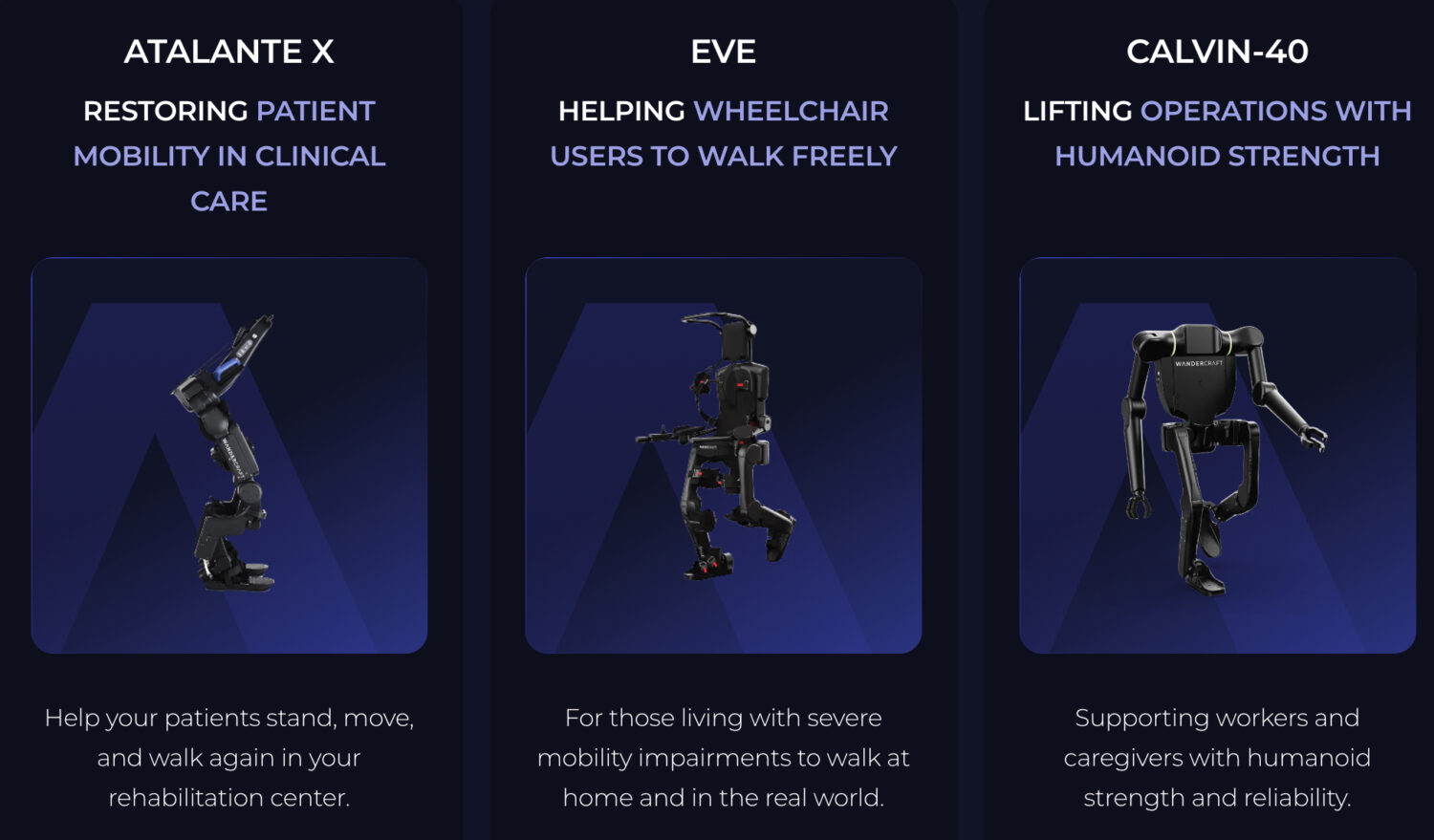
Founded in 2012, Wandercraft is globally recognized for creating the world’s first self-balancing walking exoskeleton, Atalante X, which is used in more than 100 rehabilitation centers across four continents to assist individuals with disabilities in taking more than a million steps each month.
The new funding will be used to propel Wandercraft into its next stage of development, with a focus on three key areas:
- Bringing Eve, the world’s first self-balancing personal exoskeleton, to market as early as 2026.
- Expanding clinical adoption of its flagship rehabilitation system, Atalante X.
- Developing and deploying Calvin-40, its new humanoid robot for industrial applications.
Strategic Parntership with Renault Group
A key component of this funding round is a strategic partnership with Renault Group, which now holds a minority stake in Wandercraft. The collaboration brings Renault Group’s industrial expertise to help scale up the production of Wandercraft’s exoskeletons and industrial robots, laying the groundwork for cost-efficient scaling of both the Eve personal exoskeleton and the broader Calvin humanoid family.
Renault Group is also Wandercraft’s first commercial partner and customer for Calvin-40, the first humanoid robot developed by a European company. Calvin-40’s rapid development—achieved in just 40 days—was made possible by leveraging Wandercraft’s existing robotics platform integrated with NVIDIA Isaac technologies.
Recent Traction/Milestones
Wandercraft’s momentum is built on its dedication to restoring independence through self-balancing, hands-free robotic systems that allow upright movement without crutches or walkers. This technology, powered by AI, has been refined through billions of simulations and tens of millions of real-world steps.
Recent milestones include:
- Receiving two FDA clearances for the Atalante X rehabilitation exoskeleton for stroke recovery.
- Deploying Atalante X in more than 100 hospitals and rehabilitation centers globally, including the Kessler Foundation and the Villa Beretta Rehabilitation Research Innovation Institute.
- Launching the world’s first clinical trial of a self-balancing personal exoskeleton, Eve, designed for use at home and in the community.
- Enabling 2,500 people with mobility disabilities to take more than 14 million steps.
- Winning a 2025 SXSW Innovation Award in the Artificial Intelligence category.
“The momentum we’ve achieved over the past few years is extraordinary,” said Matthieu Masselin, CEO and Co-founder of Wandercraft. “We’ve expanded globally, launched pivotal clinical trials, readied the commercialization of Eve, our personal exoskeleton, and entered a landmark partnership with Renault Group. This funding allows us to continue our mission of transforming how people live, move, and work.”


No comments:
Post a Comment