Your competent? doctor has known of this a long time ago and has protocols to detect and prevent the problem, right! Oh NO, your doctor knows nothing and has done nothing; too bad, you get the results of not getting competent persons in your stroke hospital. Your doctor gets off scot-free, yet is still getting paid.
Hidden brain condition may quadruple dementia risk in older adults, study suggests
A little-known brain blood vessel disorder could quadruple the risk of dementia in older adults, according to a preliminary study from the American Heart Association.
Cerebral amyloid A little-known brain blood vessel disorder could quadruple the risk of dementia in older adults, according to a preliminary study from the American Heart Association.
Cerebral amyloid angiopathy (CAA) is a condition in which protein builds up in the brain and weakens blood vessels.
As people age, some of these proteins can collect in the brain’s blood vessels with few to no symptoms, according to the association.
ALZHEIMER’S DECLINE COULD SLOW DRAMATICALLY WITH ONE SIMPLE DAILY HABIT, STUDY FINDS
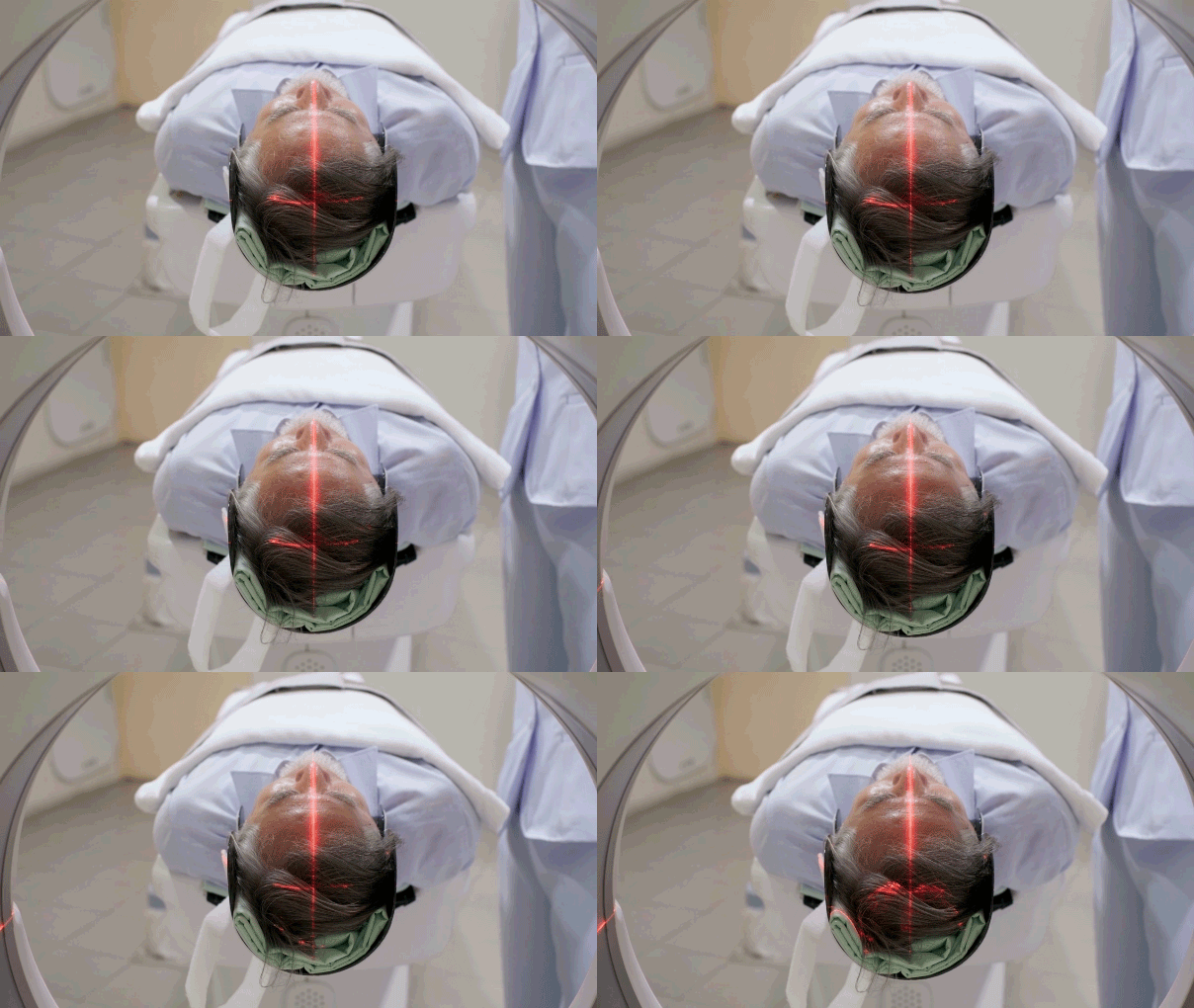
When the buildup begins to affect brain function, doctors may diagnose the condition, typically through MRI or PET scans. In severe cases, CAA can result in a stroke.
Approximately 23% to 29% of people above the age of 50 have moderate to severe CAA, according to Cleveland Clinic.

In the new study, researchers analyzed health data for nearly two million adults with and without CAA, tracking new dementia diagnoses from 2016 to 2022. All participants were at least 65 years old and covered by Medicare.
The adults were grouped into four medical categories: no CAA or stroke, CAA only, stroke only, or both CAA and stroke.
LOWER DEMENTIA RISK LINKED TO ROUTINE VACCINATION IN MAJOR NEW ANALYSIS
About 42% of people with CAA were diagnosed with dementia within five years, compared to only 10% of those without it — roughly a fourfold difference.
The risk remained elevated even if the person had no history of stroke.
“What stood out was that the risk of developing dementia among those with CAA without stroke was similar to those with CAA with stroke, and both conditions had a higher increase in the incidence of dementia when compared to participants with stroke alone,” study author Samuel S. Bruce, an assistant professor of neurology at Weill Cornell Medicine in New York City, said in a press release.
CLICK HERE TO SIGN UP FOR OUR HEALTH NEWSLETTER
“These results highlight the need to proactively screen for cognitive changes after a diagnosis of CAA and address risk factors to prevent further cognitive decline,” he added.
CLICK HERE FOR MORE HEALTH STORIES
The early research will be presented as a preliminary study at the American Stroke Association’s International Stroke Conference this week in New Orleans, and it may undergo further peer review before final publication.
(CAA) is a condition in which protein builds up in the brain and weakens blood vessels.
As people age, some of these proteins can collect in the brain’s blood vessels with few to no symptoms, according to the association.
ALZHEIMER’S DECLINE COULD SLOW DRAMATICALLY WITH ONE SIMPLE DAILY HABIT, STUDY FINDS
When the buildup begins to affect brain function, doctors may diagnose the condition, typically through MRI or PET scans. In severe cases, CAA can result in a stroke.
Approximately 23% to 29% of people above the age of 50 have moderate to severe CAA, according to Cleveland Clinic.
In the new study, researchers analyzed health data for nearly two million adults with and without CAA, tracking new dementia diagnoses from 2016 to 2022. All participants were at least 65 years old and covered by Medicare.
The adults were grouped into four medical categories: no CAA or stroke, CAA only, stroke only, or both CAA and stroke.
LOWER DEMENTIA RISK LINKED TO ROUTINE VACCINATION IN MAJOR NEW ANALYSIS
About 42% of people with CAA were diagnosed with dementia within five years, compared to only 10% of those without it — roughly a fourfold difference.
The risk remained elevated even if the person had no history of stroke.
“What stood out was that the risk of developing dementia among those with CAA without stroke was similar to those with CAA with stroke, and both conditions had a higher increase in the incidence of dementia when compared to participants with stroke alone,” study author Samuel S. Bruce, an assistant professor of neurology at Weill Cornell Medicine in New York City, said in a press release.
CLICK HERE TO SIGN UP FOR OUR HEALTH NEWSLETTER
“These results highlight the need to proactively screen for cognitive changes after a diagnosis of CAA and address risk factors to prevent further cognitive decline,” he added.
CLICK HERE FOR MORE HEALTH STORIES
The early research will be presented as a preliminary study at the American Stroke Association’s International Stroke Conference this week in New Orleans, and it may undergo further peer review before final publication.


No comments:
Post a Comment