Use the labels in the right column to find what you want. Or you can go thru them one by one, there are only 33,991 posts. Searching is done in the search box in upper left corner. I blog on anything to do with stroke. DO NOT DO ANYTHING SUGGESTED HERE AS I AM NOT MEDICALLY TRAINED, YOUR DOCTOR IS, LISTEN TO THEM. BUT I BET THEY DON'T KNOW HOW TO GET YOU 100% RECOVERED. I DON'T EITHER BUT HAVE PLENTY OF QUESTIONS FOR YOUR DOCTOR TO ANSWER.
Changing stroke rehab and research worldwide now.Time is Brain!trillions and trillions of neuronsthatDIEeach day because there areNOeffective hyperacute therapies besides tPA(only 12% effective). I have 523 posts on hyperacute therapy, enough for researchers to spend decades proving them out. These are my personal ideas and blog on stroke rehabilitation and stroke research. Do not attempt any of these without checking with your medical provider. Unless you join me in agitating, when you need these therapies they won't be there.
What this blog is for:
My blog is not to help survivors recover, it is to have the 10 million yearly stroke survivors light fires underneath their doctors, stroke hospitals and stroke researchers to get stroke solved. 100% recovery. The stroke medical world is completely failing at that goal, they don't even have it as a goal. Shortly after getting out of the hospital and getting NO information on the process or protocols of stroke rehabilitation and recovery I started searching on the internet and found that no other survivor received useful information. This is an attempt to cover all stroke rehabilitation information that should be readily available to survivors so they can talk with informed knowledge to their medical staff. It lays out what needs to be done to get stroke survivors closer to 100% recovery. It's quite disgusting that this information is not available from every stroke association and doctors group.
Showing posts with label talk to survivors. Show all posts
Showing posts with label talk to survivors. Show all posts
You are that blitheringly stupid that you don't know that every survivors goal is 100% recovery? Have you never talked to survivors? The stupidity displayed is amazing,; congratulations!
Accepted 05 Aug 2026, Published online: 18 Aug 2026
Abstract
Purpose
This study aims to explore perspectives of stroke survivors, caregivers, and physiotherapists on goal-setting in stroke rehabilitation.
Materials and methods
A qualitative study included in-depth interviews with 15 stroke survivors and seven caregivers and four focus groups with 16 physiotherapists. Data were analyzed using reflexive thematic analysis.
Results
An overarching theme “Readiness to patient-centered goal-setting in physiotherapy” emerged, reflecting goal-setting as a clinician-led process with limited involvement of stroke survivors and caregivers.(You've got this completely backwards, survivors set the goals; CLINICIANS SHOULD COMPETENTLY DELIVER THEM!) Four themes were identified: a) Attitudes and perceived roles regarding goal-setting throughout rehabilitation, (b) Uncertainty as a barrier to goal-setting, (c) Strategies and challenges in communicating goals, and (d) Health system and policies challenges to person-centered goal-setting. While physiotherapists recognized the importance of patient involvement, goal-setting was often implicit, informal, and constrained by individual, organizational, and systemic factors.
Conclusion
The findings suggest a systemic lack of preparedness for implementing person-centered goal-setting in post-stroke physiotherapy. Addressing this gap may require structured approaches that combine training, communication strategies, and organizational support to promote collaborative goal-setting and enhance stroke survivors’ and caregivers’ engagement in rehabilitation planning. Further research should focus on testing and refining theory-informed behavior change and implementation strategies to support the uptake of person-centered goal-setting practices.
IMPLICATIONS FOR REHABILITATION
Uncertainty about prognosis after stroke and prevailing clinician-centered attitudes toward goal-setting may limit its consistent use in rehabilitation practice.
A lack of effective strategies from physiotherapists and healthcare organizations prevents stroke survivors and their caregivers from taking charge of their rehabilitation, including goal-setting and achievement.
To promote patient-centered practices, it is crucial to advocate physiotherapists to involve stroke survivors and their caregivers more in rehabilitation goal-setting and achievement.
Strategies that facilitate shared and tailored goal-setting during stroke rehabilitation should be developed and implemented in physiotherapy services.
What the fuck good does recognizing symptoms where the interventions are complete fucking failures? You can't sugarcoat this; these are all failures. Don't allow any stroke medical 'professional' to suggest they are successes, Success is 100% recovery; NOTHING LESS!
If you don't publish these three statistics no one should go there because they aren't even trying to improve their work.
Ready does not mean recovery; so this place is still a failure! If you don't publish these three statistics no one should go there because they aren't even trying to improve their work.
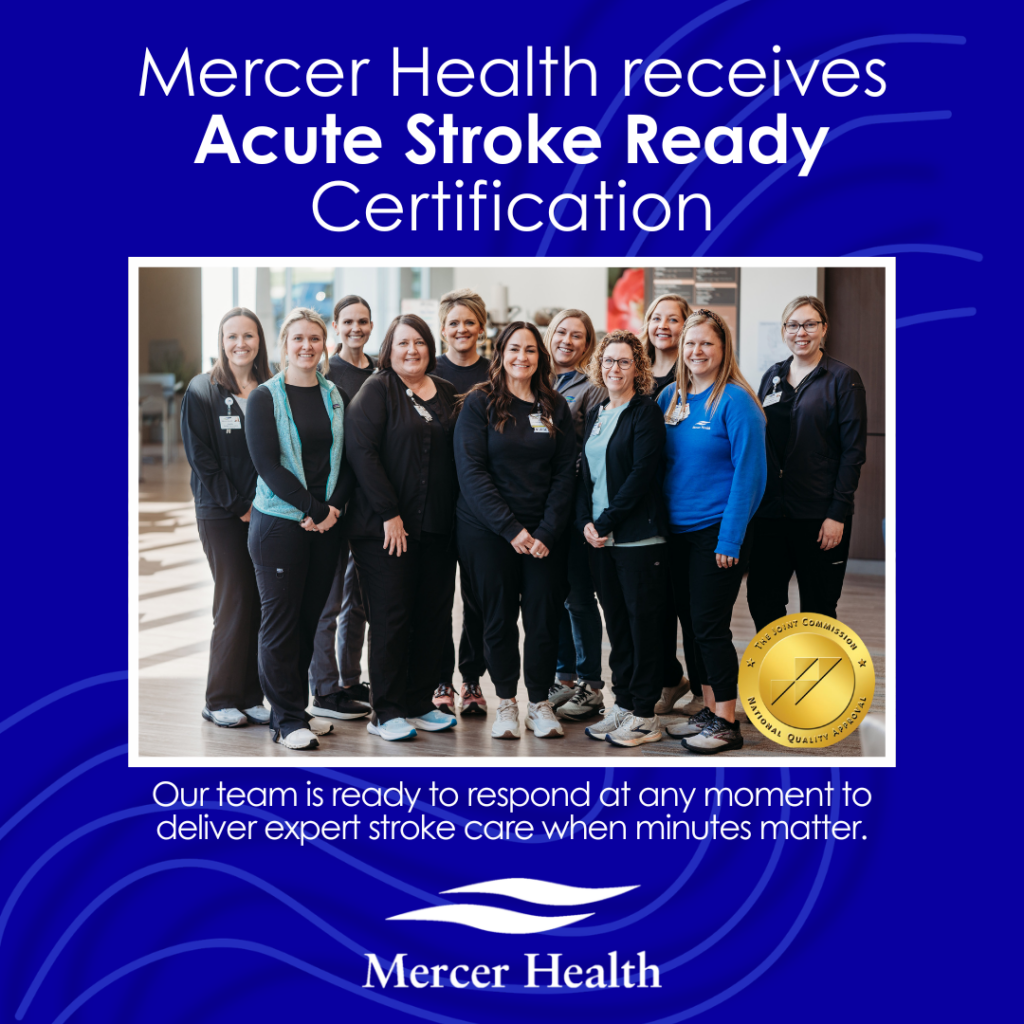
Mercer Health has earned The Joint Commission’s Gold Seal of Approval® and the American Stroke Association’s Heart-Check mark for Acute Stroke Ready Certification.
Mercer Health underwent a rigorous onsite review on February 6, 2026. During the visit, a team of Joint Commission reviewers evaluated compliance with related certification standards including program management and supporting self-management. Joint Commission standards(Your standards are shitworthy if you are not measuring 100% recovery; the only goal in stroke!) are developed in consultation with health care experts and providers, measurement specialists and patients(You obviously didn't listen to patients who were demanding recovery, not just 'care'!). The reviewers also conducted onsite observations and interviews.
“Acute Stroke Ready Certification recognizes healthcare organizations committed to striving for excellence and fostering continuous improvement in patient safety and quality of care,”(But nothing about actual recovery statistics!) says Ken Grubbs, DNP, MBA, RN, executive vice president of Accreditation and Certification Operations and chief nursing officer, The Joint Commission. “We commend Mercer Health for using The Joint Commission certification process to reduce variation in clinical processes and to strengthen its clinical program to drive safer, higher quality and more compassionate care(NOT RECOVERY!) for individuals served.”
“We congratulate Mercer Health for this outstanding achievement,” says Nancy Brown, chief executive officer, the American Stroke Association. “This certification reflects its commitment to providing the highest quality of care(NOT RECOVERY!) for stroke patients.”
“Achieving Acute Stroke Ready Certification strengthens our commitment to provide lifesaving care(NOT RECOVERY!) close to home,” says Jenny Conn, Director of Emergency Services and Disaster Preparedness at Mercer Health. “Our team collaborates across disciplines and is prepared every moment to respond when minutes matter. This recognition reflects the dedication of our providers, nurses and staff, and our promise to the community we serve.”
This just leaves most of those disabled since NO 100% RECOVERY PROTOCOLS EXIST! Or anything to stop the neuronal cascade of death in the first week allowing hundreds of millions of neurons to die! You've left the real problems unfinished! You do know survivors want 100% recovery; or have you never talked to any without forcing your tyranny of low expectations on them?
UNIVERSITY PARK, Pa. — Penn State Health stroke experts say new guidelines extend clot‑busting treatment to 24 hours after a stroke, offering critical benefits for patients who experience a stroke while asleep.
When physician Jeffrey Rajchel got up in the middle of the night to use the restroom in 2022, he never imagined he would have a stroke. At 72, he was in excellent physical shape — he didn’t smoke, maintained a healthy weight and was training to compete in a national-level seniors’ tennis tournament. But that night, he collapsed on the bathroom floor and couldn’t reach his phone to call his wife, a nurse.
By the time she found him in the morning, Rajchel had passed the then-standard 4.5-hour window to receive clot-busting medication. After being rushed to Penn State Health Milton S. Hershey Medical Center, he found the stroke had left him with a significant loss of movement and control on his dominant left side.
He chose to get a vagus nerve stimulator implant, a device that sends mild electrical pulses to a nerve, strengthening the brain’s ability to rewire during rehabilitation. The nerve stimulator, paired with physical therapy, has helped him regain some hand function.
Looking back, Rajchel said he believes earlier treatment would have given him a better outcome.
“If I had been able to receive the [clot-busting] medication, I’d be living a very different life right now,” he said.(Hell, I got it in 90 minutes and still had major damage because my incompetent doctors had nothing to stop the neuronal cascade of death in the first week allowing hundreds of millions of neurons to die!)
However, starting in January 2026, patients who experience an acute ischemic stroke, as Rajchel did, now have a longer window of time to receive treatment for ischemic stroke, said Alicia Richardson, Penn State Health System stroke director.
The 2026 Guideline for the Early Management of Patients with Acute Ischemic Stroke, published by the American Stroke Association, expands treatment options for a condition that affects more than 795,000 people in the U.S., according to the Centers for Disease Control and Prevention. Stroke remains the fourth-leading cause of death in this country.
What is a stroke?
An acute ischemic stroke happens when a blood clot blocks blood flow within the brain. Without oxygen, brain cells quickly begin to die.
A simple way to remember stroke symptoms is BEFAST:
B – Sudden loss of balance
E – Sudden eyesight changes
F – Facial drooping
A – Arm weakness
S – Speech difficulty, both understanding and speaking
T – Time to call 911
Jeffrey Rajchel takes a break after a day at the driving range. Physical therapy and a vagus nerve stimulator received at Penn State Health Milton S. Hershey Medical Center have helped him continue his active lifestyle.Credit: Penn State Health . All Rights Reserved.
Expanding access to proven treatments
The update doesn’t introduce new treatments, but it expands access to existing ones based on advanced imaging, said Erin Cekovich, Penn State Health stroke program manager.
“We have treatments available that are very time sensitive, and the earlier you get treated, the better,” Cekovich said.
Under the updated guidance, stroke patients may now receive the clot-busting drug up to 24 hours after a stroke if imaging shows they have salvageable brain tissue. This can especially benefit patients who have a stroke while asleep, like Rajchel experienced. Previously, under the former guidance, such cases were denied.
“An ischemic stroke is like a clogged pipe,” Cekovich said. “The goal of the medication is to unclog the pipe by dissolving the blockage.”
While clot-dissolving medications are very effective, their benefits diminish as time passes and risks increase, according to Cekovich. Even with the expanded time window, patients still need to arrive as soon as possible to determine if they are good candidates for the treatment.
Time is brain: Seek immediate medical attention
Cekovich emphasized that the larger treatment window doesn’t mean patients should wait to see a doctor. Anyone who suspects they’ve had a stroke should seek medical attention immediately.
For Rajchel, the new guidelines came too late for his own stroke — but he said he sees the potential impact for future patients, including shorter rehabilitation timelines. With the help of the vagus nerve stimulator and physical therapy, he has regained much of his left-sided motor function. Some of his favorite activities, like golf, require adjustments, such as using a gait belt. But with a friend’s support, he can still swing a club.
He said he continues working on his strength and dexterity.
“It’s a never-ending process. I keep doing physical therapy,” Rajchel said. “Obviously, I’m not able to return to work as a surgeon, but I have improved dramatically.”
The Medical Minute is a health news feature produced by Penn State Health. Articles feature the expertise of faculty, physicians and staff, and are designed to offer timely, relevant health information of interest to a broad audience.
A new clinical trial has produced the most reliable information to date on the optimum level of early rehabilitation appropriate for patients with acute stroke.
The AVERT DOSE trial has suggested that in the initial days after an acute stroke, just 10 minutes of active training per day is sufficient for patients with mild stroke, while patients with moderate stroke could benefit from slightly higher levels of exercise training split into two separate sessions.
“The AVERT DOSE trial, while underpowered, provides current best available evidence to guide early training after an acute stroke,” said lead investigator, professor Julie Bernhardt, PhD, The Florey Institute, Melbourne, Australia.
“Our trial shows that the protocolized training tested can feasibly be delivered in multiple settings and is safe,” she added.
The findings suggest that for patients with mild stroke (National Institutes of Health Stroke Scale [NIHSS] 0-7), a single 10-minute session of active, task-specific training supported by nurses during upright daily activities may be sufficient for most patients, with no clear evidence that higher-intensity training provides additional benefit, Bernhardt said.
For patients with moderate stroke severity (NIHSS, 8-16), the findings suggest that two separate 10-minute sessions of active, task-specific training supported by nurses during upright daily activities provided clinically meaningful benefits compared with a single session.
In both cases the 10 minutes of active training refers to only the active practice time and does not include preparation or rest periods in between activity, so the session itself would take significantly longer than 10 minutes.
Bernhardt explained that regaining movement is a vital early goal after stroke, but important questions remain about how soon rehabilitation should begin and how much training is beneficial. Those uncertainties have persisted since the first AVERT trial, reported in 2015, showed that very early intensive mobilization — initiated within 24 hours of stroke onset — worsened outcomes compared with lower-dose usual care, with the greatest adverse effects seen in patients with intracerebral hemorrhage (ICH) and severe stroke.
“This very early intensive therapy appeared to be too much, too soon and but there has remained a lack of clear evidence on the optimal timing and intensity for rehabilitation training,” Bernhardt noted
To address this issue the researchers conducted the AVERT DOSE trial.
For the study, the researchers analyzed data from the original AVERT trial to identify intervention doses with the most favorable safety and efficacy profiles, then evaluated those dosing strategies in the new trial that excluded patients with ICH and severe stroke.
The study enrolled 1000 patients across 50 hospitals in seven countries, including Australia, Brazil, India, Ireland, Malaysia, Singapore, and the UK.
Participants were stratified by stroke severity, with 631 patients in the mild stroke group and 366 in the moderate stroke group and randomly assigned to one of four mobility training regimens.
All interventions were initiated within 48 hours of stroke onset (mean, 38 hours) and continued for 14 days or until hospital discharge. The interventions focused on functional, task-specific upright movement tailored to each patient and delivered by trained physiotherapists.
Participants were stratified by stroke severity, with 631 patients in the mild stroke group and 366 in the moderate stroke group and randomized to one of four mobility training regimens. All interventions were initiated within 48 hours of stroke onset (mean, 38 hours) and continued for 14 days or until hospital discharge.
Optimal Exercise Dose
The interventions emphasized functional, task-specific upright movement tailored to each patient and delivered by trained physiotherapists.
The groups differed by time (10-40 mins) and session frequency (1-4 sessions/d), with varying activity types and intensity as patients progressed. These protocols replaced usual care.
“There was no usual care alone group as usual care is so varied it is difficult to document what it actually is and makes clinical trial results very difficult to interpret,” said Bernhardt.
The primary endpoint — favorable functional outcome(You never do talk to survivors about their definition of favorable, do you?), defined as a modified Rankin Scale score of 0-2 at 3 months — showed no significant differences between the lowest-dose reference group (one 10-minute session daily) and the higher-dose training regimens.
However, a prespecified analysis of clinically meaningful benefit found more than 90% confidence that higher training doses were not clinically meaningfully better than the lowest reference dose — 10 minutes once per day — for patients with mild stroke.
In the moderate stroke group, there was 96% confidence that two 10-minute regimens at different times of day was better than the lowest dose reference arm, and 84% confidence that this difference was clinically meaningful.
A Safe Intervention
Safety results showed no significant differences in deaths or serious adverse events between lowest reference dose and the higher dose regimens.
“Our primary message is that these interventions are safe. We had low rates of death and serious adverse events, and that was across all of the different dose arms in both the mild and moderate groups. That is a very important finding given that the previous AVERT trial had shown harm,” Bernhardt said.
“We’ve also shown that these interventions can be delivered in multiple settings across the world, including in low- and middle-income countries,” she added.
She explained that the 10 minutes of task specific training took place within a longer overall sessions and the exercises were done in bursts, with rest times not included in the exercise times.
“The training was individualized to the patient depending on their deficit but could be something like repeatedly standing up from a chair. It is trying to build control, stamina, and strength. Patients have to be active, and they have to be working to improve their mobility.”
As part of the study publication, the researchers plan to fully characterize the interventions and how they evolved over time, and the protocols will be made publicly available.
“This is the first time we’ve been able to provide any documented rehabilitation strategy for these patients. The strength of this trial is that we have used consistent protocols, and although we didn’t finish the trial as we planned because of the pandemic, this 1000 patient-strong data set is the best we have,” Bernhardt concluded.
‘An Amazing Achievement’
Commenting on the trial, Peter Kelly, MD, clinical professor of neurology at University College Dublin, Dublin, Ireland, said it was “an amazing achievement.”
“This is the best designed and best conducted trial in rehabilitation that we have ever seen. The though that went into eliminating variability was very impressive and the findings are very useful,” he noted.
Kelly added that the lack of any safety concerns was “very reassuring” and “the lessons from AVERT-DOSE trial that will inform the next steps in rehabilitation studies were outstanding.”
The AVERT DOSE trial was funded by the National Health & Medical Research Council of Australia.
You're solving the wrong problem! First up is 100% recovery protocols, then you can expand the correct solution countrywide. All you are doing is delivering failure to new areas.(Not getting to 100% recovery IS FAILURE ACCORDING TO SURVIVORS! Don't you listen to survivors at all?)
Thousands of stroke patients are missing out on thrombectomy, a life-altering treatment that can save lives or reduce long-term disability, a charity has warned.
The Stroke Association has highlighted “stark inequalities” in whether patients receive a thrombectomy, a procedure that removes a blood clot from a blocked blood vessel in the brain.
Getting this treatment in the hours after stroke symptoms start can save a person’s life or reduce the risk of life-long disability, as it limits brain damage caused by a clot.
Professor Deb Lowe, medical director for the Stroke Association, said: “There are a multitude of reasons given as to why thrombectomy is still subject to stark inequalities which mean some stroke patients are left facing a life of disability when others are not.
“Gaps in the stroke workforce are a major factor here as is targeted funding, prioritisation by commissioners and hospital leaders, as well as timing delays due to ambulance response times or hospital handovers.
Analysis by the Stroke Association found that 1,222 patients missed out on a thrombectomy between October and December 2025, despite the procedure needing to be carried out within the first 24 hours.
The charity said these disparities reflect the fact that some parts of the country do not have access to round-the-clock thrombectomy services.
NHS plans introduced in 2019 set a target to expand thrombectomy provision from 1 per cent to 10 per cent of stroke patients, with the aim of helping 1,600 more people live independently each year.
But the Stroke Association said that target has still not been met.
Data from the Sentinel Stroke National Audit Programme, which covers England, Wales and Northern Ireland, showed that just 4.8 per cent of stroke patients had a thrombectomy between October and December 2025.
Funding was made available to help prepare services for 24/7 care.
But the charity said that of the 24 specialist neuroscience centres across England, only 17 currently deliver a thrombectomy regardless of the day or time.
Lowe said: “There are thousands of stroke survivors in the UK who could be living very different lives from the realities they now face if they had received a thrombectomy.
“They could potentially work, live independently, easily hold a conversation, and simply enjoy a sense of normality. Instead, they may not be able to even leave the house without help.
“We can – and must – do better, so the 240 people who survive stroke every day have the chance to live well.”
Phil Woodford, now 55, had a stroke on a weekend in 2016, which meant he missed out on a thrombectomy because his nearest service was yet to introduce 24/7 care.
Mr Woodford, from Preston, was left with significant disability including reduced movement on his left-hand side, permanent pain and fatigue, which meant he had to take early retirement from his career as an NHS director.
“I will never know for sure but I am confident that, if I’d had a thrombectomy, I wouldn’t have been forced to retire due to the extent of disability I had been left with,” he said.
“It’s still frustratingly not as widely available as it needs to be.
“People can obviously be unwell at any time of the day or week, so it makes no sense to not offer such a vital service around the clock too.”
Look how fucking useless the International Stroke conference is! 'Care' NOT RECOVERY! All because they never listen or talk to stroke survivors. Staying in your own insular bubble isn't going to help you recover when you are the 1 in 4 per WHO that has a stroke? Then you just might want 100% recovery.
Conference MDAngle offers personal perspectives from conference attendees, showcasing their anticipation, quick takeaways, and insights into how the presented research will affect their patients.
The International Stroke Conference (ISC) was held February 4-6, 2026, in New Orleans, where leading experts presented late‑breaking research and practice‑changing innovations across stroke science, including sessions focused on post‑stroke care(NOT RECOVERY!). Featured topics included spasticity management in post‑stroke recovery; comprehensive post‑stroke care(NOT RECOVERY!), including stroke‑unit best practices, secondary prevention, and long‑term management; rehabilitation and recovery with an emphasis on innovative methods and sustained support; and the psychosocial and behavioral aspects of stroke, including mental health and social‑support systems essential for recovery. Results were presented from a randomized controlled trial looking at transcutaneous electrical nerve stimulation, including transcutaneous vagus nerve stimulation and transcutaneous spinal cord stimulation, to improve cognitive and upper limb motor function after stroke. Presentations were given on the ANIMATOR trial, looking at brain-computer interface technology interfacing with virtual reality therapy in post-stroke recovery, and on contralaterally controlled functional electrical stimulation for subacute stroke rehabilitation. Results were also presented from a trial of the IpsiHand system, an at-home brain-computer interface therapy for patients with chronic upper extremity motor deficit after stroke.
Annie J. Ferris, MD
Assistant Professor, Department of Neurology, Stroke Division, UMass Memorial Health, Worcester, Massachusetts
"We heard an amazing amount of data, trials, devices, innovations, research, and publications on all the things that doctors, nurses, and therapists are doing in this field. But what it all comes down to is the human experience of stroke.”
Heading to the International Stroke Conference, Dr Ferris suggests that post-stroke care(NOT RECOVERY!) is neglected compared with acute treatment. She highlights promising technologies such as vagus nerve stimulation and transcranial stimulation for motor recovery, aphasia, mood, and vision, and anticipates updates on their broader uses. Dr Ferris calls for standardized, reliable systems to connect patients to recovery therapies earlier to improve outcomes while the neuroplasticity window is open.
At ISC 2026, Dr Ferris reports on exciting advances in stroke rehabilitation, including brain-computer interface technology, functional electrical stimulation, and devices such as the IpsiHand, which have demonstrated significant improvements even for chronic stroke survivors. Additional therapies such as vagal nerve stimulation, virtual reality, and emerging stem cell treatments are expanding options for recovery across all phases of stroke. These developments, alongside innovative assessment methods like hand grip strength, signal a new era of hope and possibility for stroke recovery.
Dr Ferris reflects on the human aspect of post-stroke recovery, which is often overshadowed by clinical data and research, and was particularly moved by stories of survivors of stroke who used artistic expression to process their experiences and rebuild their identities. Dr Ferris emphasizes that creativity can play a vital role in helping patients regain dignity and self-worth after a stroke, which healthcare providers should always keep in mind.