Why BMI, hasn't it been replaced by the waist-to-height ratio (WHtR) is: WHtR = Waist Circumference / Height? My blood pressure is controlled by drugs. I don't see how blood pressure and BMI have any causation to brain health, correlation maybe, but scientists know not to depend on correlation.
My BMI is 28.8 I think I'm pretty good. That problem is directly the result of my doctor COMPLETELY FAILING AT HAVING 100% RECOVERY PROTOCOLS!
The formula for calculating the waist-to-height ratio (WHtR) is: WHtR = Waist Circumference / Height.
AI Reveals Key Predictors of Lifelong Brain Health
Summary: A new study used machine learning to pinpoint the lifestyle and health factors most strongly associated with cognitive performance across the lifespan. Among 374 adults aged 19 to 82, age, blood pressure, and BMI were the top predictors of success on a focus-and-speed-based attention test.
While diet and exercise played a smaller role, they were still associated with better outcomes, particularly in offsetting high BMI or blood pressure. This data-driven approach highlights how combining multiple factors provides a clearer picture of what supports brain health with age.
Key Facts:
- Top Predictors: Age, diastolic blood pressure, and BMI most strongly influenced cognitive performance.
- Diet + Exercise: Healthy eating and physical activity contributed modestly but positively to focus and reaction speed.
- Machine Learning Advantage: Advanced algorithms revealed nuanced relationships traditional statistics may miss.
Source: University of Illinois
A new study offers insight into the health and lifestyle indicators — including diet, physical activity and weight — that align most closely with healthy brain function across the lifespan.
The study used machine learning to determine which variables best predicted a person’s ability to quickly complete a task without becoming distracted.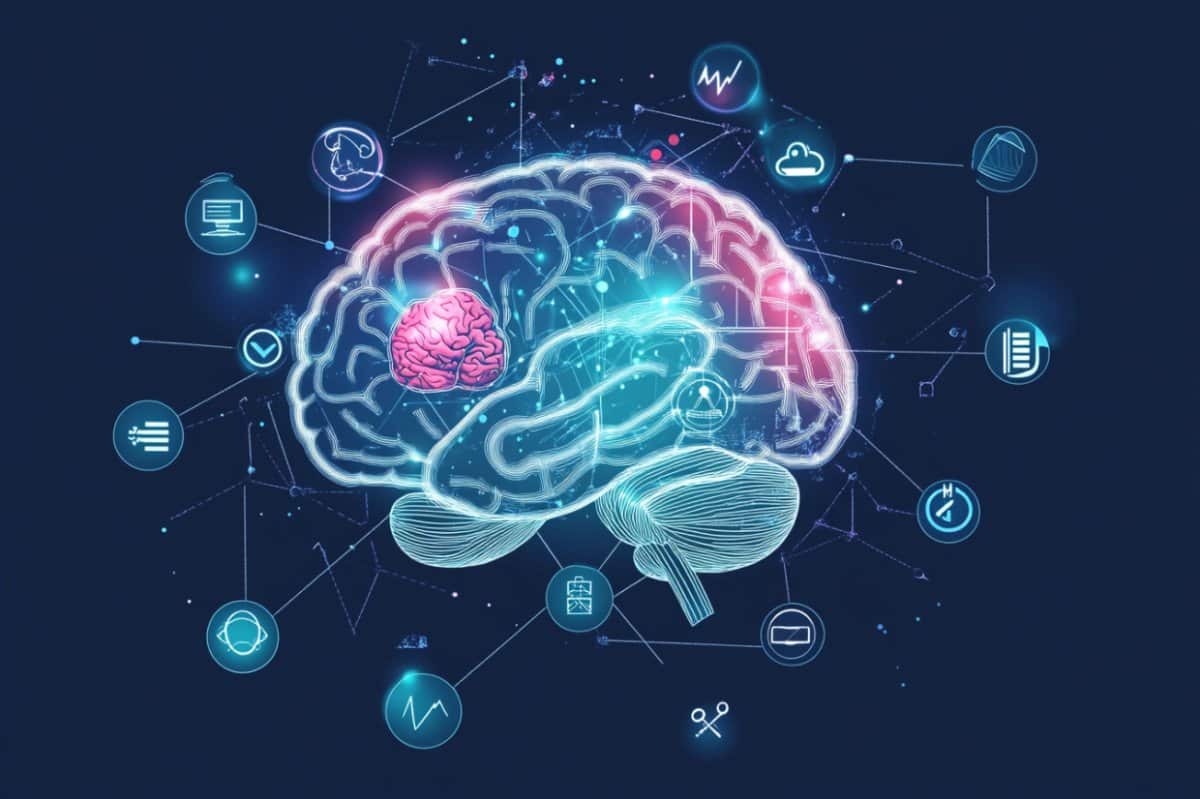
Reported in The Journal of Nutrition, the study found that age, blood pressure and body mass index were the strongest predictors of success on a test called the flanker task, which requires participants to focus on a central object without becoming distracted by flanking information.

Diet and exercise also played a smaller but relevant role in performance on the test, the team found, sometimes appearing to offset the ill effects of a high BMI or other potentially detrimental factors.
“This study used machine learning to evaluate a host of variables at once to help identify those that align most closely with cognitive performance,” said Naiman Khan, a professor of health and kinesiology at the University of Illinois Urbana-Champaign who led the work with kinesiology Ph.D. student Shreya Verma.
“Standard statistical approaches cannot embrace this level of complexity all at once.”
To build the model, the team used data collected from 374 adults 19 to 82 years of age. The data included participant demographics, such as age, BMI, blood pressure and physical activity levels, along with dietary patterns and performance on a flanker test that measured their processing speed and accuracy in determining the orientation of a central arrow flanked by other arrows that pointed in the same or opposite direction.
“This is a well-established measure of cognitive function that assesses attention and inhibitory control,” Khan said.
Previous studies have found that several factors are implicated in the preservation of cognitive function across the lifespan, Khan said.
“Adherence to the healthy eating index, a measure of diet quality, has been linked to superior executive function and processing speed in older adults,” he said. “Other studies have found that diets that are rich in antioxidants, omega-3 fatty acids and vitamins are associated with better cognitive function.”
The Dietary Approaches to Stop Hypertension, or DASH diet, the Mediterranean diet, and a diet that combines the two, called the MIND diet, all “have been linked to protective effects against cognitive decline and dementia,” the researchers wrote. Physical factors, such as BMI and blood pressure, along with increased physical activity also are strong predictors of cognitive health, or decline, in aging.
“Clearly, cognitive health is driven by a host of factors, but which ones are most important?” Verma said. “We wanted to evaluate the relative strength of each of these factors in combination with all the others.”
Machine learning “offers a promising avenue for analyzing large datasets with multiple variables and identifying patterns that may not be apparent through conventional statistical approaches,” the researchers wrote.
The team tested various machine learning algorithms to see which one best weighed the various factors to predict the speed of accurate responses in the flanker test. The researchers tested the predictive ability of each algorithm, using a variety of approaches to validate those that appeared to perform the best.
They found that age was the most influential predictor of performance on the test, followed by diastolic blood pressure, BMI and systolic blood pressure. Adherence to the healthy eating index was less predictive of cognitive performance than blood pressure or BMI but also correlated with better performance on the test.
“Physical activity emerged as a moderate predictor of reaction time, with results suggesting it may interact with other lifestyle factors, such as diet and body weight, to influence cognitive performance,” Khan said.
“This study reveals how machine learning can bring precision and nuance to the field of nutritional neuroscience,” he said.
“By moving beyond traditional approaches, machine learning could help tailor strategies for aging populations, individuals with metabolic risks or those seeking to enhance cognitive function through lifestyle changes.”
The Personalized Nutrition Initiative and National Center for Supercomputing Applications at the U. of I. supported this research.
Khan is a dietitian and an affiliate faculty member of the Division of Nutritional Sciences, the Neuroscience Program and the Beckman Institute for Advanced Science and Technology at Illinois.
About this AI and brain health research news
Author: Diana Yates
Source: University of Illinois
Contact: Diana Yates – University of Illinois
Image: The image is credited to Neuroscience News
Original Research: Open access.
“Predicting cognitive outcome through nutrition and health markers using supervised machine learning” by Naiman Khan et al. Journal of Nutrition


No comments:
Post a Comment