Changing stroke rehab and research worldwide now.Time is Brain! trillions and trillions of neurons that DIE each day because there are NO effective hyperacute therapies besides tPA(only 12% effective). I have 523 posts on hyperacute therapy, enough for researchers to spend decades proving them out. These are my personal ideas and blog on stroke rehabilitation and stroke research. Do not attempt any of these without checking with your medical provider. Unless you join me in agitating, when you need these therapies they won't be there.

What this blog is for:

My blog is not to help survivors recover, it is to have the 10 million yearly stroke survivors light fires underneath their doctors, stroke hospitals and stroke researchers to get stroke solved. 100% recovery. The stroke medical world is completely failing at that goal, they don't even have it as a goal. Shortly after getting out of the hospital and getting NO information on the process or protocols of stroke rehabilitation and recovery I started searching on the internet and found that no other survivor received useful information. This is an attempt to cover all stroke rehabilitation information that should be readily available to survivors so they can talk with informed knowledge to their medical staff. It lays out what needs to be done to get stroke survivors closer to 100% recovery. It's quite disgusting that this information is not available from every stroke association and doctors group.

Showing posts with label task-oriented training. Show all posts

Tuesday, December 16, 2025

Neurons Use a Fast Structural Signal to Stabilize Communication

 What will your doctor do with this to get you recovered? OH, NOTHING AND DOESN'T EVEN KNOW ABOUT IT!

Neurons Use a Fast Structural Signal to Stabilize Communication

    We are providing an unedited version of this manuscript to give early access to its findings. Before final publication, the manuscript will undergo further editing. Please note there may be errors present which affect the content, and all legal disclaimers apply.

    Abstract

    Background

    Motor imagery (MI) has garnered significant interest as a novel rehabilitation method for stroke. Additionally, task-oriented robot training has been shown to enhance lower limb motor function in patients with early-stage stroke. However, the therapeutic effects of combining these two approaches remain unclear, and the underlying mechanisms are not yet understood. This study aims to investigate the effects of MI combined with task-oriented robot training on the lower limb motor function of post-stroke patients.

    Methods

    First-ever stroke patients meeting the inclusion criteria were recruited and randomly allocated eligible participants to the control group (n = 91) or the experimental group (n = 91). Based on routine conventional physical therapy, the experimental group received task-oriented robot training combined with MI training, whereas the control group received task-oriented robot training combined with muscle relaxation training. The outcome indicators are the Fugl-Meyer Assessment of Lower Extremity (FMA-LE), Berg Balance Scale (BBS), and spatio-temporal gait parameters, which reflect the patients’ lower limb motor function. (None of these are even remotely objective measurements AND THUS ARE COMPLETELY FUCKING USELESS! And you don't know that?)The functional connectivity between regions is measured by functional near-infrared spectroscopy (fNIRS).

    Results

    Significant improvements in FMA-LE and BBS were observed in the experimental group compared with the control group (p < 0.05). Although no significant differences were observed between groups post-treatment (p > 0.05), both groups demonstrated improved step frequency and gait speed scores and reduced gait cycle scores following intervention (p < 0.05). In addition, the experimental group showed significantly enhanced functional connectivity between the prefrontal cortex and motor-related regions compared to the control group (p < 0.05).

    Conclusions

    Combining MI training with task-oriented robotic training can enhance lower limb motor function and enhance the brain’s functional connectivity. Changes in functional connectivity within the prefrontal cortex (PFC) and motor-related cortex may serve as a potential therapeutic target for promoting motor recovery in stroke patients. Future studies should incorporate task-based functional Magnetic Resonance Imaging (fMRI) data to elucidate the directionality of information flow between these brain regions, thereby advancing our understanding of causal interactions underlying functional improvements in post-stroke gait rehabilitation.

    Trial registration: It was retrospectively registered at the Chinese Clinical Trial Registry on 8 July 2025 (Registration No. ChiCTR2500105631).

    Tuesday, April 9, 2024

    Q&A: A task-oriented approach in occupational therapy is critical to recovery after a stroke

    But does it get you 100% recovered? The only goal in stroke!

    Q&A: A task-oriented approach in occupational therapy is critical to recovery after a stroke

    Chih-Huang "Jeffrey" Yu, a professor in the School of Integrated Health Sciences' brain health department, works with occupational therapy doctoral student Julie Canda on how to apply makeup with only her left hand. Yu has been a practicing occupational therapist for 30 years and is one of the field's premier advocates for using the task-oriented approach while working with stroke patients. Credit: Josh Hawkins/UNLV

    Recovering from a life-altering stroke can be a long and arduous journey when an irascible demeanor and a litany of frustrations prolong a patient's return to normalcy.

    Stroke is the leading cause of death in the United States and a major cause of serious disability for adults, according to the Centers for Disease Control and Prevention.

    A task-oriented, client-centered approach is the preferred method of rehab for stroke patients, says Chih-Huang "Jeffrey" Yu, an assistant professor in the Department of Brain Health's occupational therapy doctorate program within the UNLV School of Integrated Health Sciences.

    "A typical rehab is more of a one-size-fits-all approach, and a lot of times, our clients can feel frustrated by that approach," he said.

    "The occupational therapy task-oriented approach allows us to really learn more about the person, their life, what kind of tasks they were able to do before their stroke that they're not able to do anymore, and determine a strategy to improve their performance effectively. That's why I really need to understand and get to know the person so I can establish their own personal plan going forward. We really have to put ourselves in their shoes."

    Occupational therapists help people achieve the things they want to do, not just what they need to do, after experiencing a health affliction. They approach a person holistically to improve their physical, spiritual, and emotional health in an effort to maximize their overall well-being.

    Yu has been a practicing occupational therapist since the mid-1990s. Born and raised in Taiwan, he honed his skills using the occupational therapy task-oriented approach while studying at the University of Minnesota in 2010.

    According to Yu, the task-oriented approach is a novel concept in occupational therapy, with Yu having published one of just two articles on the subject. We spoke with him about how , especially those utilizing a task-oriented approach, can impact the lives of while making their long road to recovery a little less stressful.

    For those unfamiliar with occupational therapy, can you explain how occupational therapists work with stroke patients?

    Occupational therapists work on how we can best help our clients (we refer to them as "clients" in outpatient settings and "patients" during acute care and inpatient settings) to do the things that they most value. These are tasks that people do on a daily basis that take up their time and are also meaningful to them.

    As an example, I am a father, a son, and a husband, and I work at a university. I also need to do things that give me life, like eating, shopping, and other tasks that give me the fulfillment I need. As a father and husband, I need to spend quality time with my daughter and my wife. Those tasks take up my time and are meaningful for me. After a stroke, I may be able to do some of those tasks, but not all of them.

    Occupational therapists are experts in working with our clients to address the areas with the most need, and we customize our plans for each client. You might eat your breakfast at home or at work, where it's quiet, and I might eat my breakfast while watching videos on my couch. Even though we are both having breakfast, we are eating it differently. They are different experiences that affect us in our own way.

    As occupational therapists, we also educate our clients to ensure they are rehabbing in the healthiest way. We believe everything is parallel to each other. The task, the environment, and someone's personal ability are parallel, and we regard them as separate systems. When using the occupational therapy task-oriented approach, you need to spend a lot of time working with a client.

    Why is there a dearth of published information about the task-oriented approach in occupational therapy, specifically working with stroke patients?

    The occupational therapy task-oriented approach was first proposed by my mentor, Virgil Mathiowetz, in Minnesota in 1994. He and one of his colleagues proposed this at a time when occupational therapy was focused on a medical model, so the rehab world did not accept this type of thinking.

    This also makes funding more difficult because it is not a mainstream approach, and research opportunities are limited. I wanted to learn his approach even though I knew it was risky [in terms of research funding opportunities]. After I did some more research on it, I moved from Taiwan to study under him while being sponsored by the occupational therapy program at the University of Minnesota.

    Over the past 20 years, especially in motor learning theory, we have seen an increase in awareness about how the environment is very important to a client's recovery. There have been a few case studies done about occupational therapists using the task-oriented approach, but not much. It is a different approach than most health care professionals use, but the new model is moving toward a whole-body approach.

    How have you seen the difference in a patient's recovery process between a more generalized approach and a multi-task approach?

    I really saw the difference when working on my dissertation. After three or four weeks of intervention with a stroke patient, his motor skill issue had become a psychological issue. My assumption was that his ability to move was holding him back, but it turned out to be psychosocial. Once we established that it wasn't his mobility that necessarily contributed to his motor skill issue, the recovery process was easier because we knew what to focus on.

    That is why we treat each system as its own. Systems can trigger change. By the end of the study, the man was able to regain his driver's license just a few years after suffering a stroke.

    Sometimes, you have to change your entire intervention strategy based on the needs of the patient. It was a perfect example of why it is so important to pay attention to the little things. You have to put yourself in their shoes and not come in with your own perception in order to find out what's wrong. I witnessed the power of that personalized, task-oriented approach, and I want to produce more research to share with our society.

    What do you hope the future holds for more occupational therapists using the task-oriented approach?

    As capstone coordinator for UNLV's occupational therapy program, I coordinate scholarly projects for our students. Right now, I'm trying to recruit students to do stroke rehab while guiding them toward the occupational therapy task-oriented approach. In terms of research evidence, our studies have only been done with patients who have had a stroke, and our students are eager to learn more.

    I spent 20 years in the clinic, and my goal is to develop a clinical protocol for the occupational therapy task-oriented approach. Task-oriented approaches aren't currently covered by insurance companies. I want to create a protocol for therapists to use so it becomes more acceptable. I hope that more people recognize its effectiveness so they can use it to benefit their patients.


    Explore further

    Goal-oriented rehab improves recovery in older adults

    Thursday, June 23, 2022

    Comparison of task- and impairment-oriented approaches for upper limb function and usage behavior among patients with upper extremity paralysis after cerebral infarction in the recovery phase

    FYI. Do you think your therapist could implement this?

     Comparison of task- and impairment-oriented approaches for upper limb function and usage behavior among patients with upper extremity paralysis after cerebral infarction in the recovery phase

    回復期において脳梗塞後の上肢麻痺に対する 課題指向型アプローチと機能指向型アプローチの 上肢機能および使用行動に関する比較検討.  Japanese Occupational Therapy Research , Volume 39(2) , Pgs. 162-169.

    NARIC Accession Number: I247505.  What's this?
    Author(s): Takashi TAKEBAYASHI; Hiroki Karato; Isao Sasaki; Kazuhiro Tokuda.
    Publication Year: 2020.

    Abstract: 

    The objective of this study was to compare the protocols of the Task-oriented approach (TOA) and Transfer Package (TP) to the Impairment-oriented approach (IOA) and TP for paralyzed hands after stroke. Study participants were 13 patients: 7 in the TOA/TP group and 6 in the IOA/TP group. Upper extremity function (Fugl-Meyer Assessment - FMA) and usage behavior of the paralyzed hand (Motor Activity Log - , MAL/AOU, QOM) were compared, and results indicated no significant change in FMA (p=0.18), but MAL changed significantly in the TOA group compared to the IOA group (MAL AOU: p=0.04, MAL QOM: p<0.01). These results suggest that TOA could transfer the functions acquired in real-life practice more efficiently even if the same TP is performed.
    Descriptor Terms: Attitudes toward disabled, Operations research, Professional occupations, Treatment, Brain.
    Language: Japanese
    Geographic Location(s): Japan, East & Southeast Asia.

    Can this document be ordered through NARIC's document delivery service*?: Request Information.
    Get this Document: https://www.jstage.jst.go.jp/article/jotr/39/2/39_162/_pdf/-char/en.

    Citation: Takashi TAKEBAYASHI, Hiroki Karato, Isao Sasaki, Kazuhiro Tokuda. (2020). Comparison of task- and impairment-oriented approaches for upper limb function and usage behavior among patients with upper extremity paralysis after cerebral infarction in the recovery phase.  回復期において脳梗塞後の上肢麻痺に対する 課題指向型アプローチと機能指向型アプローチの 上肢機能および使用行動に関する比較検討.  Japanese Occupational Therapy Research , 39(2), Pgs. 162-169. Retrieved 6/23/2022, from REHABDATA database.

    The role of ward placement of occupational therapists in the task-oriented training for acute stroke patients

    You didn't even measure patient recovery, completely useless research. May improve means nothing.

    The role of ward placement of occupational therapists in the task-oriented training for acute stroke patients

    課題指向型アプローチにおける急性期の病棟配置作業療法士の役割.  Japanese Occupational Therapy Research , Volume 38(5) , Pgs. 601-608.

    NARIC Accession Number: I247978.  What's this?
    Author(s): Takashi TAKEBAYASHI; Masumi Takahashi; Mitsuhiko Kodama; Takuya Hirose.
    Publication Year: 2019.
    Abstract: 
    This article discusses the role of ward placement of occupational therapists (OT) in the task-oriented training for acute stroke patients. In task-oriented training, i.e., shaping and task practice approaches for acute stroke patients, clearly defined roles exist for the primary OT and the ward placement OT. The ward placement OT provides task practice in the patient’s hospital room, whereas the primary OT provides shaping practice in a rehabilitation setting. Taken together, these two roles may improve the affected upper extremity function and use in everyday activities for acute stroke patients. In addition, this type of collaboration may lead to the effective transfer of positive patient outcomes from the rehabilitation setting into the real world.
    Descriptor Terms: Heart disorders, Physical stress, Treatment, Unemployment, Brain.
    Language: Japanese
    Geographic Location(s): Japan, East & Southeast Asia.

    Can this document be ordered through NARIC's document delivery service*?: Request Information.
    Get this Document: https://www.jstage.jst.go.jp/article/jotr/38/5/38_601/_pdf/-char/en.

    Citation: Takashi TAKEBAYASHI, Masumi Takahashi, Mitsuhiko Kodama, Takuya Hirose. (2019). The role of ward placement of occupational therapists in the task-oriented training for acute stroke patients.  課題指向型アプローチにおける急性期の病棟配置作業療法士の役割.  Japanese Occupational Therapy Research , 38(5), Pgs. 601-608. Retrieved 6/23/2022, from REHABDATA database.


    * The majority of journal articles, books, and reports in our collection are only available by regular mail, rather than downloadable electronic format. Learn more about our digital collection and our document delivery service.

    More information about this publication: There are no references related to this document. 

    Saturday, October 23, 2021

    The influence of task-oriented training on motor recovery in patients with acute stroke

     So task-oriented training was superior.

    So write this up as a specific stroke rehab protocol and deliver it to all 10 million yearly stroke survivors  now and into the future.

    Your responsibility since we have fucking failures of stroke associations that can't accomplish that simple task for all stroke researchers.

    The influence of task-oriented training on motor recovery in patients with acute stroke

      A influência no treinamento orientado à tarefa na recuperação motora em pacientes com AVC agudo.  Revista Neurociencias , Volume 28 , Pgs. 15-Jan.

    NARIC Accession Number: I247307.  What's this?
    Author(s): Clarissa Cardoso dos Santos Couto Paz; Raquel Costa de Alencar; Thaís Gontijo Ribeiro; Yasmim Amorim Costa.
    Publication Year: 2020.
    Abstract: The objective of this study was to evaluate the influence of task-oriented training (TOT) on motor recovery in individuals with stroke in the acute phase. TOT is based on neuroplasticity and has been studied in individuals with stroke, due to its influence on the recovery of motor function. This was an observational, longitudinal, retrospective, and analytical study composed of 23 individuals divided into two groups: a group that underwent conventional physical therapy (n=12) and an intervention group that underwent TOT (n=11). Individuals with a single stroke event were included after 24 to 72 hours of the event, both sexes, aged over 18 years, with ischemic injury to the middle cerebral artery. Mobility was assessed by the ICU Mobility Scale (IMS) and muscle strength by the Medical Research Council (MRC) at event admission and hospital discharge. Mobility was significant in the group that performed task-oriented training (p=0.011) compared to the group that underwent conventional physical therapy (p=0.136), whereas the analysis of muscle strength showed a difference in both groups. Task-oriented training was superior in relation to mobility when compared to conventional physical therapy, probably because it is related to daily activities.
    Descriptor Terms: Advocacy, Pets, Self care, Treatment.
    Language: Portuguese
    Geographic Location(s): Brazil, South America.

    Can this document be ordered through NARIC's document delivery service*?: Request Information.
    Get this Document: https://periodicos.unifesp.br/index.php/neurociencias/article/view/10571/8229.

    Citation: Clarissa Cardoso dos Santos Couto Paz, Raquel Costa de Alencar, Thaís Gontijo Ribeiro, Yasmim Amorim Costa. (2020). The influence of task-oriented training on motor recovery in patients with acute stroke.  A influência no treinamento orientado à tarefa na recuperação motora em pacientes com AVC agudo.  Revista Neurociencias , 28, Pgs. 15-Jan. Retrieved 10/23/2021, from REHABDATA database.

    Saturday, July 18, 2020

    The Effect of Task-Oriented Activity on Self-efficacy and Rehabilitation Motivation for Stroke Patients

    You'll have to read the tasks for this in Korean because we have fucking failures of stroke associations  that can't even create a simple database of all stroke research so survivors can use it. 

    The Effect of Task-Oriented Activity on Self-efficacy and Rehabilitation Motivation for Stroke Patients

    과제 지향적 활동이 뇌졸중 환자의 자기효능감과 재활동기에 미치는 영향.  Special Education Rehabilitation Science Research , Volume 54(4) , Pgs. 303-321.

    NARIC Accession Number: I246271.  What's this?
    Author(s): Song, Seung Il; Lee, Jong Min; Jung, Jae Hun.
    Publication Year: 2015.

    Abstract: 

    The purpose of this study was to determine the effect of task-oriented activity on self-efficacy and rehabilitation motivation in patients with stroke. To this end, 60 participants living in Daegu city K hospital were randomly allocated into two groups: an experimental group (n=30) for task-oriented activity and a control group (n=30) receiving traditional occupational therapy. The self-efficacy of both groups was assessed using a general, specific self-efficacy scale and rehabilitation motivation was assessed with a rehabilitation motivation scale. After the intervention, self-efficacy and rehabilitation motivation of the stroke patients in both groups improved. The average score of the experimental group was higher than that of the control group. These results indicate that the carrying out of task-oriented activity with occupational therapy has a positive effect on the self-efficacy and rehabilitation motivation of patients with stroke.
    Descriptor Terms: Motivation, Rehabilitation, Stroke, Self determination.
    Language: Korean
    Geographic Location(s): Republic of Korea, East & Southeast Asia.

    Can this document be ordered through NARIC's document delivery service*?: Request Information.
    Get this Document: https://www.kci.go.kr/kciportal/landing/journalArticleList.kci?vol_isse_id=VOL000072005&sere_id=001516.

    Citation: Song, Seung Il, Lee, Jong Min, Jung, Jae Hun. (2015). The Effect of Task-Oriented Activity on Self-efficacy and Rehabilitation Motivation for Stroke Patients.  과제 지향적 활동이 뇌졸중 환자의 자기효능감과 재활동기에 미치는 영향.  Special Education Rehabilitation Science Research , 54(4), Pgs. 303-321. Retrieved 7/18/2020, from REHABDATA database.

    Saturday, January 25, 2020

    Comparison of Task Oriented Approach and Mirror Therapy for Post-stroke Hand Function Rehabilitation

    You'll have to ask your doctor to get the protocol for the mirror therapy anyway. If you have spasticity the regular therapy doesn't work so mirror therapy and action observation might work. Botox is not therapy.

    Comparison of Task Oriented Approach and Mirror Therapy for Post-stroke Hand Function Rehabilitation

    B Ragamai* and K Madhavi MNR Sanjeevani College of Physiotherapy, Subedari, Warangal, Telangana, India

    Abstract 

    Objective:
    The purpose of this study was to compare the effectiveness of task-oriented therapy and mirror therapy on improving hand function in post-stroke patients.
    Methods: 
    Total subjects 30 were randomly divided into two groups: the task-oriented group (15 patients) and the mirror therapy group (15 patients). The task-oriented group underwent task-oriented training for 45 mins a day for 5 days a week for 4 weeks. The mirror therapy group underwent a mirror therapy program under the same schedule as task-oriented therapy. The manual dexterity and motor functioning of the hand were evaluated before the intervention and 4 weeks after the intervention by using FMA (Fugl-Meyer assessment) and BBT (Box & Block test).
    Results: 
    Hand function of all patients increased significantly after the 4-week intervention program on the evaluation of motor function and manual dexterity by FMA and BBT in both the groups of Task-Oriented approach and Mirror therapy, but Group A Task-oriented approach improved more significantly when compared to Group B Mirror therapy.
    Conclusion: 
    The treatment effect was more in patients who received a Task-Oriented approach compared to Mirror therapy. These findings suggest that the Task-Oriented approach was more effective in post stoke hand function rehabilitation.

    Monday, December 30, 2019

    Task-oriented training in rehabilitation after stroke: systematic review

      So all this earlier research wasn't enough?  You had to do your own review,  proving once again that our fucking failures of stroke associations can't even do the simple task of creating a database of all stroke research and protocols. All this waste of time would be completely unnecessary if we had a great stroke association run by stroke survivors. At least they acknowledge Bobath doesn't work.

     Task-oriented training in rehabilitation after stroke: systematic review 

      RENSINK M., SCHUURMANS M., LINDEMAN E. & HAFSTEINSDO ´TTIR T.(2009)(2009)
     Task-oriented training in rehabilitation after stroke: systematic review.
     Journal of Advanced Nursing
     65
    (4), 737–754
    doi: 10.1111/j.1365-2648.2008.04925.x

    Abstract


    Title. Task-oriented training in rehabilitation after stroke: systematic review.
    Aim.
     This paper is a report of a review conducted to provide an overview of theevidence in the literature on task-oriented training of stroke survivors and its relevance in daily nursing practice.
    Background.
     Stroke is the second leading cause of death and one of the leading causes of adult disability in the Western world. The use of neurodevelopmental treatment(Bobath) in the daily nursing care of stroke survivors does not improve clinical outcomes. Nurses are therefore exploring other forms of rehabilitation intervention,including task-oriented rehabilitation. Despite the growing number of studies showing evidence on task-oriented interventions, recommendations for daily nursing practice are lacking.
    Data Sources.
     A range of databases was searched to identify papers addressing task-oriented training in stroke rehabilitation, including Medline, CINAHL, Embase andthe Cochrane Library of systematic reviews. Papers published in English between January 1996 and September 2007 were included. There were 42 papers in the finaldataset, including nine systematic reviews.
    Review methods.
     The selected randomized controlled trials and systematic reviewswere assessed for quality. Important characteristics and outcomes were extractedand summarized.
    Results.
     Studies of task-related training showed benefits for functional outcome compared with traditional therapies. Active use of task-oriented training with stroke survivors will lead to improvements in functional outcomes and overall health-related quality of life.
    Conclusion.
     Generally, task-oriented rehabilitation proved to be more effective.Many interventions are feasible for nurses and can be performed in a ward or at home. Nurses can and should play an important role in creating opportunities to practise meaningful functional tasks outside of regular therapy sessions.

    Tuesday, April 30, 2019

    Task Specificity & Functional Outcome: What is best for Post-Stroke Rehabilitation?

    No one has a fucking clue on how to get stroke survivors recovered. No protocols, no nothing.  Your doctors know nothing, your therapists are just using guidelines. You are on your own for your complete recovery. Start researching now.  I don't expect to ever get recovered in my lifetime of 30 more years. No one has a strategy to solve stroke.

    Task Specificity & Functional Outcome: What is best for Post-Stroke Rehabilitation?


    Faculty Advisor

    Abigail Kerr

    Graduation Year

    2019

    Location

    Center for Natural Sciences, Illinois Wesleyan University

    Event Website

    https://digitalcommons.iwu.edu/jwprc/

    Start Date

    13-4-2019 9:00 AM

    End Date

    13-4-2019 10:00 AM

    Description

    Stroke is a debilitating insult to the brain occurring from a blockage in blood supply (ischemic), or a bleed (hemorrhagic) in one hemisphere of the brain. Worldwide, approximately 10 million people are left with moderate to severe disability due to stroke; the most common deficit is upper extremity impairment. Current stroke rehabilitation strategies utilize task specific training of a skill, meaning one practices the specific skill they want to regain. However, it is possible that there are more generalized types of therapy that can be as effective in rehabilitating debilitated skills. The current study utilizes several skilled reaching tasks in mice that have shown striking parallels to human dexterous movements to observe the effects of task-specific versus generalized upper extremity rehabilitation post-stroke. Our findings have meaningful implications for rehabilitative strategies post-stroke and test the validity of a skilled reaching task used in the rodent model.
    This document is currently not available here.

    Thursday, December 13, 2018

    Decreasing Fear of Falling in Chronic Stroke Survivors Through Cognitive Behavior Therapy and Task-Oriented Training

    I would think that perturbation training would be much better because you would be able to recover from balance problems and thus prevent the fall.  But I know nothing, I'm not medically trained. This falls under the same category that you learn faster from your mistakes than from practicing perfection. 

    Decreasing Fear of Falling in Chronic Stroke Survivors Through Cognitive Behavior Therapy and Task-Oriented Training

    Originally publishedStroke. 2018;0:STROKEAHA.118.022406

    Background and Purpose—

    Research has shown that balance training is effective for reducing the fear of falling in individuals with a history of stroke. In this study, we evaluated (1) whether cognitive behavior therapy could augment the beneficial effects of task-oriented balance training (TOBT) in reducing the fear of falling in chronic stroke survivors and (2) whether it could, in turn, reduce fear-avoidance behavior and improve related health outcomes.

    Methods—

    Eighty-nine cognitively intact subjects with mildly impaired balance ability were randomized into the following 2 groups that underwent 90-minutes interventions 2 days per week for 8 weeks: (1) cognitive behavior therapy + TOBT or (2) general health education + TOBT (control). The primary outcome was the fear of falling, and the secondary outcomes were fear-avoidance behavior, balance, fall risk, independent daily living, community integration, and health-related quality of life. The outcomes were assessed at baseline, after 4 and 8 weeks of intervention, and 3 and 12 months after completing the intervention.

    Results—

    Eighty-two subjects completed the intervention and follow-up assessments. From postintervention to 12 months after completing the intervention, the cognitive behavior therapy + TOBT participants reported greater reduction in the fear of falling and fear-avoidance behavior and greater improvements in balance and independent daily living than the general health education + TOBT participants.

    Conclusions—

    Cognitive behavior therapy should be considered as an adjuvant therapy to standard physiotherapy for cognitively intact individuals(So you cherry picked participants?, I expect recovery for all. Yes that will be more difficult but leaders tackle difficult problems. Are you a mouse or a leader?)  with a history of stroke.

    Clinical Trial Registration—

    URL: http://clinicaltrials.gov. Unique identifier: NCT02937532

    Wednesday, November 21, 2018

    Accelerating Stroke Recovery: Body Structures and Functions, Activities, Participation, and Quality of Life Outcomes From a Large Rehabilitation Trial

    I got nothing out of this. 

    Accelerating Stroke Recovery: Body Structures and Functions, Activities, Participation, and Quality of Life Outcomes From a Large Rehabilitation Trial 


    First Published March 19, 2018 Research Article
    Background. Task-oriented therapies have been developed to address significant upper extremity disability that persists after stroke. Yet, the extent of and approach to rehabilitation and recovery remains unsatisfactory to many.  
    Objective. To compare a skill-directed investigational intervention with usual care treatment for body functions and structures, activities, participation, and quality of life outcomes.  
    Methods. On average, 46 days poststroke, 361 patients were randomized to 1 of 3 outpatient therapy groups: a patient-centered Accelerated Skill Acquisition Program (ASAP), dose-equivalent usual occupational therapy (DEUCC), or usual therapy (UCC). Outcomes were taken at baseline, posttreatment, 6 months, and 1 year after randomization. Longitudinal mixed effect models compared group differences in poststroke improvement during treatment and follow-up phases.
    Results. Across all groups, most improvement occurred during the treatment phase, followed by change more slowly during follow-up. Compared with DEUCC and UCC, ASAP group gains were greater during treatment for Stroke Impact Scale Hand, Strength, Mobility, Physical Function, and Participation scores, self-efficacy, perceived health, reintegration, patient-centeredness, and quality of life outcomes. ASAP participants reported higher Motor Activity Log–28 Quality of Movement than UCC posttreatment and perceived greater study-related improvements in quality of life. By end of study, all groups reached similar levels with only limited group differences.  
    Conclusions. Customized task-oriented training can be implemented to accelerate gains across a full spectrum of patient-reported outcomes. While group differences for most outcomes disappeared at 1 year, ASAP participants achieved these outcomes on average 8 months earlier (ClinicalTrials.gov: Interdisciplinary Comprehensive Arm Rehabilitation Evaluation [ICARE] Stroke Initiative, at www.ClinicalTrials.gov/ClinicalTrials.gov. Identifier: NCT00871715).

    Wednesday, October 11, 2017

    Effectiveness and feasibility of eccentric and task-oriented strength training in individuals with stroke

    You'll have to ask your doctor to get the protocol for this since we have NO public database of stroke research and protocols.
    http://search.naric.com/research/rehab/redesign_record.cfm?search=2&type=all&criteria=J76606&phrase=no&rec=134491&article_source=Rehab&international=0&international_language=&international_location=
    NeuroRehabilitation , Volume 40(4) , Pgs. 459-471.

    NARIC Accession Number: J76606.  What's this?
    ISSN: 1053-8135.
    Author(s): Folkerts, Mireille A.; Hijmans, Juha M.; Elsinghorst, Anne L.; Mulderij, Yvon; Murgia, Alessio; Dekker, Rienk.
    Publication Year: 2017.
    Number of Pages: 13.
    Abstract: Study assessed the effect and feasibility of an intervention combining eccentric and task-oriented strength training in individuals with chronic stroke. Eleven participants were randomly assigned to a group first receiving four weeks of eccentric strength training and then four weeks of task-oriented strength training (EST-TOST) or vice versa (TOST-EST). Strength and upper-limb function were measured with a hand-held dynamometer and the Action Research Arm Test (ARAT), respectively. Feasibility was evaluated with the Intrinsic Motivation Inventory (IMI), the adherence rate, and the drop-out rate. Significant increases were found in ARAT score (mean difference = 7.3) and in shoulder and elbow strength (mean difference = 23.96 N and 27.41 N; respectively). Participants rated both EST and TOST with 81 percent on the IMI, the adherence rate was high, and there was one drop-out. The results show that a combination of eccentric and task-oriented strength training is an effective and feasible training method to increase function and strength in individuals with chronic stroke.
    Descriptor Terms: COMPLIANCE, EXERCISE, FEASIBILITY STUDIES, LIMBS, MOBILITY, MUSCLES, STROKE, THERAPEUTIC TRAINING.


    Can this document be ordered through NARIC's document delivery service*?: Y.

    Citation: Folkerts, Mireille A., Hijmans, Juha M., Elsinghorst, Anne L., Mulderij, Yvon, Murgia, Alessio, Dekker, Rienk. (2017). Effectiveness and feasibility of eccentric and task-oriented strength training in individuals with stroke.  NeuroRehabilitation , 40(4), Pgs. 459-471. Retrieved 10/11/2017, from REHABDATA database.

    Wednesday, October 4, 2017

    Getting REAL About Functional Therapy

    My real life tasks would have included daily bike rides, weekly whitewater canoeing, xc skiing in winter, running, sea kayaking on Lake Superior. None of which were even considered as focuses for my therapy. This is all because stroke medical professionals dumb down the goals(tyranny of low expectations) that are even offered to stroke survivors because they know that failure will occur on most of them. This requires priming the stroke survivor for low expectations. And that priming is what is wrong with all stroke therapy, no one even talks about 100% recovery. 

    Getting REAL About Functional Therapy


    Published on
    By Tracie Hunnicutt, MS, CCC-SLP; Julie Clement, OTR; and Susan Adix, PT
    Patients enter inpatient rehabilitation facilities for countless reasons, but always share a common goal—independence(WRONG, WRONG, WRONG! 100% RECOVERY IS THE ONLY GOAL IN STROKE! You're fired!). Each patient may define independence differently, but the ultimate goal for all is to recover function in the skill sets that allow them to return to their chosen activities at home or in the community. The foundation for successful recovery of function is task specificity. Research has shown that physical rehabilitative therapy focused on task-specific training produces more meaningful functional improvements than therapy based on high-intensity repetitive exercise alone.1 This is true regardless of age or diagnosis, and is particularly relevant for patients who are recovering from a neurologic event. When the neurophysiologic goal is to impact plasticity, it is critical that the activities chosen for therapy are the very same activities that patients will be returning to at home or in the community. Task-specific practice results in greater cortical representation and reorganization in recovering neuro patients.1 In patient populations other than neuro, task specificity may not be necessary to impact plasticity, but can and will incrementally improve both patient performance and confidence.
    Functional therapy begins with a skilled therapist invested in developing an individualized care plan suited to the patient’s needs and interests. The joint nature of the care plan should start during a thorough patient history, where both skill and intuition are necessary to identify what is important to the patient, and what therapy tasks can most closely resemble the patient’s desired activities. Physical therapists, occupational therapists, and speech language pathologists all spend a large portion of their work day adjusting tasks or manipulating the surrounding environment to simulate a patient’s home and community activities. This can present a challenge during the inpatient portion of a patient’s recovery in both acute care and inpatient rehabilitation settings, which are hospital-based and designed with patient safety and ease of function as priorities. The contrast between what the environment demands from a patient in a hospital versus the demands of home and community is vast, and can be a surprise and a risk to patients who are not prepared.
    From this clinical need arose a new treatment tool—Realistic Environment Applied Learning, or REAL Therapy. REAL Therapy is a community simulation environment with ready-made functional therapy tasks available to patients and clinicians from the moment they enter the room. Because the environment is task-specific, and does not require modification by the therapist, the entire time spent in therapy can address the physical and cognitive demands of real-life activities performed by the patient. REAL Therapy is comprised of various modules that each have a unique clinical focus. Modules were designed to address some of the most common community-based locations patients visit upon discharge. Available modules include a grocery store, restaurant, deli, laundromat, and a car transfer/gas station area.
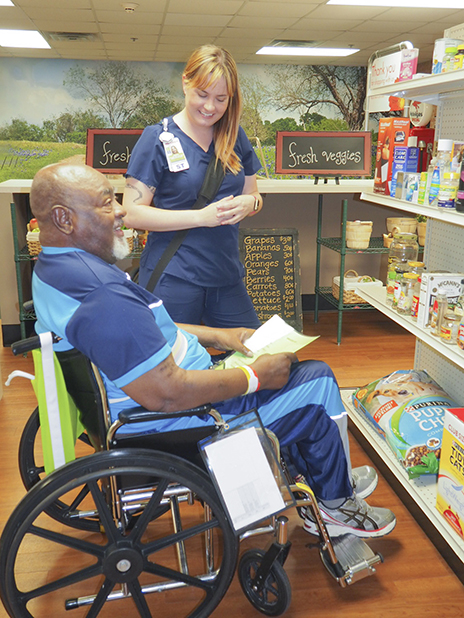
    The grocery shopping module helps patients use their OT skills when grasping various-sized items, and PT skills when navigating the aisle and reaching for the products at multiple levels. Items are weighted to actual scale to closely simulate the experience of being in a real store.
    The grocery shopping module helps patients use their OT skills when grasping various-sized items, and PT skills when navigating the aisle and reaching for the products at multiple levels. Items are weighted to actual scale to closely simulate the experience of being in a real store.

    Grocery Store

    The grocery store module is the most versatile and commonly used area of REAL Therapy. Opportunities for functional therapy tasks abound, and physical therapists, occupational therapists, and speech pathologists alike utilize this module daily because of the variety of tasks that can be performed. The grocery store includes standard grocery shelving with a height of 72 inches, stocked with realistically weighted items. There is an area with fruit and vegetables that must be hand selected and weighed, as well as a bakery. A freezer with cold storage contains commonly refrigerated items. There are shopping carts and baskets, a working checkout counter, a register, and an ATM.
    Some of the common physical tasks include dynamic balance activities such as pushing a shopping cart, carrying a shopping basket, reaching for objects on high shelves, reaching for objects on low shelves, reaching for objects at the back of shelves, opening the glass door and selecting items from cold storage, picking up heavy or bulky objects, retrieving items from a shopping cart and placing them on the checkout counter, bagging items, and carrying bags out of the store. Some of the common cognitive tasks include creating and executing a shopping list, locating difficult-to-find items, reading labels, calculating totals, money management, operating a credit card machine, staying within a budget, using memory strategies to recall short lists of items, and identifying obstacles and safety hazards.
    This module is used frequently because it represents an essential community location that up to 84% of geriatric adults visit regularly.2 Community-based locations specific to food and medical care are among the most commonly visited sites for older adults. Therefore, task-specific practice with a skilled therapist is likely to be a precursor for greater success and safety when patients are functioning in these locations post-discharge.

    Restaurant

    The restaurant is another module with a variety of applications depending on the patient’s individual needs or preferences. There are various settings within the restaurant, each with its own challenges to the patient. There is indoor booth-style seating for one table and outdoor seating/patio furniture for another, complete with a table umbrella.
    Physical tasks for this module include getting into and out of a booth with limited space, pulling out chairs to sit down and repositioning closer to the table once seated, raising or lowering the table umbrella, reaching across the table to receive food from a server, and identifying a space to place any necessary assistive devices (ie, walkers, wheelchairs, canes, etc) while at the table. Common cognitive or communication tasks for this module include reading a menu, making menu choices that consider dietary restrictions or special needs, communicating with wait staff, verbalizing an order, participating in conversation and socialization during a meal, estimating a bill, calculating a tip, completing and signing the check, and time management.
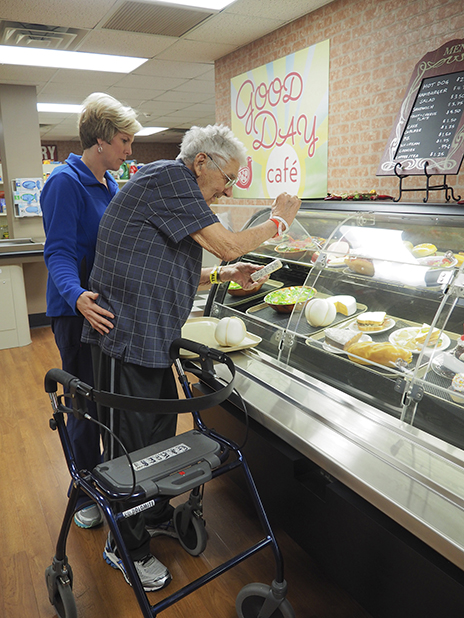
    With the café module, patients can use speech skills to call out certain items, while using PT skills to navigate the cafeteria line, as well as OT skills to pick up items. Cognitive skills such as math and memory may be practiced by asking patients to select items below a certain dollar amount.
    With the café module, patients can use speech skills to call out certain items, while using PT skills to navigate the cafeteria line, as well as OT skills to pick up items. Cognitive skills such as math and memory may be practiced by asking patients to select items below a certain dollar amount.

    Deli

    The deli module includes a glass-faced display case from which patients can view and select their food options. There is a metal tray line in front of the display case followed by a drink and condiment station. This module demands more from the patients from a mobility standpoint, and is less flexible in terms of the ability to modify the physical tasks that can be performed.
    Common physical tasks for the deli include standing and reaching into the display case to obtain food, placing items on the tray, pushing the tray down the line as it gains an increasing amount of weight, moving the tray to the drink station, obtaining the desired drink and condiments, carrying the tray, and getting into and out of seating. The deli has an elevated barstool-type seating area, and the restaurant module seating may also be used. Where the deli lacks some flexibility in physical modification of tasks, it is particularly useful in the patient’s ability to problem-solve in a challenging, less forgiving environment.
    Cognitively, the patient must determine if he or she has the ability to perform the necessary tasks, or if it would be safer to request help with the physical components of this setting. Elements of the deli environment, such as bilateral upper extremity use to open the case and obtain the food or propelling and carrying the tray, may require the assistance of another person, as they cannot be easily modified. Cognitive tasks in the deli include visual scanning, sequencing food choices (ie, salad, main dish, dessert, drink), making food choices that are compliant with dietary needs, estimating cost, money management, and identification of barriers or safety hazards.

    Laundromat

    The laundry module can represent a community-based laundromat or a home-based laundry room. This module includes a top-loading washer, a front-loading dryer, an ironing board, and an elevated folding table that also has a place for hanging clothes. Common physical tasks in the laundromat include picking up large piles of both wet and dry clothing, picking up heavy containers of detergent or fabric softener, loading and removing clothing from the washer, bending to load and remove clothing from the dryer, carrying a laundry basket, folding clothes, ironing clothes, and hanging clothes. Common cognitive tasks in this module include sorting and organizing clothing, calculating how much detergent or fabric softener to use, and time management. If this module is being used to simulate an actual laundromat, there is an available change machine to include the money management portion of the activity.
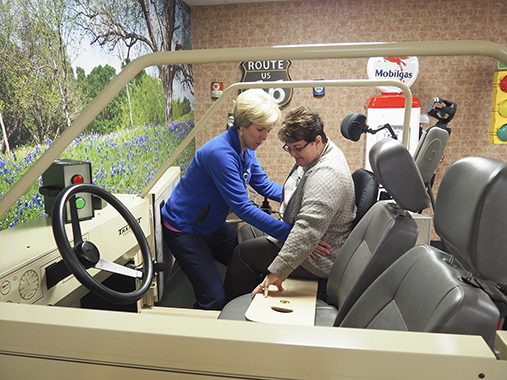
    One common goal among HealthSouth Arlington’s patients is the ability to drive or safely get from one place to another. The car transfer simulator is adjustable to the height of the patient’s personal vehicle, and therapists use it to help patients learn how to safely transfer in and out of the vehicle.
    One common goal among HealthSouth Arlington’s patients is the ability to drive or safely get from one place to another. The car transfer simulator is adjustable to the height of the patient’s personal vehicle, and therapists use it to help patients learn how to safely transfer in and out of the vehicle.

    Car Transfer / Gas Station

    In addition to the grocery store, the car transfer/gas station module is one of the more frequently utilized areas of REAL Therapy. Safe and effective car transfers are often one of the keys to a patient’s continued community involvement, as well as access to necessities and medical care following hospitalization. The inability to perform this task has been linked to decreased quality of life, increased burden of care, and the possibility of institutional living.3 In certain patient populations such as spinal cord injury, correct execution of car transfers is even more critical to prevent pain and injury that could compromise a patient’s overall independence.4 The REAL Therapy module features a car transfer simulator. The simulator is the front end of a car, with working doors, handles, locks, seat belts, bench or bucket seats, gas pedal, brake, steering wheel, and a behind-seat wheelchair loading area. The car simulator is height adjustable, so that therapists may match the simulator to the type of car, truck, or SUV utilized by each patient.
    When utilizing the car simulator, patients must perform a variety of physical tasks that include approaching the vehicle, opening the car door, getting into proper position for the transfer, turning and lowering themselves into the car seat, bringing their legs into the vehicle, repositioning in the seat if necessary, and buckling the seat belt. One of the more challenging aspects of car transfers is the management of assistive devices during the transfer. Patients who are learning to get in and out of a vehicle often need and depend upon assistive devices, but find that there is limited space between the car door and seat. They require instruction from a skilled therapist for proper placement and utilization of devices such as wheelchairs, power wheelchairs, walkers, hemi-walkers, canes, sliding boards, crutches, etc. Another aspect of managing those assistive devices is ensuring that the caregiver or family member is trained and able to lift and/or stow the devices in the car. The car simulator has behind-seat space specifically designed for practicing this skill. Caregiver training for proper body mechanics will help prevent both injury and broken equipment.
    The simulator also has the ability to assess the driver’s brake reaction speed with a reaction time tester. Drivers are given instructions to attend to an illuminated light box with red and green lights. As the green light changes to red, the timer starts and the patient depresses the brake. Reaction speeds are generated and may be compared to age and gender norms as a means of basic biofeedback to the patient. Information from various studies has revealed that in some patient populations, reaction time is a useful metric in determining when it is appropriate to return to driving.5 While this decision is ultimately made jointly by the physician and patient, the data generated by the reaction time tester can be valuable information and a means to build insight and confidence for patients and families.
    Other elements included in the car transfer/gas station module are an ADA-compliant flooring surface that simulates asphalt, a 6-inch curb typical of those found in parking lots, and a weighted gas pump.
    While the benefit of REAL Therapy for patients is clear, the group of people who may be the most invested in REAL Therapy are the rehabilitation clinicians. The amount of time they spend trying to modify the environment to suit the needs of each patient can become direct patient care time. There are also endless possibilities of treatment ideas, so there is less time spent planning and organizing, and more time spent doing. REAL Therapy also removes the necessity of explaining to the patient how the therapy tasks they are doing are applicable to their real-life activities, as the connection is very clear. Rather than moving weights on a shelf to simulate groceries, the patient walks into a grocery store. Rather than move from one chair to another, the patient gets into a car. This immediately makes sense to the patient, increasing their buy-in and willingness to work with therapy.
    REAL Therapy is the manifestation of a treatment philosophy that focuses on returning a patient to function. With the move to shorter lengths of stay across all healthcare settings, it is important that physical rehabilitation therapists immediately focus on the patient’s desired activities and begin task-specific training as early as possible. In addition, the evidence base supports functional, task-specific training to achieve better patient outcomes and perceived independence. When used in conjunction with a protocol for therapeutic patient outings into the community, there is an even larger impact on patient confidence and ability. As the rehabilitation industry and we as therapy professionals move forward, REAL Therapy and functional, task-specific treatment may be the key to efficient service delivery and excellent patient outcomes. RM
    Tracie Hunnicutt, MS, CCC-SLP, Therapy Manager, received her training as a speech-language pathologist at Texas Tech University Health Sciences Center. The early part of her career was focused on the care of traumatic brain injury (TBI) patients with an emphasis on community re-entry. From this setting, she developed a strong foundation in functional therapy as a tool to return patients back to school, work, community, and home activities. Hunnicutt is currently a medical speech language pathologist in inpatient rehabilitation at HealthSouth Rehabilitation Hospital of Arlington.
    Julie Clement, OTR, received her training in occupational therapy at the University of Texas Medical Branch. She specializes in helping patients increase independence with Activities of Daily Living (ADLs), functional mobility, and Instrumental Activities of Daily Living (IADLs). Clement is a Neuro-IFRAH certified therapist, and has completed more than 200 hours of continuing education related to neurological evaluation and treatment. She has been the OT Team Lead at HealthSouth Rehabilitation Hospital of Arlington for the past 12 years.
    Susan Adix, PT, received her training as a physical therapist at the University at Buffalo. She began her career in outpatient physical therapy at HealthSouth Arlington, working primarily with orthopedic and neurologic patient populations. In 2006, Adix transitioned into inpatient rehabilitation, where she focused her professional development on the care of neurologic patients. Adix has assisted in the development of the REAL Therapy Gym and is currently the PT Team Lead for a staff of more than 30 physical therapists and rehabilitation techs. For more information, contact RehabEditor@medqor.com.

    Thursday, August 24, 2017

    Saturday, December 24, 2016

    Does Task-Specific Training Improve Upper Limb Performance in Daily Life Poststroke?

    Wrong question you fucking idiots. All because we have NO stroke strategy. 'What is the best protocol for bringing back complete arm and hand recovery?'  Nothing less.  'Improve' means you're using the tyranny of low expectations to justify YOUR FUCKING FAILURE IN NOT GETTING SURVIVORS FULLY RECOVERED!

    Does Task-Specific Training Improve Upper Limb Performance in Daily Life Poststroke? 


    First Published December 13, 2016 research-article


     Background. A common assumption is that changes in upper limb (UL) capacity, or what an individual is capable of doing, translates to improved UL performance in daily life, or what an individual actually does. This assumption should be explicitly tested for individuals with UL paresis poststroke.
    Objective. To examine changes in UL performance after an intensive, individualized, progressive, task-specific UL intervention for individuals at least 6 months poststroke.  
    Methods. Secondary analysis on 78 individuals with UL paresis who participated in a phase II, single-blind, randomized parallel dose-response trial. Participants were enrolled in a task-specific intervention for 8 weeks. Participants were randomized into 1 of 4 treatment groups with each group completing different amounts of UL movement practice. UL performance was assessed with bilateral, wrist-worn accelerometers once a week for 24 hours throughout the duration of the study. The 6 accelerometer variables were tested for change and the influence of potential modifiers using hierarchical linear modeling.  
    Results. No changes in UL performance were found on any of the 6 accelerometer variables used to quantify UL performance. Neither changes in UL capacity nor the overall amount of movement practice influenced changes in UL performance. Stroke chronicity, baseline UL capacity, concordance, and ADL status significantly increased the baseline starting points but did not influence the rate of change (slopes) for participants.  
    Conclusions. Improved motor capacity resulting from an intensive outpatient UL intervention does not appear to translate to increased UL performance outside the clinic.

    Tuesday, February 9, 2016

    Task-oriented rehab program does not result in greater recovery from stroke

    This goes totally against all the standard rehab protocols we have heard about for years. If true, WHO is going to broadcast this worldwide? Your insurance will use this to deny you therapy.
    http://medicalxpress.com/news/2016-02-task-oriented-rehab-result-greater-recovery.html
    The use of a structured, task-oriented rehabilitation program, compared with usual rehabilitation, did not result in better motor function or recovery after 12 months for patients with moderate upper extremity impairment following a stroke, according to a study in the February 9 issue of JAMA.
    Clinicians providing care for with stroke lack evidence for determining the best type and amount of motor during outpatient rehabilitation. Clinical trials suggest that higher doses of task-oriented training are superior to current clinical practice for patients with stroke with upper extremity motor deficits.
    Carolee J. Winstein, Ph.D., of the University of Southern California, Los Angeles, and colleagues randomly assigned 361 participants with moderate motor impairment following a stroke to structured, task-oriented upper extremity training (n = 119); dose-equivalent occupational therapy (DEUCC; n = 120); or monitoring-only occupational therapy (UCC; n = 122). The DEUCC group was prescribed 30 one-hour sessions over 10 weeks; the UCC group was only monitored, without specification of dose. Participants were recruited from 7 U.S. hospitals, treated in the outpatient setting, and tested at 12 months on various measures of and recovery.
    Among the 361 patients (average age, 61 years), 304 (84 percent) completed the 12-month primary outcome assessment. The researchers found there were no group differences in upper extremity motor performance; specifically, the structured, task-oriented motor therapy was not superior to usual outpatient for the same number of hours, showing no additional benefit for an evidence-based, intensive, restorative therapy program. In addition, there was no advantage to providing more than twice the average dose (average, 27 hours) of therapy compared with the average 11 hours received by the observation-only group, showing that substantially more therapy time was not associated with additional motor restoration.
    "These findings do not support superiority of this task-oriented rehabilitation program for patients with motor stroke and moderate upper extremity impairment," the authors write.
    "With payer pressures on reducing inpatient rehabilitation, outpatient rehabilitation may be of greater importance for patients with stroke. The findings from this study provide important new guidance to clinicians who must choose the best treatment for patients with ," the researchers write. "The results suggest that usual and customary community-based therapy, provided during the typical outpatient rehabilitation time window by licensed therapists, improves upper extremity motor function and that more than doubling the dose of therapy does not lead to meaningful differences in motor outcomes."
    "The data pertaining to dose of therapy may be important to policy makers and may be useful to estimate the cost and expected effect of aftercare in the outpatient setting."
    More information: JAMA, DOI: 10.1001/jama.2016.0276