Changing stroke rehab and research worldwide now.Time is Brain! trillions and trillions of neurons that DIE each day because there are NO effective hyperacute therapies besides tPA(only 12% effective). I have 523 posts on hyperacute therapy, enough for researchers to spend decades proving them out. These are my personal ideas and blog on stroke rehabilitation and stroke research. Do not attempt any of these without checking with your medical provider. Unless you join me in agitating, when you need these therapies they won't be there.

What this blog is for:

My blog is not to help survivors recover, it is to have the 10 million yearly stroke survivors light fires underneath their doctors, stroke hospitals and stroke researchers to get stroke solved. 100% recovery. The stroke medical world is completely failing at that goal, they don't even have it as a goal. Shortly after getting out of the hospital and getting NO information on the process or protocols of stroke rehabilitation and recovery I started searching on the internet and found that no other survivor received useful information. This is an attempt to cover all stroke rehabilitation information that should be readily available to survivors so they can talk with informed knowledge to their medical staff. It lays out what needs to be done to get stroke survivors closer to 100% recovery. It's quite disgusting that this information is not available from every stroke association and doctors group.

Showing posts with label THC. Show all posts

Wednesday, March 11, 2026

Marijuana compound may help prevent dementia when paired with common drug

 Will your competent? doctor put 2 and 2 together and see if this could prevent your increased risk of dementia post stroke? Or is your doctor so incompetent that knowledge of this doesn't even exist?

Didn't this from November 2013 already lead the way?

Your risk of dementia, has your doctor told you of this?  Your doctor is responsible for preventing this! Is s/he willing to try this on you?

1. A documented 33% dementia chance post-stroke from an Australian study?   May 2012.

2. Then this study came out and seems to have a range from 17-66%. December 2013.`    

3. A 20% chance in this research.   July 2013.

4. Dementia Risk Doubled in Patients Following Stroke September 2018 

The latest here:

Marijuana compound may help prevent dementia when paired with common drug

THC shown to keep Alzheimer's at bay when combined with pain medication

As marijuana's potential health benefits are under debate, new research has found that THC could have a powerful and positive effect on the brain.

Researchers at the University of Texas (UT) at San Antonio, Long School of Medicine, recently discovered that THC (tetrahydrocannabinol, the main psychoactive compound in marijuana) could prevent the development of Alzheimer’s disease – but only when paired with an anti-inflammatory drug called celecoxib.

Celecoxib is a selective COX-2 inhibitor that is commonly prescribed for arthritis and pain.

ALZHEIMER’S DECLINE COULD SLOW DRAMATICALLY WITH ONE SIMPLE DAILY HABIT, STUDY FINDS

While THC has previously been shown to have anti-inflammatory and neuroprotective properties, it’s also been linked to negative effects on the brain, particularly in learning and memory, according to a UT Health press release.

Combining THC with an anti-inflammatory drug, however, could provide the same benefits with fewer negative side effects.
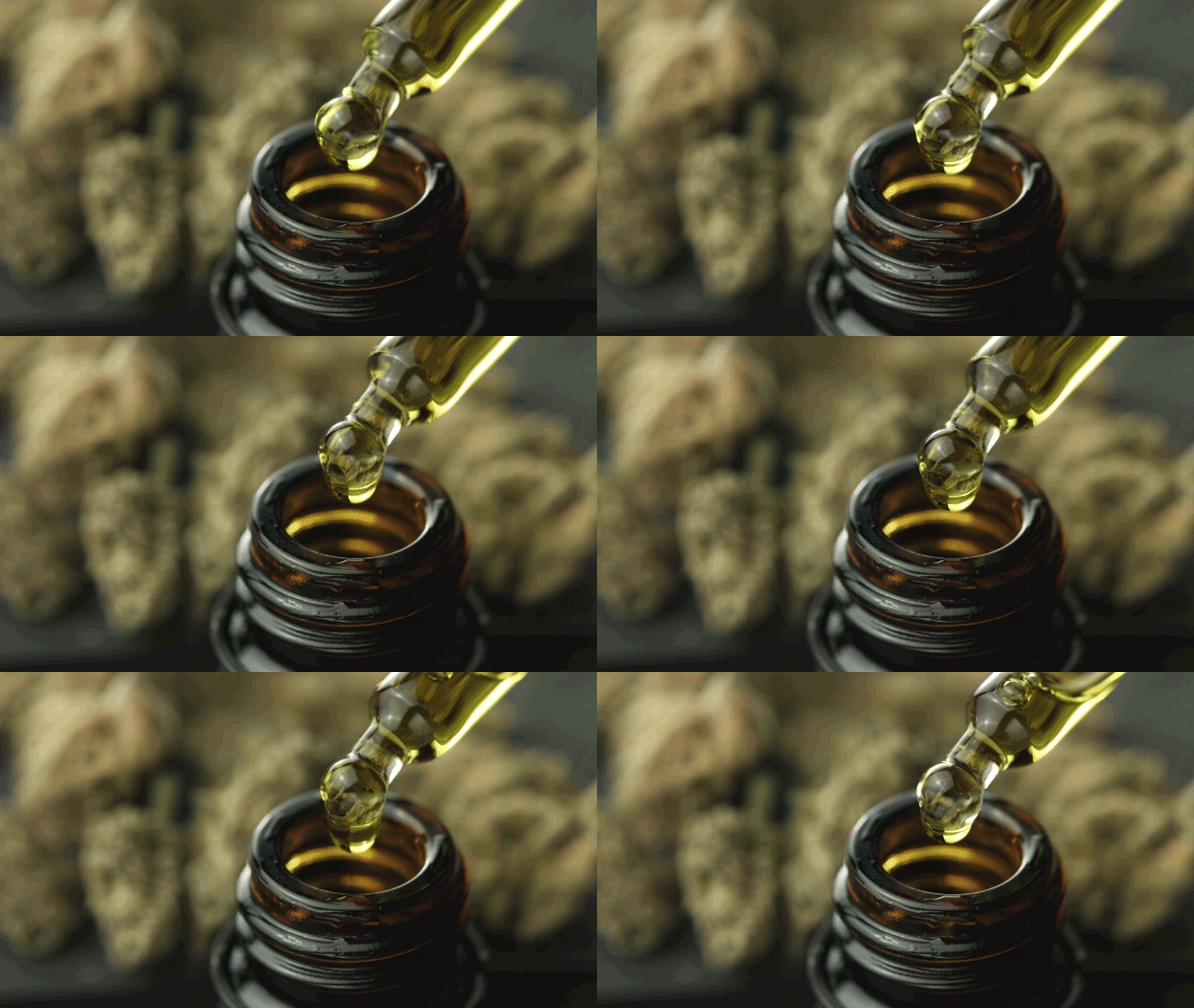
THC cannabis drops

THC could be powerful against cognitive decline when combined with an anti-inflammatory, a new study suggests. (iStock)

The study, which was published in the journal Aging and Disease, paired low-dose THC extract with celecoxib, which was administered to mice daily for 30 days.

The mice received the treatments before the development of memory symptoms to measure the impact on preventing or delaying Alzheimer’s.

The results showed improved cognition, learning and memory, as well as decreased markers of neuroinflammation and reduced Alzheimer’s-related brain pathology, the release stated.

Although THC alone had the same results, it also increased inflammatory signals, while the combination dosage did not.

"What really mattered was behavior. If cognition is not improved, then the treatment doesn’t matter. And that’s where the combination clearly worked better than THC alone," noted lead study author Chu Chen, Ph.D., professor in the Department of Cellular and Integrative Physiology.

Years of research led Chen to connect the dots on how THC can manipulate the brain and why it’s difficult to use safely for neurological conditions, according to UT Health.

"When THC is given, it unexpectedly increases COX-2 in the brain. That increase is closely associated with learning and memory impairment," Chen said.

Both THC and celecoxib are FDA-approved for use in humans, which could provide a "real advantage" in moving along to clinical trials, according to UT Health.

"What really mattered was behavior. If cognition is not improved, then the treatment doesn’t matter."

Future studies will investigate whether the drug combination can slow disease progression or reverse deficits after symptoms have appeared.


Wednesday, May 28, 2025

Smoking weed and consuming THC-laced edibles linked to early heart disease, study finds

What an alarmist headline! I'm doing it after my next stroke to recover. Unless you have a stick in the mud doctor who still believes in 'Reefer Madness'.

My 13 reasons for marijuana use post-stroke.  

Don't follow me, I'm not medically trained, and I don't have a Dr. in front of my name. 

The latest here:

Smoking weed and consuming THC-laced edibles linked to early heart disease, study finds

             Healthy people who regularly smoked marijuana or consumed THC-laced edibles showed signs of early cardiovascular disease similar to tobacco smokers, a new small study found.

“To my knowledge, it’s the first study looking at THC’s impact on vascular function in humans,” said senior study author Matthew Springer, professor of medicine at the University of California, San Francisco.

“We’re looking at a window in the future, showing the early changes that may explain why smoking marijuana has been linked to later heart disease,” Springer said. “It appears the act of smoking and the THC itself both contribute to those changes in different ways.”

Tetrahydrocannabinol, or THC, is the component of marijuana that provides a high. Prior research on mice found damage to blood vessels that supply oxygen to vital organs after exposure to marijuana smoke, Springer said. Whether marijuana smoke would impact the human vascular system, however, was unknown.

“We found that vascular function was reduced by 42% in marijuana smokers and by 56% in THC-edible users compared to nonusers,” lead study author Dr. Leila Mohammadi, an assistant researcher in cardiology at the University of California, San Francisco, said in an email.

The research only shows an association, Springer said. “We can only state that the cannabis users have poor vascular function, not that cannabis use causes poor vascular function,” he said via email.

The findings on THC-laced edibles was surprising, said Dr. Andrew Freeman, director of cardiovascular prevention and wellness at National Jewish Health in Denver.

“Could it be that other forms of marijuana — teas, tinctures, edibles — are perhaps not as benign as we once thought?” said Freeman, who was not involved in the study. “We need larger studies to make a better conclusion about this finding.”

Risk of damaged blood vessels

A single layer of endothelial cells lines all of the body’s blood vessels. When functioning properly, these specialized cells release chemicals such as nitric oxide that control the relaxing and contracting of the canal, thus regulating blood flow. Healthy endothelium cells also play a role in local cell growth and help prevent blood clotting.     

Thursday, July 16, 2020

Does cannabis really affect memory? Here's what research currently says

At least they acknowledge that it doesn't cause psychosis as compared to this bad research:

Marijuana Chokes Alzheimer's-Related Brain Regions - Really? April 2020 

Now we just need our survivor led stroke associations to conduct the research necessary on amounts of CBD and THC needed for stroke recovery. 

My 13 reasons for marijuana use post-stroke.  

Don't follow me, I'm not medically trained and I don't have a Dr. in front of my name.

The latest here:

Does cannabis really affect memory? Here's what research currently says

Ian Hamilton, Associate Professor, Addiction and Mental Health, University of York and Elizabeth Hughes, Professor of Mental Health, University of Leeds


Does cannabis really affect memory? Here's what research currently says

Cannabis use has long been associated with memory loss. But until now, this notion was largely anecdotal. As researchers begin to look into cannabis and the effect that it has on human health, they’re beginning to better understand the effect it has on the human brain – and whether cannabis really does impair memory.
Memory is divided into both short-term and long-term memory. Short-term memory is where immediate events are temporarily stored, whereas long-term memory is where information is stored indefinitely.
Current evidence shows that cannabis intoxication may temporarily alter or distort short-term memory processing. This seems to be caused by compounds in cannabis that disrupt neural signalling when binding to receptors responsible for memory in the brain. Interrupted short-term memory can indeed impact on learning, and may also cause loss of interest or problems with concentration.

However, early research also shows that cannabis could have a positive impact on neurodegenerative diseases that affect memory, such as Alzheimer’s, Huntington Chorea, and epilepsy. In mainly animal studies, when researchers used components found in cannabis, they found it could slow or even prevent the advance of these diseases – essentially through the creation of neurons.
These apparently paradoxical effects from the same drug are best explained by two chemicals found in cannabis. Namely delta 9-tetrahydrocannabinol (THC) and cannabinoids (CBD). We all have naturally occurring cannabinoid receptors in our brains. THC is able to effectively bind to these receptors, creating euphoric effects. However CBD can interfere with this binding process, which dampens the feeling of euphoria.
Different ratios of these two chemicals are found in various types of cannabis. Consuming a cannabis product with THC but no CBD increases the risk of developing mental health problems, such as psychosis. However, CBD could actually be used to treat psychosis.
Cannabis with higher levels of THC and lower, or negligible, amounts of CBD appear to have a detrimental effect on short-term memory, particularly in adolescents. The main problem is their ability to retain and recall information. Fortunately this is not permanent.
But these recent discoveries about the role of THC and CBD in cannabis show that we can no longer simply say cannabis itself causes psychosis, or is detrimental to memory. Rather, it might be the type of cannabis, and the compounds it contains, that may have specific risks or benefits.
And while there’s little doubt that some people who use cannabis do experience impaired memory, establishing that cannabis is the cause is tricky. One reason for this is because it’s difficult to rule out the impact of other drugs that people may have used – and whether these drugs contributed to this memory impairment. For example, alcohol misuse can also cause brain damage and memory loss. Another obvious problem when researching this is when asking people with impaired memory to recall their past drug use and any associated problems. Their ability to recall these details could be compromised.
Recent research even suggests that any memory impairment associated with using cannabis can be reversed when people stop using cannabis. This effect was seen mainly in those who used cannabis at least once a week.
Just as higher doses of alcohol can potentially cause brain damage, higher doses or more frequent use of cannabis may also cause long-term memory problems – the ability to learn effectively and the ability to concentrate on a task for example. Some people will use both alcohol and cannabis, often at the same time, which may both worsen the potential impact on memory.
New research also suggests that it’s cannabis, rather than alcohol, that’s responsible for damage to developing teen brains. Though alcohol can destroy or severely damage brain neurons and their signalling functions, this study showed cannabis actually changes the neural brain tissue responsible for memory. But this change can be reversed within a matter of weeks if a person abstains. Though surveys suggest fewer young people are using both cannabis and alcohol, those teenagers that do use cannabis use it twice as frequently.

Frequent cannabis by teens may impact their memory and ability to concentrate. mooremedia/ Shutterstock
Research shows that young, frequent users of cannabis have thinner temporal and frontal cortices, which are both areas that help process memory functioning. Memory is a critical aid to learning and study – but cannabis doesn’t just effect memory, it can also reduce motivation to learn. This dual influence reduces a young person’s engagement in education and their ability to perform.
However, using cannabis later in life (age 50 and over) appears to have only a moderate impact on cognitive functioning, including on memory. These modest declines are not fully understood, and there is a lack of high quality research in this area. That will need to change as it’s not just young people that use cannabis. As more countries legalise cannabis, older people might also want to try it.
While there is likely to be no great harm to a person’s memory if they experiment with cannabis, current research seems to agree that the more frequent the use, the greater the risk. Though there is still a lot that researchers don’t yet know about cannabis use on memory, current evidence suggests that any memory impairment can be reversed if a person abstains from use.

Tuesday, March 31, 2020

The Broad Concept of “Spasticity-Plus Syndrome” in Multiple Sclerosis: A Possible New Concept in the Management of Multiple Sclerosis Symptoms

I would think your doctor would immediately prescribe Nabiximols for your spasticity. Since 30% of survivors that have it and there is absolutely nothing else for treating spasticity(botox does not cure spasticity).

This has been out there for years;
Nabiximols is an oromucosal spray formulated in a 1:1 ratio of tetrahydrocannabinol and cannabidiol and approved in several countries for treatment-resistant spasticity in patients with MS.(How fucking incompetent is your doctor in not using it?)

The Broad Concept of “Spasticity-Plus Syndrome” in Multiple Sclerosis: A Possible New Concept in the Management of Multiple Sclerosis Symptoms

Óscar Fernández1*, Lucienne Costa-Frossard2, Marisa Martínez-Ginés3, Paloma Montero4, José Maria Prieto5 and Lluis Ramió6
  • 1Biomedical Research Institute of Malaga, University of Málaga, Málaga, Spain
  • 2Department of Neurology, Ramón y Cajal University Hospital, Madrid, Spain
  • 3Department of Neurology, Gregorio Marañón Hospital, Madrid, Spain
  • 4Servicio de Neurología, Hospital Clínico San Carlos, Madrid, Spain
  • 5Servicio de Neurologia, Complejo Hospitalario Universitario de Santiago, Santiago de Compostela, Spain
  • 6Servicio de Neurologia, Hospital Universitari de Girona Doctor Josep Trueta, Girona, Spain
Multiple sclerosis (MS) pathology progressively affects multiple central nervous system (CNS) areas. Due to this fact, MS produces a wide array of symptoms. Symptomatic therapy of one MS symptom can cause or worsen other unwanted symptoms (anticholinergics used for bladder dysfunction produce impairment of cognition, many MS drugs produce erectile dysfunction, etc.). Appropriate symptomatic therapy is an unmet need. Several important functions/symptoms (muscle tone, sleep, bladder, pain) are mediated, in great part, in the brainstem. Cannabinoid receptors are distributed throughout the CNS irregularly: There is an accumulation of CB1 and CB2 receptors in the brainstem. Nabiximols (a combination of THC and CBD oromucosal spray) interact with both CB1 and CB2 receptors. In several clinical trials with Nabiximols for MS spasticity, the investigators report improvement not only in spasticity itself, but also in several functions/symptoms mentioned before (spasms, cramps, pain, gait, sleep, bladder function, fatigue, and possibly tremor). We can conceptualize and, therefore, hypothesize, through this indirect information, that it could be considered the existence of a broad “Spasticity-Plus Syndrome” that involves, a cluster of symptoms apart from spasticity itself, the rest of the mentioned functions/symptoms, probably because they are interlinked after the increase of muscle tone and mediated, at least in part, in the same or close areas of the brainstem. If this holds true, there exists the possibility to treat several spasticity-related symptoms induced by MS pathology with a single therapy, which would permit to avoid the unnecessary adverse effects produced by polytherapy. This would result in an important advance in the symptomatic management of MS.
In the last two decades, the availability of new disease-modifying therapies has radically changed the management of multiple sclerosis (MS) and relapsing–remitting MS in particular (1), resulting in a longer life expectancy for patients with the disease (2). Nevertheless, MS currently remains incurable and, in most patients, disability will eventually progress and they must live with the very many symptoms associated with the disease. These symptoms can have a major impact on patient's quality of life (3) and their management is considered important, although traditionally, this area has received far less attention than disease-modifying therapies (4).
A wide range of treatments are available to manage each of the MS symptoms (57). Given that different agents are used for different symptoms and a patient may have several symptoms present at the same time, many MS patients are multi-medicated, particularly as most patients will also be receiving disease-modifying therapies. This article will assess the current fragmented approaches to pharmacological management of spasticity muscle tone increase-related symptoms and their shortcomings. Given that the treatment of MS-associated muscle spasticity has been associated in a good number of clinical trials and also observational studies with the improvement of several other functions/symptoms present in MS (8), we will conceptualize, and subsequently hypothesize, about the clinical interest of introducing the more broad concept of “Spasticity-Plus Syndrome” to provide a unified framework for managing all these seemingly related functions/symptoms. By applying such a concept, it would be possible to simplify the management of symptoms associated with MS and reduce importantly the interactions and adverse effects associated with poly-medication.

Wednesday, August 30, 2017

Consuming Cannabis Could Slash Your Chances Of Blood Clots, Stroke: Study

Now we just need to know what delivery method and how much. Increased blood flow sounds like an excellent intervention immediately post-stroke. DEMAND your doctor figure out how to get some, how much and how delivered. I'm not medically trained so I obviously don't know how to interpret these findings.  But I will do marijuana after my next stroke.

My 13 reasons for marijuana use post-stroke. 

Consuming Cannabis Could Slash Your Chances Of Blood Clots, Stroke: Study

Consuming cannabis can significantly cut your chances of having a stroke, according to a new study published in the journal, ‘Neuropsychopharmacology.’
Researchers from the University of Texas at Dallas found that cannabis improves blood and oxygen flow, consequently slashing the risk of blood clots and stroke.
Head researcher Dr. Francesca Filbey said the "primary psychoactive ingredient present in cannabis —tetrahydrocannabinol (THC) — relaxes arterial walls resulting in lower blood pressure and increased blood flow to tissues.”
“Past marijuana research has shown changes in cognitive functions such as memory and executive functioning,” added Filbey in a press statement.
“Our study seeks to understand the possible neurophysiological mechanisms that may drive these cognitive changes.”
The research team analyzed 175 volunteers – 74 drug users and 101 non-users – for 60 days, although all participants refrained from taking drugs 72 hours prior to the examination. All the drug users selected for the study had consumed cannabis at least 5,000 times in their lifetime.
Throughout the study, researchers administered MRIs to the volunteers, as well as analyzed their THC metabolite levels using urinalysis. It was revealed that those who regularly consumed cannabis had greater global oxygen extraction fraction (OEF) and cerebral metabolic rate of oxygen (CMRO2) than the non-consumers.
Researchers also found that the cerebral blood flow (CBF) in the putamen – located at the base of the forebrain and associated with learning – was greater in cannabis users than non-users.
“Currently, cannabis is the most widely used illicit drug [in the U.S.],” said Filbey. “As it becomes more widely legalized, understanding neurophysiological alterations and its effects on the brain's health and performance are becoming increasingly relevant.”

Monday, August 14, 2017

Study Connects Chronic Cannabis Use to Oxygen Changes in Brain

Higher cerebral blood flow and better oxygen uptake sounds like it would be good for our damaged brains. But we will never know since no research will ever be done on this.

My 13 reasons for marijuana use post-stroke.  

But don't listen to me, I have absolutely no medical training,


http://neurosciencenews.com/oxygen-cannabis-brain-7296/
Summary: According to UT Dallas researchers, chronic cannabis users extract more oxygen from brain blood flow and have higher cerebral blood flow than nonusers.
Source: UT Dallas.
New research from the Center for BrainHealth at The University of Texas at Dallas reveals that levels of THC, the psychoactive ingredient in cannabis that leaves a euphoric feeling, directly correlate to changes in how the brain utilizes oxygen.
Dr. Francesca Filbey, director of Cognitive Neuroscience Research in Addictive Disorders at the Center for BrainHealth, led the team that found chronic cannabis users have higher cerebral blood flow and extract more oxygen from brain blood flow than nonusers. The rate at which oxygen is metabolized in the brain was found to be higher in users as well.
While THC is known to relax blood vessels and alter blood flow in the brain, the study focused on how prolonged THC use might affect the brain by analyzing the differences in regional brain blood oxygenation and metabolism in chronic cannabis users.
Due to the prospective nature of the study, published in the journal Neuropsychopharmacology, researchers cannot say whether cannabis use directly causes the observed changes, or whether other underlying conditions also may be at play.
While the reason for the brain changes related to chronic marijuana use is unclear, Filbey said that these changes may reflect underlying differences in brain tissue metabolic rate.
“Past marijuana research has shown changes in cognitive functions such as memory and executive functioning. Our study seeks to understand the possible neurophysiological mechanisms that may drive these cognitive changes,” said Filbey, who is also Bert Moore Chair in BrainHealth and head of the cognitive neuroscience program in the School of Behavioral and Brain Sciences.
The study consisted of 74 cannabis users and 101 nonusers matched for age and IQ. All users reported at least 5,000 usages over their lifetime and daily use for 60 days leading up to the study. Participants were required to refrain from cannabis for 72 hours before the study to eliminate acute effects of the drug. Participants underwent magnetic resonance imaging, and THC metabolite levels were measured using urinalysis.
Image shows a person smoking.
Increased blood flow in the putamen may either reflect the capacity of THC to dilate blood vessels or the development of additional circulatory pathways. NeuroscienceNews.com image is in the public domain.
Filbey and her team found that cannabis users showed higher global oxygen extraction fraction and cerebral metabolic rate of oxygen compared to nonusers. Also, blood flow in the putamen — an area of the brain associated with reward learning and habit formation — was found to be greater in users than nonusers.
Increased blood flow in the putamen may either reflect the capacity of THC to dilate blood vessels or the development of additional circulatory pathways.
“Currently, cannabis is the most widely used illicit drug. As it becomes more widely legalized, understanding neurophysiological alterations and its effects on the brain’s health and performance are becoming increasingly relevant,” Filbey said.
About this neuroscience research article
Source: Emily Bywaters – UT Dallas
Image Source: NeuroscienceNews.com image is in the public domain.
Original Research: The study will appear in Neuropsychopharmacology.
Cite This NeuroscienceNews.com Article
UT Dallas “Study Connects Chronic Cannabis Use to Oxygen Changes in Brain.” NeuroscienceNews. NeuroscienceNews, 14 August 2017.
.

Friday, May 12, 2017

German Study Finds Marijuana May Reverse Brain Aging, Memory Loss

 Don't do this on your own.
http://247wallst.com/consumer-products/2017/05/11/german-study-finds-marijuana-may-reverse-brain-aging-memory-loss/.

Jokes abound related to how people tend to forget more as they age: “Why did I walk into this room?” “I know I’ve read this book before, but I forgot what happens, so it’s like reading a new book.” If the results of a recently reported study on mice from the University of Bonn are borne out, cannabis may help cut the jokes, to say nothing of improving the quality of life of millions of older people.
The researchers found that altering mice genes to stop the mammalian endocannabinoid system from working properly causes the mice to age faster and display a greater decline in cognitive function. A properly functioning mammalian endocannabinoid system balances a human body’s reaction to stress. The psychoactive component of marijuana, THC, mimics the molecules of that system.
The observed effect is exactly the opposite of the observed effect of marijuana on young mice (and people). Teenagers who use marijuana perform less well on memory and attention tasks while under the influence of THC, but low doses of the substance may have the opposite effect in older people, according to a report in New Scientist.

Here’s a description of the research:
[T]he team gave young (2-month-old), middle-aged (12-month-old) and elderly (18-month-old) mice a steady dose of THC. The amount they received was too small to give them psychoactive effects.
After a month, the team tested the mice’s ability to perform cognitive tasks, such as finding their way around mazes, or recognising other individuals.
In the control groups, which received no THC, the young mice performed far better than the middle-aged and elderly mice. But the middle-aged and elderly mice who had been given THC performed as well as the young mice in the control group.
Further studies showed that THC boosted the number of connections between brain cells in the hippocampus, which is involved in memory formation.
The German researchers are planning to conduct human trials using purified THC in precisely controlled doses to find out if older people experience the same beneficial effects as older mice, and if they do, at what age.
But even if it does work the same way in people, lead researcher Andreas Zimmer told New Scientist that it is unlikely that doctors will prescribe weed for their patients: “Smoking marijuana is very different.” This is why Marijuana needs to be fully legalized, so you, your parents and your grandparents can get these benefits.

Monday, May 8, 2017

Marijuana's mind-altering compound may improve memory in old mice

Not to be tried on your own. 
http://www.foxnews.com/health/2017/05/08/marijuanas-mind-altering-compound-may-improve-memory.html
Marijuana's main psychoactive compound, THC , may improve memory, according to a new study in mice.
However, more research is needed to see whether these findings would apply to people, the researchers said.
The researchers found that old mice in the study experienced "a dramatic improvement in cognitive functions" after the animals were given small daily doses of THC for about a month, said study co-author Andreas Zimmer, a professor of molecular psychiatry at the University of Bonn in Germany.
Previous research in people — in teens and young adults — as well as in young animals has suggested that THC may actually impair cognition , but it was not clear how the compound might affect the aging brain in older individuals.


In the new study, the researchers looked at 17 young mice, which were 2 months old; 24 mature mice, which were 1 year old; and 29 mice that were 18 months old, considered old for mice. The researchers implanted small pumps into the bodies of all mice in the study. In about half of the mice in each age group, the pumps contained a small amount of THC that was released into the mice's bodies daily for about a month. In the other half of the mice, the pumps contained a control substance, without THC.
The researchers then conducted a few behavioral experiments to test the mice's cognitive skills, including their memory and ability to learn new information. For example, in one of the tasks, the scientists placed the mice in a pool of water with a hidden platform that allowed the rodents to escape the water once they could find it. In the control group, the mature mice and the old mice took longer to learn to climb out than the young mice.
However, both mature mice and old mice that had been treated with THC learned the task faster than the control mice in corresponding age groups.
In some of the experiments, THC seemed to improve the memory in the older mice to such an extent that some aspects of their memory were as good as those of young mice.
However, in the younger mice given THC, the compound seemed to worsen their performance at cognitive tasks . This finding is in line with previous research that has shown the detrimental effects that THC may have on cognition in young people and animals, according to the study, published today (May 8) in the journal Nature Medicine.
To try to figure out the potential mechanisms behind the findings, the researchers also examined how the THC interacted with gene expression in a brain region called the hippocampus in the mice. It turned out that administering the compound to the older mice led to a change in those patterns, bringing them back to a state similar to the patterns seen in the young control mice. In contrast, administering THC to the young mice led to a gene expression pattern that resembled that of the older control mice.
The researchers don't yet know if THC could help to improve memory in aging humans , but they are planning tests, Zimmer said.
Originally published on Live Science .

Monday, September 12, 2016

Adverse effects of cannabis scientifically verified

The title is alarmist, didn't see the alarm in the writeup itself. I'm sure only negative results are going to posted for a while since marijuana could replace a lot of drugs and ruin big pharma profits. So rather than focus on the 'have potential' statement you get the alarmist, 'causes disruption' 'may be harmful'
http://medicalxpress.com/news/2016-09-adverse-effects-cannabis-scientifically.html
Researchers have clarified important mechanisms involved in the formation of neural circuits in the brain. This group also discovered that delta-9-tetrahydrocannabinol (THC), a psychoactive substance also found in cannabis, causes disruption of neural circuits within the cortex. These results explain why cannabis may be harmful and have potential to find application in the functional recovery of brain injury and in cases of dementia.
Neural activity is known to play an important role in the formation of neural circuits. However, we still do not know much about what kind of neural activities are involved in this formation process. This process is especially complex in projections from the thalamus to the cortex, of which so far we only knew that as these projections develop, unnecessary projections are eliminated, thereby leaving only correct projections. A group of researchers led by Fumitaka Kimura, associate professor at the Department of Molecular Neuroscience, Graduate School of Medicine, Osaka University, has now clarified the involvement of several mechanisms in the formation of this . The researchers also put forth scientific evidence that cannabis intake causes the unnecessary trimming of , leading to a breakdown of neural circuits (Figure 1).
In their study, this group of researchers discovered that in a different section of the cortex, the rule (Spike Timing-Dependent Plasticity: STDP) by which synaptic strength (a functional measure of connections) between neurons was determined suddenly changed at a certain point in development. Building on this finding, the group examined whether a similar STDP change occurred in the projection from the thalamus and the cortex as well. They found that initially, the synapses were strengthened due to the synchronized activities of the pre- (thalamic) and post- (cortical) synaptic neurons. But after the projections had spread widely, the synchronized activities weakened all but some synapses, thereby eliminating unnecessary projections to enable more systematic ones. As the synapses are weakened, endogenous cannabinoid is released from via these synchronized activities, leading to a regression of unnecessary neuron projections (Figure 2). The researchers also confirmed such regression when cannabinoid was taken in externally.

Endogenous cannabinoid regulates the termination area of thalamocortical axons.(left): Normal thalamocortical projection terminates within a square area in layer 4 (barrel, indicated in red), revealed by visualization of individual …more
These findings may have an impact on further research focused on advancing our understanding of the mechanisms involved in the formation of neural circuits and have the potential to lead to the development of new therapies to improve recovery from brain damage and dementia. In addition, the findings provide for the adverse effects of cannabis consumption on brain development and therefore may help to decrease abuse of marijuana.
This research was featured in the electronic version of Journal of Neuroscience on June 29, 2016.
More information: C. Itami et al, Developmental Switch in Spike Timing-Dependent Plasticity and Cannabinoid-Dependent Reorganization of the Thalamocortical Projection in the Barrel Cortex, Journal of Neuroscience (2016). DOI: 10.1523/JNEUROSCI.4280-15.2016

Journal reference: Journal of Neuroscience search and more info website

Tuesday, August 23, 2016

THC makes rats lazy, less willing to try cognitively demanding tasks: UBC study

I would think that the higher reasoning displayed by most adults could easily counteract this. But negative articles like this will continue until proof of marijuana usefulness overwhelms the naysayers by your Mom and grandmmothers positive experiences.
http://news.ubc.ca/2016/08/23/thc-makes-rats-lazy-less-willing-to-try-cognitively-demanding-tasks-ubc-study/
New research from the University of British Columbia suggests there may be some truth to the belief that marijuana use causes laziness— at least in rats.
The study, published today in the Journal of Psychiatry and Neuroscience, found that tetrahydrocannabinol (THC), the main psychoactive ingredient in marijuana, makes rats less willing to try a cognitively demanding task.
“Perhaps unsurprisingly, we found that when we gave THC to these rats, they basically became cognitively lazy,” said Mason Silveira, the study’s lead author and a PhD candidate in UBC’s department of psychology. “What’s interesting, however, is that their ability to do the difficult challenge was unaffected by THC. The rats could still do the task— they just didn’t want to.”
For the study, researchers looked at the effects of both THC and cannabidiol (CBD) on rats’ willingness to exert cognitive effort.
They trained 29 rats to perform a behavioural experiment in which the animals had to choose whether they wanted an easy or difficult challenge to earn sugary treats.
Under normal circumstances, most rats preferred the harder challenge to earn a bigger reward. But when the rats were given THC, the animals switched to the easier option, despite earning a smaller reward.
When they looked at the effect of CBD, an ingredient in marijuana that does not result in a high, researchers found the chemical did not have any effect on rats’ decision-making or attention. CBD, which is believed to be beneficial in treating pain, epilepsy and even cancer, also didn’t block the negative effects of THC.
“This was surprising, as it had been suggested that high concentrations of CBD could modulate or reduce the negative effects of THC,” said Catharine Winstanley, senior author of the study and an associate professor in UBC’s department of psychology. “Unfortunately, that did not appear to be the case.”
Given how essential willingness to exert cognitive effort is for people to achieve success, Winstanley said the findings underscore the importance of realizing the possible effect of cannabis use on impairing willingness to engage in harder tasks.
While some people view marijuana as a panacea that can cure all ailments, the findings also highlight a need for more research to determine what THC does to the human brain to alter decision-making. That could eventually allow scientists to block these effects of THC, allowing those who use medical marijuana to enjoy the possible benefits of cannabis without the less desirable cognitive effects.
METHOD
At the beginning of each behavioural experiment, rats chose between two levers to signal whether they wanted an easy or hard challenge.
Choosing the easy challenge resulted in a light turning on for one second, which the rats could easily detect and respond to by poking it with their nose, receiving one sugar pellet as a reward. In the more difficult challenge, the light turned on for only 0.2 seconds, rewarding the rat with two sugar pellets if they responded with a nose poke.

Sunday, August 21, 2016

Three FDA-approved THC drugs are Marinol, Cesamet and Syndros.

If there is any protocol using these drugs to address uses for stroke I can't find it.
The three FDA-approved drugs are Marinol, Cesamet and Syndros. 
This article below is basically an extended version of reefer madness, you can't trust people to use marijuana responsibly. FUD (Fear, Uncertainty, Doubt). That will prevent us ever getting marijuana legalized unless you get your elderly mom and grandma to start screaming in our federal legislators faces. And we need it completely legalized before we will ever get open research on it.
My 13 reasons for marijuana use post-stroke. I would have to self treat my stroke rehab needs because we have NO stroke leadership or strategy to figure out how to create THC or marijuana protocols. I can't self treat using any form of medical marijuana including this THC because it would require getting a prescription and with no protocol doctors are not going to write prescriptions. Our fucking failures of stroke associations are doing nothing to actually help survivors by creating stroke protocols and solving all the fucking problems in stroke.

Pot Pushers’ Dirty Little Secret: Legal THC Pills

Tuesday, August 2, 2016

Secondhand Marijuana Smoke May Damage Blood Vessels More Than Secondhand Cigarette Smoke

But do the benefits outweigh the harm? Or does this mean we should get it in foods? Your doctors thoughts on this? Cancer drugs cause problems which are alleviated by other drugs. I'm sure with a bit of thought this can be overcome.
My 13 reasons for marijuana use post-stroke.  
Seems like trying to demonize marijuana any way possible. 
http://www.biosciencetechnology.com/news/2016/08/secondhand-marijuana-smoke-may-damage-blood-vessels-more-secondhand-cigarette-smoke?


Inhaling any type of smoke is bad for you, researchers of a new study say. But inhaling secondhand marijuana for one minute may cause even more damage to blood vessels than one minute of exposure to secondhand cigarette smoke.
The study, performed on rats, was published in the Journal of the American Heart Association and could have important implications considering there are a number of states legalizing both recreational and medicinal marijuana.
According to the findings when rats inhaled secondhand marijuana smoke for one minute, their blood vessels took at least three times longer to return to normal function than rats who inhaled secondhand tobacco smoke.  Tobacco smoke caused blood vessel impairment for 30 minutes, compared to 90 minutes for rats exposed to marijuana smoke.
Lead study author Matthew Springer, Ph.D., professor of medicine at the University of California, San Francisco, said that the rats’ response is likely a good model for how human arteries would respond to secondhand marijuana smoke as it is already known that rats’ arteries respond similarly to secondhand cigarette smoke.
He also noted that while the blood vessel impairment is temporary and function is restored after a period of time, it can become a long-term problem with repeated exposure and increase the risk of developing hardened and clogged arteries.
“There is a widespread belief that unlike tobacco smoke, maijurana smoke is benign,” Springer said in a press release. “We in public health have been telling the public to avoid secondhand tobacco smoke for years, but we don’t tell them to avoid secondhand marijuana smoke, because until now we haven’t had evidence that it can be harmful.”
Interestingly, neither burning of the rolling papers nor chemicals such as nicotine or tetrahydrocannabinol (THC) caused the blood vessel damage. Researchers found that burning of the actual plant material caused of the impairment.

Thursday, July 28, 2016

A minute of secondhand marijuana smoke may damage blood vessels

But do the benefits outweigh the harm? Or does this mean we should get it in foods? Your doctors thoughts on this?
My 13 reasons for marijuana use post-stroke.  
Seems like trying to demonize marijuana any way possible. 
http://www.alphagalileo.org/ViewItem.aspx?ItemId=166350&CultureCode=en
Rats’ blood vessels took at least three times longer to recover function after only a minute of breathing secondhand marijuana smoke, compared to recovery after a minute of breathing secondhand tobacco smoke, according to new research in Journal of the American Heart Association, the Open Access Journal of the American Heart Association/American Stroke Association.
When rats inhaled secondhand marijuana smoke for one minute, their arteries carried blood less efficiently for at least 90 minutes, whereas similar exposure to secondhand tobacco smoke caused blood vessel impairment that recovered within 30 minutes.
“While the effect is temporary for both cigarette and marijuana smoke, these temporary problems can turn into long-term problems if exposures occur often enough and may increase the chances of developing hardened and clogged arteries,” said Matthew Springer, Ph.D., study senior author and professor of medicine at the University of California, San Francisco’s Division of Cardiology.
Blood vessel function was examined in rats before and after exposure to secondhand marijuana smoke at levels similar to real-world secondhand tobacco smoke.
“Arteries of rats and humans are similar in how they respond to secondhand tobacco smoke, so the response of rat arteries to secondhand marijuana smoke is likely to reflect how human arteries might respond,” Springer said.
Researchers also found the mere burning of the plant material appears responsible for the impaired blood vessels, not chemicals like nicotine and tetrahydrocannabinol (THC), the psychoactive ingredient in marijuana, nor rolling paper.
“There is widespread belief that, unlike tobacco smoke, marijuana smoke is benign,” Springer said.  “We in public health have been telling the public to avoid secondhand tobacco smoke for years, but we don't tell them to avoid secondhand marijuana smoke, because until now we haven’t had evidence that it can be harmful.”
Springer also noted that the increasing number of states legalizing medicinal and recreational marijuana, along with increasing potential for corporate expansion within the cannabis industry, makes it important to understand the health consequences of secondhand marijuana smoke exposure.
The inhalation of smoke should be avoided, regardless of whether it comes from tobacco, marijuana, or other sources. Inhaling smoke is bad for you – period, researchers said.
Co-authors are Xiaoyin Wang, M.D.; Ronak Derakhshandeh, M.S.; Jiangtao Liu, M.D.; Shilpa Narayan, B.S.; Pooneh Nabavizadeh, M.D.; Stephanie Le, B.A.; Olivia Danforth, B.S.; Kranthi Pinnamaneni, M.D.; Hilda Rodriguez, A.S.; Emmy Luu, B.S.; Richard Sievers, B.S.; Suzaynn Schick, Ph.D.; and Stanton Glantz, Ph.D. Author disclosures are on the manuscript.
The National Institutes of Health’s National Institute on Drug Abuse and a generous grant from Elfenworks Foundation funded the study.
http://newsroom.heart.org/news/a-minute-of-secondhand-marijuana-smoke-may-damage-blood-vessels?preview=d01b7b4584badcd39cedb6903e591302

Monday, February 9, 2015

The potential therapeutic effects of THC on Alzheimer's disease

For your doctors' knowledge. This won't be enough to get through the stupidity of Schedule I classification of marijuana. Every single congressperson is going to need to get alzheimers and be successfully treated like this before they legalize it.  I personally will travel to Colorado.
http://www.ncbi.nlm.nih.gov/pubmed/25024327

Abstract

The purpose of this study was to investigate the potential therapeutic qualities of Δ9-tetrahydrocannabinol (THC) with respect to slowing or halting the hallmark characteristics of Alzheimer's disease. N2a-variant amyloid-β protein precursor (AβPP) cells were incubated with THC and assayed for amyloid-β (Aβ) levels at the 6-, 24-, and 48-hour time marks. THC was also tested for synergy with caffeine, in respect to the reduction of the Aβ level in N2a/AβPPswe cells. THC was also tested to determine if multiple treatments were beneficial. The MTT assay was performed to test the toxicity of THC. Thioflavin T assays and western blots were performed to test the direct anti-Aβ aggregation significance of THC. Lastly, THC was tested to determine its effects on glycogen synthase kinase-3β (GSK-3β) and related signaling pathways. From the results, we have discovered THC to be effective at lowering Aβ levels in N2a/AβPPswe cells at extremely low concentrations in a dose-dependent manner. However, no additive effect was found by combining caffeine and THC together. We did discover that THC directly interacts with Aβ peptide, thereby inhibiting aggregation. Furthermore, THC was effective at lowering both total GSK-3β levels and phosphorylated GSK-3β in a dose-dependent manner at low concentrations. At the treatment concentrations, no toxicity was observed and the CB1 receptor was not significantly upregulated. Additionally, low doses of THC can enhance mitochondria function and does not inhibit melatonin's enhancement of mitochondria function. These sets of data strongly suggest that THC could be a potential therapeutic treatment option for Alzheimer's disease through multiple functions and pathways.

Friday, September 21, 2012

Cannabis chemical 'helps heart' The cannabis chemical helps ward off heart disease, scientists say

This is not the smoked version. But I doubt we'll get to where this is prescribed instead of statins any time soon, Hell its been 7 years since this came out.
http://news.bbc.co.uk/2/hi/health/4417261.stm

Swiss researchers found THC, one of 60 cannabinoids in the drug, helped stop the narrowing of arteries to the brain and heart in a study of mice.
But the team, from Geneva University Hospital, said smoking cannabis did not produce the same effect.
However UK experts warned more research was needed before firm conclusions could be drawn.
Deaths
Blocked arteries - a condition known as atherosclerosis - are estimated to be responsible for up to 50% stroke and heart disease deaths in developing countries each year.
In the study, published in the Nature journal, mice were fed a high cholesterol diet to make them develop atherosclerosis and then given THC, which causes the high during cannabis use.
The Swiss researchers found THC stopped inflammation of blood vessels, which is largely responsible for blocking arteries.
The chemical worked by suppressing the immune system's response to a protein which is responsible for inflammation.

We certainly hasten to advise against people smoking cannabis to protect their heart health
Professor Jeremy Pearson, of the British Heart Foundation
Lead researcher Francois Mach said while drugs such as statins which lower blood pressure and cholesterol had proved extremely effective the findings were still of "great medical interest".
And he added: "The dose [used] is lower than the dose usually associated with psychotropic effects of THC."
THC is being tested by GW Pharmaceuticals, the firm granted a UK licence to create cannabis-based drugs, in a number of treatments for pain relief and multiple sclerosis under development.
However, a study published last week in BMC Psychiatry found THC medicines could lead to psychosis.
Health
Professor Jeremy Pearson, associate medical director at the British Heart Foundation, said more work needed to be done in the area.
"Although these results, which use an oral cannabinoid in a pill form, are interesting, we look forward to further research into the area.
"We certainly hasten to advise against people smoking cannabis to protect their heart health - cannabis is usually smoked with tobacco which is highly dangerous for the heart."
And a spokeswoman for the National Heart Forum said: "This study presents interesting findings about the protective effects of active components found in marijuana and suggests scope for further investigation of these compounds."

But she added: "It does not suggest that marijuana smoking is beneficial to the heart. On the contrary, the harmful effects on the heart are well documented."