Your competent? doctor has been using these earlier techniques and knows about them, right? NO? So, you DON'T have a functioning stroke doctor, do you?
clot busting treatment
(1 post to May 2016)
clot removal
(5 posts to September 2016)
clot retrieval
(2 posts to June 2021)
Do you prefer your doctor and hospital incompetence NOT KNOWING? OR NOT DOING?
Tiny clot-busting robots could transform care for stroke and heart attack patients
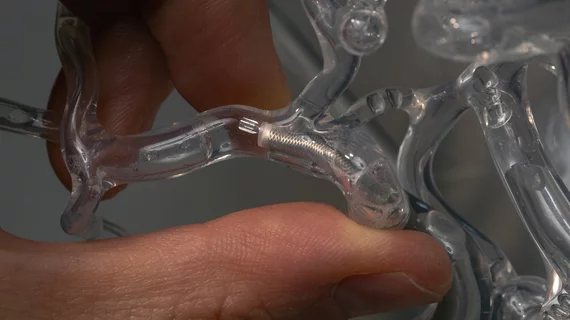
Researchers with Stanford University have developed tiny robots capable of swimming through a patient’s vascular system and removing blood clots. The new technology, called milli-spinner thrombectomy, could potentially be used to treat strokes, heart attacks, pulmonary embolisms and other clot-related cardiovascular conditions.
“For most cases, we’re more than doubling the efficacy of current technology, and for the toughest clots—which we’re only removing about 11% of the time with current devices—we’re getting the artery open on the first try 90% of the time,” Jeremy Heit, MD, PhD, chief of neuroimaging and neurointervention at Stanford and an associate professor of radiology, explained in a statement. “It’s unbelievable. This is a sea-change technology that will drastically improve our ability to help people.”
Heit is the co-author of a new analysis focused on this state-of-the-art technology. Published in Nature, the research explored the impact of these tiny robots in both flow models and animal studies.[1]
“The milli-spinner thrombectomy directly modifies the clot microstructure to facilitate clot removal, improving mechanical thrombectomy success rates compared with current methods that rely on clot rupture or cutting,” the study’s authors concluded. “This approach offers a promising new direction for mechanical thrombectomy devices, especially for treating ischemic stroke, pulmonary embolism and peripheral thrombosis.”
A brand new way to target blood clots
Milli-spinner thrombectomy is a continuation of the work of Renee Zhao, PhD, an assistant professor of mechanical engineering at Stanford and senior author of the Nature study. Zhao’s previous research with these robots was primarily focused on dispensing medicine. The spinning hollow structure of the robots, with their tiny fins and slits, were originally intended to be used as a propulsion mechanism. However, Zhao and her team noted that the structures were also providing localized suction that could be used to help eliminate blood clots in a fast, effective manner.
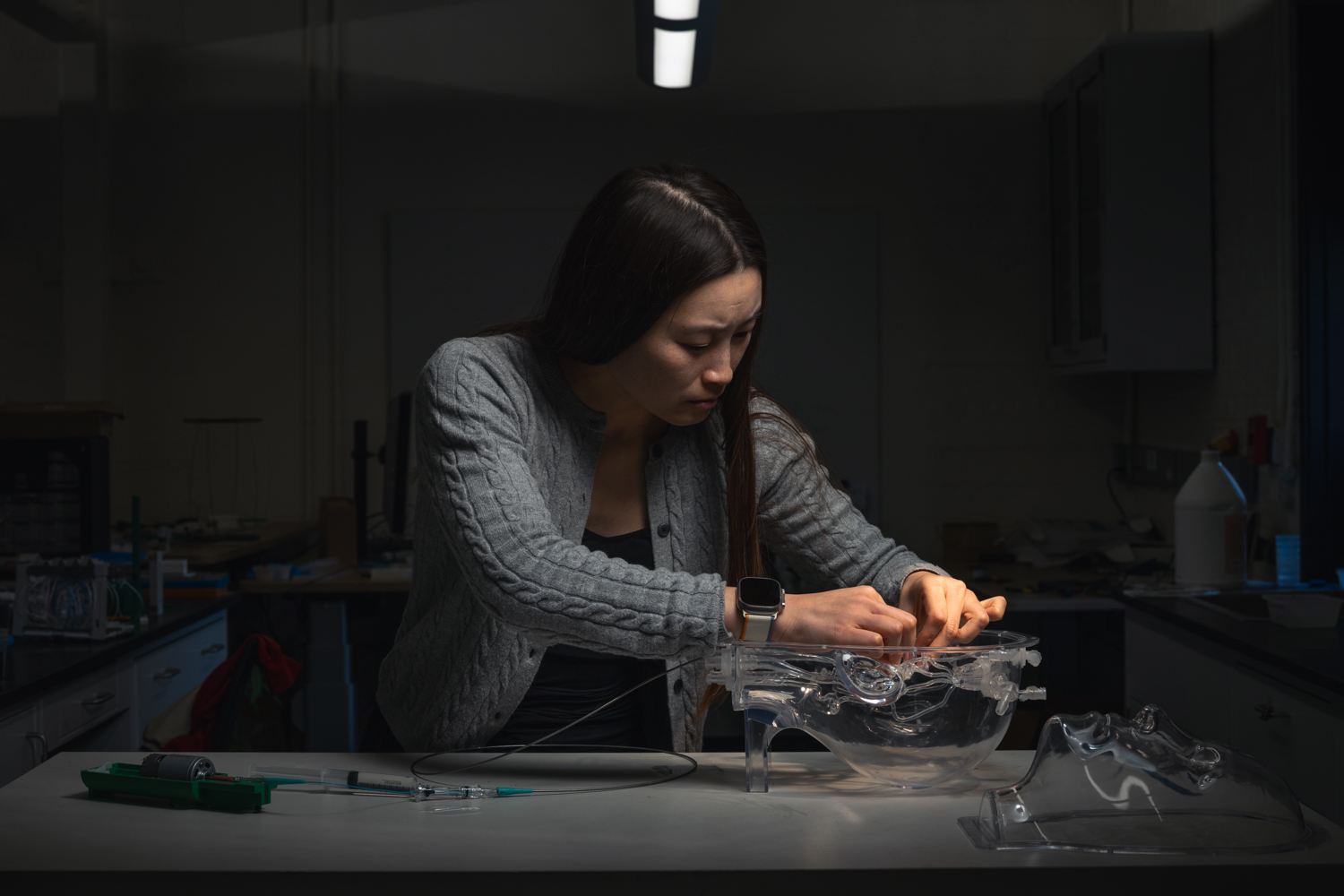
Renee Zhao, PhD, working on her milli-spinner thrombectomy technology. Image courtesy of Andrew Brodhead/Stanford University.
“At first, we simply wondered whether this suction could help remove a blood clot,” Zhao said in the same statement. “But when we tested the spinner on a clot, we observed a striking clot color change, from red to white, along with a dramatic reduction in volume. Honestly, it felt like magic. We didn’t fully understand the mechanism at the time.”
For the current version of this technology, clinicians deliver the tiny robot to its intended location with a catheter and then it remains in one location. However, researchers are also exploring the possibility of an “untethered version” of the milli-spinner that could freely move through the vascular system.
There is also hope that this same technique could go beyond busting blood clots and be used to remove kidney stone fragments.
“We’re exploring other biomedical applications for the milli-spinner design, and even possibilities beyond medicine,” Zhao explained. “There are some very exciting opportunities ahead.”
This technology is still under development. More research will still be required before it gains FDA approval.
Click here to read the Nature study. In addition, Stanford has produced a video about this breakthrough that is now available online.


No comments:
Post a Comment