Great Catch-22 here; you need exercise to recover, but you really need 100% recovery to do the required exercises. Have your competent? doctor EXACTLY EXPLAIN HOW TO GET AROUND THAT PROBLEM!
I can almost guarantee your doctor and hospital will KNOW NOTHING AND DO NOTHING!
No human research will occur; nothing will be done! That is how fucking incompetent the whole stroke medical world is. Hopefully comeuppance will hit them all with a stroke. And they can regret their incompetence in not solving stroke to 100% recovery!
Al this incompetence is a result of NO leadership firing the incompetent persons!
Mitochondria magic: Exercise’s value soars with this news
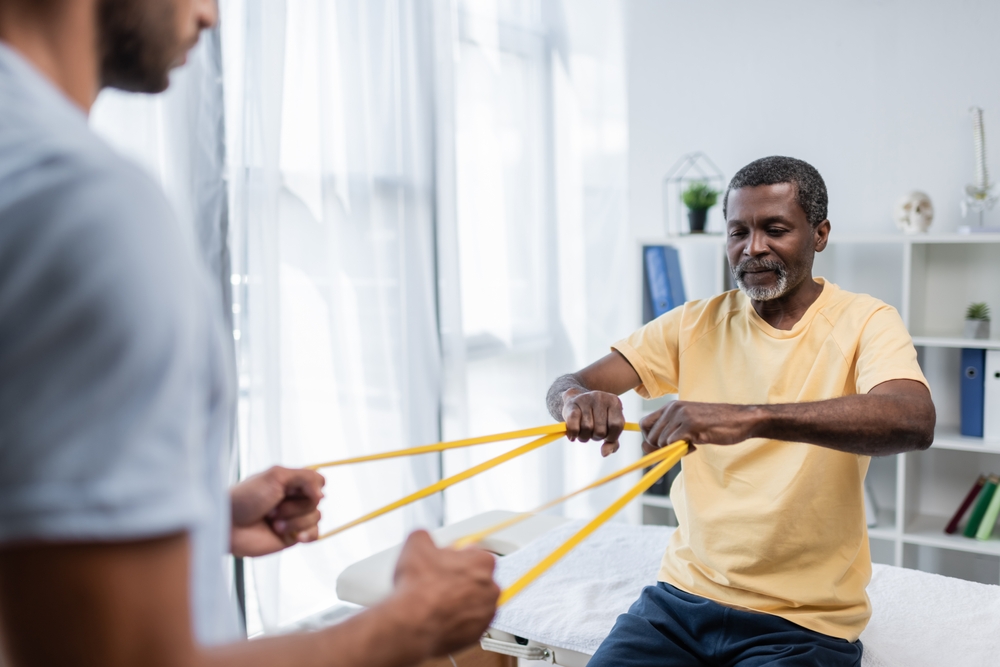
Scientists at Juntendo University School of Medicine have uncovered a remarkable process that explains how exercise protects the brain from stroke damage. The research team discovered that physical activity triggers muscle cells to produce mitochondria that travel through the bloodstream and deliver healing benefits directly to injured brain tissue.
The study, published in the journal MedComm on Jan. 15, reveals that blood platelets act as tiny transport vehicles, carrying these cellular powerhouses from muscles to the brain. Once they arrive, the mitochondria help damaged neurons survive oxygen deprivation and support the repair of critical brain structures. The findings could eventually lead to new treatments for stroke patients who are too frail to exercise on their own.(Slight problem here, the penumbra resolves itself into dead brain in the first week, so you need this exercise immediately! HOW THE FUCK WILL YOUR DOCTOR ACCOMPLISH THAT?)

Research Assistant Professor Toshiki Inaba led the investigation alongside colleagues Nobukazu Miyamoto and Nobutaka Hattori at Juntendo’s Department of Neurology. The team conducted experiments using mouse models designed to replicate both stroke and dementia conditions, providing insights into how cellular communication might be harnessed for therapeutic purposes.
Watching mitochondria travel between cells
Miyamoto’s interest in mitochondrial migration began during a research fellowship at Massachusetts General Hospital and Harvard Medical School, where he first observed these cellular structures moving from one cell to another. That observation sparked the realization that mitochondrial transfer might offer treatment possibilities for various neurological conditions.
For the current study, researchers divided mice into groups and had some perform low-intensity treadmill exercise while others remained sedentary. The team then carefully tracked brain damage, movement abilities, memory function and changes in brain and muscle cells among both groups. They also measured mitochondrial levels and activity throughout the experiment.
The results showed clear advantages for the mice that exercised. These animals experienced less damage to white matter and myelin, the protective coating around nerve fibers. They also demonstrated better memory retention and movement capabilities compared to sedentary mice, while experiencing fewer complications following stroke events.

Platelets serve as cellular delivery system
The research revealed that exercise significantly increased mitochondrial production in both muscle tissue and the bloodstream. Blood platelets, typically known for their role in clotting, took on an unexpected function by capturing mitochondria from muscle cells and transporting them to the brain.
Once in the brain, these traveling mitochondria didn’t just reach neurons. They also made their way to support cells including oligodendrocytes, which produce protective myelin, and astrocytes, star-shaped cells that help form the blood-brain barrier. The mitochondria provided crucial support to cells in the damaged area and the surrounding region called the penumbra, where brain tissue remains vulnerable but potentially salvageable.
Inside these brain cells, the delivered mitochondria helped them endure low-oxygen conditions that typically cause widespread cell death after stroke. They supported the repair of white matter, the brain’s communication infrastructure, and reduced the cascade of complications that often follow stroke events.
Limited options drive search for new approaches
Current stroke treatment relies heavily on clot removal or dissolution, but these interventions only work within a narrow window after symptoms begin. Once that critical time frame passes, patients face limited therapeutic options. Physical rehabilitation and symptom management become the primary focus, yet many stroke survivors continue struggling with walking difficulties, speech problems and memory decline.
Exercise has long been recognized as beneficial for both stroke prevention and recovery. However, many stroke patients are elderly and lack the physical stamina required to exercise intensively enough to gain those protective benefits. This reality makes the search for alternative approaches particularly urgent.
Inaba acknowledged that while the research team has identified several technical and biological challenges through additional experiments, the approach holds promise for reducing neurological problems after stroke. The applications might extend beyond stroke to include mitochondrial diseases and related neurodegenerative conditions where current treatment options remain limited.
From mice to potential human therapies
The pathway from laboratory findings to clinical treatments typically spans years and requires extensive testing for safety and effectiveness. If the mitochondrial transfer approach proves successful in human trials, it could potentially allow stroke patients to receive the benefits of exercise through transfusions of platelet preparations enriched with mitochondria.
Such a treatment would be particularly valuable for patients who cannot engage in physical rehabilitation due to age, frailty or the severity of their condition. The approach might also offer hope for preventing the progression of vascular dementia, a condition that currently has no established treatments.
The research team’s work builds on growing scientific understanding of how cells communicate and share resources. By revealing the specific mechanism through which exercise protects the brain, the scientists have opened a new avenue for developing therapies that could help millions of stroke survivors worldwide maintain better neurological function and quality of life.
SOURCE: juntendo


No comments:
Post a Comment