Nothing here mentions getting 100% recovered at all, so they are ensuring that their pushing of the tyranny of low expectations allows them to declare success when survivors would actually declare it A COMPLETE FUCKING FAILURE!
Comprehensive Guide to Occupational Therapy After Stroke
Introduction to Occupational Therapy for Stroke Survivors
Occupational therapy helps stroke survivors reclaim their independence in daily life.
Stroke can suddenly change how someone performs the simplest tasks. It can affect movement, vision, thinking, or coordination, making tasks like getting dressed, preparing breakfast, or even brushing teeth challenging. These difficulties with everyday activities can feel daunting for both survivors and their families.
Occupational therapy (OT) after stroke helps survivors regain independence in daily life. Therapists assess changes in movement, thinking, coordination, vision, and sensation to understand how these impact essential activities such as dressing, eating, or working.1 Instead of treating symptoms in isolation, occupational therapists (OTs) design personalized recovery plans that restore function or adapt tasks to the survivor’s new abilities.
How Occupational Therapy Differs from Physical Therapy
Physical therapy (PT) focuses on major movement abilities like walking, balance, and overall mobility. On the other hand, OTs concentrate on daily living skills, which are the specific tasks people need to take care of themselves and participate in their communities. PT focuses on improving physical abilities and motion, such as strength, endurance, and walking. OT helps patients regain independence and living skills by addressing both mobility and upper extremity recovery. OT provides training in transfers, safe movement through daily environments, balance for everyday tasks, and use of the arms and hands for functional activities like dressing, cooking, and self-care.2
The two professions work collaboratively during stroke rehabilitation, with each addressing different aspects of recovery. Physical therapists (PTs) might help someone regain strength to stand up, while OTs teach them how to get dressed while standing or seated safely. Both therapies may be combined for comprehensive recovery, especially in complex cases where survivors need both movement restoration and skill retraining.
Why Occupational Therapy Matters After Stroke
Occupational therapists evaluate the specific skills needed to support daily living after stroke.
There can be many effects of stroke, with each person’s experience varying according to their recovery, the location of brain injury, and their support systems.3 OTs conduct evaluations that examine how stroke has affected their patients’ daily functioning.
OT assessments cover how someone manages daily activities, their ability to move around, and any problems with motor function, visual perception, coordination, sensation, and cognition.
The evaluation process involves watching people attempt real-world tasks like washing, dressing, or preparing meals. When OTs begin training their patients on activities of daily living, they will start with this type of assessment, observing how stroke has affected the person’s ability to carry out essential tasks on their own.
During the assessment, a therapist might notice that someone struggles to button a shirt not just because of weak fingers, but because they can’t see the left side of their body or can’t remember the sequence of steps.
OT aims to improve participation in meaningful activities, address underlying deficits, minimize complications, and provide education and support to patients and care partners.4 Rather than simply working on isolated skills, they focus on helping people return to roles that matter to them, such as parent, spouse, employee, or community member. They also help families understand how stroke has affected their loved one’s ability to function and how best to support them.
|

Core Occupational Therapy Interventions
Occupational therapy interventions may focus on task-oriented training.
Task-oriented training involves client-centered, repetitive practice of activities that are relevant to each person’s goals.5
- Restoring motor control and hand function happens through OT exercises that involve practicing functional tasks. Someone might practice opening jars, using utensils, or operating a computer mouse. These real-world movements help the brain relearn motor patterns while building strength. OTs also use neurorehabilitation techniques such as task-specific training, repetitive practice, bilateral arm activities, and sensory re-education to stimulate the nervous system and promote neuroplasticity. They may incorporate tools like constraint-induced movement therapy, functional electrical stimulation, or adaptive equipment to reinforce recovery. By combining these approaches, OTs help patients rebuild coordination, improve motor control, and regain independence in daily life.
- Maximizing self-care and activities of daily living involves teaching techniques for dressing, bathing, and meal preparation. When recovery alone isn’t enough, adaptive equipment or assistive devices may help bridge the gap. This may include things like specialized utensils, long-handled dressing tools, or modified kitchen features that require less fine motor control.
- Managing cognitive, perceptual, and behavioral changes combines retraining with adaptation strategies. Memory difficulties might be addressed with external cues like alarms or visual prompts. Behavioral changes such as impulsivity, emotional outbursts, or difficulty with social interactions may require other strategies.6
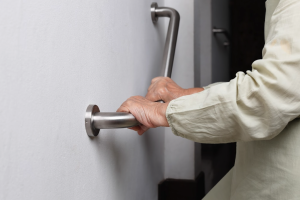
- Preparing home and work environments ensures safety and supports independence. OTs assess living spaces and recommend modifications like grab bars or furniture rearrangement to prevent falls and support daily activities.
Improving Quality of Life and Supporting Stroke Caregivers
Stroke affects mental health as well as physical health.
Stroke recovery goes beyond physical healing. Survivors and their families also face emotional and psychological challenges that impact quality of life and long-term recovery. Early psychological interventions can decrease stress in stroke patients and increase their commitment to treatment, while problem-solving strategies and involvement in activities help survivors develop better coping abilities.7
Research shows that life quality in stroke survivors can decrease with age but often improves the longer it’s been since the stroke; over time, people also tend to improve in different areas of daily function.8
Post-stroke depression affects 30-50% of stroke survivors and can impact recovery and rehabilitation.9 When left untreated, depression can reduce motivation for therapy, slow physical recovery, and decrease quality of life for the entire family. Healthcare teams should screen for depression regularly and connect people with appropriate mental health support when needed.
Support groups may also provide essential connections for both survivors and care partners who often feel isolated after stroke. These groups offer practical advice from others who understand similar challenges, emotional support during difficult moments, and hope through seeing others who have made progress. Care partner support is particularly important because family members may experience their own stress, depression, and burnout while caring for their loved one.
Frequently Asked Questions
How often should occupational therapy sessions occur?
Stroke survivors typically receive OT sessions multiple times per week, with frequency and duration varying based on individual needs and location.
What are the expected timelines for progress?
Recovery after a stroke tends to be most rapid in the first few months, when the brain’s natural healing and rewiring processes are most active. However, research shows that neuroplasticity—the brain’s ability to adapt and form new connections—can support meaningful improvements well beyond the first year. With consistent, targeted therapy and practice, many stroke survivors continue to make gains months and even years after their stroke.
How can family members assist between sessions?
Family members can help by practicing recommended exercises with their loved one, learning safe techniques for transfers and daily activities, and providing encouragement while stepping back when their loved one can work independently.
Conclusion: Why Occupational Therapy Matters in Stroke Recovery
Occupational therapy addresses the practical challenges stroke survivors face every day. Early intervention supports independence, improves quality of life, and helps families adapt to new routines.
Research confirms that early OT intervention soon after the stroke can enhance quality of life, improve cognitive function, and reduce depression in stroke survivors.10 A comprehensive approach—combining skill retraining, adaptive or assistive equipment, and environmental modifications—can address the full scope of post-stroke challenges.
The most rapid recovery after stroke often happens in the first few months, when the brain is especially responsive to change. Yet, research on neuroplasticity shows that with the right therapy and practice, survivors can continue to improve well beyond this early phase. Working with certified occupational therapists provides access to evidence-based strategies and individualized treatment plans that combine restoring lost abilities with teaching practical adaptations. This approach supports ongoing progress, helping stroke survivors enhance both independence and quality of life over time.


No comments:
Post a Comment