Changing stroke rehab and research worldwide now.Time is Brain! trillions and trillions of neurons that DIE each day because there are NO effective hyperacute therapies besides tPA(only 12% effective). I have 523 posts on hyperacute therapy, enough for researchers to spend decades proving them out. These are my personal ideas and blog on stroke rehabilitation and stroke research. Do not attempt any of these without checking with your medical provider. Unless you join me in agitating, when you need these therapies they won't be there.

What this blog is for:

My blog is not to help survivors recover, it is to have the 10 million yearly stroke survivors light fires underneath their doctors, stroke hospitals and stroke researchers to get stroke solved. 100% recovery. The stroke medical world is completely failing at that goal, they don't even have it as a goal. Shortly after getting out of the hospital and getting NO information on the process or protocols of stroke rehabilitation and recovery I started searching on the internet and found that no other survivor received useful information. This is an attempt to cover all stroke rehabilitation information that should be readily available to survivors so they can talk with informed knowledge to their medical staff. It lays out what needs to be done to get stroke survivors closer to 100% recovery. It's quite disgusting that this information is not available from every stroke association and doctors group.

Showing posts with label thiamine. Show all posts

Wednesday, February 21, 2024

Dietary Thiamine Linked With Cognition — J-shaped curve emerges between vitamin B1 in diet and cognitive decline

Ask your competent? doctor PRECISELY what you should do with this. Don't try to figure this out yourself, your doctor is being paid to know this stuff. Your doctor should easily know how much thiamine you're getting in your hospital meals.

Dietary Thiamine Linked With Cognition J-shaped curve emerges between vitamin B1 in diet and cognitive decline

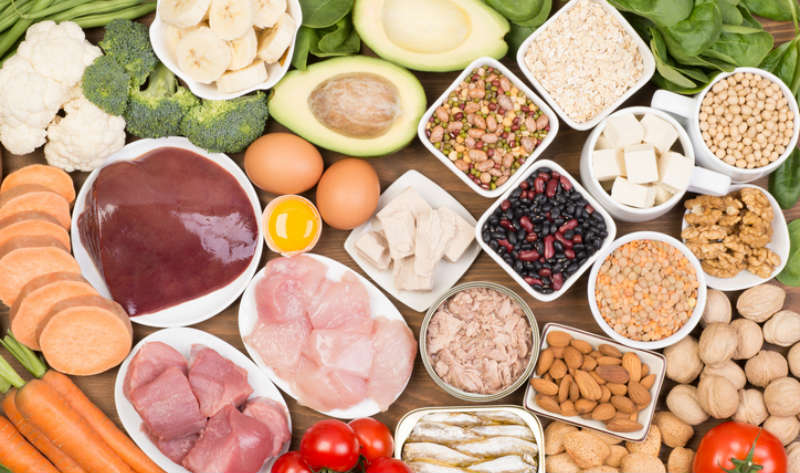
A photo of foods rich in thiamine

Dietary thiamine (vitamin B1) intake was linked with cognition in older adults, a longitudinal analysis in China suggested.

Over a median follow-up of 5.9 years, cognitive decline risk was minimal at dietary thiamine intake levels of 0.60 to 1.00 mg/day, reported Xianhui Qin, MD, of Southern Medical University in Guangzhou, and co-authors.

However, a J-shaped association emerged between intake of dietary thiamine and 5-year cognitive decline, with an inflection point at 0.68 mg/day (95% CI 0.56-0.80), the researchers wrote in General Psychiatryopens in a new tab or window.

Before the inflection point of 0.68 mg/day, thiamine intake was not significantly associated with cognitive decline. After the inflection point, each daily 1.0-mg increase in thiamine intake was associated with a drop of 4.24 points in global cognitive scores (95% CI 2.22-6.27) and 0.49 standard units in composite cognitive scores (95% CI 0.23-0.76) within 5 years (P<0.001 for both). Global cognitive scores could range from 0 to 27.

The association of dietary thiamine intake with cognitive decline beyond the inflection point appeared stronger in people with obesity or hypertension and in non-smokers, Qin and colleagues noted. After multiple test correction, the effect of hypertension and smoking became non-significant.

Food sources of thiamine include whole grains, meat, and fish. In the U.S., common thiamine sourcesopens in a new tab or window are cereals and bread. Several observational studies -- including a recent cross-sectional analysisopens in a new tab or window of National Health and Nutrition Examination Survey (NHANES) data -- have reported a linear relationship between dietary thiamine and cognitive function in older adults.

In animal models, thiamine deficiency produces many Alzheimer's-like changes, noted Gary Gibson, PhD, of the Burke Neurological Institute of Weill Cornell Medicine in White Plains, New York, who wasn't involved with the study.

"Evidence suggests that the decline is related to a reduced ability to transport thiamine," Gibson told MedPage Today. "Thus, brains of Alzheimer's disease patients and animal models can be thiamine-deficient despite normal intake."

In 2021, an exploratory clinical trialopens in a new tab or window led by Gibson suggested that pharmacological-grade benfotiamine, a thiamine prodrug not available commercially, may help people with mild cognitive impairment or mild Alzheimer's disease. A larger phase II studyopens in a new tab or window that randomizes people with early Alzheimer's disease to benfotiamine or placebo is underway.

In their analysis, Qin and co-authors used data from the China Health and Nutrition Surveyopens in a new tab or window. In 1997, 2000, 2004, and 2006, cognitively healthy participants ages 55 and older had assessments of mental acuity. Information about diet was collected in each survey round, supplemented by detailed data about dietary intake over 24 hours on 3 consecutive days, which were collected in person by trained investigators.

The study included 3,106 participants capable of completing repeated cognitive function tests who had at least two rounds of survey data. Mean age was 63, and the average dietary thiamine intake was 0.93 mg/day.

Cognitive decline was defined as the 5-year decline rate in global or composite cognitive scores based on a subset of items from the Telephone Interview for Cognitive Status-modified (TICS-mopens in a new tab or window), which can be administered by phone or in-person. The test included immediate and delayed recall of a 10-word list, counting backward from 20, and serial seven subtraction five times from 100 to evaluate verbal memory, attention, and calculation, respectively. Higher scores in each item indicated better function. The researchers also determined a composite score by averaging z scores of the test components.

Compared with participants with thiamine intake of 0.60 to less than 1.00 mg/day, β for 5-year decline rates in the composite cognitive score was 0.13, 0.15, and 0.33 in those with daily intake of less than 0.60 mg, 1.00 mg to less than 1.20 mg, and 1.20 mg or more, respectively. "Similar patterns were observed for the global cognitive scores," Qin and colleagues noted. "Moreover, multiple test correction had no significant effect on the results."

Other variables -- age, sex, alcohol consumption, and dietary intake of fat, protein, or carbohydrate -- did not significantly change the findings, the researchers added.

The analysis relied on dietary intake recalled over 24-periods, which may not be fully accurate, Qin and co-authors acknowledged. It assessed data about cognitively healthy older adults in China only and findings might not apply to others.

  • Judy George covers neurology and neuroscience news for MedPage Today, writing about brain aging, Alzheimer’s, dementia, MS, rare diseases, epilepsy, autism, headache, stroke, Parkinson’s, ALS, concussion, CTE, sleep, pain, and more. Follow

Disclosures

This study was funded by the National Key Research and Development Program of China and the National Natural Science Foundation of China.

Qin and co-authors reported no conflicts of interest.

Gibson reported relationships with the National Institute on Aging.

Primary Source

General Psychiatry

Source Reference: opens in a new tab or windowLiu C, et al "J-shaped association between dietary thiamine intake and the risk of cognitive decline in cognitively healthy, older Chinese individuals" Gen Psychiatr 2024; DOI: 10.1136/gpsych-2023-101311.

Sunday, October 6, 2019

How to beat the fatigue of multiple sclerosis

From an email I got.  Ask your doctor about this and not politely. Can your doctor put two and two together and maybe consider the applicability of this to post stroke fatigue? With your doctor doing nothing huge number of survivors are not getting treated for this.

I had massive fatigue immediately post stroke and continuing for years. My doctor stupidly said I needed to get more cardiovascularly fit. He never tested my cardio fitness. Three years after my stroke I had a physical where my resting heart rate was 54 at the age of 53. That means my cardiovascular fitness was that of an athlete, even after doing nothing on it for 3 years. Yet I was still completely fatigued everyday.

 Statistics on stroke fatigue:

At least half of all stroke survivors experience fatigue Or is it 70%?

Or is it 40%?

How to beat the fatigue of multiple sclerosis

In my research, I found 4 main natural compounds that are quite effective at reducing MS-related fatigue:

Thiamine (Vitamin B1) - When patients with MS supplement with thiamine, they see a significant improvement in their fatigue (1). 

CoQ10 - Researchers have found that CoQ10 significantly improves fatigue and depression in patients with MS (2-3). 

Magnesium - Lower magnesium levels are correlated with higher fatigue scores in MS patients (4).

Alpha Lipoic Acid (ALA) - Studies show that ALA improves fatigue and depression in people with MS (5). 

What do all these natural compounds have in common?

They all support your mitochondria.

That's why I included all four of them in Optimal Energy.

Optimal Energy is a powerful mitochondrial formula designed to boost your energy.

It also includes 13 other science-backed ingredients proven to boost cellular energy levels.
 

Copyright © 2019 Optimal Living Dynamics, All rights reserved.
You are receiving this email because you opted in at our website OptimalLivingDynamics.com.

Our mailing address is:
Optimal Living Dynamics

106 Orchard Court
Whitby, Ontario L1N 1H4
Canada


References:

(1) https://www.ncbi.nlm.nih.gov/pubmed/23861280 July 2013

(2) https://www.ncbi.nlm.nih.gov/pubmed/25603363  2016

(3) https://www.tandfonline.com/doi/abs/10.1179/1476830515Y.0000000002?journalCode=ynns20 January 2015

(4) https://www.ncbi.nlm.nih.gov/pmc/articles/PMC3968354/ 2014

(5) https://www.ncbi.nlm.nih.gov/pubmed/31056714  May 2019


Sunday, June 9, 2019

The vitamin that people don’t get enough of

Pretty much totally fucking useless. No mention of what test you should have your doctor run to determine your levels. This is just trying to scare people into buying this and likely just having expensive pee.  I expect exact levels needed, how to measure those levels and what to do to bring them up EXACTLY to the correct levels. THAT is what 'professionals' would do.

The vitamin that people don’t get enough of

John Murphy, MDLinx | June 07, 2019
Feeling weak, sluggish, or anemic? You may not be getting enough B vitamins. These are a group of eight vitamins that have important metabolic roles in converting food into energy. They’re also necessary for a wide range of other processes, such as blood cell production, neurological function, cellular signaling, DNA production and repair, metabolizing amino acids, and more. B vitamins are also believed to help reduce stress, anxiety, memory loss, and heart disease risk.

Need more vitamin B? Foods like liver, tuna, leafy greens, eggs, nuts, beans, and cereals help to make up for any diet deficiencies of the B complex vitamins.
Importantly, we have to replenish our B vitamins regularly. Because they’re water soluble, B vitamins aren’t stored in the body, and the ones that aren’t used get flushed out. That’s why we need to obtain B vitamins daily to avoid deficiencies.
B vitamin deficiencies, although uncommon, can be dangerous. There are eight great B vitamins, but let’s look at the four in which deficiencies may be more common and can be more serious.

Vitamin B1 (thiamine) deficiency

Most people in the United States get enough thiamine (vitamin B1). But for those who develop a thiamine deficiency, it can become a serious, potentially life-threating problem. Notably, people with chronic alcoholism frequently develop thiamine deficiency because ethanol reduces gastrointestinal absorption of thiamine, thiamine stores in the liver, and thiamine phosphorylation.
Other groups prone to thiamine deficiency include older adults, people with HIV/AIDS, people with diabetes, and those who have undergone bariatric surgery.
In its early stage, signs and symptoms of thiamine deficiency are nonspecific, and may include fatigue, irritability, poor memory, sleep disturbances, precordial pain, anorexia, and abdominal discomfort.
In severe stages, thiamine deficiency results in beriberi, which is characterized by peripheral neuropathy and muscle wasting, as well as impaired sensory, motor, and reflex functions. In rare cases, people with beriberi develop congestive heart failure that leads to edema in the legs and sometimes death. Although beriberi is rare in the United States, it does still occur here.
A more familiar consequence of thiamine deficiency in the United States is Wernicke-Korsakoff syndrome, which most commonly develops in people with chronic alcoholism—about 8-10 times more commonly than in the general population. Wernicke-Korsakoff syndrome often manifests in two phases. The first is Wernicke’s encephalopathy, an acute, life-threatening phase that’s characterized by peripheral neuropathy. Without supplemental thiamine treatment, up to 20% of people with Wernicke’s encephalopathy die.
Those who survive develop the second phase, Korsakoff’s psychosis, which is associated with severe short-term memory loss, disorientation, and confusion between real and imagined memories. Even with parenteral thiamine treatment, about one-quarter of patients with Korsakoff’s psychosis do not completely recover.
The daily Recommended Dietary Allowance (RDA) for thiamine is 1.2 mg in adult men and 1.1 mg in adult women. Primary food sources include whole grains, meat (notably pork), and fish. Americans get most of their thiamine from cereals and breads.

Vitamin B6 deficiency

Vitamin B6 deficiency is relatively rare in the United States, but some individuals can have low vitamin B6 status. Groups most likely to have inadequate vitamin B6 intake include people with poor renal function, including those with end-stage renal disease and chronic renal insufficiency, and people with autoimmune disorders, including rheumatoid arthritis. Other groups include patients with celiac disease, Crohn’s disease, ulcerative colitis, inflammatory bowel disease, and other malabsorptive autoimmune disorders, as well as people with alcohol dependence.
In addition, 24% of people in the United States who don’t take supplements containing vitamin B6 have low plasma concentrations of the vitamin. In particular, teenagers have the lowest vitamin B6 levels, followed by adults aged 21-44 years. Interestingly, the elderly do not have significantly low vitamin B6 plasma levels, even those who didn’t take supplements.

People with borderline vitamin B6 levels or mild deficiency may show no signs or symptoms for months or even years. In individuals with true vitamin B6 deficiency, symptoms can include anemia, seborrheic dermatitis, peripheral neuropathy, cheilosis (scaling on the lips and cracks at the corners of the mouth), glossitis (swollen/painful tongue), weakened immune function and, in adults specifically, depression, confusion, electroencephalographic abnormalities, and seizures. In infants, vitamin B6 deficiency causes irritability, abnormally acute hearing, and convulsive seizures.
People with low vitamin B6 concentrations should be sure to get adequate nutrients from food sources or vitamin supplements. Individuals with alcohol dependence or malabsorptive disorders may benefit from pyridoxine supplementation. Importantly, the patient’s underlying condition also needs to be addressed.
The daily RDA for vitamin B6 is 1.3 mg in adults up to age 50, and is higher in pregnant (1.9 mg) and lactating women (2.0 mg). In adults age 51 and older, the daily RDA is 1.7 mg for men and 1.5 mg for women.
Dietary sources of vitamin B6 include a wide variety of foods, particularly fish, beef liver and other organ meats, potatoes and other starchy vegetables, chickpeas, and non-citrus fruits.

Vitamin B9 (folate) deficiency

Although most Americans get enough vitamin B9 (folate), certain populations—including women of childbearing age and non-Hispanic black women—may not get a sufficient amount. Even among girls and women who take supplements with folic acid, 19% of those aged 14 to 18 years and 17% of those aged 19 to 30 years have an inadequate intake of folate. Likewise, 23% of non-Hispanic black women don’t get enough folate compared with 13% of non-Hispanic white women.
Other groups may also not get enough folate. For instance, pregnant women have a higher demand for folate, so they’re recommended to take a prenatal vitamin supplement that includes folic acid. Indeed, pregnant women with insufficient folate have an increased risk of giving birth to infants with neural tube defects. Inadequate folate intake in mothers is also associated with low infant birth weight, preterm delivery, and fetal growth retardation. The good news: Since 1998, the FDA has required manufacturers to add 140 mcg of folic acid to every 100 g of enriched breads, cereals, flour, cornmeal, pasta, rice, and other grain products to reduce the risk of these defects.
In addition, people with alcohol use disorder often have poor diets that don’t provide enough folate. Alcohol also interferes with folate absorption and hepatic uptake. Others who may not get enough folate include people with malabsorptive disorders and those with MTHFR gene polymorphism.
Although these groups may be at risk of insufficient folate intake, isolated folate deficiency is uncommon—it usually occurs along with other nutrient deficiencies related to poor diet, alcoholism, and malabsorptive disorders.
The primary clinical sign of folate deficiency (as well as vitamin B12 deficiency) is megaloblastic anemia, which is characterized by large, abnormally nucleated red blood cells. Symptoms include weakness, fatigue, difficulty concentrating, irritability, headache, heart palpitations, and shortness of breath.
Other signs and symptoms of folate deficiency are soreness and ulcerations on the tongue and oral mucosa; pigmentary changes in skin, hair, or fingernails; gastrointestinal symptoms; and elevated blood concentrations of homocysteine.
The RDA for folate in adults is 400 mcg dietary folate equivalents (DFE) per day, and is higher in pregnant and (600 mcg DFE) and lactating women (500 mcg DFE). Folate is naturally present in a wide variety of foods and found in the largest amounts in vegetables (especially spinach, asparagus, and brussels sprouts), meat (particularly beef liver), fruits and fruit juices, nuts, beans, peas, seafood, eggs, dairy products, poultry, and grains (notably breakfast cereal).
Bear in mind that some people are at risk of getting too much folic acid. About 5% of adults aged 51-70 years, as well as men aged 71 years and older, have folic acid intakes that exceed the tolerable limit of 1,000 mcg per day, mostly due to the folic acid they get from dietary supplements.

Vitamin B12 deficiency

Some people—particularly older adults and people with pernicious anemia—have difficulty absorbing vitamin B12. Consequently, vitamin B12 deficiency is common in the United States, affecting between 1.5% and 15% of the general population.
Older adults are prone to develop vitamin B12 deficiency due to atrophic gastritis, a condition that occurs in 10% to 30% of this population. Atrophic gastritis decreases the secretion of hydrochloric acid in the stomach, which reduces absorption of vitamin B12.
Similarly, some adults develop pernicious anemia, which is characterized by a lack of intrinsic factor in the stomach. Without enough intrinsic factor, people with pernicious anemia don’t properly absorb vitamin B12.
Other groups at risk of vitamin B12 deficiency include people with stomach and small intestine disorders (such as celiac disease and Crohn’s disease), people who have had gastrointestinal surgery (eg, for weight loss), and strict vegetarians (because animals are the only natural food source of B12).
Signs and symptoms of vitamin B12 deficiency include megaloblastic anemia, peripheral neuropathy, fatigue, weakness, constipation, loss of appetite, and weight loss. Other symptoms include difficulty maintaining balance, confusion, dementia and, rarely, soreness of the mouth or tongue.

The daily RDA for vitamin B12 in adults is 2.4 mcg, with higher amounts recommended for pregnant (2.6 mcg) and lactating (2.8 mcg) women. Vitamin B12 is naturally found in foods derived from animals, including seafood (eg, clams, trout, salmon, tuna), meat (notably beef liver), poultry, eggs, milk, milk products, and (for vegans) fortified breakfast cereals.
People with atrophic gastritis can absorb the synthetic vitamin B12 added to fortified foods and dietary supplements. So, adults older than age 50 are recommended to obtain vitamin B12 from vitamin supplements or fortified foods. People with pernicious anemia are usually treated with intramuscular injections of vitamin B12.
Other people who have trouble absorbing vitamin B12 from foods—as well as strict vegetarians who don’t eat foods derived from animal sources—can get their vitamin B12 from fortified foods, vitamin supplements, or vitamin B12 injections.