Changing stroke rehab and research worldwide now.Time is Brain! trillions and trillions of neurons that DIE each day because there are NO effective hyperacute therapies besides tPA(only 12% effective). I have 523 posts on hyperacute therapy, enough for researchers to spend decades proving them out. These are my personal ideas and blog on stroke rehabilitation and stroke research. Do not attempt any of these without checking with your medical provider. Unless you join me in agitating, when you need these therapies they won't be there.

What this blog is for:

My blog is not to help survivors recover, it is to have the 10 million yearly stroke survivors light fires underneath their doctors, stroke hospitals and stroke researchers to get stroke solved. 100% recovery. The stroke medical world is completely failing at that goal, they don't even have it as a goal. Shortly after getting out of the hospital and getting NO information on the process or protocols of stroke rehabilitation and recovery I started searching on the internet and found that no other survivor received useful information. This is an attempt to cover all stroke rehabilitation information that should be readily available to survivors so they can talk with informed knowledge to their medical staff. It lays out what needs to be done to get stroke survivors closer to 100% recovery. It's quite disgusting that this information is not available from every stroke association and doctors group.

Showing posts with label tryptophan. Show all posts

Saturday, July 27, 2024

Systematic Insights into the Relationship between the Microbiota–Gut–Brain Axis and Stroke with the Focus on Tryptophan Metabolism

 Will your competent? doctor GUARANTEE they will ensure further research gets done? NO? Then you don't have a functioning stroke doctor or hospital!

Systematic Insights into the Relationship between the Microbiota–Gut–Brain Axis and Stroke with the Focus on Tryptophan Metabolism

by Xinyu Shen 1,2 and
1
Genomics Research Center, Key Laboratory of Gut Microbiota and Pharmacogenomics of Heilongjiang Province, College of Pharmacy, Harbin Medical University, Harbin 150081, China
2
Translational Medicine Research and Cooperation Center of Northern China, Heilongjiang Academy of Medical Sciences, Harbin 150081, China
*
Author to whom correspondence should be addressed.
Metabolites 2024, 14(8), 399; https://doi.org/10.3390/metabo14080399
Submission received: 18 June 2024 / Revised: 15 July 2024 / Accepted: 15 July 2024 / Published: 24 July 2024

Abstract

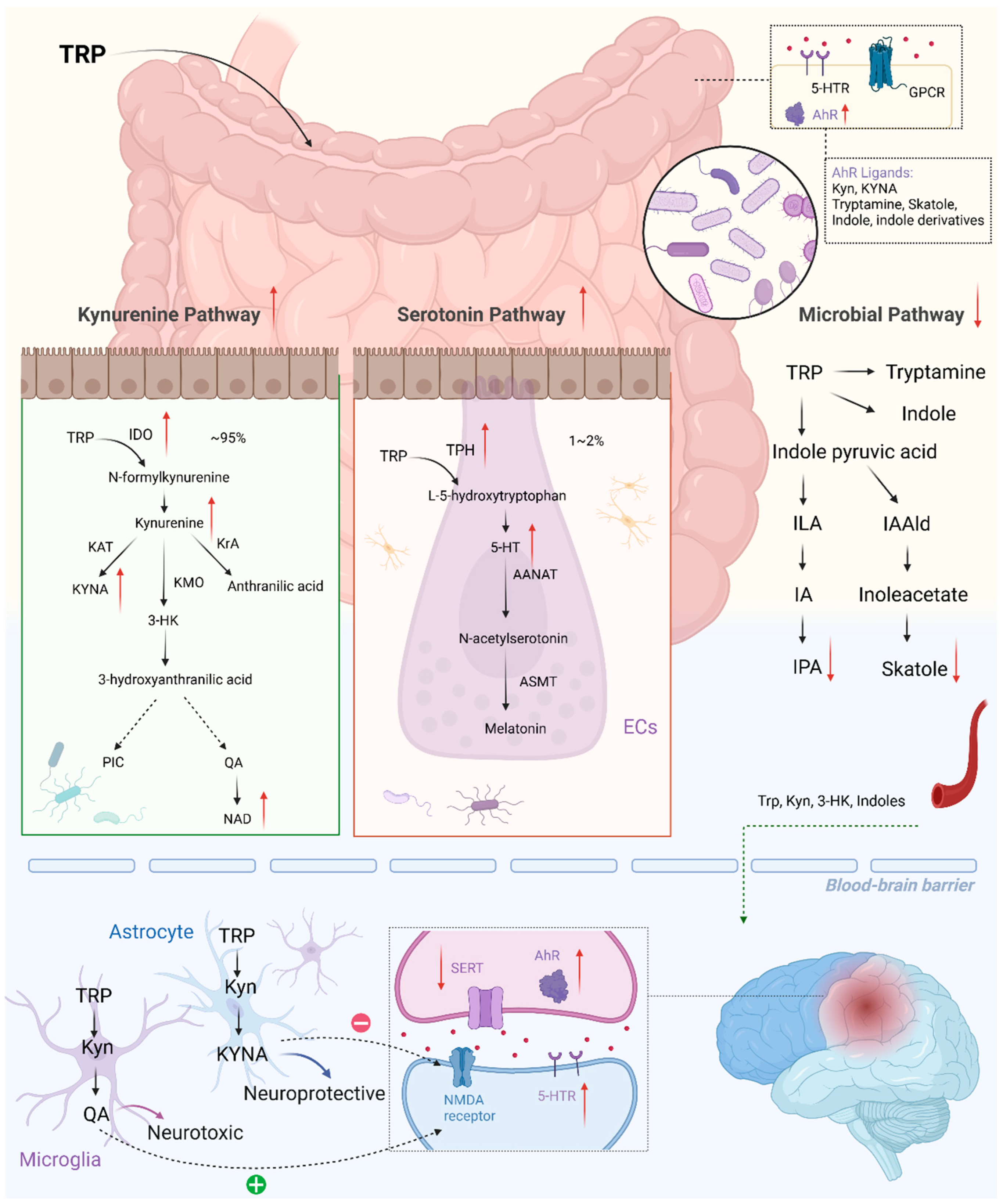
Stroke, as a serious cerebral vascular disease with high incidence and high rates of disability and mortality, has limited therapeutic options due to the narrow time window. Compelling evidence has highlighted the significance of the gut microbiota and gut–brain axis as critical regulatory factors affecting stroke. Along the microbiota–gut–brain axis, tryptophan metabolism further acquires increasing attention for its intimate association with central nervous system diseases. For the purpose of exploring the potential role of tryptophan metabolism in stroke and providing systematic insights into the intricate connection of the microbiota–gut–brain axis with the pathological procedure of stroke, this review first summarized the practical relationship between microbiota and stroke by compiling the latest case-control research. Then, the microbiota–gut–brain axis, as well as its interaction with stroke, were comprehensively elucidated on the basis of the basic anatomical structure and physiological function. Based on the crosstalk of microbiota–gut–brain, we further focused on the tryptophan metabolism from the three major metabolic pathways, namely, the kynurenine pathway, serotonin pathway, and microbial pathway, within the axis. Moreover, the effects of tryptophan metabolism on stroke were appreciated and elaborated here, which is scarcely found in other reviews. Hopefully, the systematic illustration of the mechanisms and pathways along the microbiota–gut–brain axis will inspire more translational research from metabolic perspectives, along with more attention paid to tryptophan metabolism as a promising pharmaceutical target in order to reduce the risk of stroke, mitigate the stroke progression, and ameliorate the stroke prognosis.

1. Introduction

As an acute cerebrovascular condition, stroke is one of the most important contributors to long-term disability and mortality, affecting millions of people each year worldwide. Ischemic stroke (IS) and hemorrhage stroke (HS) are the two main types of strokes, among which 87% are ischemic, 10% are intracerebral hemorrhage (ICH), and 3% are subarachnoid hemorrhage (SAH) according to the 2024 American Heart Association statistical update [1,2], implying the structural or functional damage to brain tissue caused by the blockage or rupture of cerebral blood vessels. Recent years have witnessed alarming growth as well as the youthful trend of stroke incidence with the prevalence of unhealthy lifestyle and eating habits. In the US, there is a projection that an additional 3.4 million adults over 18 will suffer a stroke by 2030 [1]. Although the therapy of stroke has improved during the past few decades, including intravenous thrombolysis, intra-arterial thrombectomy, recombinant tissue plasminogen activator therapy, and so on, it is limited due to the narrow therapeutic window, individual differences, as well as the potential risk [3]. In addition, dementia, cognitive impairment [4], anxiety, depression [5], and communication disorder [6] can be observed in a large amount of post-stroke cases. Thus, early prevention and intervention of stroke and understanding potential therapeutic targets are particularly essential.
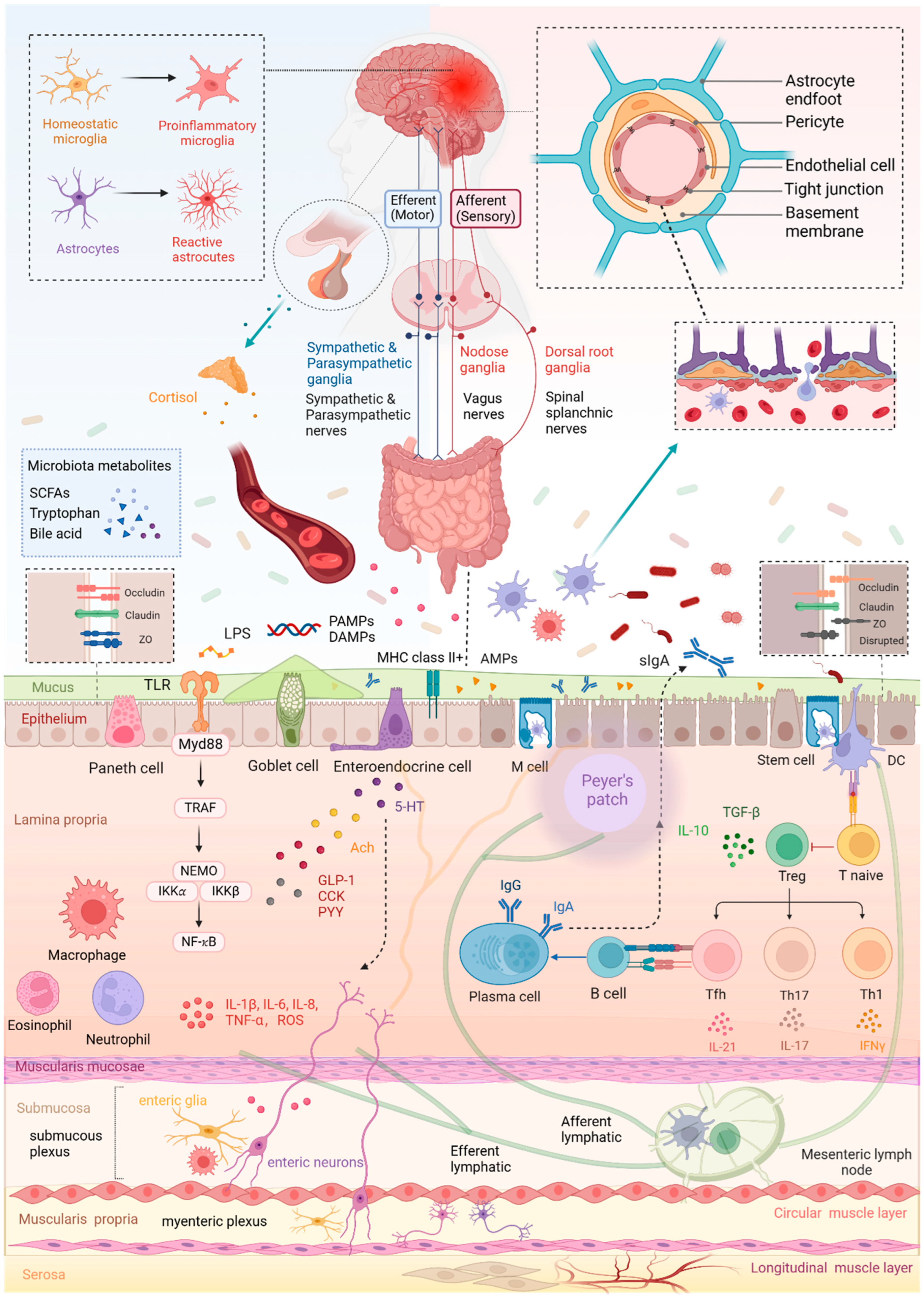
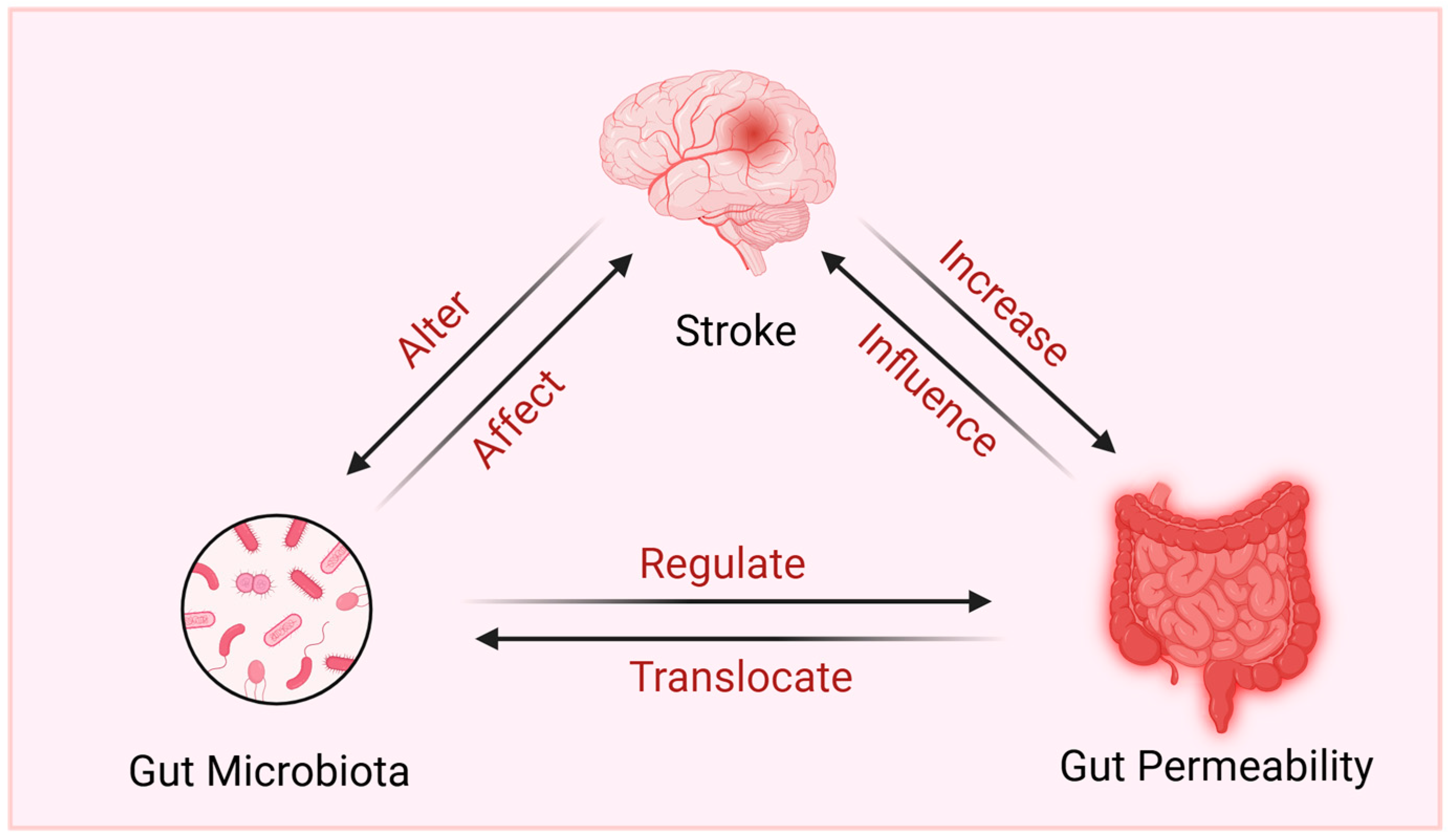
Numerous studies suggested that intestinal disorders accompanied by gut microbial alteration, such as inflammatory bowel disease, irritable bowel syndrome, and constipation, have complex interactions with stroke [7,8,9,10]. Gastrointestinal disorders or gut dysbiosis, on the one hand, often appear as complications in stroke patients; on the other hand, they may increase the risk of stroke [11] or worsen cerebral infarction [12]. The gut environment influences brain function in many ways, involving the central nervous system (CNS), enteric nervous system (ENS), autonomic nervous system (ANS), neuroendocrine system (hypothalamic–pituitary–adrenal axis), and immune system [13]. Likewise, the brain fine-tunes gut activities. The intricate bidirectional communication system between the gastrointestinal tract (GIT) and the brain is called the gut–brain axis (GBA). Since gut microbiota act as an integral regulator in the GBA, the GBA was further extended to the microbiota–gut–brain axis (MGBA) [14].
A key component of the MGBA is tryptophan, an essential amino acid whose metabolism is directly or indirectly regulated by the gut microbiota [15]. Products of tryptophan metabolism, including 5-hydroxytryptamine (serotonin, 5-HT), kynurenines, indole derivatives, etc., exert profound impacts on the pathways related to MGBA [16]. Mounting evidence supports a clear correlation between stroke and Trp metabolism in the MGBA with regard to enzyme activities, metabolite level changes, and related genes [17,18,19]. Promisingly, tryptophan and its metabolites serve as potential biomarkers as well as therapeutic targets of neurological disorders, including stroke, endorsing high precision of diagnosis and alternative treatments.
In this review, we systematically summarize the mechanism of MGBA and comprehensively discuss the role of MGBA in stroke, with a focus on the correlation between tryptophan metabolism and the pathogenesis and progression of stroke, combining the latest knowledge so as to provide a reference for further exploration of the prevention, treatment, and rehabilitation of stroke.
 
More at link.

Sunday, July 11, 2021

Gut Microbe Secreted Molecule Linked to Formation of New Nerve Cells in Adult Brain

What do I need to eat to generate 5.5 billion neurons in my brain? Why does no one know that answer? 

Gut Microbe Secreted Molecule Linked to Formation of New Nerve Cells in Adult Brain

Summary: Gut microbes that metabolize tryptophan secrete indoles that stimulate the development of new neurons in the adult brain.

Source: Singhealth

The billions of microbes living in your gut could play a key role in supporting the formation of new nerve cells in the adult brain, with the potential to possibly prevent memory loss in old age and help to repair and renew nerve cells after injury, an international research team spanning Singapore, UK, Australia, Canada, US, and Sweden has discovered.

The international investigating team led by Principal Investigator Professor Sven Pettersson, National Neuroscience Institute of Singapore, and Visiting Professor at Lee Kong Chian School of Medicine, Nanyang Technological University, Singapore (NTU Singapore), and Sunway University, Malaysia, found that gut microbes that metabolise tryptophan – an essential amino acid – secrete small molecules called indoles, which stimulate the development of new brain cells in adults.

Prof Pettersson and his team also demonstrated that the indole-mediated signals elicit key regulatory factors known to be important for the formation of new adult neurons in the hippocampus, an area of the brain also associated with memory and learning. Memory loss is a common sign of accelerated ageing and often an early sign of the Alzheimer’s disease (AD).

drugs to mimic the action of indoles to stimulate the production of new neurons in the hippocampus or to replace neurons damaged by stroke and spinal injury, as well as designing dietary intervention using food products enriched with indoles as a preventive measure to slow down aging,” said Prof Pettersson.

The international study involved researchers from multiple disciplines and institutions around the world including:

  • UK Dementia Research Institute at Imperial College London, UK
  • Karolinska Institute, Sweden
  • NTU Lee Kong Chian School of Medicine, Singapore
  • Murdoch University, Australia
  • National Neuroscience Institute, Singapore
  • Pennsylvania State University, USA
  • University of Toronto, Canada
  • Sunway University Malaysia

“The work reported in this paper addresses the formation of neurons in the adult brain. We are currently assessing whether indoles can also stimulate early formation of neurons during brain development. Another area of potential intervention interest is in situations of stroke or spinal injury where there is an urgent need to generate new neurons. It is an interesting and exciting time ahead of us,” said Prof Pettersson.


Friday, September 30, 2016

The Case for Cashews for depression

When I meet friends for wine and movies I bring cashews also.
http://www.mensjournal.com/health-fitness/nutrition/the-case-for-cashews-20140305
Two handfuls of cashews each day may keep depression at bay. A growing body of research has found that in lieu of taking a prescription drug, some people can turn to foods that are high in tryptophans, like cashews. Depressive episodes are often triggered when the body drops in serotonin and tryptophans can boost it again, but people tend to turn to nutrition as a last resort. One more natural source of tryptophan is cashews. "Several handfuls of cashews provide 1,000-2,000 milligrams of tryptophan, which will work as well as prescription antidepressants," says Dr. Andrew Saul, a therapeutic nutritionist and editor-in-chief of Orthomolecular Medicine News Service. The body turns tryptophan into serotonin, a major contributor to feelings of sexual desire, good mood, and healthy sleep.
The high levels of magnesium and vitamin B6 found in cashews may also help to stabilize mood. Approximately five ounces of cashews a day will provide a middle-aged man with his daily-required magnesium intake, a nutrient that, when low, can trigger mild depression. Vitamin B6 lends a hand to converting tryptophan into serotonin and helps magnesium enter into the body's cells. It's likely a trio of nutrients that help with depression. "You don't want to think that one individual nutrient is the magic bullet," says Saul.

Saturday, November 21, 2015

probiotics and tryptophan may slow down social cognitive decline in aging.

Would this help us post-stroke? Let your doctor know that you want to know the results when they are released. Charge him/her $1000 for training if you have to notify them them that the results are out. Your doctor should have a system in place that notifies them when relevant stroke research comes out. And that shouldn't be me, if they are relying on me and you to keep up to date that is a sign of pure incompetence.
http://www.alphagalileo.org/ViewItem.aspx?ItemId=158297&CultureCode=en
A JPI "A Healthy Diet for A Healthy Life" / Joint Transnational grant (1.000.000 Euro) has been awarded to Dutch, German and Spanish interdisciplinary scientists to investigate whether the administration of probiotics and tryptophan may slow down social cognitive decline in aging.

Within twenty years Europe will face a situation where the largest population cohort will be those over the age of 65. The aim of the awarded research program is to understand how social cognition, a crucial factor for successful aging and vitality, can be preserved and promoted in old age. This project will be jointly carried out by Peter Kirsch (Central Institute of Mental Health, Germany), Lorenza Colzato (Leiden University, The Netherlands), Martin Reuter (University of Bonn, Germany) and Ana Rodríguez Moratinos (University of Extremadura, Spain). Using a multidisciplinary and translational approach, this project will be the first to examine how probiotics and tryptophan can enhance social and affective cognition in aging. Epigenetics (changes in gene expression triggered by the environment) will be used to study and understand the mechanisms underlying the interactions between brain, nutritional intervention, and social behavior. If successful, this approach would provide an important step towards developing food programs that are tailored to individual needs. The proposed research is the first to combine genetics, epigenetics and nutritional intervention studies from a social cognitive neuroscience perspective.