Changing stroke rehab and research worldwide now.Time is Brain! trillions and trillions of neurons that DIE each day because there are NO effective hyperacute therapies besides tPA(only 12% effective). I have 523 posts on hyperacute therapy, enough for researchers to spend decades proving them out. These are my personal ideas and blog on stroke rehabilitation and stroke research. Do not attempt any of these without checking with your medical provider. Unless you join me in agitating, when you need these therapies they won't be there.

What this blog is for:

My blog is not to help survivors recover, it is to have the 10 million yearly stroke survivors light fires underneath their doctors, stroke hospitals and stroke researchers to get stroke solved. 100% recovery. The stroke medical world is completely failing at that goal, they don't even have it as a goal. Shortly after getting out of the hospital and getting NO information on the process or protocols of stroke rehabilitation and recovery I started searching on the internet and found that no other survivor received useful information. This is an attempt to cover all stroke rehabilitation information that should be readily available to survivors so they can talk with informed knowledge to their medical staff. It lays out what needs to be done to get stroke survivors closer to 100% recovery. It's quite disgusting that this information is not available from every stroke association and doctors group.

Showing posts with label train a chimpanzee. Show all posts

Monday, July 27, 2026

A longevity researcher says everyone's too obsessed with living forever. Here are his 2 anti-aging habits instead.

 I can do the restricted eating, I'm close with only 1 meal a day. Heavy exercise; NO, because my doctor and therapists COMPLETELY FAILED AT GETTING ME 100% RECOVERED!

My doctor assumed NO RESPONSIBILITY for my recovery by writing three prescriptions of E.T.(Evaluate and Treat) to my OT, PT and ST! If yours does that; fire them immediately and get them fired for incompetence! I could easily train a chimpanzee for that task.

A longevity researcher says everyone's too obsessed with living forever. Here are his 2 anti-aging habits instead.

  • Dr. Steven Austad is the scientific director of the American Federation for Aging Research.
  • Austad believes too many people are obsessed with longevity, focusing on dubious trends.
  • Austad follows 2 habits for his health: heavy exercise and time-restricted eating.

Dr. Steven Austad, the scientific director of a nonprofit researching healthy aging, never fretted too deeply about his own longevity.

"I used to train lions for a living," Austad told Business Insider. "It was not something that you would do if you were thinking about living a long time."

Prior to his career at the American Federation for Aging Research, Austad was a biologist who focused on field work in places like Venezuela and East Africa. He became interested in aging research not because he wanted to crack the code to living forever, but to learn why healthy cells age at all. When he entered the field, he said many researchers had the same question, and were not necessarily motivated by extending their own lifespans.

Things have changed since, as more people pursue anti-aging trends — often, Austad said, with dubious science backing the claims. "I'm not one of those people who spends an hour a day in a hyperbaric chamber or gets infusions of some weird protein-vitamin cocktail," he said. "But in fact, I'm quite healthy, despite the years I spent in the field, and I had malaria."

For example, Austad doesn't take supplements, citing a lack of strong-enough evidence of their guaranteed longevity benefits, and he enjoys a glass of wine here and there. "If you spend all your time thinking about how long you're going to live, you kind of forget to live," he said.

Related video: Arnold Schwarzenegger's 5 daily habits that could add years to your life (Bodybuilding Bros)Austad shared a few simple longevity habits he's followed for years, which he said are both science-backed and "basically the things that my mother probably told me."

He exhausts himself at the gym

When Austad was a field biologist, he traveled to Papua New Guinea. Upon landing, his group had to climb to the top of a mountain. The village headman gave Austad's bag to his 12-year-old daughter to carry, because Austad would "slow them down too much." Offended at first, Austad was grateful to be baggage-free an hour later. He was also stunned by the girl's level of fitness.

"To me, that was a window into what our bodies evolved to be like," he said. The villagers never had osteoporosis or other conditions caused by sedentary lifestyles.

It's a huge reason he prioritizes serious exercise almost every day of the week.

"I am kind of a gym rat," Austad said. Because of an old lion injury on his knee, he bikes for his cardio, ranging from 40 minutes to an hour and a half. He also prioritizes strength training, alternating areas of his body and always including some core exercises.

Research shows many benefits of exercise. "It used to be that we thought this exercise good for your heart and lungs, good for your muscles, keeping your bones strong," Austad said. "Now we know there are cognitive benefits, there are immune benefits, there are all kinds of benefits that we never appreciated."

One of the biggest ones for him is quality sleep, so much so that he sets strict boundaries around his workout time. "I don't have great sleep unless I physically exhaust myself, and I just figure I have to live with that."

He only eats twice a day

Austad was practicing time-restricted eating, a form of intermittent fasting, before it became trendy in the longevity space. It felt like his "natural rhythm" to eat a late breakfast around 11 a.m., skip lunch, and finish the day with dinner around 6 or 7 p.m.

"Now, recently it's come out that there are all kinds of health benefits associated with that kind of timing, and I'm kind of embarrassed that I didn't appreciate that earlier," he said.

Intermittent fasting schedules vary and can potentially be risky, according to some studies. Austad's schedule aligns with his circadian rhythm, which researchers believe can improve metabolic health.

He recalled speaking at a calorie restriction conference and attending the banquet after. "It was basically leaves and nuts and zero-calorie dressing," he said. "Even if it made you healthier, and I'm not convinced that it does, it's just too much for me."

If you enjoyed this story, be sure to follow Business Insider on MSN.

Thursday, June 18, 2026

Four minutes of daily resistance training can quadruple fitness in older adults, suggests study

Can your competent? doctor get you recovered enough to do this? Your doctor has to have EXACT PROTOCOLS FOR YOUR RECOVERY! Not dumping it off like my doctor did; writing three prescriptions to OT, PT, ST all saying the same thing(E.T. Evaluate and treat! I could train a chimpanzee to write that!

Four minutes of daily resistance training can quadruple fitness in older adults, suggests study

Monday, February 9, 2026

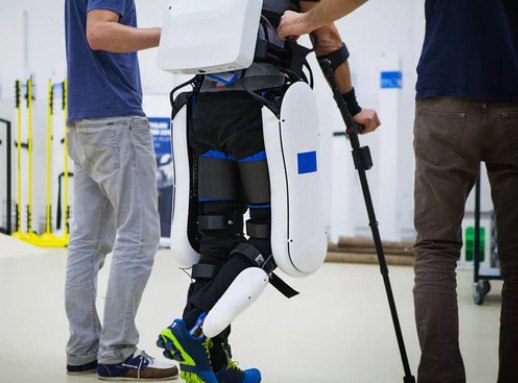
Kazakh Scientists Launch Medical Exoskeleton for Stroke Rehabilitation


 Ask your competent? doctor if this has proven better than all these previous exoskeletons! NO knowledge of them; FIRE THAT IDIOT!

No excuses are allowed, your doctor is supposed to know this stuff, and because s/he doesn't YOU get to be the failure point of not recovering. My doctor knew nothing of stroke rehab as completely proven by writing three prescriptions to PT, OT, ST all saying the same thing(E.T- Evaluate and Treat) completely proving NO knowledge of anything that will hep you recover! I could train a chimpanzee to write that.

Ask your doctor which of these walking exoskeletons will get you 100% recovered, meaning walking without the exoskeleton. 

There are many more exoskeletons out there. Which ones has your hospital tested?

Maybe these?

5-Link model based gait trajectory adaption control strategies of the gait rehabilitation exoskeleton for post-stroke patients  August 2020 


A Control Framework of Lower Extremity Rehabilitation Exoskeleton based on Neuro-Muscular-Skeletal Model.pdf August 2020 


Passive-elastic knee-ankle exoskeleton reduces the metabolic cost of walking July 2020 


Effects of a wearable exoskeleton stride management assist system (SMA®) on spatiotemporal gait characteristics in individuals after stroke: a randomized controlled trial June 2020 


The H2 robotic exoskeleton for gait rehabilitation after stroke: early findings from a clinical study May 2020 


Gait training early after stroke with a new exoskeleton--the hybrid assistive limb: a study of safety and feasibility April 2020 


Gait training early after stroke with a new exoskeleton--the hybrid assistive limb: a study of safety and feasibility January 2020 

I gave up listing them all, it is your doctor's job to know this.

Your doctor can analyze the intersection of these multiple sets of data. 

No knowledge of ALL OF THESE IS COMPLETE FUCKING INCOMPETENCE!


  • exoskeleton (217 posts to June 2011)
  • walking (631 posts to September 2010)
  • gait training (93 posts to May 2016)
  • lower limb (88 posts to April 2013)
  • exoskeleton gait training (3 posts to November 2024)
  • Exoskeleton shorts (1 post to August 2019)
  • Gravity Balancing Exoskeleton (1 post to May 2020)
  • hip exoskeleton (9 posts to May 2020)
  • overground robotic exoskeleton (1 post to January 2025)
  • powered exoskeleton (4 posts to May 2020)
  • REX exoskeleton rehabilitation robot (1 post to June 2024)
  • robotic exoskeleton (3 posts to May 2020)
  • Robotic hip exoskeleton (3 March 2024)
  • self-balancing exoskeleton (1 posts to February 2024)
  • LOPES Exoskeleton (2 posts to October 2020)
  • LOPES was first written up in Sept. 2007.

    LOPES researchers hope to get the device into rehabilitation clinics by early 2012, with a mid-2012 target for introduction into the market. Is it available and does your hospital know about it? Have they been following this for the past 13 years? Or are they completely incompetent? But then it doesn't seem to work that well. 

    The latest here:

    Kazakh Scientists Launch Medical Exoskeleton for Stroke Rehabilitation


    @depositphotos

    Researchers at Nazarbayev University have completed development and secured state registration for a medical exoskeleton designed to aid stroke rehabilitation. The device is now ready for clinical use and mass production, according to the university’s press service.

    Named the Astana Gait Exoskeleton Assisted Rehabilitation (A.GEAR), the system is intended to help restore motor function in stroke survivors and individuals with musculoskeletal disorders. It received official certification following a positive evaluation from the National Center for Expertise of Medicines and Medical Devices. Nazarbayev University stated that this is one of the few high-tech medical solutions developed domestically that has received full clinical approval.

    Cost efficiency is cited as A.GEAR’s main competitive advantage. According to project estimates, the exoskeleton is several times more affordable than foreign alternatives, reducing Kazakhstan’s reliance on imports and increasing accessibility to modern rehabilitation tools.

    Professor Prashant Jamwal, the project lead, noted that it took just four years to progress from a lab concept to a certified medical product far shorter than the global average of 10 to 15 years. He added that the system could not only replace imported equipment but also reduce public expenditure on rehabilitation technologies.

    The project began in late 2021 at the university’s Medical Robotics Competence Center. Clinical trials took place in Karaganda and Astana, involving stroke patients and adolescents with cerebral palsy. Following the successful trials, the team began negotiations for a long-term contract with SK-Pharmacy LLP and sought a commercial distributor.

    Commercialization is being overseen by Robotics and Artificial Intelligence, led by Nazarbayev University graduate Shyngys Dauletbayev. In 2026, the university’s technopark aims to produce at least five exoskeleton units, with plans to scale production for distribution to medical institutions nationwide.

    University President Professor Waqar Ahmad highlighted that Nazarbayev University researchers rank among the top 2% of scientists globally, based on a bibliometric analysis by Stanford University.

    According to the Ministry of Health of Kazakhstan, approximately 40,000 people in the country suffer strokes annually, underlining a consistent demand for advanced rehabilitation solutions. As previously reported by The Times of Central Asia, Kazakhstan is also expanding the use of artificial intelligence for early diagnosis of strokes and cancer.

    Thursday, January 29, 2026

    Sharing Feelings Helps Stroke Survivors Recover

     Yeah, screaming at my doctor for knowing nothing about stroke recovery might make me feel better but would do nothing towards recovery because the incompetent? doctor had nothing and knew nothing! 

    My doctor knew nothing of stroke rehab as completely proven by writing three prescriptions to PT, OT, ST all saying the same thing(E.T- Evaluate and Treat) completely proving NO knowledge of anything that will help you recover! I could train a chimpanzee to write that.

    Sharing Feelings Helps Stroke Survivors Recover

    American Heart Association

    Research Highlights:

    • Stroke survivors who felt they could not talk about their feelings or fears about their health with close friends or family reported feeling lonelier and had worse physical and mental recovery when assessed one year after the stroke.
    • Difficulty sharing their feelings with family/friends was as important as the severity of the stroke for identifying patients who would experience greater disability and poorer physical function one year after the stroke.
    • Supporting caregivers, family and health care professionals to provide a safe space that encourages stroke survivors to share their feelings and fears after having a stroke may enhance stroke recovery.
    • Note: The study featured in this news release is a research abstract. Abstracts presented at the American Heart Association/American Stroke Association's scientific meetings are not peer-reviewed, and the findings are considered preliminary until published as full manuscripts in a peer-reviewed scientific journal.

    DALLAS, Jan. 29, 2026 — Stroke survivors who were uncomfortable sharing their thoughts and feelings about their condition and future had slower physical and cognitive recovery after their stroke, according to a preliminary study to be presented at the American Stroke Association's International Stroke Conference 2026. The meeting is in New Orleans, Feb. 4-6, 2026, and is a world premier global event dedicated to advancing stroke and brain health science.

    "When trying to cope with major stress and trauma, a lot of people benefit from having a supportive social environment where they can talk about what they are going through," said lead study author E. Alison Holman, Ph.D., a professor of nursing in the Sue & Bill Gross School of Nursing at the University of California Irvine. "However, when stroke survivors feel uncomfortable sharing their thoughts/feelings because they think talking about it will make others uncomfortable or that others won't want to hear their concerns, these constraints on sharing can be harmful for their health."

    Researchers investigated whether social constraints on sharing feelings and emotions predicted loneliness and functional and cognitive disability one year after a stroke. The analysis included more than 700 participants in the STRONG (Stroke, sTress, RehabilitatiON, and Genetics) study, conducted at 28 U.S. sites. STRONG has already revealed that one-year recovery after a stroke is worse if there was a higher level of stress and trauma in a person's life before their stroke, if they experienced post-traumatic stress symptoms while still hospitalized after the stroke or if they had certain genetic variations.

    In the current study, researchers assessed participants' perception of social constraints at 3 months after their stroke, after the initial healing period. Stroke survivors identified a person they regularly depend on, often a family member serving as a caregiver, and answered two questions about their interactions with this person: "In the past week, how often did you get the feeling that he or she didn't want to hear about your feelings about your stroke or your fears about future health problems?"; and "How often have you felt as though you had to keep your feelings about your stroke or your fears about future health problems to yourself because they made him or her feel uncomfortable or upset?"

    The analysis found that one year after the stroke, people who felt less able to openly share their feelings at 90 days were more likely to experience several challenges:

    • They felt lonelier, reporting they felt more left out, isolated or without companionship in the past week.
    • They had more difficulty with everyday activities, such as feeding or bathing (they needed more help overall).
    • They experienced greater problems with thinking skills, including memory, attention and language.

    "The level of social constraint after 90 days was just as effective at predicting overall disability and physical function one year later as the initial severity of the stroke," Holman said. "For many stroke-focused health care professionals, the severity of the stroke is the gold standard for understanding how well or poorly a person will be doing down the road."

    She encouraged other stroke researchers to inquire about what's going on in patients' social environment early after a stroke to understand if it may influence recovery and to provide support.

    For caregivers, Holman encourages, "making room, a safe space, for people to talk about their stroke, let them talk about their feelings and what they're going through so they can process what has happened and what's going on. However, don't try to force it because not everyone needs to verbalize their emotions. Providing a safe place for them to share, if needed, is the key."

    The researchers noted that if these results are confirmed in future studies, interventions could be designed to help stroke survivors face fewer social challenges.

    American Stroke Association volunteer expert, Amytis Towfighi, M.D., FAHA, said, "While social support is increasingly recognized as beneficial after stroke, less is known about how social constraints affect recovery. This study is one of the first to assess their influence on long-term psychological, cognitive and functional outcomes. The findings offer valuable insights that can inform interventions to improve post-stroke recovery." Towfighi is also a professor of neurology and population and public health sciences at the Keck School of Medicine of USC and director, neurological services at the Los Angeles County Department of Health Services.Study details, background and design:

    • The study included 763 participants (average age of 63 years; 41.2% women; 69.4% self-reported white adults) who enrolled in the trial while hospitalized after a mild to moderate stroke.
    • Participants were part of the STRONG (Stroke, sTress, RehabilitatiON, and Genetics) study, which was a detailed multi-center study examining the first year of recovery after a stroke, conducted at 28 U.S. sites between 2016 and 2021.
    • Researchers assessed participants during their first hospitalization and again at 3-, 6- and 12-months post-stroke. At one year, physical and cognitive function were assessed using the modified Rankin Scale and the results of the Montreal Cognitive Assessment administered during a telephone call.
    • Loneliness was rated using three items from the UCLA Loneliness Scale. This was assessed at every follow-up, at 3, 6, and 12 months post-stroke. The UCLA Loneliness Scale rated patients' level of loneliness on a 5-point scale from "never" to "all the time," so higher scores mean more frequent feelings of being lonely.
    • At 90 days, the degree of discomfort expressed by the stroke survivors in relation to their concerns was rated using two items from the Social Constraints Scale.
    • After controlling for age, gender, race, stroke severity and stress 2-10 days after the stroke, researchers analyzed the association between more social constraints at 3 months with loneliness and recovery levels at one year.

    Patient Perspective: Why social support matters after stroke

    Dipika Aggarwal, a neurologist from Kansas City, Missouri, was living a full life when a stroke in 2019 turned everything upside down. At just 38, she went from thriving in her career to months in intensive rehab, followed by isolation during the COVID lockdown. "I lost my professional life, my engagement ended and there was no guarantee I'd ever work again," she recalls. "My mental health got so bad that I started thinking about ending my life. I didn't even realize I was experiencing post-stroke depression."

    Aggarwal says it took months before she felt comfortable talking about her stroke. When she finally opened up, first to family, then publicly on social media, it changed everything.

    "Sharing my story helped me heal. It gave me hope to hear from others and feel less alone," said Aggarwal, who now volunteers for the American Stroke Association, a division of the American Heart Association. "The social, financial and psychological aspects of recovery are huge, and we don't talk about them enough. My advice to other stroke survivors: don't keep things hush-hush. Seek support, allow yourself to be vulnerable and connect with people who understand what you're going through."

    Co-authors, disclosures and funding sources are listed in the abstract.

    Statements and conclusions of studies that are presented at the American Heart Association/American Stroke Association's scientific meetings are solely those of the study authors and do not necessarily reflect the Association's policy or position. The Association makes no representation or guarantee as to their accuracy or reliability. Abstracts presented at the Association's scientific meetings are not peer-reviewed, rather, they are curated by independent review panels and are considered based on the potential to add to the diversity of scientific issues and views discussed at the meeting. The findings are considered preliminary until published as a full manuscript in a peer-reviewed scientific journal.

    Wednesday, January 28, 2026

    NextStep Robotics seeks FDA authorization to use its lower body exoskeleton for more than just exercise

     Ask your competent? doctor if this has proven better than all these previous exoskeletons! NO knowledge of them; FIRE THAT IDIOT!

    No excuses are allowed, your doctor is supposed to know this stuff, and because s/he doesn't YOU get to be the failure point of not recovering. My doctor knew nothing of stroke rehab as completely proven by writing three prescriptions to PT, OT, ST all saying the same thing(E.T- Evaluate and Treat) completely proving NO knowledge of anthing that will hep you recover! I could train a chimpanzee to write that.

    Ask your doctor which of these walking exoskeletons will get you 100% recovered, meaning walking without the exoskeleton. 

    There are many more exoskeletons out there. Which ones has your hospital tested?

    Maybe these?

    5-Link model based gait trajectory adaption control strategies of the gait rehabilitation exoskeleton for post-stroke patients  August 2020 


    A Control Framework of Lower Extremity Rehabilitation Exoskeleton based on Neuro-Muscular-Skeletal Model.pdf August 2020 


    Passive-elastic knee-ankle exoskeleton reduces the metabolic cost of walking July 2020 


    Effects of a wearable exoskeleton stride management assist system (SMA®) on spatiotemporal gait characteristics in individuals after stroke: a randomized controlled trial June 2020 


    The H2 robotic exoskeleton for gait rehabilitation after stroke: early findings from a clinical study May 2020 


    Gait training early after stroke with a new exoskeleton--the hybrid assistive limb: a study of safety and feasibility April 2020 


    Gait training early after stroke with a new exoskeleton--the hybrid assistive limb: a study of safety and feasibility January 2020 

    I gave up listing them all, it is your doctor's job to know this.

    Your doctor can analyze the intersection of these multiple sets of data. 

    No knowledge of ALL OF THESE IS COMPLETE FUCKING INCOMPETENCE!


  • exoskeleton (217 posts to June 2011)
  • walking (631 posts to September 2010)
  • gait training (93 posts to May 2016)
  • lower limb (88 posts to April 2013)
  • exoskeleton gait training (3 posts to November 2024)
  • Exoskeleton shorts (1 post to August 2019)
  • Gravity Balancing Exoskeleton (1 post to May 2020)
  • hip exoskeleton (9 posts to May 2020)
  • overground robotic exoskeleton (1 post to January 2025)
  • powered exoskeleton (4 posts to May 2020)
  • REX exoskeleton rehabilitation robot (1 post to June 2024)
  • robotic exoskeleton (3 posts to May 2020)
  • Robotic hip exoskeleton (3 March 2024)
  • self-balancing exoskeleton (1 posts to February 2024)
  • LOPES Exoskeleton (2 posts to October 2020)
  • LOPES was first written up in Sept. 2007.

    LOPES researchers hope to get the device into rehabilitation clinics by early 2012, with a mid-2012 target for introduction into the market. Is it available and does your hospital know about it? Have they been following this for the past 13 years? Or are they completely incompetent? But then it doesn't seem to work that well. 

    The latest here:

    NextStep Robotics seeks FDA authorization to use its lower body exoskeleton for more than just exercise


    The Baltimore stroke-rehab startup has plans to build upper-extremity devices, too, CEO Bradley Hennessie said.
    NextStep Robotics is located at the University of Maryland BioPark campus (Courtesy)This story was made possible through support from TEDCO, the Maryland Technology Development Corporation, which enhances economic empowerment growth through the fostering of an inclusive entrepreneurial innovation ecosystem. TEDCO identifies, invests in, and helps grow technology and life science-based companies in Maryland. Learn more at tedcomd.com.
    Startup profile: NextStep Robotics
    • Founded by:  Bradley Hennessie, Richard Macko, Larry Forrester, Anindo Roy
    • Year founded: 2017
    • Headquarters: Baltimore, MD
    • Sector: Biotech
    • Funding and valuation: $8 million raised at a $10 million valuation, according to the company
    • Key ecosystem partners: TEDCO, Abell Foundation, University of Maryland, Baltimore

    A Baltimore startup could help stroke survivors improve how they move, even months after rehab ends.

    NextStep Robotics’ AMBLE device targets foot drop, a condition that limits someone’s ability to lift the front of the foot while walking. The assistive tech is gathering another FDA authorization, with affordability front of mind, according to CEO Bradley Hennessie.

    “Our clinical trial results show that it has much more benefit than just being helpful during exercise.”

    Bradley Hennessie, NextStep Robotics

    “Most small community-based clinics can’t afford a $120,000 exoskeleton system,” Hennessie told Technical.ly.

    Most rehabilitation happens in lower-budget clinics rather than resource-rich institutions, Hennessie said. AMBLE charges clinics a subscription fee for the device and software package, instead of an upfront fee, but costs can vary, Hennessie said. 

    The device is worn on the knee, paired with a sensor on the shoe that tracks a patient’s steps in real time. It helps lift the foot with robotic assistance, adjusting as the patient gets stronger. 

    AMBLE is currently FDA-cleared as an exercise device, which allows NextStep to sell it to clinics for use during gait therapy. But Hennessie said he hopes the next level of FDA clearance, called a De Novo submission, will expand its use.

    The team completed its three-year, National Institutes of Health–funded clinical trials in 2024, after the onset of the COVID-19 pandemic delayed the study’s start. Conducted at the University of Maryland, Baltimore, the trials found that patients continued to improve in key walking measures for months after training ended, including follow-ups more than a year later.

    Potential for spine, arm assistive tech 

    While AMBLE was initially developed to treat foot drop, the company sees broader potential for the technology. 

    Most recently, NextStep received approval from the Kennedy Krieger Institute to test the device with spinal cord injury patients. The team is planning to gather preliminary data from a small pool of patients before conducting a larger study, Hennessie said. 

    NextStep is also developing other devices. 

    The company is creating a standalone version of its shoe-based sensor that can track how someone walks without the exoskeleton, according to Hennessie. The sensor is designed to monitor changes in walking patterns and, over time, help identify patients at risk of falling. 

    NextStep is also developing an upper-extremity device, for the arm or hand, that uses the same “assist-as-needed” approach as AMBLE. 

    The company is finalizing its shoe sensor product. An initial prototype of its upper extremity device was developed and tested as a part of a Ph.D. project at the University of Maryland, Baltimore. 

    “We make sure that,” Hennessie said, “the user is making as much of the motion on their own [as possible].”


    Monday, December 8, 2025

    Walking is good for you. Walking backward can add to the benefits

     Didn't your fuckingly incompetent doctor have you doing this a decade ago? Or is yours so incompetent all they can write is E.T(Evaluate and Treat) to all the therapists? I could train a chimpanzee to do that! NO, SO COMPLETELY FUCKING INCOMPENT? And you're still paying them for shit?

  • backward walking (15 posts to April 2015)
  • Walking is good for you. Walking backward can add to the benefits

    Here’s a simple way to switch up your walking routine, according to experts: try going backward.

    Taking a brisk walk is an exercise rich in simplicity, and it can have impressive mental and physical benefits: stronger bones and muscles, cardiovascular fitness and stress relief, to name a few. But like any workout, hoofing it for your health may feel repetitive and even boring after a while.

    Backward walking, also known as retro walking or reverse walking, could add variety and value to an exercise routine, when done safely. Turning around not only provides a change of view, but also puts different demands on your body.

    Janet Dufek, a biomechanist and faculty member at the University of Nevada, Las Vegas, has researched the mechanics of both walking and landing from jumps to identify ways of preventing injuries and improving physical performance. And as a former college basketball player and a regular exerciser, she’s also done her fair share of backward walking.

    In humans, reverse locomotion can increase hamstring flexibility, strengthen underused muscles and challenges the mind as the body adjusts to a new movement and posture.

    “I see a lot of people in my neighborhood and they walk, and that’s good,” she said. “But they are still stressing the same elements of their structure over and over again. Walking backward introduces an element of cross-training, a subtly different activity.”

    On the treadmill

    Kevin Patterson, a personal trainer in Nashville, Tennessee, recommends the treadmill as the safest place to retro walk. You can adjust it to a slow speed. However, Patterson likes to turn off the treadmill — termed the “dead mill” — and have clients propel the belt on their own.

    “It can take a while to get the treadmill going, but from there we have them be the horsepower for the treadmill,” he said.

    Patterson said he uses backward walking with all his clients as an “accessory exercise” — a weight-training term for add-on movements designed to work a specific muscle group — or during warm-ups. The activity typically makes up a small part of the workouts, he said.

    “The treadmill is great for older clients because you have the handles on the side and you reduce that risk of falling,” he said.

    Off the treadmill

    Dufek suggests working a one-minute segment of backward walking into a 10-minute walk and adding time and distance as you get comfortable.

    You can also do it with a partner; face each other, perhaps clasp hands. One person walks backward, and the other strolls forward and watches for problems. Then switch positions.

    “At first, you start really, really slowly because there’s a balance accommodation and there is brain retraining. You are learning a new skill,” Dufek said. “You’re using muscles in different ways.”

    If you work your way up to running and get really good at it, you can try running a marathon backward — 26.2 miles or 42.2 kilometers. Yes, people have done that.

    Backward walking as cross-training

    Dufek classifies backward walking as a form of cross-training, or incorporating a mix of moves into a fitness program. Doing a range of exercises can help prevent overuse injuries, which can occur after repeatedly using the same muscle groups.

    For many people, cross-training involves different activities and types of exercise: for example, running one day, swimming the next, and strength training on a third day. But the modifications required to walk backward work in the same way, but on a micro level.

    Do small tweaks make much of a difference? Once an avid runner, Dufek said she had several pairs of running shoes and did not wear the same pair two days in a row.

    “The shoes had a different level of wear, a different design,” she said. “Just by changing that one element, in this case footwear, it would provide a slightly different stress to the system.”

    Retro walking as rehabilitation

    Physical therapists instruct some of their clients to reverse walk, which can be useful after knee injuries or for people in rehabilitation or recovering from surgery.

    “Backward walking is very different than forward walking from a force perspective, from a movement pattern perspective,” Dufek explained. Instead of landing heel first, “you strike the forefoot first, often quite gently, and often the heel does not contact the ground.”

    “This reduces of the range of motion in the knee joint, which allows for activity without stressing the (knee) joint,” Dufek said.

    Backward walking also stretches the hamstring muscles, the group of muscles at the back of the thigh. Dufek is interested in finding out if it improves balance and reduces fall risks in older adults by activating more senses of the body.

    Athletes do it naturally

    There is nothing unnatural about backward walking. In fact, backward running is a key skill for top athletes.

    Basketball players do it. So do soccer players. American football players — particularly the defensive backs — do it continually.

    “I played basketball and I probably spent 40% of my time playing defense and running backwards,” Dufek said.

    ___