Use the labels in the right column to find what you want. Or you can go thru them one by one, there are only 34,367 posts. Searching is done in the search box in upper left corner. I blog on anything to do with stroke. DO NOT DO ANYTHING SUGGESTED HERE AS I AM NOT MEDICALLY TRAINED, YOUR DOCTOR IS, LISTEN TO THEM. BUT I BET THEY DON'T KNOW HOW TO GET YOU 100% RECOVERED. I DON'T EITHER BUT HAVE PLENTY OF QUESTIONS FOR YOUR DOCTOR TO ANSWER.
Changing stroke rehab and research worldwide now.Time is Brain!trillions and trillions of neuronsthatDIEeach day because there areNOeffective hyperacute therapies besides tPA(only 12% effective). I have 523 posts on hyperacute therapy, enough for researchers to spend decades proving them out. These are my personal ideas and blog on stroke rehabilitation and stroke research. Do not attempt any of these without checking with your medical provider. Unless you join me in agitating, when you need these therapies they won't be there.
What this blog is for:
My blog is not to help survivors recover, it is to have the 10 million yearly stroke survivors light fires underneath their doctors, stroke hospitals and stroke researchers to get stroke solved. 100% recovery. The stroke medical world is completely failing at that goal, they don't even have it as a goal. Shortly after getting out of the hospital and getting NO information on the process or protocols of stroke rehabilitation and recovery I started searching on the internet and found that no other survivor received useful information. This is an attempt to cover all stroke rehabilitation information that should be readily available to survivors so they can talk with informed knowledge to their medical staff. It lays out what needs to be done to get stroke survivors closer to 100% recovery. It's quite disgusting that this information is not available from every stroke association and doctors group.
Showing posts with label tongue exercises. Show all posts
Will your competent? doctor and hospital be DOING ANYTHING WITH THIS?
Do you
prefer your doctor, hospital and board of director's incompetence NOT
KNOWING? OR NOT DOING? Your choice; let them be incompetent or demand
action!
Bioness’s PoNS system is designed to improve gait impairment in stroke patients by stimulating the trigeminal and facial cranial nerves.
Bioness Medical’s oral neuromodulation system for rehabilitating stroke patients with gait deficits has secured clearance from the US Food and Drug Administration (FDA). The California-based company’s portable neuromodulation stimulator (PoNS) system delivers neurostimulation through a mouthpiece placed on the tongue. Designed for at-home use in conjunction with physical rehabilitation, the prescription-only device stimulates branches of the trigeminal and facial cranial nerves, activating direct connections to the brainstem. This treatment approach promotes the development of new neural networks to compensate for impaired corticospinal pathways, with the aim of improving walking function in individuals following a stroke, Bioness stated. The device’s clearance for stroke rehabilitation was supported by Bioness’s three-study Stroke Registrational Program (SRP) that evaluated PoNS’ safety and efficacy in conjunction with physical rehabilitation therapy as compared to physical therapy (PT) alone over a 12-week treatment period. Bioness acquired the PoNS system product line from original developer Solana Company (formerly known as Helius Medical Technologies) in April 2026. Prior to the transaction, for which financial terms were not publicly disclosed, PoNS held an FDA indication for multiple sclerosis (MS) treatment.&mThe 159-patient SRP met its primary endpoint, with statistically significant improvements on the Functional Gait Assessment (FGA) scale. Treatment with PoNS plus PT led to an adjusted mean change in FGA of 5.37 points at week 12, versus a non-clinically meaningful change of 3.31 points in the control group. Meanwhile, 45% more subjects treated with PoNS responded to treatment on the basis of a six-point FGA increase threshold, with at least 30% more on the basis of a ≥4-point or ≥5-point improvement threshold. Bioness’ CMO, Antonella Favit-Van Pelt, commented: “The totality of data in chronic stroke survivors with gait deficits confirms the broader evidence of PoNS therapeutic effect in improving walking disability by transitioning the outcome of physical therapy alone to a clinically meaningful effect with a 45.5% increased response rate to PoNS treatment as compared to PT alone.”
Neuromodulation is having a significant impact in the healthcare space for the treatment of conditions ranging from sleep apnoea and chronic migraine to major depressive disorder (MDD). According to GlobalData analysis, the global neuromodulation device market is projected to reach a valuation of over $13bn in 2035, up from around $6.8bn in 2025.
1Graduate Institute of Chinese Medicine, China Medical University, Taichung, Taiwan
2Department of Traditional Chinese Medicine, Changhua Christian Hospital, Changhua, Taiwan
3Graduate Institute of Integrated Medicine, China Medical University, Taichung, Taiwan
4Chinese Medicine Research Center, China Medical University, Taichung, Taiwan
5Department of Chinese Medicine, China Medical University Hospital, Taichung, Taiwan
6Department of Healthcare Administration and Medical Informatics, Kaohsiung Medical University, Kaohsiung, Taiwan
7Department of Computer Science and Engineering, National Sun Yat-sen University, Kaohsiung, Taiwan
8School of Chinese Medicine, China Medical University, Taichung, Taiwan
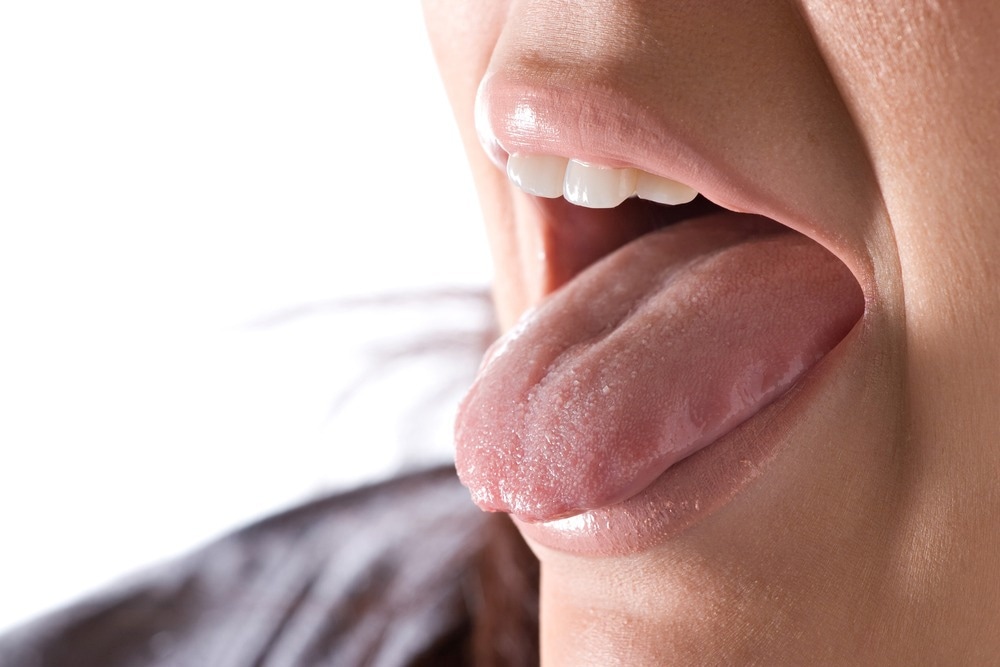
Background: With the growing global burden of ischemic stroke in aging populations, there is increasing interest in simple and non-invasive neurological markers to support early risk stratification and functional prognosis. Retroflex tongue (RT) and tongue deviation (TD) are observable signs of cranial nerve dysfunction; however, their comparative predictive value for stroke severity remains unclear.
Methods: In this retrospective observational study, 308 older adults (mean age: 69.1 years) hospitalized with ischemic stroke were enrolled. Tongue motor function was evaluated using an automatic tongue diagnosis system (ATDS). Deviation angles were measured, and the presence or absence of RT was assessed by trained traditional Chinese medicine physicians. Stroke severity and functional outcomes were evaluated using the National Institutes of Health Stroke Scale (NIHSS), Barthel Index, and length of hospital stay.
Results: Among the 308 patients, 59 (19.2%) exhibited TD and 249 (80.8%) did not. No significant differences were found in baseline characteristics between TD groups, except for deviation angle (TD: 9.72° ± 8.91° vs. non-TD: 6.40° ± 7.84°, p = 0.011). Patients without RT had significantly worse clinical outcomes, including longer hospital stays (32.0 vs. 25.9 days, p = 0.007), higher NIHSS scores (14.1 vs. 8.9, p < 0.001), and lower Barthel Index scores (18.6 vs. 35.0, p < 0.001), compared to those with RT. In contrast, TD showed no significant association with these outcomes. Multivariate regression identified non-RT as an independent predictor of stroke severity. ROC analysis supported the discriminative value of RT (AUC = 0.703 for NIHSS ≥ 9; AUC = 0.712 for Barthel ≤ 17), whereas TD showed poor predictive ability (AUC = 0.524 and 0.570, respectively).
Conclusion: Absence of retroflex tongue is more strongly associated with stroke severity and functional impairment than tongue deviation. As a simple, observable motor sign, RT may serve as a practical bedside indicator for early neurological assessment. However, given its preliminary status, further validation in prospective, multi-center studies is warranted before clinical application.
How long before your competent? hospital reaches out to these researchers to see what the protocol is and where the device can be purchased? Do you even have a functioning stroke hospital? If they don't have a research analyst following and implementing stroke research, then you don't have a useful stroke hospital! They are a dinosaur living in the past waiting for that meteorite to obliterate them.
Up to three-quarters of all stroke survivors experience some form of
difficulty swallowing (dysphagia). This condition often results in food
or liquid entering the lungs, significantly affecting patients' health
and quality of life.
Image Credit: ARENA Creative/Shutterstock.com
In extreme cases, dysphagia can lead to an inability to eat or drink
or even death from aspiration pneumonia. The social aspect of eating and
drinking being hindered, dysphagia can also contribute to depression in
patients.
The Gardner Neuroscience Institute, supported by a $660,000 NIH
grant, is launching a trial to test an at-home tongue endurance exercise
aimed at improving swallowing function in stroke survivors.
Brittany Krekeler, PhD, Speech language pathologist and trial
principal investigator, describes swallowing issues as a "hidden"
disorder often overshadowed by primary diseases.
Krekeler emphasizes the emotional and physical burden of dysphagia on
patients and their families, noting the significance of being able to
eat and drink normally.
Historically addressed through feeding tubes, dysphagia research is
now exploring more effective treatments, moving away from a
one-size-fits-all approach to more personalized therapies.(Protocols can be properly written to cover different variations in the problem.)
Treating dysphagia is like an artform, so depending on what therapist
you go to, you’ll get a different approach,” Krekeler said. “Current
treatment approaches are really a mixed bag depending on what
institution you’re at and what therapist you’re seeing.” (So incompetence reigns! No one has written a protocol on recovering from this!)
About the trial
Unlike traditional therapies that emphasize total tongue strength,
this trial will concentrate on improving tongue endurance, akin to
repetitive, sub-maximal movements during eating.
The study will enroll patients who are 3-6 months post-stroke, a time
of heightened neuroplasticity, offering a window for potentially more
effective rehabilitation.
Participants will use a Bluetooth-connected device to perform tongue
exercises, receiving real-time feedback. The exercises are designed to
increase in difficulty over an eight-week period. The trial will also
include MRI studies to observe brain changes related to learning the new
tongue exercises.
We think that learning how to use the device might actually be part
of the therapy, and in our field, we haven’t really looked at the
learning curve in terms of using your tongue to do something new,”
Krekeler said. “To investigate this potential learning effect, we’re
also doing MRIs on a small subset to see what changes occur in the brain
with learning how to use a tongue device.”
Potential for wider impact
While the study initially focuses on stroke patients, the insights
gained could benefit individuals with swallowing issues due to other
conditions like head and neck cancer and Parkinson's disease.
The trial represents a step towards determining the most effective
combination of interventions for recovering swallowing function.
Brittany Krekeler received this prestigious grant, indicating her promise as a future independent researcher in the field.
The trial benefits from the mentorship of established researchers in
stroke research and biostatistics, providing Krekeler with valuable
guidance and support in conducting effective stroke trials.
For information on enrolling in the trial, please contact the trial’s research coordinator, Anna Hopkins, by emailing hopkiak@ucmail.uc.edu.
WVXU highlighted a new trial at the University of Cincinnati that
will test an at-home tongue endurance exercise to improve patients’
swallowing function after a stroke.
Up to three-quarters of all stroke survivors have some form of difficulty swallowing (dysphagia) after a stroke.
"When you have a stroke, or another condition that impairs your
swallowing, it impacts your life in an incredible way," Brittany
Krekeler, PhD, assistant professor and clinician-scientist at the UC
College of Medicine’s Dysphagia Rehabilitation Laboratory, told WVXU.
The study will enroll patients who have trouble swallowing three to
six months after their stroke. Patients enrolled in the study will
receive a device with a pressurized bulb that connects to their phone or
tablet through Bluetooth to give them real-time feedback about how hard
they are pressing the bulb with their tongue.
Participants in the trial will press their tongue to the bulb, with
the device recording the number of times they do so and if they meet
their goal. They’ll complete the exercises three times a day for eight
weeks, with their goal increasing as they build endurance.
"We're trying to target fatigue resistance or endurance of the tongue
instead of strength because to swallow, you don't have to push your
tongue as hard as you can every single time, you have to generate enough
pressure to move whatever is in your mouth through your throat into
your esophagus," Krekeler said. "What we're doing in this study is
training people to press repeatedly over a longer period of time with
the hope that that will carry over to more functional swallowing
change."