Our doctors could make a 3d model of your damaged brain, thus knowing EXACTLY WHERE YOUR DEAD GRAY AND WHITE MATTER IS. Thus simplifying recommending the EXACT PROTOCOLS THAT FIX SUCH DAMAGE!
Nothing will occur, there is NO leadership or strategy anywhere in stroke!
Lifelike 3D-Printed ‘Training Brains’ React Like Real Organs
Imagine what brain surgeons could do with a three-dimensional (3D)-printed model of the brain. Not a structural model printed in plastic and uniform throughout, but one that mirrors the heterogeneity of real human brain tissue — its mechanical, thermal, and electromagnetic properties.

“If somebody has a brain tumor, you could take an MRI of their brain and make a 3D model from it that includes the tumor, and then practice surgery on that model,” said Christopher O’ Bryan, PhD, MS, assistant professor of mechanical and aerospace engineering at the University of Missouri (UM) in Columbia, Missouri. “You could learn how sound, electromagnetic waves, or physical insults interact with the brain to better understand concussions and traumatic brain injury.”
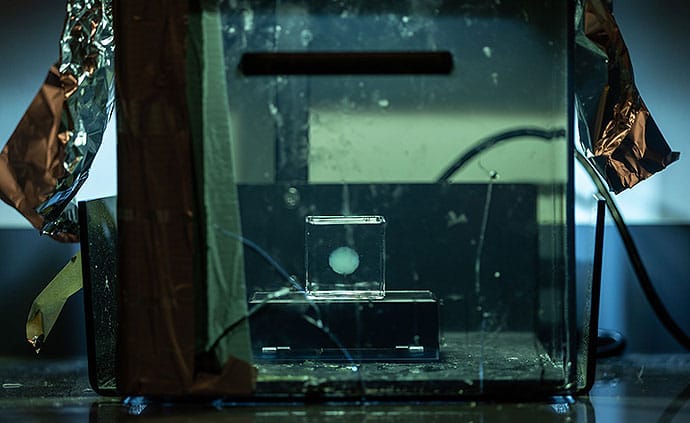
O’Bryan and colleagues in UM’s College of Engineering recently published a study in the journal Materialia describing how the researchers designed a unique 3D printer ink made from a modified polymer — called a photo-crosslinkable poly(vinyl alcohol) methacrylate polymer — and then used it to print a scaled-down 3D model of the brain, about 15% of a real brain’s size. The scientists relied on a method called embedded 3D printing, crosslinking the polymer in a microgel bath, to achieve a model that mimicked the soft tissue and the structural complexities of a real human brain.
How They Did It
To provide a broader picture of why they conducted the study, O’Bryan described his lab’s goals. “The focus areas in our lab include the designing of soft materials, the testing of these materials, and then how to actually manufacture things out of these soft materials. And that’s especially challenging when you take into account that most soft materials are hydrogels and biopolymers which start out in a liquid phase ,” he said.


No comments:
Post a Comment