Changing stroke rehab and research worldwide now.Time is Brain! trillions and trillions of neurons that DIE each day because there are NO effective hyperacute therapies besides tPA(only 12% effective). I have 523 posts on hyperacute therapy, enough for researchers to spend decades proving them out. These are my personal ideas and blog on stroke rehabilitation and stroke research. Do not attempt any of these without checking with your medical provider. Unless you join me in agitating, when you need these therapies they won't be there.

What this blog is for:

My blog is not to help survivors recover, it is to have the 10 million yearly stroke survivors light fires underneath their doctors, stroke hospitals and stroke researchers to get stroke solved. 100% recovery. The stroke medical world is completely failing at that goal, they don't even have it as a goal. Shortly after getting out of the hospital and getting NO information on the process or protocols of stroke rehabilitation and recovery I started searching on the internet and found that no other survivor received useful information. This is an attempt to cover all stroke rehabilitation information that should be readily available to survivors so they can talk with informed knowledge to their medical staff. It lays out what needs to be done to get stroke survivors closer to 100% recovery. It's quite disgusting that this information is not available from every stroke association and doctors group.

Saturday, October 10, 2020

Effect of Pre- and In-Hospital Delay on Reperfusion in Acute Ischemic Stroke Mechanical Thrombectomy

YOU BLITHERING IDIOTS STILL DON'T KNOW HOW FAST YOU NEED TO  DO tPA TO GET 100% RECOVERY.  In this research in mice the needed time frame for tPA delivery is 3 minutes.

Electrical 'storms' and 'flash floods' drown the brain after a stroke


'Think your stroke team can do that?' Since you will never meet that goal you are going to have to go down the difficult route of solving the 5 causes of the neuronal cascade of death in the first week. 100% recovery is still expected.


The latest here:

Effect of Pre- and In-Hospital Delay on Reperfusion in Acute Ischemic Stroke Mechanical Thrombectomy

Originally publishedhttps://doi.org/10.1161/STROKEAHA.120.030208Stroke. 2020;51:2934–2942

Abstract

Background and Purpose:

Post hoc analyses of randomized controlled clinical trials evaluating mechanical thrombectomy have suggested that admission-to-groin-puncture (ATG) delays are associated with reduced reperfusion rates.(Wrong goal; 100% recovery is the goal. Not this crapola of the tyranny of low expectations you want to push.) Purpose of this analysis was to validate this association in a real-world cohort and to find associated factors and confounders for prolonged ATG intervals.

Methods:

Patients included into the BEYOND-SWIFT cohort (Bernese-European Registry for Ischemic Stroke Patients Treated Outside Current Guidelines With Neurothrombectomy Devices Using the Solitaire FR With the Intention for Thrombectomy; https://www.clinicaltrials.gov; Unique identifier: NCT03496064) were analyzed (n=2386). Association between baseline characteristics and ATG was evaluated using mixed linear regression analysis. The effect of increasing symptom-onset-to-admission and ATG intervals on successful reperfusion (defined as Thrombolysis in Cerebral Infarction [TICI] 2b-3) was evaluated using logistic regression analysis adjusting for potential confounders.

Results:

Median ATG was 73 minutes. Prolonged ATG intervals were associated with the use of magnetic resonance imaging (+19.1 [95% CI, +9.1 to +29.1] minutes), general anesthesia (+12.1 [95% CI, +3.7 to +20.4] minutes), and borderline indication criteria, such as lower National Institutes of Health Stroke Scale, late presentations, or not meeting top-tier early time window eligibility criteria (+13.8 [95% CI, +6.1 to +21.6] minutes). There was a 13% relative odds reduction for TICI 2b-3 (adjusted odds ratio [aOR], 0.87 [95% CI, 0.79–0.96]) and TICI 2c/3 (aOR, 0.87 [95% CI, 0.79–0.95]) per hour ATG delay, while the reduction of TICI 2b-3 per hour increase symptom-onset-to-admission was minor (aOR, 0.97 [95% CI, 0.94–0.99]) and inconsistent regarding TICI 2c/3 (aOR, 0.99 [95% CI, 0.97–1.02]). After adjusting for identified factors associated with prolonged ATG intervals, the association of ATG delay and lower rates of TICI 2b-3 remained tangible (aOR, 0.87 [95% CI, 0.76–0.99]).

Conclusions:

There is a great potential to reduce ATG, and potential targets for improvement can be deduced from observational data. The association between in-hospital delay and reduced reperfusion rates is evident in real-world clinical data, underscoring the need to optimize in-hospital workflows. Given the only minor association between symptom-onset-to-admission intervals and reperfusion rates, the causal relationship of this association warrants further research.

Registration:

URL: https://www.clinicaltrials.gov. Unique identifier: NCT03496064.


Friday, October 9, 2020

Anticoagulation for Sickest COVID-19 Patients: Tread Carefully

You see a doctor immediately and get anti-coagulation going. You don't wait until it gets severe before you see a doctor. I'm going to demand heparin. Don't tough it out at home.

 Heparin binds to cells at a site adjacent to ACE2, the portal for SARS-CoV-2 infection, and "potently" blocks the virus, which could open up therapy options.

Anticoagulation Again Shown to Improve Survival in COVID-19 Patients;-Mortality risk about 50% lower

Stroke occurs frequently in COVID-19, leads to ‘devastating consequences’ for patients


I'm not medically trained so I know nothing, don't listen to me.

The latest here:


Anticoagulation for Sickest COVID-19 Patients: Tread Carefully

ASH recommendations on preventing blood clots in COVID-19

A computer rendering of COVID-19 viruses causing a blood clot

COVID-19 patients without overt venous thromboembolism (VTE) should receive anticoagulation in the hospital but only at relatively low doses, according to American Society of Hematology (ASH) draft guidance.

ASH endorsed prophylactic-intensity anticoagulation -- not intermediate- or therapeutic-intensity -- to prevent clotting in COVID-19 patients who are acutely or critically ill.

This conditional recommendation was based on very low certainty in the evidence about the effects of anticoagulation in affected patients, the guideline panel acknowledged.

But that may change in the near future, as there are currently 20 or so global randomized trials studying the question of anticoagulation dosing for primary thromboprophylaxis in sick, hospitalized COVID-19 patients, according to Alex Spyropoulos, MD, of Northwell Health at Lenox Hill Hospital in New York City, who was not involved with the group.

A pilot randomized trial, HESACOVID, recently suggested that therapeutic-level dosing of enoxaparin (Lovenox) improved respiratory outcomes in severe COVID-19.

Spyropoulos said he agreed with the proposed ASH guideline recommendations, and he noted that VTE rates from large U.S. health systems have been much lower than those reported from earlier, smaller studies from China and Europe.

Reasons for the difference may include reporting bias, bias from the use of systematic screening for VTE, or simple overestimations of VTE risk due to small samples in those older studies, he said.

Abnormal clotting was observed in COVID patients almost from the pandemic's outset, and discussions of whether, when, and how to prevent it followed almost immediately.

"COVID-19 is the most important public health problem of our lifetime, with more than one million deaths worldwide. Data suggest that abnormal blood clotting plays an important role in why patients die or get very sick from this disease. Thus, it is important that these patients be given anticoagulants to try to prevent clots, and data available right now suggest that standard dosing provides the best balance of benefits and risks," said ASH President Stephanie Lee, MD, in a press release.

For patients at high clotting risk and low bleeding risk, however, higher doses may be appropriate.

An intermediate dose of unfractionated or low molecular weight heparin may be considered in people with morbid obesity or those in the ICU, for example, Spyropoulos suggested.

Guideline authors cautioned that available clotting and bleeding risk assessment tools have not been validated in people with SARS-CoV-2.

In addition, no single anticoagulant was endorsed for COVID-19 patients given the lack of high-quality evidence.

"The selection of a specific agent (e.g., low molecular weight heparin, unfractionated heparin, etc.) may be based on availability, resources required, familiarity, and the aim of minimizing PPE use or staff exposure to COVID-19 infected patients as well as patient-specific factors (e.g., renal function, history of heparin-induced thrombocytopenia, concerns about gastrointestinal tract absorption)," the authors offered.

ASH will finalize the guideline before December. Public comments are being accepted until October 16.

As they are, the proposed recommendations are "very reasonable," according to Stephan Moll, MD, of the University of North Carolina in Chapel Hill.

"Overall, I agree with these recommendations. Higher intensities of anticoagulation should be used only with prospective data collection. That way, our practice recommendations will be informed by high-quality data," commented Behnood Bikdeli, MD, MS, of Brigham and Women's Hospital and Harvard Medical School.

Bikdeli said he is working with the INSPIRATION group that is midway through enrollment for a trial randomizing critically ill COVID patients to intermediate-dose vs standard dose anticoagulation.

Ongoing studies that answer similar questions include ACTIV-4, COVID-PACT, DAWN-ANTICO, and IMPROVE-COVID.

"They will help clarify the benefit and risk of various intensities of anticoagulation and will help guide who should be considered for anticoagulation therapy, at what dose, and for what length," Moll commented.

The ASH recommendations do not apply to VTE patients or those requiring anticoagulation to prevent thrombosis of extracorporeal circuits (e.g., extracorporeal membrane oxygenation or continuous renal replacement therapy).

  • author['full_name']

    Nicole Lou is a reporter for MedPage Today, where she covers cardiology news and other developments in medicine. Follow


Flutter kick failure

 In Florida right now, don't come here, mask wearing is hit and miss. Tried out the pool at the condo. I can't independently just move my lower left leg to propel myself in a straight direction using both legs easily. I should be able to go to any physical therapist in the world, get an exact diagnosis of the problem, THEN GET EXACT PROTOCOLS TO FIX THE PROBLEM.  I shouldn't have to solution this myself, the stroke medical world should have all the answers to 100% recovery.

Cost-Effectiveness of Tenecteplase Before Thrombectomy for Ischemic Stroke

WHAT ABSOLUTE FUCKING STUPIDITY,  

'COST EFFECTIVENESS' NOT RESULTS 

You all need to be fired! Get to 100% recovery and then you can work on costs.

Cost-Effectiveness of Tenecteplase Before Thrombectomy for Ischemic Stroke

 
Originally publishedhttps://doi.org/10.1161/STROKEAHA.120.029666Stroke. ;0

Background and Purpose:

Tenecteplase improved functional outcomes and reduced the requirement for endovascular thrombectomy in ischemic stroke patients with large vessel occlusion in the EXTEND-IA TNK randomized trial. We assessed the cost-effectiveness of tenecteplase versus alteplase in this trial.

Methods:

Post hoc within-trial economic analysis included costs of index emergency department and inpatient stroke hospitalization, rehabilitation/subacute care, and rehospitalization due to stroke within 90 days. Sources for cost included key study site complemented by published literature and government websites. Quality-adjusted life-years were estimated using utility scores derived from the modified Rankin Scale score at 90 days. Long-term modeled cost-effectiveness analysis used a Markov model with 7 health states corresponding to 7 modified Rankin Scale scores. Probabilistic sensitivity analyses were performed.

Results:

Within the 202 patients in the randomized controlled trial, total cost was nonsignificantly lower in the tenecteplase-treated patients (40 997 Australian dollars [AUD]) compared with alteplase-treated patients (46 188 AUD) for the first 90 days(P=0.125). Tenecteplase was the dominant treatment strategy in the short term, with similar cost (5412 AUD [95% CI, −13 348 to 2523]; P=0.181) and higher benefits (0.099 quality-adjusted life-years [95% CI, 0.001–0.1967]; P=0.048), with a 97.4% probability of being cost-effective. In the long-term, tenecteplase was associated with less additional lifetime cost (96 357 versus 106 304 AUD) and greater benefits (quality-adjusted life-years, 7.77 versus 6.48), and had a 100% probability of being cost-effective. Both deterministic sensitivity analysis and probabilistic sensitivity analyses yielded similar results.

Conclusions:

Both within-trial and long-term economic analyses showed that tenecteplase was highly likely to be cost-effective for patients with acute stroke before thrombectomy. Recommending the use of tenecteplase over alteplase could lead to a cost saving to the healthcare system both in the short and long term.

Registration:

URL: https://www.clinicaltrials.gov. Unique identifier: NCT02388061.

Monday, October 5, 2020

Chapter 19 - Sex differences in stroke

Darn, this is not about how much sex men vs. women need post stroke to 100% recover. So go ask your doctor for EXACTLY HOW MUCH SEX YOU SHOULD BE HAVING TO RECOVER.  I'M DEADLY SERIOUS. Why the fuck doesn't your doctor know that answer?


Chapter 19 - Sex differences in stroke

Abstract

Sex disparities within the field of stroke, including subarachnoid hemorrhages (SAHs), have been in focus during the last 2 decades. It is clear that stroke incidence is higher in men, and also that men have their first stroke earlier than women. On the other hand, women have more severe strokes, mainly because cardioembolic strokes are more common in women. This leads to higher case fatality and worse functional outcome in women. It has often been pointed out that women more often have nontraditional stroke symptoms, and therefore may seek medical help later. After discharge from the hospital, female stroke survivors live alone in many cases and are dependent on external care. Therefore, these women frequently rate their quality of life (QoL) lower than men do. Female spouses more often provide help to their male stroke survivors than the reverse, and they accept a heavier burden. These caregivers are at high risk for depression, low QoL, and low psychologic wellbeing. SAH is a special form of stroke, often caused by a ruptured aneurysm. It is about 20% more common in women. The case fatality is high, but does not differ between the sexes.


Thursday, October 1, 2020

Israeli Students Win International Prize for Developing App That Detects Strokes Early

 Good for those with smart phones and using them all the time. What would be the usage rate for 70+ people? I use my phone for texting, reading emails, almost no phone calls. Would this app work in those conditions? This would seem to require access to the camera non-stop, eating your battery in no time, and for that reason I wouldn't use it.

Israeli Students Win International Prize for Developing App That Detects Strokes Early

Strokes (cerebrovascular events, or CVAs) are among the most devastating medical conditions in humans, but in many cases, they can be prevented. A stroke occurs when the blood supply to part of the brain is halted or reduced, preventing brain tissue from getting oxygen and nutrients. Brain cells begin to die in minutes. 

The two main types of stroke

As it is a medical emergency, speedy treatment is crucial. Early action can reduce brain damage and other complications. There are two main types of stroke – ischemic, due to lack of blood flow, and hemorrhagic, the result of bleeding in the brain. Both cause parts of the brain to stop functioning properly.

Stroke symptoms include an inability to move or feel on one side of the body, problems understanding or speakingdizziness or loss of vision to one side. hemorrhagic stroke may also be associated with a severe headache.

Prevention includes decreasing risk factors

People with various medical conditions and habits are at high risk for a stroke – those who smoke, suffer from hypertension, obesity, uncontrolled diabetes, end-stage kidney disease, and atrial fibrillation

Prevention includes decreasing risk factors and surgery to open up the arteries to the brain in those with problematic narrowing of the carotid artery to the brain. 

MedHacks – a hackathon for developing medical technologies

Now, a team of students from the Technion-Israel Institute of Technology in Haifa and the University of Missouri in the US has won second place at MedHacks – a hackathon for developing medical technologies hosted by Johns Hopkins University. They were awarded for developing the Scan&Sound application, which detects strokes at early stages and alerts the victims.

Sean Heilbronn-Doron (Technion)

MedHacks is the largest hackathon in the US for developing medical technologies. This year, more than 1,000 people participated, including students, doctors, engineers, scientists and entrepreneurs from all over the world. The event was a collaboration between Johns Hopkins University and MLH-Major League Hacking, which organizes hundreds of student hackathons every year and was funded by various entities, including Google Cloud.

The Scan&Sound team consists of four Technion students and alumni: Hadas Braude, a 6th-year student in the Rappaport Faculty of Medicine; Sean Heilbronn-Doron, a fourth-year student in the faculty; Shunit Polinsky, a master’s-degree student in the Faculty of Mechanical Engineering; and Ron Liraz, an alumnus who received a master’s degree from the Viterbi Faculty of Electrical Engineering. The fifth student on the team was Leeore Levinstein, a third-year medical student at the University of Missouri. 

The different levels of stroke severity

One in four people in the US undergoes a stroke at some point in their lives. There are many different levels of severity, ranging from a stroke that one is not even aware of experiencing to an event that results in serious cognitive and motor impairmentsand even death. In addition to personal harm, strokes also incur enormous financial expenses for the individual, the health system and the country. As a result, there is a great deal of motivation to develop methods to identify strokes at the early stages when treatment is more effective. 

Scan&Sound won second place in the “Personalized Medicine Using Data-Driven Healthcare” category. The application detects early, subtle stages of stroke by studying voices and facial expressions and analyzing the data using artificial intelligence. If there is a significant change, the application alerts the user that he/she is suffering from symptoms that may indicate a stroke and suggests a call to predetermined contacts or an emergency call center. 

Keeping them up at night

Braude, who headed the group, proposed the idea after someone close to her suffered a stroke. On the day it happened, the person met with friends and family, who immediately noticed that something was wrong. They did not, however, suspect a stroke.

“As a result,” said Braude, “the man arrived at the hospital late and missed the ‘treatment window.’ Since then, I haven’t stopped thinking about how to prevent the next incident and have asked myself how it can be possible that the telephone that is always with us gathers information about us, but cannot detect and warn that something is wrong with us.”

Braude and Heilbronn-Doron met before this round of competition when they competed together in the T2Med hackathon hosted by the Rappaport Faculty of Medicine. Following their win there, the two registered for MedHacks and invited Liraz, a talented and experienced electrical engineer they met at T2Med, to join them. In classic Israeli fashion, the two other members of the unique and diverse trans-Atlantic Scan&Sound team arrived through personal and family contacts.

Meeting their goal through effective communication

The hackathon itself was very challenging. Besides the physical distance, the members of the team had to contend with the time difference between Israel and the US, as well as navigating classes and other prior commitments. They were able to meet their goal through effective communication, planning, determination, division of labor and, most importantly, through each member’s personal commitment to the project.

The judges at the competition were very impressed with their project. The team stressed the project’s true goal is to enable people to get treatment in time and to safeguard brains, identities and lives. This is, in fact, the motivation that inspired them to establish a technological team and to create partnerships with neurological departments and rehabilitation centers in Israel and the US,


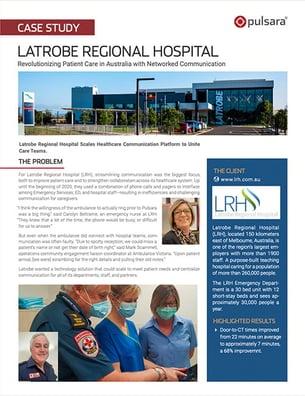
Australia’s Latrobe Regional Hospital(Melbourne, Australia) Improves Door-to-CT Times by 68% with Pulsara (Case Study)

 But you don't even tell us the only outcome desired in stroke. 100% recovery! How many got that result? No measurement of that you all need to be fired. My God, the massive incompetence in stroke is appalling. Hope you are OK with that when YOU  become the 1 in 4 per WHO that has a stroke?

Australia’s Latrobe Regional Hospital(Melbourne, Australia) Improves Door-to-CT Times by 68% with Pulsara (Case Study)

For Latrobe Regional Hospital (LRH) near Melbourne, Australia, streamlining communication has been a major area of focus, both to improve patient care and to strengthen collaboration across its healthcare system. Up until the beginning of 2020, they used a combination of phone calls and pagers to interface among Emergency Services, ED, and hospital staff—resulting in inefficiencies and challenging communication for caregivers.

“I think the willingness of the ambulance to actually ring prior to Pulsara was a big thing,” said Carolyn Beltrame, an Emergency Nurse at LRH. “They knew that a lot of the time, the phone would be busy, or difficult for us to answer.”

latrobe-regional-case-study-500x650

But even when the ambulance did connect with hospital teams, communication was often faulty. “Due to spotty reception, we could miss a patient’s name or not get their date of birth right,” said Mark Scammell, Operations Community Engagement Liaison Coordinator at Ambulance Victoria. “Upon patient arrival, [we were] scrambling for the right details and pulling their old notes.”

Latrobe wanted a technology solution that could scale to meet patient needs and centralize communication for all of its departments, staff, and partners.

Latrobe is the third hospital in the state of Victoria to implement a mobile communication platform called Pulsara. Made possible by grant funding, the hospital activated the technology across multiple entities in February 2020, including ambulance partners, cardiology, stroke, and mental health teams.

Pulsara connects people when seconds matter with a secure, unified patient channel—replacing multiple phone calls, radio reports, faxes, and pagers—and allowing care teams to communicate efficiently and effectively when treating patients.

Read the case study (or download it here) to learn how Latrobe Regional Hospital united their EMS and hospital teams on one communication channel, improving door-to-CT times by 68% — reducing them from an already impressive 22 minutes down to an average of just 7 minutes.


Dynamic CTA-Derived Perfusion Maps Predict Final Infarct Volume: The Simple Perfusion Reconstruction Algorithm

Great, your next step is to take these objective maps and create protocols that recover from such damage. I don't care that that is a BHAG(Big Hairy Audacious Goals, but leaders tackle such goals. Are you leaders or mice? I already know there are no leaders in our fucking failures of stroke associations.

The latest here:

Dynamic CTA-Derived Perfusion Maps Predict Final Infarct Volume: The Simple Perfusion Reconstruction Algorithm

C.C. McDougall, L. Chan, S. Sachan, J. Guo, R.G. Sah, B.K. Menon, A.M. Demchuk, M.D. Hill, N.D. Forkert, C.D. d’Esterre and P.A. Barber

Abstract

BACKGROUND AND PURPOSE: Infarct core volume measurement using CTP (CT perfusion) is a mainstay paradigm for stroke treatment decision-making. Yet, there are several downfalls with cine CTP technology that can be overcome by adopting the simple perfusion reconstruction algorithm (SPIRAL) derived from multiphase CTA. We compare SPIRAL with CTP parameters for the prediction of 24-hour infarction.

MATERIALS AND METHODS: Seventy-two patients had admission NCCT, multiphase CTA, CTP, and 24-hour DWI. All patients had successful/quality reperfusion. Patient-level and cohort-level receiver operator characteristic curves were generated to determine accuracy. A 10-fold cross-validation was performed on the cohort-level data. Infarct core volume was compared for SPIRAL, CTP–time-to-maximum, and final DWI by Bland-Altman analysis.

RESULTS: When we compared the accuracy in patients with early and late reperfusion for cortical GM and WM, there was no significant difference at the patient level (0.83 versus 0.84, respectively), cohort level (0.82 versus 0.81, respectively), or the cross-validation (0.77 versus 0.74, respectively). In the patient-level receiver operating characteristic analysis, the SPIRAL map had a slightly higher, though nonsignificant (P < .05), average receiver operating characteristic area under the curve (cortical GM/WM, r = 0.82; basal ganglia  = 0.79, respectively) than both the CTP–time-to-maximum (cortical GM/WM = 0.82; basal ganglia = 0.78, respectively) and CTP-CBF (cortical GM/WM = 0.74; basal ganglia = 0.78, respectively) parameter maps. The same relationship was observed at the cohort level. The Bland-Altman plot limits of agreement for SPIRAL and time-to-maximum infarct volume were similar compared with 24-hour DWI.

CONCLUSIONS: We have shown that perfusion maps generated from a temporally sampled helical CTA are an accurate surrogate for infarct core.


Disseminating Research on Null, Inconclusive, and Confirmatory Findings in Cardiovascular Science

Our fucking failures of stroke associations  should report on all stroke research that falls into these categories. BUT THEY ARE SO FUCKING INCOMPETENT THEY WILL DO NOTHING!

 Disseminating Research on Null, Inconclusive, and Confirmatory Findings in Cardiovascular Science

 
Originally publishedhttps://doi.org/10.1161/CIRCOUTCOMES.120.007448Circulation: Cardiovascular Quality and Outcomes. ;0

Footnotes

The opinions expressed in this article are not necessarily those of the editors or of the American Heart Association.

This article is part of the Null Hypothesis Collection, a collaborative effort between CBMRT, AHA Journals, and Wolters Kluwer. For more information, visit https://www.ahajournals.org/null-hypothesis

Brahmajee K. Nallamothu, MD, MPH, University of Michigan Medical School, Internal Medicine-Cardiovascular Medicine North Campus Research Complex, 2800 Plymouth Rd, Bldg 16, Ann Arbor, MI 48109. Email

The Functional Tactile Object Recognition Test: A Unidimensional Measure With Excellent Internal Consistency for Haptic Sensing of Real Objects After Stroke

 You do realize that this is just an assessment and does fucking nothing to get survivors recovered? Nothing on next steps or protocols to be used to recover.

Useless.

The Functional Tactile Object Recognition Test: A Unidimensional Measure With Excellent Internal Consistency for Haptic Sensing of Real Objects After Stroke

  • 1Department of Occupational Therapy, Social Work and Social Policy, School of Allied Health, Human Services and Sport, College of Science, Health and Engineering, La Trobe University, Melbourne, VIC, Australia
  • 2Neurorehabilitation and Recovery, The Florey Institute of Neuroscience and Mental Health, Heidelberg, VIC, Australia

Introduction: Our hands, with their exquisite sensors, work in concert with our sensing brain to extract sensory attributes of objects as we engage in daily activities. One in two people with stroke experience impaired body sensation, with negative impact on hand use and return to previous valued activities. Valid, quantitative tools are critical to measure somatosensory impairment after stroke. The functional Tactile Object Recognition Test (fTORT) is a quantitative measure of tactile (haptic) object recognition designed to test one’s ability to recognize everyday objects across seven sensory attributes using 14 object sets. However, to date, knowledge of the nature of object recognition errors is limited, and the internal consistency of performance across item scores and dimensionality of the measure have not been established.

Objectives: To describe the original development and construction of the test, characterize the distribution and nature of performance errors after stroke, and to evaluate the internal consistency of item scores and dimensionality of the fTORT.

Method: Data from existing cohorts of stroke survivors (n = 115) who were assessed on the fTORT quantitative measure of sensory performance were extracted and pooled. Item and scale analyses were conducted on the raw item data. The distribution and type of errors were characterized.

Results: The 14 item sets of the fTORT form a well-behaved unidimensional scale and demonstrate excellent internal consistency (Cronbach alpha of 0.93). Deletion of any item failed to improve the Cronbach score. Most items displayed a bimodal score distribution, with function and attribute errors (score 0) or correct response (score 3) being most common. A smaller proportion of one- or two-attribute errors occurred. The total score range differentiated performance over a wide range of object recognition impairment.

Conclusion: Unidimensional scale and similar factor loadings across all items support simple addition of the 14 item scores on the fTORT. Therapists can use the fTORT to quantify impaired tactile object recognition in people with stroke based on the current set of items. New insights on the nature of haptic object recognition impairment after stroke are revealed.

Introduction

Our hands, with their exquisite sensors, work in concert with our sensing brain to extract sensory attributes of objects to interact with those objects as we engage in our daily activities. This ability is critical to tactually recognize objects (e.g., a cup from a jar), locate objects (e.g., locate a button from the background of the clothing on which it is fastened), appreciate the tactile features of objects (e.g., the shape and warmth of a child’s hand), and to connect with the people and objects that we interact with in the immediate (reachable) space around us.

The capacity underlying these tasks is commonly referred to as tactile (or haptic) object recognition. Tactile (haptic) object recognition is the ability to identify common objects through the use of touch without the aid of vision. Haptic object recognition relies on all the somatosensory inputs used by the tactile system and skin sensors in combination with information from position and movement sensors in joints and muscles and force receptors in tendons (Lederman and Klatzky, 1990, 2009). It involves extraction of various object attributes and the integration of that information to recognize what the object is. The sensory object attributes extracted include texture, shape, size, weight, temperature, hardness, and function/motion of objects (Lederman and Klatzky, 1987, 1990). Haptic perception typically involves active manual exploration. When people use their haptic system, they typically focus on their experiences of the external world and objects and their properties, such as roughness, shape, and weight (Lederman and Klatzky, 2009).

One in four adults are likely to suffer a stroke, based on the estimated global lifetime risk of stroke (Feigin et al., 2018). One in two stroke survivors experience impairment in the ability to receive and interpret body sensations such as touch, limb position sense, and to recognize objects through touch (Carey, 1995; Connell et al., 2008; Tyson et al., 2008; Carey and Matyas, 2011; Kessner et al., 2016). It is like the hand is blind (Turville et al., 2019). The person has difficulty holding and using simple objects such as a fork, and frequently learns not to use his/her hand. The impairment negatively impacts the person’s ability to interact with the world around them (Connell et al., 2014; Turville et al., 2019), hand function (Blennerhassett et al., 2007, 2008), goal-directed use of the arm (Jeannerod, 1997; Turville et al., 2017), and return to previous life activities (Carey et al., 2016b, 2018). It is associated with poorer functional outcome (Reding and Potes, 1988; Carey et al., 2016b), yet it is a “neglected” area of stroke rehabilitation (Kalra, 2010). Valid, quantitative measurement is critical to diagnose somatosensory impairment and assess change over time (Carey, 1995).

Assessment of the ability to recognize common objects through the sense of touch is important after stroke. It has face validity for the person with stroke and allows direct translation of capacity to the context of everyday tasks. Some measures have been developed to assess recognition of a subset of object features such as shape and size, often using a two-dimensional layout (Rosen and Lundborg, 1998) or arbitrary shapes (Kalisch et al., 2012). However, in the real world, we typically need to interact with three-dimensional (3D) common objects that have multiple sensory object features. Further, we know that real 3D common objects can be recognized very efficiently in non-neurologically impaired adults (Lederman and Klatzky, 1987). Haptic recognition of everyday objects is quite fast and highly accurate with 96% correctly named: 68% in less than 3 s and 94% within 5 s (Klatzky et al., 1985). Further, in using common objects, it may be important to not only recognize sensory features but also recognize the type of object, such as a drinking vessel (typically characterized by a cluster of object features).

Our overall objective was to develop a quantitative and psychometrically sound tool to measure the capacity of haptic object recognition using 3D common objects. Our approach involved two sub-aims:

1. To construct a quantitative measure of the ability to recognize everyday objects through touch, the functional Tactile Object Recognition Test (Part 1).

2. To evaluate the internal consistency of item scores and dimensionality of the functional Tactile Object Recognition Test, an evidence-based assessment to measure somatosensory impairment in the hand after stroke (Part 2).


Oxytocin Receptor Signaling in Vascular Function and Stroke

Way beyond my ability to understand how this might help in stroke recovery.

Oxytocin Receptor Signaling in Vascular Function and Stroke

Erin C. McKay1,2* and Scott E. Counts1,2,3,4,5
  • 1Department of Translational Neuroscience, Michigan State University, Grand Rapids, MI, United States
  • 2Neuroscience Program, Michigan State University, East Lansing, MI, United States
  • 3Department of Family Medicine, Michigan State University, Grand Rapids, MI, United States
  • 4Hauenstein Neurosciences Center, Mercy Health Saint Mary’s Hospital, Grand Rapids, MI, United States
  • 5Michigan Alzheimer’s Disease Research Center, Ann Arbor, MI, United States

The oxytocin receptor (OXTR) is a G protein-coupled receptor with a diverse repertoire of intracellular signaling pathways, which are activated in response to binding oxytocin (OXT) and a similar nonapeptide, vasopressin. This review summarizes the cell and molecular biology of the OXTR and its downstream signaling cascades, particularly focusing on the vasoactive functions of OXTR signaling in humans and animal models, as well as the clinical applications of OXTR targeting cerebrovascular accidents.

Introduction

Since its original cloning and characterization by Kimura et al. (1992), to more recent predictions of its three dimensional structure (Busnelli et al., 2016), the human oxytocin receptor (OXTR) has garnered special attention for its role as a potential therapeutic target in a wide array of physiological and behavioral disorders. Several recent reviews have comprehensively covered the impact of OXTR signaling upon peripheral and central control of behavior and physiological functions including osmoregulatory, stress modulation, and memory (Jurek and Neumann, 2018; Grinevich and Neumann, 2020). By contrast, this review will survey the role of OXTR-mediated cellular and molecular pathways regulating vascular function, with a special focus on mechanisms of cerebrovascular disease and the receptor’s putative disease-modifying role in the post-stroke environment, which may be amenable to therapeutic targeting.

The Oxytocin Receptor

The OXTR is a widely expressed Gαq protein-coupled receptor (GPCR) that binds its endogenous nonapeptide ligand, oxytocin (OXT), with an affinity of about 1–10 nM (Chini et al., 2017), as well as a structurally similar nonapeptide, vasopressin, with an affinity of about 100 nM–1 μM (Postina et al., 1996). The OXT peptide and its full nine amino acid sequence was first detailed in 1953 by Du Vigneaud and colleagues through varied partial hydrolysis experiments combined with paper chromatography (du Vigneaud et al., 1953). However, its existence was recognized as early as 1928 when researchers began testing the effects of OXT from pituitary extracts on peripheral reactions such as uterine contractions and blood pressure (Bourne and Burn, 1928; Griling and Eddy, 1928; Gruber, 1928; Kamm et al., 1928). OXT has since been found to exert both central and peripheral effects via OXTR-mediated phospholipase C (PLC) activation and downstream Ca2+ signal transduction (Zingg and Laporte, 2003). OXT is synthesized in the hypothalamic magnocellular and parvocellular neurons, reaching the peripheral circulation through the posterior pituitary (Argiolas and Gessa, 1991), while central actions appear to occur through both axonal and possibly volume transmission through dendrites (Meyer-Lindenberg et al., 2011). This volume transmission and its relative contribution to OXTR activation is an ongoing subject of debate, as more OXT neuronal projections to forebrain OXTR-expressing regions have become apparent in recent years (Knobloch et al., 2012; Grinevich et al., 2016). The very first hint of a bioactive OXTR was indirectly demonstrated by Sir Henry Dale and focused on the induction of uterine contractions by posterior pituitary gland components (Viero et al., 2010). Since that time OXTRs have not only been identified in the uterus (Fuchs et al., 1984), but also the mammary glands (Soloff et al., 1977), heart (Gutkowska et al., 1997), blood vessels (Thibonnier et al., 1999b), and brain (Muhlethaler et al., 1983). While the presence and activity of the receptor in each of these regions underscores the importance of OXTR signaling in peripheral and central physiology, this review will focus primarily on those found in the brain. Regardless, the widespread expression of this receptor and its ligands underscores the continued relevance and necessity of research into its functional repertoire (Grinevich et al., 2016), even after the 100 years that have passed since Dale engaged the receptor without knowing what it was (Viero et al., 2010). Before turning to physiological and disease modifying possibilities for the receptor, its biology as revealed by basic research will be summarized. This section provides a synthesis of the current understanding of the OXTR gene and protein at the cellular level that will be necessary to fully grasp the potential of its therapeutic use.

Much more at link.

St. Mary’s Hospital(Virginia) earns awards


Big fucking whoopee.


 But you tell us NOTHING ABOUT RESULTS. They remind us they 'care' about us  but never tell us how many 100% recovered.

Three measurements will tell me if the stroke hospital is possibly not completely incompetent; DO YOU MEASURE ANYTHING?

  1. tPA full recovery? Better than 12%?
  2. 30 day deaths? Better than competitors?
  3. rehab full recovery? Better than 10%?


You'll want to know results so call that hospital president(Whoever that is) and demand to know what the RESULTS are for; tPA efficacy, 30 day deaths, 100% recovery. Because there is no point in going to that hospital if they are not willing to publish results.

The invalid chest thumping here:

St. Mary’s Hospital(Virginia) earns awards

Bon Secours St. Mary’s Hospital is one of five Bon Secours Richmond hospitals to receive awards recently from the American Heart Association & American Stroke Association’s Get With The Guidelines program.

The hospital’s Cardiovascular Intensive Care Unit also received the gold-level Beacon Award for Excellence from the American Association of Critical-Care Nurses.

Get with The Guidelines recognizes a hospital’s commitment to ensuring that stroke patients receive the most appropriate treatment according to nationally recognized, research-based guidelines based on the latest scientific evidence. It awards hospitals that meet specific quality achievement measures for the diagnosis and treatment of stroke patients at a set level for a designated period. These measures include evaluation of the proper use of medications and other stroke treatments aligned with the most up-to-date, evidence-based guidelines with the goal of speeding recovery and reducing death and disability for stroke patients.

Bon Secours St. Mary’s Hospital earned the Get with the Guidelines-Stroke Gold Plus Award and the Target: Stroke Honor Roll Elite award.  In addition, St. Mary’s Hospital received the Get with the Guidelines-Heart Failure Gold Plus Award.

The CICU award is given to units that achieve a three-year, three-level award with gold, silver or bronze designations and meet national criteria consistent with Magnet Recognition, the Malcolm Baldrige National Quality Award and the National Quality Healthcare Award.

The Beacon Award for Excellence recognizes unit caregivers who successfully improve patient outcomes and align practices with AACN’s six Healthy Work Environment Standards.

St. Mary’s Hospital CVICU earned the gold award by meeting the following evidence-based Beacon Award for Excellence criteria: leadership structures and systems; appropriate staffing and staff engagement; effective communication, knowledge management, and learning and development; evidence-based practice and processes; and outcome measurement.

Cambridge Medical Center receives Get With The Guidelines-Stroke Silver Quality Achievement Award

Big fucking whoopee.


 But you tell us NOTHING ABOUT RESULTS. They remind us they 'care' about us  but never tell us how many 100% recovered.

Three measurements will tell me if the stroke hospital is possibly not completely incompetent; DO YOU MEASURE ANYTHING?

  1. tPA full recovery? Better than 12%?
  2. 30 day deaths? Better than competitors?
  3. rehab full recovery? Better than 10%?


You'll want to know results so call that hospital president(Whoever that is) and demand to know what the RESULTS are for; tPA efficacy, 30 day deaths, 100% recovery. Because there is no point in going to that hospital if they are not willing to publish results.

The invalid chest thumping here:


Cambridge Medical Center receives Get With The Guidelines-Stroke Silver Quality Achievement Award

Cambridge Medical Center (CMC) has received the American Heart Association/American Stroke Association’s Get With The Guidelines®-Stroke Silver Quality Achievement Award. The award recognizes the hospital’s commitment to ensuring stroke patients receive the most appropriate treatment according to nationally recognized, research-based guidelines based on the latest scientific evidence.

CMC earned the award by meeting specific quality achievement measures for the diagnosis and treatment of stroke patients. These measures include evaluation of the proper use of medications and other stroke treatments aligned with the most up-to-date, evidence-based guidelines aimed at speeding recovery and reducing death and disability for stroke patients. Before discharge, patients also receive education on managing their health, get their follow-up visit scheduled, and other care transition interventions

“Cambridge Medical Center is dedicated to improving the quality of care for our stroke patients by implementing the American Heart Association’s Get With The Guidelines-Stroke initiative,” said hospital president Kelly Spratt. “This award tells the Cambridge area community that we are committed to providing the best care possible at Cambridge Medical Center and that we are always striving to improve patient outcomes.”

Cambridge Medical Center additionally received the Association’s Target: Diabetes Type 2 Honor Roll award. To qualify for this recognition, hospitals must meet quality measures with more than 90% compliance for 12 consecutive months for the “Overall Diabetes Cardiovascular Initiative Composite Score.”

“We are pleased to recognize Cambridge Medical Center for their commitment to stroke care,” said Lee H. Schwamm, M.D., national chairperson of the Quality Oversight Committee and Executive Vice Chair of Neurology, Director of Acute Stroke Services, Massachusetts General Hospital, Boston, Massachusetts. “Research has shown that hospitals adhering to clinical measures through the Get With The Guidelines quality improvement initiative can often see fewer readmissions and lower mortality rates.”

According to the American Heart Association/American Stroke Association, stroke is the No. 5 cause of death and a leading cause of adult disability in the United States. On average, someone in the U.S. suffers a stroke every 40 seconds and nearly 795,000 people suffer a new or recurrent stroke each year.


Enhanced Rehab For Stroke Doubles Movement Recovery

Well then, write up a protocol AND DELIVER IT to all 10 million yearly stroke survivors  now and into the future.

on what works. Just this writeup is totally fucking useless, doctors and stroke hospitals do not read and implement research.

Enhanced Rehab For Stroke Doubles Movement Recovery

 Source:

A novel therapy technique invented by researchers at The University of Texas at Dallas has been shown in a pilot study to double the rate of upper limb recovery in stroke patients, a leap forward in treating the nearly 800,000 Americans who suffer strokes each year.

The results of the study, funded by UT Dallas spinoff company MicroTransponder of Austin, Texas, were published Sept. 27 in the journal Stroke.

The findings indicate that targeted plasticity therapy — which involves stimulation of the vagus nerve — paired with traditional motor-skill rehabilitation is not only safe, but also twice as effective as rehab alone.

Dr. Jane Wigginton, the chief medical officer at UT Dallas’ Texas Biomedical Device Center (TxBDC) and an associate professor of emergency medicine at UT Southwestern Medical Center, led the Dallas site of the clinical trial, which involved 17 people across the country who had suffered a stroke.

“Stroke is too common and too debilitating for us to tolerate the status quo,” Wigginton said. “Patients need a real solution so they can get back to fully living their lives.”

Dr. Michael Kilgard, associate director and chief science officer of the TxBDC, invented targeted plasticity therapy (TPT). Kilgard, who is also the Margaret Fonde Jonsson Professor in the School of Behavioral and Brain Sciences (BBS), said the study results further validate the theories that he and his colleagues based their TPT work on beginning in 2009.

“We set out to design an approach that could transform long-term care and restore quality of life to patients for whom that has thus far been impossible,” said Kilgard, who was not involved in the clinical trial. “These results show our method has immense potential. We’re excited about what this could mean for millions of stroke patients worldwide.”

Researchers affiliated with the TxBDC and BBS developed the therapy technique, which pairs physical movements with precisely timed vagus nerve stimulation (VNS) — electrical stimulus of the nerve via a device implanted on the nerve in the neck.

The vagus nerve controls the parasympathetic nervous system, overseeing many unconscious functions such as circulation and digestion. Stimulating the nerve initiates neural plasticity — reorganization of the brain’s circuitry. The idea behind TPT is that synchronizing VNS with movement accelerates plasticity in a damaged brain, and with it, recovery.

A stroke occurs when blood flow to the brain is interrupted because of a blockage or a ruptured blood vessel. Limb mobility can be affected when nerve cells are damaged. Such forms of brain trauma are often treated with rehabilitation that includes repeated movement of the affected limb in an effort to regain motor skills. The approach is thought to work by helping the brain reorganize.

Several studies of Kilgard’s technique in animal models have previously demonstrated that it is effective in recovering limb function after stroke. A small clinical trial in Europe also provided encouraging data for its potential use in humans.

In 2009, UT Dallas licensed its VNS technique as a stroke and tinnitus treatment to MicroTransponder, which sponsored the new double-blind, placebo-controlled study.

Neither the researchers nor the study subjects knew who was getting VNS stimulation and who was not.

Each study subject was a stroke patient whose stroke occurred between four months and five years prior to selection. After they had a VNS device implanted, the subjects received six weeks of in-clinic rehab followed by a home exercise program. About half were treated with active VNS while the rest received control VNS. All were assessed one, 30 and 90 days after therapy with a widely used, stroke-specific measure of performance impairment.

In addition to showing that the technique is safe, the researchers found that subjects receiving active VNS scored more than twice as high as control subjects at the 30- and 90-day intervals, opening the way for larger, more extensive clinical trials, Kilgard said. One such trial is in the recruitment phase and includes a study site in Dallas.

Other institutions involved in the study included The University of Texas Health Science Center at Houston; the University of Minnesota; the University of California, Irvine; the University of Glasgow; and Massachusetts General Hospital.

MicroTransponder had no responsibility for the analysis and interpretation of study data and had no responsibility for writing of the trial report or in the decision to submit the paper for publication. Kilgard is a shareholder and consultant for MicroTransponder Inc.

Does Caffeine Protect Against Parkinson's?

 I'm not waiting for future studies. I'm doing one 12 cup pot of coffee a day, although I did just switch to decaf for this reason.

This Many Coffees Is Bad For Your Heart Health

The latest here:

Does Caffeine Protect Against Parkinson's?

Benefit seen even for people with Parkinson's genetic risk

A female barista is about to put the lid on a takeout cup of coffee

People with Parkinson's disease had lower plasma caffeine levels than people without Parkinson's, and levels were even lower for Parkinson's patients carrying the LRRK2 gene mutation, researchers reported.

Plasma caffeine concentration was lower in Parkinson's patients compared with healthy controls, substantially more so among LRRK2 carriers (by 76%) than noncarriers (by 31%), reported Grace Crotty, MD, of Massachusetts General Hospital in Boston, and co-authors, in Neurology.

"These results are promising and encourage future research exploring caffeine and caffeine-related therapies to lessen the chance that people with this gene develop Parkinson's," Crotty said in a statement. "It's also possible that caffeine levels in the blood could be used as a biomarker to help identify which people with this gene will develop the disease, assuming caffeine levels remain relatively stable."

While the leucine-rich repeat kinase 2 (LRRK2) mutation is considered a causative influence on Parkinson's, people who carry the gene do not necessarily develop the disease.

Previous reports have suggested an inverse association between daily caffeine consumption and reduced risk of developing Parkinson's.

"It's odd that non-LRRK2 carriers had no association with caffeine in this study," noted Ron Postuma, MD, MSc, of McGill University in Montreal, who wasn't involved with the research.

"This is quite different than other studies," he told MedPage Today. "Even if those other studies didn't assess LRRK2 status, there are not enough noncarriers in general cohorts to account for the strong links with caffeine seen from so many different populations."

Other studies, including the CafePD trial led by Postuma, have shown caffeine doesn't help Parkinson's motor disorders.(Which is why I'm going the prevention route.)

"In our randomized trial of caffeine and Parkinson's disease, we found no benefit of caffeine on motor symptoms of Parkinson's disease," he said. "We did not see any trend towards long-term improvement like you might see with neuroprotective effects, but the study was not designed or powered to test neuroprotection."

In this analysis, Crotty and co-authors set out to identify markers of resistance to developing Parkinson's disease among LRRK2 mutation carriers by profiling metabolites in 188 Parkinson's patients and 180 healthy controls. Both groups had people with and without the LRRK2 gene mutation.

Samples came from the LRRK2 Cohort Consortium of the Michael J. Fox Foundation for Parkinson's Research. Plasma samples included 118 LRRK2 carriers and 70 noncarriers in the Parkinson's disease group, and 115 carriers and 65 noncarriers in the control group. Cerebrospinal fluid (CSF) samples were available for 68 participants. A total of 212 participants also completed dietary caffeine questionnaires.

Plasma caffeine concentration was lower in Parkinson's patients compared with controls (P<0.001), especially LRRK2 carriers, with a significant interaction between LRRK2 and Parkinson's status (P=0.005). Similar results were seen for caffeine metabolites paraxanthine, theophylline, 1-methylxanthine, and a non-xanthine marker of coffee consumption (trigonelline) in plasma, and in corresponding CSF samples.

Dietary caffeine was also lower in LRRK2 carriers with Parkinson's compared with carriers in the control group, with significant interaction effect with the LRRK2 mutation (P<0.001).

"We don't know yet whether people who are predisposed to Parkinson's may tend to avoid drinking coffee or if some mutation carriers drink a lot of coffee and benefit from its neuroprotective effects," Crotty noted.

The study has several limitations, the researchers said. Potential selection bias may have occurred and unmeasured confounders may have influenced results. The study also looked at people only at one point in time and does not prove caffeine consumption lowers Parkinson's risk, Crotty pointed out.

  • Judy George covers neurology and neuroscience news for MedPage Today, writing about brain aging, Alzheimer’s, dementia, MS, rare diseases, epilepsy, autism, headache, stroke, Parkinson’s, ALS, concussion, CTE, sleep, pain, and more. Follow

Disclosures

The study was supported by the Michael J. Fox Foundation for Parkinson's Research, Farmer Family Foundation Initiative for Parkinson's Disease Research, Jane & Alan Batkin Research Fellowship, Edmond J. Safra Fellowship in Movement Disorders, and the National Institutes of Health.

Several study authors are employees of Denali Therapeutics, which is developing a drug that would target LRRK2 gene function.