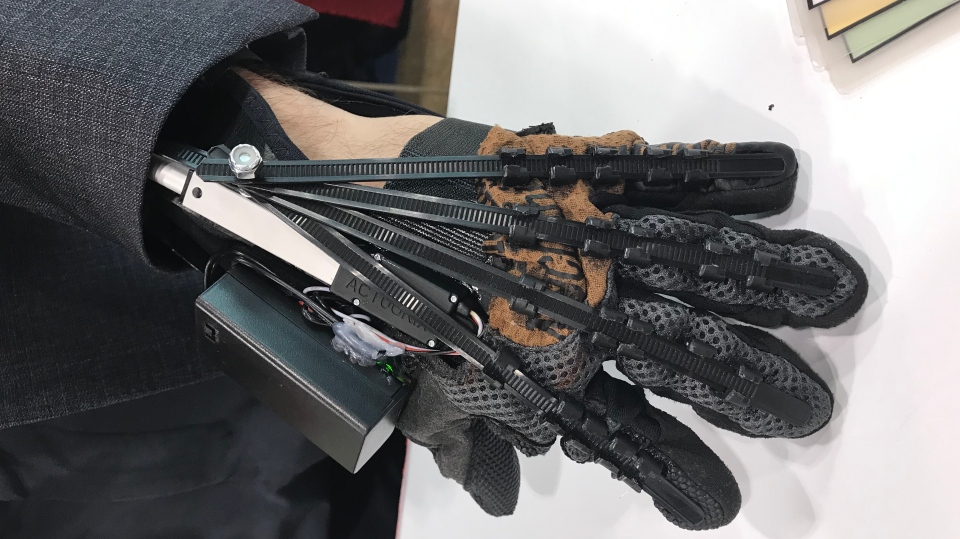
It is cannabinoid based thus will never make it past our idiotic federal
legislators having marijuana as a Class I drug. I bet you have to go to
Europe to try it. But ask your doctor how to take advantage of this. Bet you don't get an answer.
Abstract
Cannabidiol (CBD), the main non-psychotomimetic component of the
plant Cannabis sativa, exerts therapeutically promising effects on human
mental health such as inhibition of psychosis, anxiety and depression.
However, the mechanistic bases of CBD action are unclear.
Here we investigate the potential involvement of hippocampal
neurogenesis in the anxiolytic effect of CBD in mice subjected to 14 d
chronic unpredictable stress (CUS).
Repeated administration of CBD (30 mg/kg i.p., 2 h after each daily
stressor) increased hippocampal progenitor proliferation and
neurogenesis in wild-type mice. …
CBD administration prevented the anxiogenic effect of CUS in wild type
but not in GFAP-TK mice as evidenced in the novelty suppressed feeding
test and the elevated plus maze.
This anxiolytic effect of CBD involved the participation of the CB1
cannabinoid receptor, as CBD administration increased hippocampal
anandamide levels and administration of the CB1–selective antagonist
AM251 prevented CBD actions.
Studies conducted with hippocampal progenitor cells in culture showed
that CBD promotes progenitor proliferation and cell cycle progression
and mimics the proliferative effect of CB1 and CB2 cannabinoid receptor
activation. …
These findings support that the anxiolytic effect of chronic CBD
administration in stressed mice depends on its proneurogenic action in
the adult hippocampus by facilitating endocannabinoid-mediated
signalling.
http://journals.cambridge.org/action/displayAbstract?fromPage=online&aid=8930251
———————————————-
PLOS ONE (Public Library of Science)
May 2013
Activation of Type 1 Cannabinoid Receptor (CB1R) Promotes Neurogenesis in Murine Subventricular Zone Cell Cultures
Abstract
The endocannabinoid system has been implicated in the modulation of adult neurogenesis.
Here, we describe the effect of type 1 cannabinoid receptor (CB1R)
activation on self-renewal, proliferation and neuronal differentiation
in mouse neonatal subventricular zone (SVZ) stem/progenitor cell
cultures.
Expression of CB1R was detected in SVZ-derived immature cells (Nestin-positive), neurons and astrocytes.
Stimulation of the CB1R … increased self-renewal of SVZ cells, as
assessed by counting the number of secondary neurospheres … Moreover, …
treatment for 48 h, increased proliferation …
Surprisingly, stimulation of CB1R … also promoted neuronal
differentiation (without affecting glial differentiation), at 7 days, as
shown by counting the number of NeuN-positive neurons in the cultures.
Moreover, by … a method that allows the functional evaluation of
neuronal differentiation, we observed an increase in neuronal-like
cells.
This proneurogenic effect was blocked when SVZ cells were co-incubated
with … the CB1R antagonist AM 251, for 7 days, thus indicating that this
effect involves CB1R activation.
In accordance with an effect on neuronal differentiation and maturation … also increased neurite growth …
Taken together, these results demonstrate that CB1R activation induces
proliferation, self-renewal and neuronal differentiation from mouse
neonatal SVZ cell cultures.
http://www.plosone.org/article/info%3Adoi/10.1371/journal.pone.0063529
——————————————-
The Journal of Clinical Investigation
November 2005
Cannabinoids promote embryonic and adult hippocampus neurogenesis and produce anxiolytic- and antidepressant-like effects
Abstract
The hippocampal dentate gyrus in the adult mammalian brain contains
neural stem/progenitor cells (NS/PCs) capable of generating new neurons,
i.e., neurogenesis.
Most drugs of abuse examined to date decrease adult hippocampal
neurogenesis, but the effects of cannabis (marijuana or cannabinoids) on
hippocampal neurogenesis remain unknown.
This study aimed at investigating the potential regulatory capacity of
the potent synthetic cannabinoid HU210 on hippocampal neurogenesis and
its possible correlation with behavioral change.
We show that both embryonic and adult rat hippocampal NS/PCs are
immunoreactive for CB1 cannabinoid receptors, indicating that
cannabinoids could act on CB1 receptors to regulate neurogenesis.
This hypothesis is supported by further findings that HU210 promotes
proliferation, but not differentiation, of cultured embryonic
hippocampal NS/PCs likely via a sequential activation of CB1 receptors …
Chronic, but not acute, HU210 treatment promoted neurogenesis in the
hippocampal dentate gyrus of adult rats and exerted anxiolytic- and
antidepressant-like effects.
… suggesting that chronic HU210 treatment produces anxiolytic- and
antidepressant-like effects likely via promotion of hippocampal
neurogenesis.



 Xiao-Jing Zhao
 Qun-Xi Li2,
  Sudeshna A. Chatterjee
 Emily J. Fox
 Janis J. Daly
 Dorian K. Rose
 Evangelos A. Christou
 Dana M. Otzel
 Katie A. Butera
 Jared W. Skinner
 David J. Clark
 Lena P. Font
 Miriam M. Cardonne
 Hannelore Kemps
 Raf Meesen
 Ivo Lambrichts
 Jean-Michel Rigo
 Bert Brône
 Annelies Bronckaers