Changing stroke rehab and research worldwide now.Time is Brain! trillions and trillions of neurons that DIE each day because there are NO effective hyperacute therapies besides tPA(only 12% effective). I have 523 posts on hyperacute therapy, enough for researchers to spend decades proving them out. These are my personal ideas and blog on stroke rehabilitation and stroke research. Do not attempt any of these without checking with your medical provider. Unless you join me in agitating, when you need these therapies they won't be there.

What this blog is for:

My blog is not to help survivors recover, it is to have the 10 million yearly stroke survivors light fires underneath their doctors, stroke hospitals and stroke researchers to get stroke solved. 100% recovery. The stroke medical world is completely failing at that goal, they don't even have it as a goal. Shortly after getting out of the hospital and getting NO information on the process or protocols of stroke rehabilitation and recovery I started searching on the internet and found that no other survivor received useful information. This is an attempt to cover all stroke rehabilitation information that should be readily available to survivors so they can talk with informed knowledge to their medical staff. It lays out what needs to be done to get stroke survivors closer to 100% recovery. It's quite disgusting that this information is not available from every stroke association and doctors group.

Friday, July 31, 2020

Full-Dose Clot Prophylaxis for COVID-19 Tied to Mortality

So we still know nothing and are flying blind.  Since I survived getting a full dose of tPA I'm going to demand full dose of anti-coagulation. Make sure you don't get COVID-19 for at least 2-3 months.

Full-Dose Clot Prophylaxis for COVID-19 Tied to Mortality

But small numbers and retrospective design leave the question open for RCTs

by Crystal Phend, Senior Editor, MedPage Today
A computer rendering of a thrombosis
Preemptive therapeutic-dose anticoagulation for patients hospitalized with COVID-19 wasn't linked to better outcomes in a small observational study.
In fact, relative risk of in-hospital mortality with this strategy was 2.3 times greater (P=0.04) than seen with standard prophylactic dosing on multivariate analysis, with 38.7 vs 14.4 deaths per 100 patients.
"When we focused on patients with greater severity of disease [C-reactive protein ≥200], there was still no clinical improvement in outcomes of preemptive therapeutic anticoagulation," reported Jishu Kaul Motta, MD, of Danbury Hospital in Danbury, Connecticut, and colleagues in a preprint manuscript on medRxiv, which was not yet peer reviewed.
Those findings countered those of a larger observational study that suggested better survival with therapeutic anticoagulation in hospitalized COVID-19 patients, although others have suggested no effect.
It's possible that stronger thrombosis prevention is effective but just can't overcome competing risk of death from other disease processes in COVID-19, Motta's group suggested. "Regardless it does not seem from our analyses that therapeutic dosing of anticoagulation prevented overall disease progression."
However, "any interpretation other than acknowledging the need to study this prospectively in a randomized, controlled trial would be invalid," said Jason Katz, MD, director of cardiovascular critical care at the Duke University Health System in Durham, North Carolina, who was not involved with the study.
Aside from the small size, confounding and bias were also likely due to the "huge differences in patient characteristics between those who got prophylactic-dose anticoagulation and those that got full-dose anticoagulation," Katz pointed out.
The retrospective cohort study included 374 adults positive for SARS-CoV-2 treated at two large, acute care hospitals in western Connecticut in April 2020, with follow-up through June 12. Among them, 75 (20.1%) received therapeutic anticoagulation. Enoxaparin was given to nearly all (93.5%) at some time during their admission, while 14.8% took heparin.
The study excluded patients who received therapeutic-dose anticoagulation specifically for a thrombotic indication. Variables in the full logistic model included anticoagulant dosage, age, ethnicity, diabetes, history of cancer or heart disease, hyperlipidemia, peak C-reactive protein, intensive care, mechanical ventilation, and antibiotic use.
Another limitation was the lack of data on bleeding events, cautioned Behnood Bikdeli, MD, of Brigham and Women's Hospital and Harvard in Boston.
None of the studies done so far are able to really inform practice, he said. "What I do take out from this is the heterogeneity, the variability in the signals, and the effect sizes we keep seeing from these studies."
His group consensus, supported by the International Society on Thrombosis and Haemostasis and four other professional societies, recommended standard-dose prophylactic anticoagulation in most cases, despite noting a lack of data. The World Health Organization and NIH guidelines also suggest only using a higher-dose anticoagulant if there's a strong suspicion of thrombosis or in the context of a prospective study.
More than nine randomized controlled trials are underway to address questions of type and dose of antithrombotics for prophylaxis in COVID-19, Bikdeli noted.
The NIH has announced the ACTIV-4 set of adaptive platform clinical trials to evaluate safety and effectiveness of varying types of antithrombotics for adults diagnosed with COVID-19.
Well-designed studies that include enrollment of patients in areas with higher case loads should be able to deliver some answers in 2 to 3 months, Bikdeli predicted. "Because if you practice in the ICU, these questions come up for almost every single patient with COVID-19. We see abnormal coagulation parameters and we ask ourselves, 'Do we increase the dose, do we not increase the dose?'"
But with the real risk of clinically important, even fatal, bleeding, "it's not really something that you can do just by clinical gestalt," he said. "Once we have the data, yes, clinical experience would be important to make patient-by-patient decisions. But without that prospective, ideally randomized, data, we're just going blindly."

Eliminating These 12 Risk Factors Could Cut Global Dementia Rates by 40%

Useless. NO SUGGESTED INTERVENTIONS. Not even time travel to get better educated and exercise more when you were younger.  

You can't use mine, I'm not medically trained, your doctors' better be EXACT.

Dementia prevention 19 ways per Dean


The latest here:


Eliminating These 12 Risk Factors Could Cut Global Dementia Rates by 40%

News   Jul 30, 2020 | Original story from Alzheimer's Research UK
Eliminating These 12 Risk Factors Could Cut Global Dementia Rates by 40% Credit: Photo by veeterzy on Unsplash https://unsplash.com/@veeterzy

New Clues To ALS And Alzheimer's Disease From Physics

Interesting. Does your hospital have an employee assigned to keep up with research and distribute useful research to the staff? If not you have a COMPLETELY INCOMPETENT HOSPITAL.

New Clues To ALS And Alzheimer's Disease From Physics


This light micrograph from the brain of someone who died with Alzheimer's disease shows the plaques and neurofibrillary tangles that are typical of the disease. A glitch that prevents healthy cell structures from transitioning from one phase to the next might contribute to the tangles, researchers say.
Jose Luis Calvo/ Science Source
The same process that causes dew drops to form on a blade of grass appears to play an important role in Alzheimer's disease and other brain diseases.
The process, known as phase transition, is what allows water vapor to condense into liquid water, or even freeze into solid ice. That same sort of process allows brain cells to constantly reorganize their inner machinery.
But in degenerative diseases that include amyotrophic lateral sclerosis, frontotemporal dementia and Alzheimer's, the phase transitions inside neurons seem to go awry, says Dr. J. Paul Taylor, a neurogeneticist at St. Jude Children's Research Hospital in Memphis, and an investigator with the Howard Hughes Medical Institute.
This malfunctioning prompts the interior of the cell to become too viscous, Taylor says. "It's as if you took a jar of honey [and] left it in the refrigerator overnight."
In this sticky environment, structures that previously could nimbly disassemble and move around become "irreversibly glommed together," says Clifford Brangwynne, a professor of chemical and biological engineering at Princeton University and an investigator with the Howard Hughes Medical Institute. "And when they're irreversibly stuck like that, they can no longer leave to perform functions elsewhere in the cell."
That glitch seems to allow toxins to begin to build up in and around these dysfunctional cells, Taylor says — including the toxins associated with Alzheimer's and other neurodegenerative diseases.
The science behind this view of brain diseases has emerged only in the past decade.
In 2009, Brangwynne was part of a team that published a study showing that phase transitions are important inside cells — or at least inside the reproductive cells of worms.


"Originally, there was not a lot of traction for that idea," Brangwynne says. "Then — around about 2015 — people started to suddenly pay a lot of attention."
By that time, Taylor, too, had stumbled upon phase transition via a very different path.
As a practicing neurologist and geneticist at the University of Pennsylvania, he'd seen himself as a sort of medical detective.
"Typically the most oddball diseases that didn't fit into another category would wind up in my clinic, which I loved," he says.
One disease in particular caught Taylor's attention.
"We had been tracking a number of families that had an unusual degenerative illness," he says. "It was kind of a blend of a dementia and ALS."
Patients developed the mental problems of dementia as well as the muscle weakness of ALS, or Lou Gehrig's disease.
Taylor figured there must be a genetic explanation. But at the time — the late 2000s — he had no easy way to study his patients' DNA.
"So I collected those [DNA samples] and hung on to them for years," he says. "And then the world changed around me."
Seemingly overnight, it became feasible to sequence a person's entire genome. Taylor saw an opportunity.
"I dug those DNAs back out of the freezer," he says. "And we were fortunate enough to find the genetic basis for the disease in these families that I had known for, at that point, a decade."
What Taylor found was gene mutations that caused abnormal phase transitions in cells. And he found evidence of similar mutations in other neurodegenerative diseases.
This research earned Taylor the 2020 Potamkin Prize, a big deal in Alzheimer's research. And it got a lot of biotech companies thinking about ways to fix problems with phase transitions inside cells.
"I think it's probably safe to say that you'll see some of these types of therapies within the next couple of years," Taylor says.
Brangwynne says neurodegenerative diseases are an appealing target because the physics behind the problem is now clear, and because cells already contain mechanisms to regulate phase transition.
Inside a healthy nerve cell, he says, many molecules act a bit like people socializing.
"Something like at a party, where we've got little clusters of people hanging out and having nice conversations," he says. "They're free to come and go as they please."
That can change, though — at a party or inside a brain cell.
"What happens in neurodegenerative disease is that the 'people' are irreversibly stuck together — they can't leave," Brangwynne says. "This is the Hotel California of biomolecular interactions."
But Brangwynne says that doesn't have to be the case.
In the lab, at least, experimental drugs and genetic tweaks have been used to unstick these molecules.
That could lead to new treatments for neurodegenerative diseases, Brangwynne says. And the ability to correct aberrant phase transitions may also be useful for other illnesses, including certain cancers, he says.
"It's very clear that this principle is at play in many, many diseases," Brangwynne says.
The startup Dewpoint Therapeutics hopes to develop phase-transition treatments for both cancer and neurodegenerative diseases. Late last year, Dewpoint, which is based in Boston and Dresden, Germany, signed a $100 million deal with the pharmaceutical giant Bayer.

Preceding infection and risk of stroke: An old concept revived by the COVID-19 pandemic

So your doctors are still guessing what to do if you present with a stroke and COVID-19. 

I'm going to be asking for heparin as a blood thinner because of this:

Common FDA-approved drug may effectively neutralize virus that causes COVID-19

to try to prevent that stroke.

 The latest here:

Preceding infection and risk of stroke: An old concept revived by the COVID-19 pandemic

First Published July 24, 2020 Review Article Find in PubMed


Anecdotal reports and clinical observations have recently emerged suggesting a relationship between COVID-19 disease and stroke, highlighting the possibility that infected individuals may be more susceptible to cerebrovascular events. In this review we draw on emerging studies of the current pandemic and data from earlier, viral epidemics, to describe possible mechanisms by which SARS-CoV-2 may influence the prevalence of stroke, with a focus on the thromboinflammatory pathways, which may be perturbed. Some of these potential mechanisms are not novel but are, in fact, long-standing hypotheses linking stroke with preceding infection that are yet to be confirmed. The current pandemic may present a renewed opportunity to better understand the relationship between infection and stroke and possible underlying mechanisms.

The SARS-CoV-2 global pandemic

At the time of writing, the global number of confirmed severe acute respiratory syndrome coronavirus 2 (SARS-CoV-2) cases is approaching 9 million, with over 470,000 reported fatalities. The current novel coronavirus outbreak began to receive worldwide media attention in early January 2020 with the earliest cluster of cases traced back to December 2019 in the city of Wuhan in China. By 30 January the World Health Organization (WHO) declared the outbreak a “public health emergency of international concern” and, after cases were reported in 210 countries, the outbreak was recognized by WHO as a pandemic on 11 March 2020.
SARS-CoV-2 is a member of the betacoronavirus genus of the coronaviridae family of enveloped, single-stranded RNA viruses, several of which are known to cause mild respiratory disease in humans. It was named because of its similarity to SARS-CoV, the virus responsible for an epidemic in 2002–2003 that infected approximately 8000 people with almost 800 fatalities. Both SARS-CoV and SARS-CoV-2 cause acute respiratory symptoms but due to enhanced rates of transmission derived from transmission from asymptomatic individuals1 and a high level of early viral shedding in the upper respiratory tract,2 this recent pandemic has attained a large global impact.
Angiotensin-converting enzyme 2 (ACE2), the “receptor” for host cell entry of SARS-CoV-2,3 is most prominently expressed on the surface of lung alveolar epithelial cells, venous and arterial endothelial cells, arterial smooth muscle cells and enterocytes of the small intestine.4 Notably, considering the possible neurotropism of SARS-CoV-2 discussed later, ACE2 is also found on cardio-respiratory neurons of the brainstem, in the hypothalamus and the motor cortex.5 There is evidence that SARS-CoV (and possibly SARS-CoV-2) is able to infect lymphocytes, monocytes and lymphoid tissues.6 This tissue distribution is a critical determinant of the COVID-19 disease course and may drive some of the thromboinflammatory alterations that might influence stroke pathophysiology, as discussed in this review.

Clinical presentation of COVID-19

Unlike its predecessor SARS, COVID-19 manifests as a broad spectrum of disease severity from a completely asymptomatic state of infection, through mild flu-like symptoms, to the life-threatening acute respiratory distress syndrome (ARDS). It has been estimated that as many as 86% of cases in China were asymptomatic or mildly symptomatic and were, therefore, undocumented.1 The multitude of factors contributing to this disparity in disease severity are not yet fully understood and are likely to include genetic, environmental and host response factors and would, therefore, be outside the scope of this review. However, it is already clear that disease progression is, to some extent, linked to viral load,7 age, sex, ethnicity and comorbidity.8,9
At onset of illness the most common symptoms are fever, cough, myalgia, anosmia and fatigue. Common chest radiological findings are bilateral ground–glass opacity, interlobular septal thickening, and thickening of the pleura.10 In patients who went on to develop ARDS, pleural effusion, lymphadenopathy and round cystic changes were also observed, similar to those seen previously in SARS,11 Middle East respiratory Syndrome (MERS)12 and H5N1 influenza.13 Patients who develop ARDS experience severe hypoxemia, and the leading causes of mortality are respiratory failure, heart failure, fulminant myocarditis and multiple organ failure.

Cerebrovascular complications in COVID-19 patients

The possible relationship between respiratory tract infection and the incidence of stroke, particularly ischemic stroke, is not a new concept. Early case–control studies identified respiratory tract infections as a significant risk factor across all age groups despite adjusting for other known vascular risk factors.14 A large case-series analysis of UK medical records identified a significant risk of either first stroke or recurrent stroke associated with a diagnosis of acute respiratory tract infection.15 This risk was highest in the first few days after infection, steadily declining thereafter but remaining elevated over baseline for some time. The incidence ratio of first stroke was found to be 3.19 (95% CI 2.81 to 3.62) within three days of infection and 2.09 (95% CI 1.89 to 2.32) within 14 days. A later retrospective case-crossover study of administrative data in the US, focusing on respiratory tract infections defined using Centers for Disease Control and Prevention criteria as “influenza-like illness”, identified a similar risk of ischemic stroke within 15 days of infection (odds ratio 2.88, 95% CI 1.86 to 4.47).16
Large, systematically collated datasets are not yet available for the current SARS-CoV-2 pandemic and, as such reliable estimates of the associated risk of stroke have not yet been published. This is also true of the previous SARS pandemic that only affected 8000 individuals. Although, an approximate stroke incidence rate of 1 per 42 SARS patients was determined from a small, retrospective single-center analysis.17 For now, assumptions on the prevalence of stroke among COVID-19 patients are based on small, single center observational studies,18 which estimate an incidence rate of approximately 5% among the most severe cases. In a larger single center study of 3556 COVID-19 patients the estimated stroke incidence rate was much lower at 0.9%.19
It is likely that any estimation of stroke incidence will be confounded by under-reporting; both in severe infection with competing risk of mortality and milder infections (and strokes) not presenting to hospital or primary care.

Intravenous tPA for Acute Ischemic Stroke in Patients with COVID-19

So your doctors are still guessing what to do if you present with a stroke and COVID-19. 

I'm going to be asking for heparin as a blood thinner because of this:

Common FDA-approved drug may effectively neutralize virus that causes COVID-19

to try to prevent that stroke. 

Th latest here:

Intravenous tPA for Acute Ischemic Stroke in Patients with COVID-19

JonathanDashkoffMD PhD1Lester Y.LeungMD MSc2Christa O'Hana S.NoblezaMD MSCI3ErikaMarulanda-LondonoMD4MausaminbenHathidaraMD4SebastianKochMD4NicoleSurMD4AlexandraBoskeMD5BarbaraVoetschMD PhD6Hassan AboulNourMD7Daniel JMillerMD7AliDaneshmandMD MPH1JulieShulmanMD1GioacchinoCurialeMD1David M.GreerMD MA1Jose RafaelRomeroMD18PriaAnandMD1Anna M.Cervantes-ArslanianMD1


Abstract

Background/Purpose: 
Coronavirus disease 2019 (COVID-19) is associated with increased risk of acute ischemic stroke (AIS), however, there is a paucity of data regarding outcomes after administration of intravenous tissue plasminogen activator (IV tPA) for stroke in patients with COVID-19.
Methods:
We present a multicenter case series from 9 centers in the United States of patients with acute neurological deficits consistent with AIS and COVID-19 who were treated with IV tPA.
Results: 
We identified 13 patients (mean age 62 (±9.8) years, 9 (69.2%) male). All received IV tPA and 3 cases also underwent mechanical thrombectomy. All patients had systemic symptoms consistent with COVID-19 at the time of admission: fever (5 patients), cough (7 patients), and dyspnea (8 patients). The median admission NIH stroke scale (NIHSS) score was 14.5 (range 3-26) and most patients (61.5%) improved at follow up (median NIHSS score 7.5, range 0-25). No systemic or symptomatic intracranial hemorrhages were seen. Stroke mechanisms included cardioembolic (3 patients), large artery atherosclerosis (2 patients), small vessel disease (1 patient), embolic stroke of undetermined source (3 patients), and cryptogenic with incomplete investigation (1 patient). Three patients were determined to have transient ischemic attacks or aborted strokes. Two out of 12 (16.6%) patients had elevated fibrinogen levels on admission (mean 262.2 ± 87.5 mg/dl), and 7 out of 11 (63.6%) patients had an elevated D-dimer level (mean 4284.6 ±3368.9 ng/ml).
Conclusions:
IV tPA may be safe and efficacious in COVID-19, but larger studies are needed to validate these results.


Introduction

Preliminary reports suggest that patients with Coronavirus Disease 2019 (COVID-19) are at high risk of hematologic complications, including disseminated intravascular coagulation (DIC).1,2,3 Patients with COVID-19 may exhibit hemostatic abnormalities with the potential to precipitate both hemorrhagic and thromboembolic events, including mild thrombocytopenia, prolongation of both prothrombin time and international normalized ratio, and shortened activated partial thromboplastin time, and both ischemic stroke and intracerebral hemorrhage have been described in infected patients.4,5,6,7 However, limited evidence exists in the literature for management of acute stroke in COVID-19 given the concomitant risk of hemorrhage, and recommendations are based on consensus only.8
The safety and efficacy of intravenous tissue plasminogen activator (IV tPA) for acute ischemic stroke in patients with COVID-19 remain unknown.1 We present the outcomes of a multicenter series of patients with confirmed COVID-19 infection who were treated with IV tPA for suspected acute ischemic stroke.

MCSA(Medical Center of South Arkansas) recognized by American Heart Association

Big fucking whoopee.


 But you tell us NOTHING ABOUT RESULTS. They remind us they 'care' about us 3 times but never tell us how many 100% recovered.

Three measurements will tell me if the stroke hospital is possibly not completely incompetent; DO YOU MEASURE ANYTHING?

  1. tPA full recovery? Better than 12%?
  2. 30 day deaths? Better than competitors?
  3. rehab full recovery? Better than 10%?


You'll want to know results so call that hospital president(Whoever that is) and ask what the RESULTS are; tPA efficacy, 30 day deaths, 100% recovery. Because there is no point in going to that hospital if they are not willing to publish results.

The Medical Center of South Arkansas has received the American Heart Association/American Stroke Association’s Get With The Guidelines-Stroke Gold Quality Achievement Award.
The award recognizes the hospital’s commitment to ensuring stroke patients receive the most appropriate treatment(NOT GET THE BEST RESULTS!) according to nationally recognized, research-based guidelines(NOT PROTOCOLS!) based on the latest scientific evidence. Medical Center of South Arkansas earned the award by meeting specific quality achievement measures for the diagnosis and treatment of stroke patients at a set level for over 24 months.

These measures include evaluation of the proper use of medications and other stroke treatments aligned with the most up-to-date, evidence-based guidelines with the goal of speeding recovery and reducing death and disability for stroke patients. Before discharge, patients should also receive education on managing their health, get a follow-up visit scheduled, as well as other care transition interventions.
“Medical Center of South Arkansas is dedicated to improving the quality of care for our stroke patients by implementing the American Heart Association’s Get With The Guidelines-Stroke initiative,” said Amy Triplet, Chief Nursing Officer. “The tools and resources provided help us track and measure our success in meeting evidenced-based clinical guidelines developed to improve patient outcomes.”
Medical Center of South Arkansas additionally received the Association’s Target: Type 2 Honor Roll award. To qualify for this recognition, hospitals must meet quality measures developed with more than 90% of compliance for 12 consecutive months for the “Overall Diabetes Cardiovascular Initiative Composite Score.”
“We are pleased to recognize Medical Center of South Arkansas for their commitment to stroke care,” said Lee H. Schwamm, M.D., national chairperson of the Quality Oversight Committee and Executive Vice Chair of Neurology, Director of Acute Stroke Services, Massachusetts General Hospital, Boston, Massachusetts. “Research has shown that hospitals adhering to clinical measures through the Get With The Guidelines quality improvement initiative can often see fewer re-admissions and lower mortality rates.”
According to the American Heart Association/American Stroke Association, stroke is the number 5 cause of death and a leading cause of adult disability in the United States. On average, someone in the U.S. suffers a stroke every 40 seconds and nearly 795,000 people suffer a new or recurrent stroke each year.

Flu Shot And Pneumonia Vaccine Might Reduce Alzheimer's Risk, Research Shows

With your likely chances of getting dementia/Alzheimers is your doctor at least doing this?

Your chances of getting dementia.

1. A documented 33% dementia chance post-stroke from an Australian study?   May 2012.

2. Then this study came out and seems to have a range from 17-66%. December 2013.

3. A 20% chance in this research.   July 2013.

4. Dementia Risk Doubled in Patients Following Stroke September 2018 

The latest here:

Flu Shot And Pneumonia Vaccine Might Reduce Alzheimer's Risk, Research Shows

For years, public health officials have been trying to dispel the myth that people who get a flu shot are more likely to get Alzheimer's disease.
They are not. And now there is evidence that vaccines that protect against the flu and pneumonia may actually protect people from Alzheimer's, too.
The evidence comes from two studies presented Monday at this year's Alzheimer's Association International Conference, which is being held as a virtual event.
"We've always known that vaccines are very important to our overall health," says Maria Carrillo, chief science officer of the Alzheimer's Association. "And maybe they even contribute to protecting our memory, our cognition, our brain."
The first study came from a team at the University of Texas that combed through millions of medical records in a national database. The goal was to find factors that affected a person's risk of getting certain diseases, including Alzheimer's.
"And one of the things that came back was flu shots," says Albert Amran, a medical student of the McGovern Medical School at the University of Texas Health Science Center in Houston and an author of the study.
That seemed odd. So Amran and a team of researchers took a closer look at the medical records of about 9,000 people who were at least 60 years old. Some had received a seasonal flu shot. Some hadn't.
"We [tried] to make sure that both groups had an equal amount of, say, smoking status, obesity, diabetes, cardiovascular disease," Amran says. Those are known risk factors for Alzheimer's. The team also looked at factors like education and income, and indicators like the number of prescriptions a person had received, to make sure that people who got vaccines weren't just healthier overall. They weren't.
Next the researchers looked to see who was most likely to be diagnosed with the disease.
People who got at least one flu shot had a 17% reduction in risk, Amran says. And people who got regular vaccinations saw their risk drop another 13%.
"More vaccinations meant less Alzheimer's," Amran says.


Degree of brain benefit might vary
But he cautions that the amount of benefit from flu vaccination could be different in a different group of people.
"There is a protective effect," he says. "How much is something that needs to be quantified with a more intensive study."
Even so, the result was surprising, says Dr. Paul Schulz, director of the neurocognitive disorders center at McGovern.
"To have these guys come out and say, well it looks like getting the vaccine is associated with less [Alzheimer's] was totally the opposite of what any of us thought," Schulz says.
He was surprised because vaccines tend to cause inflammation when they stimulate the immune system. And in Alzheimer's disease, he says, inflammation is part of the problem.
"Here we've got a situation where we're giving them inflammation on purpose, and we get people who are actually doing better," Schulz says.
A second study looked at the effect of both flu and pneumonia vaccines on Alzheimer's risk.
A team from Duke University and the University of North Carolina studied the medical records of more than 5,000 people who were at least 65 years old.
Those who received a pneumonia vaccine before age 75 were at least 25% less likely to be diagnosed with Alzheimer's, says Svetlana Ukraintseva, an associate research professor in the Biodemography of Aging Research Unit at Duke's Social Science Research Institute.
"Pneumonia vaccination appears to be protective for older adults," she says.
But in this study, giving a flu vaccine in addition to the pneumonia vaccine did not cause any additional reduction in risk, Ukraintseva says.
What's behind the brain protection
Scientists don't know why vaccinations might reduce the risk of Alzheimer's. But previous research has hinted at a connection. And there are several potential explanations.
One is that vaccines for the flu and pneumonia may be protective because the two diseases they are designed to prevent are known to affect the brain.
"Every time you have one of these infections you may experience a challenge to your memory and thinking," Carrillo says. And studies suggest that those events can increase a person's risk of Alzheimer's.
Another possibility involves evidence linking Alzheimer's to a general weakening in the immune system and to changes that allow more bacteria and viruses into the brain.
"So if we have some general means of improving immunity, it might help reduce Alzheimer's disease," Ukraintseva says.
A number of vaccines, including those for flu and pneumonia, might be capable of improving immunity overall, she says. Scientists are looking at several other potential candidates, including vaccines against herpes viruses and tuberculosis.

New Horizons in Pharmacologic Therapy for Secondary Stroke Prevention

So NO PROTOCOLS EXIST for secondary stroke prevention. Aren't you glad that everything in stroke is a complete fucking failure? You didn't recover because no one knows a damn thing about stroke recovery.  Your children and grandchildren won't recover either since we have NO STROKE LEADERSHIP AND NO STROKE STRATEGY.

New Horizons in Pharmacologic Therapy for Secondary Stroke Prevention

JAMA Neurol. Published online July 27, 2020. doi:10.1001/jamaneurol.2020.2494
Abstract
Importance  Even with currently available therapies and lifestyle modifications following an ischemic stroke, there remains a substantial residual lifetime risk of stroke recurrence and cardiovascular morbidity. This review summarizes emerging novel therapeutic approaches that have demonstrated signals of efficacy for prevention of noncardioembolic stroke from phase II and phase III randomized clinical trials (RCTs) and provides an overview of drug regimens that have had promising results in primary stroke prevention and could be considered for further evaluation.
Observations  After a minor acute ischemic stroke or transient ischemic attack, patients bear a high cardiovascular risk that is insufficiently addressed by long-term antiplatelet treatment. The potent combination of low-dose rivaroxaban with aspirin as an antithrombotic option for the secondary prevention in patients with clinical atherosclerosis and a history of previous stroke warrants further study. Two international RCTs are currently evaluating the utility of oral factor XI inhibitors combined with antiplatelets for secondary, noncardioembolic ischemic stroke prevention. Aggressive lipid management with statins has been shown to ameliorate ischemic stroke recurrence and total cardiovascular risk. Proprotein convertase subtilisin/kexin type 9 inhibitors are drug regimens that researchers have suggested confer additional protection against stroke recurrence, while antisense oligonucleotide therapies targeting lipoprotein(a) have been reported to hold great promise as a future therapeutic strategy to decrease the residual cardiovascular risk mediated through lipoprotein(a). Glucagon-like peptide-1 receptor agonists are newer antidiabetic medications, recently highlighted because of their consistently greater benefit on stroke reduction compared with other cardiovascular outcomes.
Conclusions and Relevance  There are currently several exciting emerging opportunities in secondary stroke prevention, with RCTs investigating novel antithrombotic, hypolipidemic, anti-inflammatory, and antidiabetic agents with novel mechanisms that are likely to reduce the future burden of recurrent stroke.


Are your gums saying something about your dementia risk?

Did your doctor and hospital DO ANYTHING AT ALL when this came out in February 2013?  My one tooth loss was because the huge filling fell out and the dentist pulled it because it was already totally dead. Already had the dentist do the preparatory work of pounding in tooth stuff to lift the sinus cavity 2mm to allow a full 8mm implant. I went the implant route rather than a bridge because I didn't want the adjacent teeth to become loose and lose them also in a domino effect.  

Gum disease treatment can lower annual medical costs for people with heart disease and stroke

February 2013

 The latest here:

Are your gums saying something about your dementia risk?

Gum disease, especially the kind that is irreversible and causes tooth loss, may be associated with mild cognitive impairment and dementia 20 years later, according to a study published in the July 29, 2020, online issue of Neurology®, the medical journal of the American Academy of Neurology.
“We looked at people’s dental health over a 20-year period and found that people with the most severe gum disease at the start of our study had about twice the risk for mild cognitive impairment or dementia by the end,” said study author Ryan T. Demmer, Ph.D., M.P.H., of the University of Minnesota School of Public Health in Minneapolis. “However, the good news was that people with minimal tooth loss and mild gum disease were no more likely to develop thinking problems or dementia than people with no dental problems.”
The study involved 8,275 people with an average age of 63 who did not have dementia at the start of the study. The participants were assessed for mild cognitive impairment and dementia. Participants received a full periodontal exam that included measuring gum probing depth, amount of bleeding and recession.
ADVERTISEMENT - SCROLL TO KEEP READING
Then participants were put into groups based on the severity and extent of their gum disease and number of lost teeth, with implants counting as lost teeth. At the start of the study, 22% had no gum disease, 12% had mild gum disease, 12% had severe gum inflammation, 8% had some tooth loss, 12% had disease in their molars, 11% had severe tooth loss, 6% had severe gum disease, and 20% had no teeth at all.
A total of 4,559 people was assessed at the end of the study, when they had been followed for an average of 18 years.
Overall, 1,569 people developed dementia during the study, or 19%. This was the equivalent of 11.8 cases per every 1,000 person-years. The study found that of the people who had healthy gums and all their teeth at the start of the study, 264 out of 1,826, or 14%, developed dementia by the end of the study. For those with mild gum disease, 623 out of 3,470, or 18%, developed dementia. For participants with severe gum disease, 306 out of 1,368, or 22%, developed dementia. And 376 out of 1,611, or 23%, developed dementia in the group that had no teeth. This was equal to a rate of 16.9 cases per 1,000 person-years.
When looking at both mild cognitive impairment and dementia, the group with no teeth had about twice the risk compared to participants with healthy gums and all their teeth. People with intermediate or severe gum disease, but who still had some teeth, had a 20% greater risk of developing mild cognitive impairment or dementia compared to the healthy group. These risks were after researchers accounted for other factors that could affect dementia risk, such as diabetes, high cholesterol and smoking.
“Good dental hygiene is a proven way to keep healthy teeth and gums throughout your lifetime. Our study does not prove that an unhealthy mouth causes dementia and only shows an association. Further study is needed to demonstrate the link between microbes in your mouth and dementia, and to understand if treatment for gum disease can prevent dementia,” Demmer said.
A limitation of the study is the fact that initial gum examinations were made when the participants had an average age of 63, and it is possible that cognitive decline might have been begun before the start of gum disease and tooth loss.
To read more, click here

Boca Raton Regional Hospital First in Palm Beach County to Receive Comprehensive Stroke Center Certification from a Nationally Recognized Certifying Organization

Big fucking whoopee.


 But you tell us NOTHING ABOUT RESULTS. They remind us they 'care' about us 6 times but never tell us how many 100% recovered.

Three measurements will tell me if the stroke hospital is possibly not completely incompetent; DO YOU MEASURE ANYTHING?

  1. tPA full recovery? Better than 12%?
  2. 30 day deaths? Better than competitors?
  3. rehab full recovery? Better than 10%?


You'll want to know results so call that hospital president(Whoever that is) and demand to know what the RESULTS are for; tPA efficacy, 30 day deaths, 100% recovery. Because there is no point in going to that hospital if they are not willing to publish results.

The invalid chest thumping here:

Boca Raton Regional Hospital First in Palm Beach County to Receive Comprehensive Stroke Center Certification from a Nationally Recognized Certifying Organization

BOCA RATON, FL – July 27, 2020 ­– Boca Raton Regional Hospital is the first hospital in Palm Beach County to receive certification from a nationally recognized certifying organization, DNV GL Healthcare, as a Comprehensive Stroke Center, reflecting the highest level of competence for treatment of serious stroke events.
This certification signifies that the hospital’s Marcus Neuroscience Institute (MNI) meets rigorous standards for providing care to all stroke patients including endovascular embolization and surgical clipping of brain aneurysms, tPA administration and mechanical endovascular thrombectomy (EVT), a minimally invasive procedure used to remove a blood clot from the brain during an ischemic stroke.
“Our hospital continues to serve as a leader in providing the highest quality of care to stroke patients in the region and this certification is further recognition of our exceptional reputation,” said Brian Snelling, MD, Director of Cerebrovascular Neurosurgery and Stroke at MNI. “Stroke care at this level requires a collaborative effort with extreme efficiency across all hospital services including the emergency department physicians and staff, nursing, radiology, critical care and local emergency responders.”
The DNV GL Healthcare Comprehensive Stroke Center Certification is based on standards set forth by the Brain Attack Coalition and the American Stroke Association, and affirms that the medical center addresses the full spectrum of stroke care – diagnosis, treatment, rehabilitation and education – and establishes clear metrics to evaluate outcomes.
Comprehensive stroke centers are typically the largest and best-equipped hospitals in a given geographical area that can treat any kind of stroke or stroke complication. In a growing number of states, stroke center certification determines to which facility a patient should be taken for the most appropriate care.
“Certification at this level validates all the effort we have put into building a world-class stroke program,” said Frank D. Vrionis, MD, MPH, PhD, Director of MNI. “This is yet another significant milestone in our Institute’s history.”
Boca Raton Regional Hospital already became a Thrombectomy-Capable Stroke Center in July of 2019 through The Joint Commission, one of only two in Palm Beach County. “Our new Comprehensive Stroke Center certification combined with our status as a Thrombectomy-Capable Stroke Center represents our ability to treat complex vascular cases in addition to open and endovascular procedures,” continued Vrionis. “We are one of only a few centers that can offer this spectrum of services to improve our patient outcomes.”
Stroke is the fifth leading cause of death in the United States and more than 87 percent of cases are ischemic strokes caused by a clot that cuts off blood flow to a part of the brain. These types of strokes are largely treatable if a patient gets to a hospital that can provide the right treatment in time.
Baptist Health’s southern neuroscience program, Miami Neuroscience Institute, in conjunction with Baptist Hospital, is a Joint Commission Certified Comprehensive Stroke Center.

Epicortical Brevetoxin Treatment Promotes Neural Repair and Functional Recovery after Ischemic Stroke

Now we just need followup research in humans. WHOM IS GOING TO DO THAT? Specific names only.

Epicortical Brevetoxin Treatment Promotes Neural Repair and Functional Recovery after Ischemic Stroke 


1
Department of Pharmacology and Neuroscience, Creighton University, Omaha, NE 68123, USA
2
Center for Marine Biotechnology & Biomedicine, Scripps Institution of Oceanography, San Diego, La Jolla, CA 92093, USA
3
Center for Marine Science University of North Carolina Wilmington, Wilmington, NC 28409, USA
*
Author to whom correspondence should be addressed.
Mar. Drugs 2020, 18(7), 374; https://doi.org/10.3390/md18070374
Received: 25 June 2020 / Revised: 17 July 2020 / Accepted: 17 July 2020 / Published: 21 July 2020
(This article belongs to the Special Issue Marine Natural Products against Brain Diseases and Injuries)

Abstract

Emerging literature suggests that after a stroke, the peri-infarct region exhibits dynamic changes in excitability. In rodent stroke models, treatments that enhance excitability in the peri-infarct cerebral cortex promote motor recovery. This increase in cortical excitability and plasticity is opposed by increases in tonic GABAergic inhibition in the peri-infarct zone beginning three days after a stroke in a mouse model. Maintenance of a favorable excitatory–inhibitory balance promoting cerebrocortical excitability could potentially improve recovery. Brevetoxin-2 (PbTx-2) is a voltage-gated sodium channel (VGSC) gating modifier that increases intracellular sodium ([Na+]i), upregulates N-methyl-D-aspartate receptor (NMDAR) channel activity and engages downstream calcium (Ca2+) signaling pathways. In immature cerebrocortical neurons, PbTx-2 promoted neuronal structural plasticity by increasing neurite outgrowth, dendritogenesis and synaptogenesis. We hypothesized that PbTx-2 may promote excitability and structural remodeling in the peri-infarct region, leading to improved functional outcomes following a stroke. We tested this hypothesis using epicortical application of PbTx-2 after a photothrombotic stroke in mice. We show that PbTx-2 enhanced the dendritic arborization and synapse density of cortical layer V pyramidal neurons in the peri-infarct cortex. PbTx-2 also produced a robust improvement of motor recovery. These results suggest a novel pharmacologic approach to mimic activity-dependent recovery from stroke.


1. Introduction

Ischemic stroke is a common neurological disorder and major cause of long-term disability worldwide [1]. Currently, tissue plasminogen activator (tPA) is the only FDA-approved pharmacologic treatment for ischemic or thrombotic stroke, which carries the risk of producing an intracerebral hemorrhage [2,3,4]. Although this pharmacologic advancement of acute care has resulted in a decline in mortality rate, it has produced a greater number of disabled survivors. Soon after stroke onset, oxygen-deprived neurons in the infarct core cease to function while tissue in the surrounding peri-infarct region remain viable but compromised [5]. Previous work has suggested parallels between plasticity mechanisms in the developing brain and those occurring in the adult brain after a stroke event [6,7,8,9,10]. Neuronal circuits do undergo limited re-mapping and reorganization after stroke, and these repair processes are associated with neurogenesis, dentritogenesis, synaptogenesis, axonal sprouting and rewiring of cortical networks in the peri-infarct tissue [11]. However, this spontaneous reorganization only partially restores motor function. To more fully regain recovery of motor function, additional pharmacologic manipulations in the peri-infarct are required.
Glutamate-mediated excitotoxicity has been shown to contribute to ischemic cell death due to failure of ionic homeostasis and a sustained elevation of intracellular calcium concentration [12]. Following the excitotoxicity-induced acute insult, there is a period of recovery with characteristic heightened neuroplasticity in the peri-infarct tissue [13]. It is therefore critical that pharmacologic treatments to promote recovery be administered subsequent to the acute phase of the stroke. In rodent stoke models, pharmacologic and genetic strategies that enhance neuronal excitability in the peri-infarct cortex adjacent to the stroke promote motor recovery [14]. These mechanisms that enhance neuronal plasticity are similar to those involved in learning and memory [13]. In this regard, it is noteworthy that N-methyl-D-aspartate ionotropic glutamate receptors (NMDARs) are crucial in activity-dependent synaptic changes and in learning and memory.
Previous research has shown that changes in intracellular sodium concentration ([Na+]i) produced in the soma and dendrites as a result of neuronal activity may act as a signaling molecule and play a role in activity-dependent synaptic plasticity. Synaptic stimulation elevates [Na+]i to 10 mm in dendrites and up to 35–40 mm in dendritic spines [15]. In hippocampal neurons, such intracellular [Na+] increments have been demonstrated to increase NMDAR-mediated whole-cell currents and NMDAR single-channel activity by increasing both channel open probability and mean open time [16].
Brevetoxins (PbTx-1 to PbTx-10) are potent lipid soluble polyether neurotoxins produced by the marine dinoflagellate Karenia brevis [17]. PbTx-2 interacts with neurotoxin site 5 on the α subunit of voltage-gated sodium channels (VGSCs), and augments sodium influx by inhibiting channel inactivation and shifting the activation potential to more negative values [18]. Src kinases are widely expressed in the brain and regulate activities of ion channels such as NMDARs. Phosphorylation of NMDAR tyrosine residues by Src facilitates the binding of Na+ to NMDAR and exerts a regulatory effect on NMDAR signaling [19]. Single-channel currents recorded from cell-attached patches on cerebrocortical neurons indicate that PbTx-2 upregulates NMDAR whole-cell currents by increasing mean open time and probability without affecting the resting membrane potential [20]. This upregulation is attributed to the coincident elevation of intracellular [Na+] and Src kinase activation [21]. PbTx-2 treatment of cerebrocortical neuron cultures robustly potentiated NMDAR-mediated calcium influx (Ca2+) [20]. In immature cerebrocortical neurons, PbTx-2 treatment enhanced neurite outgrowth, dendritic arborization, synaptogenesis and filopodia formation and maturation [22]. In addition, PbTx-2 exposure engaged downstream activity-dependent mechanisms involved in neuronal growth and survival such as Ca2+-calmodulin kinases (CaMKs), extracellular signal-regulated kinase (ERK), cAMP response element binding protein (CREB) and brain-derived neurotrophic factor (BDNF) signaling pathways [22]. PbTx-2 exhibited a characteristic bidirectional concentration–response profile similar to that of NMDA since an optimal window for [Ca2+]i is required for neurite extension and branching [23]. Inasmuch as the mechanisms involved in repair processes after stroke are similar to those regulating neuronal development, we hypothesized that PbTx-2 may augment recovery following ischemic stroke.
We therefore explored neurohistochemical and functional outcomes of administration of PbTx-2 during the recovery phase after stroke. To assess neurohistochemical changes, we imaged neurons in the peri-infarct cortex to assess dendritic arborization and synaptic density. In humans, long-term disabilities related to stroke often include impairments in feeding, coordination and gait. To examine impairment and recovery, we utilized a catwalk test to examine gross motor gait, a pasta matrix reach task to assess fine-motor skills (feeding and coordination) and a foot fault task to examine coordination and gait. An emerging strategy in stroke therapy is the direct application of treatments to the stroke lesion [24,25,26]. Accordingly, we mixed PbTx-2 in a hydrogel composed of thiol-modified hyaluronan and polyethylene glycol diacrylate and this composite was deposited epicortically directly above the stroke cavity. We demonstrate that epicortical application of PbTx-2 at five-days post-infarct enhances neuronal repair and improves functional outcomes.

2. Results

2.1. PbTx-2 Enhances Neuronal Structural Plasticity in the Peri-Infarct Region as Revealed by Increased Dendritic Arbor Complexity and Synapse Formation

Using 2- to 4-month-old male yellow fluorescent protein (YFP) line-H transgenic mice, we produced unilateral photothrombotic strokes by providing an intraperitoneal injection of a light sensitive dye followed by exposure of the motor cortex region to a cold source of light. Mice were then allowed to recover in home cages for five days (Figure 1). On day 5, animals were treated with the vehicle or PbTx-2 and subsequently sacrificed on day 6 to examine neuronal structural changes in the peri-infarct region.
Figure 1. Experimental timeline: Animals were food-restricted to 85% of their body weight for two weeks prior to training for pasta matrix reach task. Animals were trained to perform pasta matrix reach task and foot fault task prior to inducing stroke to obtain baseline values. A focal lesion was induced in the motor cortex region by photothrombosis on day 0. Animals were randomly divided into PbTx-2 or vehicle treatment groups. On day 5, PbTx-2 mice were treated with 3, 10, 100, 1000 or 3000 pmol PbTx-2, whereas vehicle-treated animals were given hydrogel alone. Further, on day 1 (post-stroke) and day 6 (post-treatment), animals were assessed for the number of pasta pieces retrieved and percentage of foot faults. On day 6, animals were sacrificed, and brains were isolated for histological analysis of surviving neurons in the peri-infarct region.
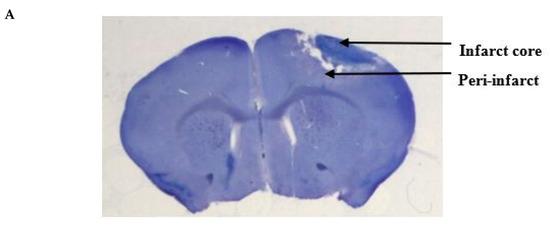
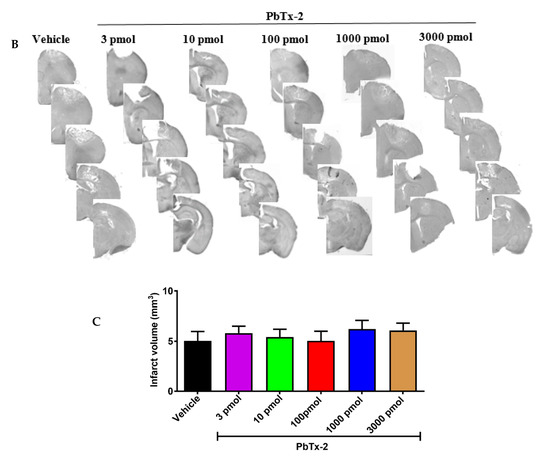
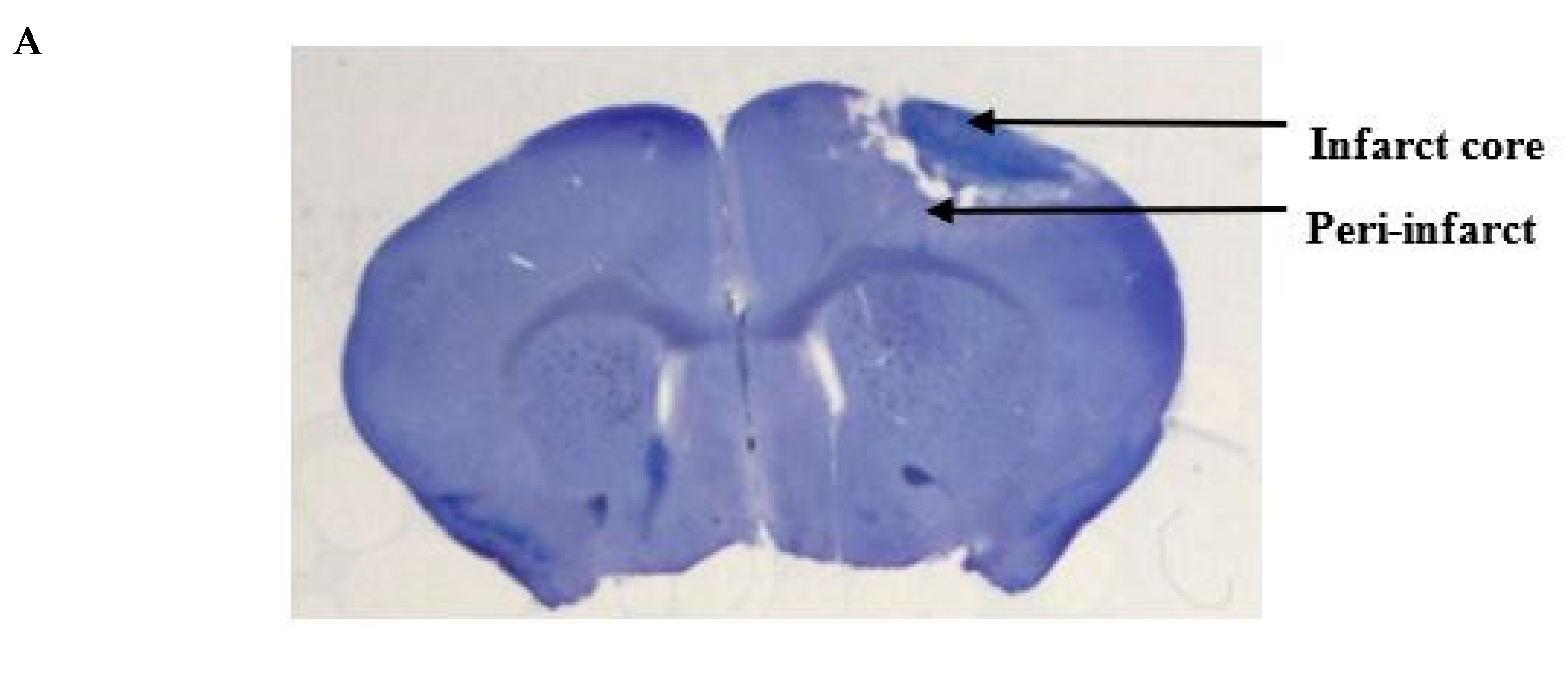
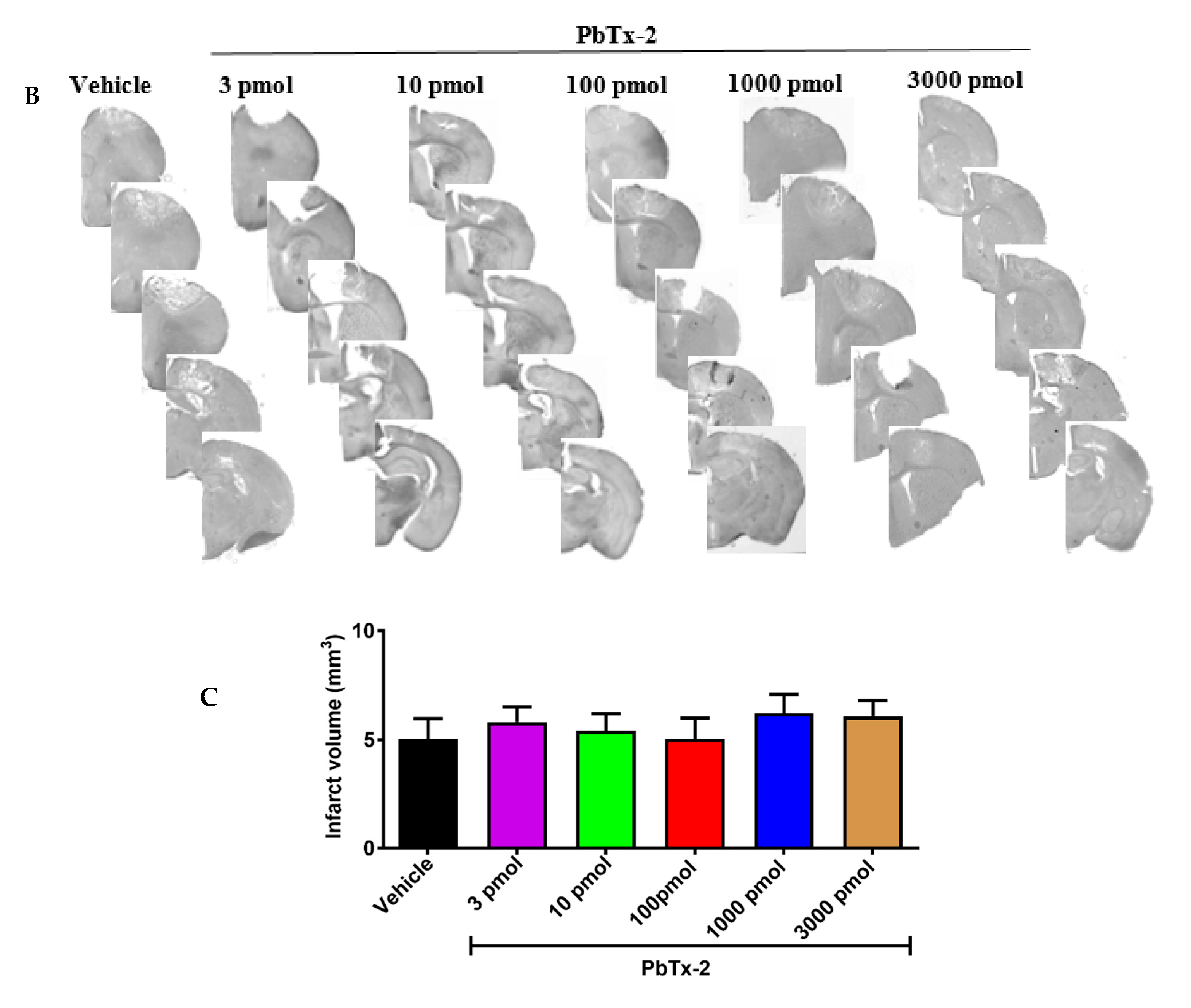
We performed cresyl violet staining to evaluate the extent of the photothrombotic stroke volume and the effect of epicortical application of PbTx-2 on the same (Figure 2A). Coronal sections of 100 μm were collected using a vibratome (Leica VT 1200S). For the infarct volume measurement, brain sections were stained with 0.5% cresyl violet and images were then acquired using a bright-field microscope. The areas of infarct were delineated and quantified using the Image J software (NIH) and infarct volume was calculated by summation of the lesion areas of all sections and integrated by the thickness of the section (Figure 2B). Infarct volumes did not vary significantly between vehicle- and PbTx-2-treated mice (Figure 2C). These results indicate that the timing of PbTx-2 treatment utilized was appropriate for the assessment of promoting functional recovery inasmuch as these treatments did not affect stroke volume.
Figure 2. Histologic assessments after stroke. (A) Representative cresyl violet image showing the infarct and the peri-infarct region. (B) Representative cresyl violet stained-sections of vehicle, 3, 10, 100, 1000 and 3000 pmol PbTx-2, respectively. (C) Quantification of infarct volume. No significant differences in infarct size were detected (one-way ANOVA followed by Dunnett’s post hoc test, 3 pmol PbTx-2 effect, p = 0.993; 10 pmol PbTx-2 effect, p = 0.907; 100 pmol PbTx-2 effect, p > 0.999; 1000 pmol PbTx-2 effect, p = 0.873; 3000 pmol PbTx-2 effect, p = 0.975). Data shown are mean ± SEM of 2 to 7 brains.
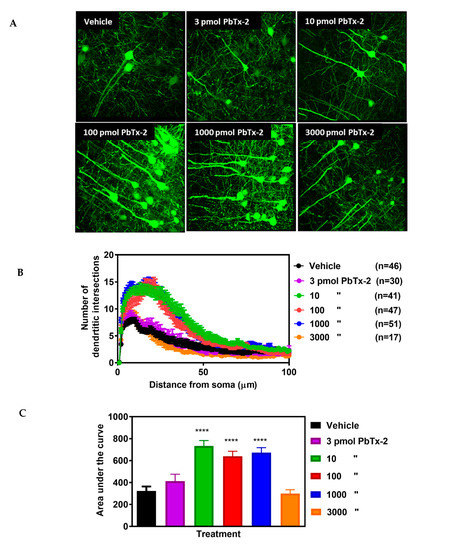
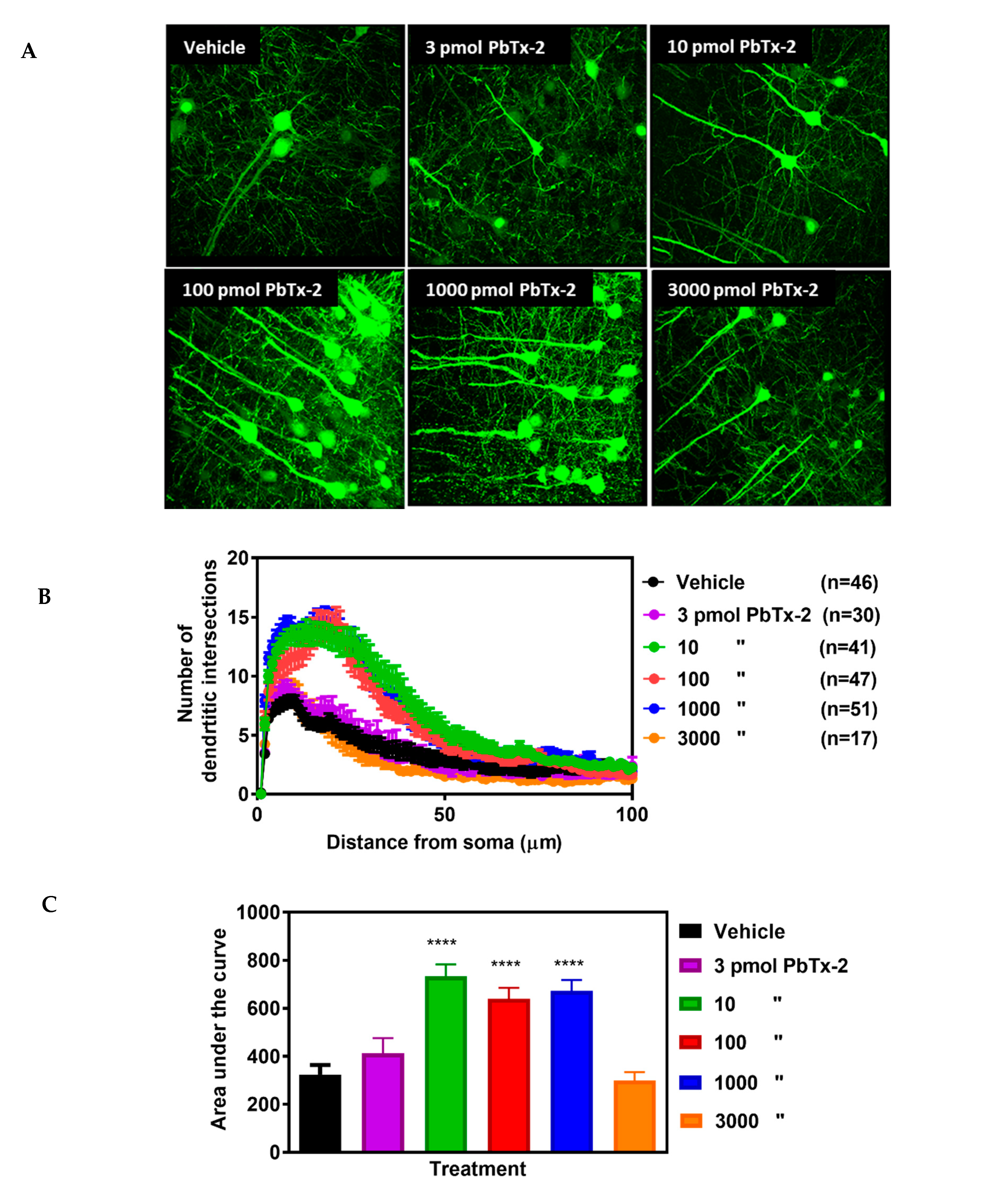
Dendritic injury is a pathologic hallmark of excitotoxicity inasmuch as NMDARs are predominantly localized on dendrites [27,28]. Stroke caused the deterioration of neurons in the infarct core that could be readily distinguished from the adjacent surviving peri-infarct region. Confocal images of layer V YFP-labelled pyramidal neurons in the peri-infarct region were obtained and 3D morphological analysis of the arbor complexity with a defined algorithm was performed using the Imaris image analysis software (Figure 3A). In vehicle-treated animals, there was a gradual increase in branching complexity moving away from the soma, reaching a maximum of 8 ± 0.5 intersections per neuron, and then progressively declining beginning at approximately 10 µm from the soma (Figure 3B). Doses of 10, 100 and 1000 pmols of PbTx-2 produced a 2-fold increase in the expansion of dendritic arbors of neurons in the peri-infarct cortex, and a rightward shift in the Sholl plot as compared with the vehicle-treated control mice (Figure 3B). An AUC analysis of Sholl data showed a significant increase in dendritic complexity following the 10, 100 and 1000 pmol doses of PbTx-2 compared with vehicle controls. The PbTx-2 effect on dendritic complexity displayed a bidirectional profile as shown by a lack of effect on the expansion of dendritic arbors at the 3 and 3000 pmol doses (one-way ANOVA followed by Dunnett’s post hoc test, **** p < 0.0001; 3 pmol PbTx-2 effect, p = 0.579; 3000 pmol PbTx-2 effect, p = 0.998; n = 17 to 51 neurons; Figure 3C). Given our previous demonstration of bidirectional PBTx-2 concentration–response profiles in cerebrocortical neurons similar to that of NMDA, a possible explanation for PbTx-2’s bidirectional profile herein is the underlying NMDAR-dependent mechanism of action [23]. Previous studies have established an inverted-U concentration–response profile for the relationship between NMDAR and neuronal survival, where too little or too large activation of NMDARs can respectively diminish neuronal growth or cause cell death [29].
Figure 3. Effect of PbTx-2 on dendritic arborization in the peri-infarct region. (A) Representative images of PbTx-2-induced dendritic arborization in the peri-infarct region (Scale bar: 30 μm). (B) Sholl analysis to quantify dendritic arbor complexity. (C) Area under the curve (AUC) analysis of Sholl data, PbTx-2 at 10, 100 and 1000 pmol doses enhanced dendritic arbor complexity in the peri-infarct site as compared with the vehicle-treated animals (one-way ANOVA followed by Dunnett’s post hoc test, **** p < 0.0001). However, the 3 and 3000 pmol doses of PbTx-2-treated mice were without effect on the expansion of dendritic arbors (3 pmol PbTx-2 effect, p = 0.579; 3000 pmol PbTx-2 effect, p = 0.998). Each bar represents the mean ± SEM of 17–51 neurons.
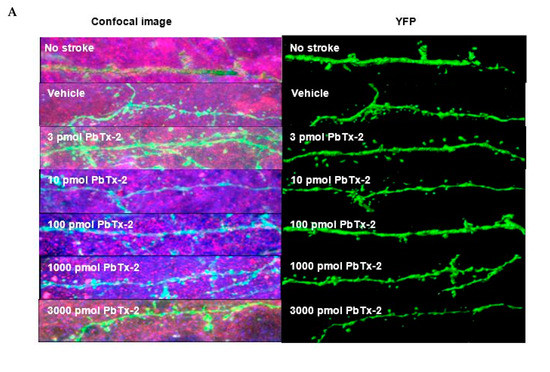
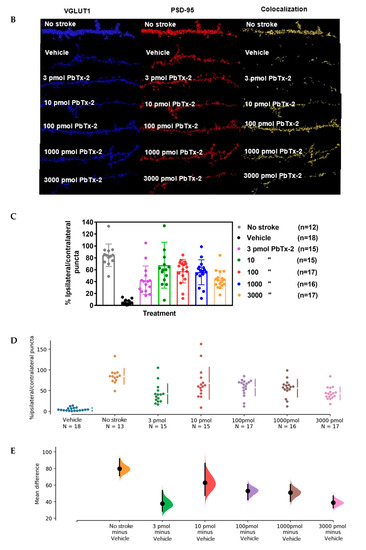
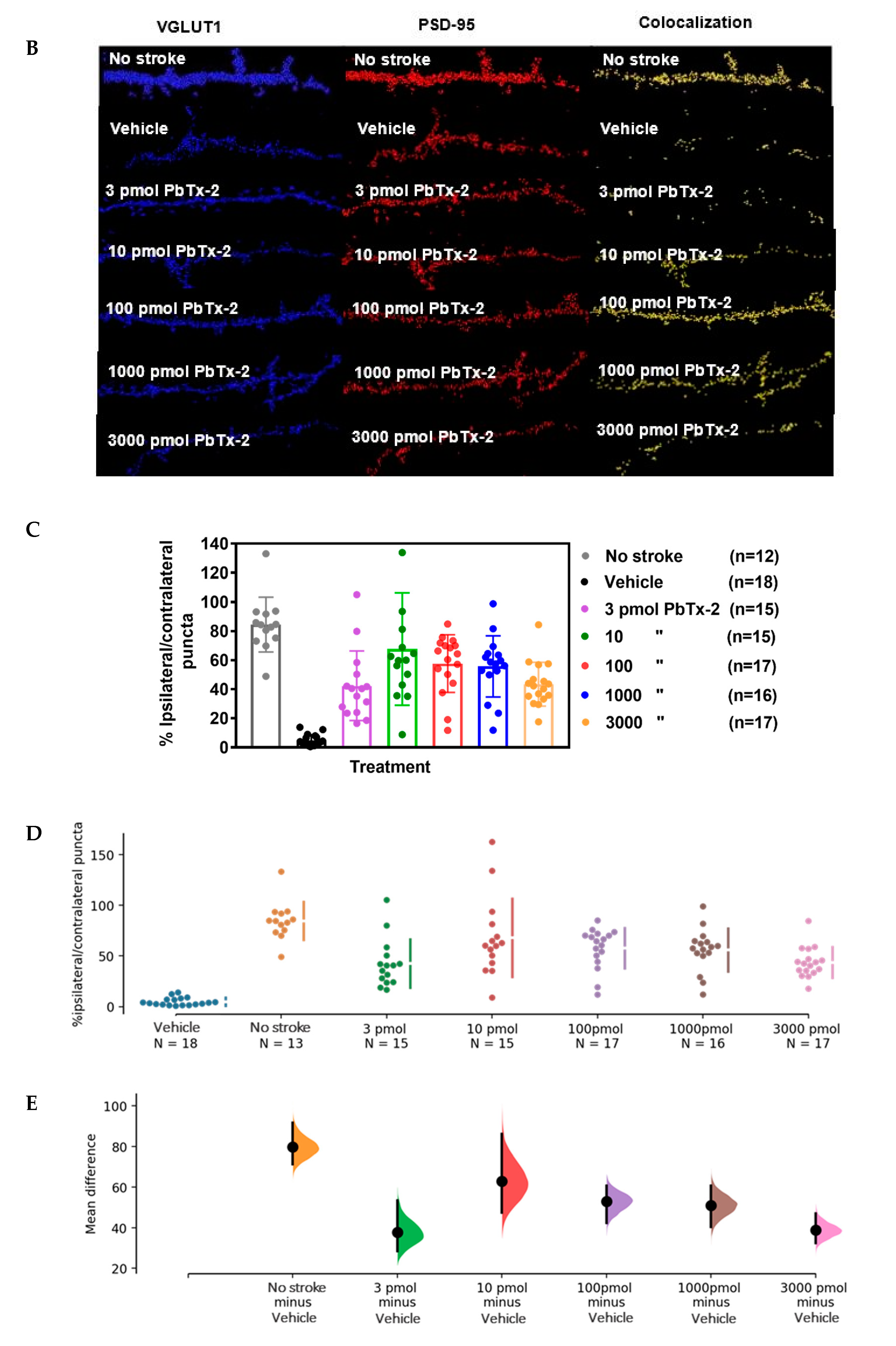
Next, we examined the influence of PbTx-2 on synapse formation in the peri-infarct cortex region. Confocal images of YFP-labelled neurites in the peri-infarct region were obtained and analyzed using a spot detection algorithm again using the Imaris image analysis software (Figure 4A). Antibodies against VGLUT1 (presynaptic marker) and PSD-95 (postsynaptic marker) were used to quantify synapse density, as revealed by colocalized fluorescent puncta (Figure 4B). We obtained the ratio of synaptic puncta on the ipsilesional side to that of the contralesional side to correct for between animal variation. Dose–response analysis of the effect of PbTx-2 on synapse density indicated that 3, 10, 100 and 1000 and 3000 pmol PbTx-2 produced a significant increase in synapse formation (number of puncta per length of neurite) compared with the vehicle-treated animals (one-way ANOVA followed by Dunnett’s post hoc test, **** p < 0.0001; n= 12 to18 neurons; Figure 4C).
Figure 4. Effect of PbTx-2 on excitatory synapse density in peri-infarct region. (A) Representative images of double-immunostained YFP expressing neurites in the peri-infarct region at day 6 obtained from a confocal microscope. (B) Antibodies against VGLUT1 (presynaptic marker/blue) and PSD-95/red (postsynaptic marker) were used to quantify synapse density, as indicated by colocalized fluorescent puncta (yellow), scale bar: 5 µm. (C) Quantification of colocalized fluorescent puncta using Imaris image analysis; 3, 10, 100, 1000 and 3000 pmol PbTx-2 doses enhanced synapse density in the peri-infarct region (one-way ANOVA followed by Dunnett’s post hoc test, **** p < 0.0001). (D) Gardner–Altman mean comparison plots showing PbTx-2-induced increments in synapse density. Each plot contains comparisons for all PbTx-2-treated groups, and each dot represents % ipsilateral/contralateral puncta from an individual brain section. (E) Gardner–Altman plot demonstrating effect size. The left ordinate axis of the plot shows mean difference (MD) distribution between the PbTx-2-treated and vehicle-treated groups; 3 pmol PbTx-2 MD = 37.6%, 95% CI [28.3, 53.4]; 10 pmol PbTx-2: MD = 63%, 95% CI [47.4, 86.2]; 100 pmol PbTx-2: MD = 52.9%, 95% CI [42.3, 60.7]; 1000pmol PbTx-2: MD = 51%, 95% CI [40.3, 60.6]; 3000 pmol PbTx-2: MD = 38.7%, 95% CI [32.4, 47.0 All data are represented as mean ± SEM of 12–18 brain sections.
Further, to better visualize the PbTx-2 effect size, we compared mean difference (MD) distribution between the vehicle- and PbTx-2-treated groups using the Gardner–Altman mean comparison plot that affords transparency of the effect size of treatments [30] (3 pmol PbTx-2 MD = 37.6%, 95% CI [28.3, 53.4]; 10 pmol PbTx-2: MD = 63%, 95% CI [47.4, 86.2]; 100 pmol PbTx-2: MD = 52.9%, 95% CI [42.3, 60.7]; 1000pmol PbTx-2: MD = 51%, 95% CI [40.3, 60.6]; 3000 pmol PbTx-2: MD = 38.7%, 95% CI [32.4, 47.0]; Figure 4D,E). The effect sizes and CIs are reported as: effect size [CI width—lower bound, upper bound] and the narrowness of the confidence interval represents the effect size precision.

2.2. PbTx-2 Promotes Recovery of Fine Motor Skills in Stroke Affected Mice

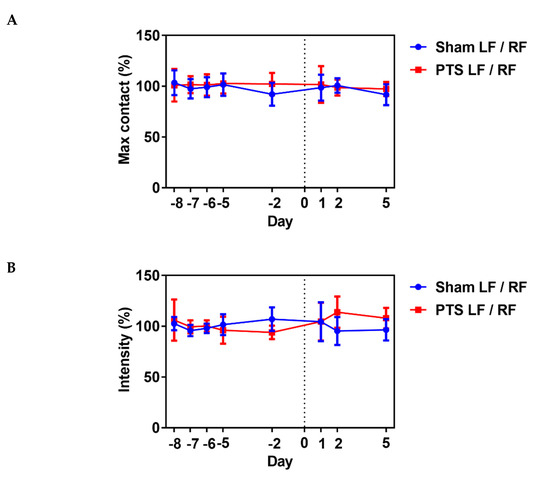
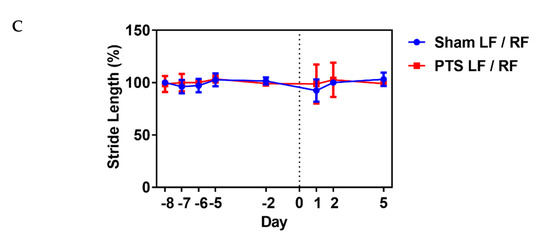
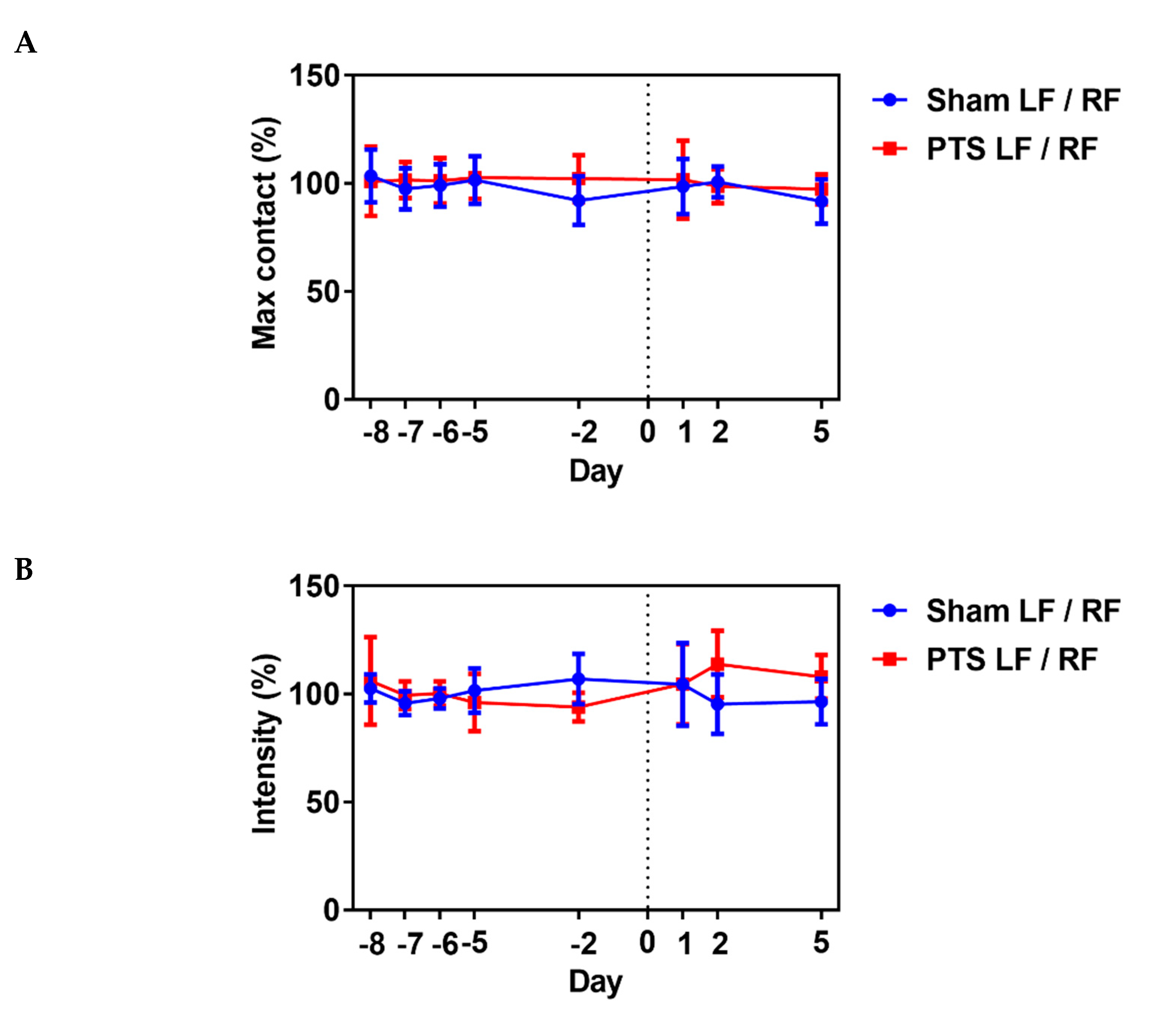
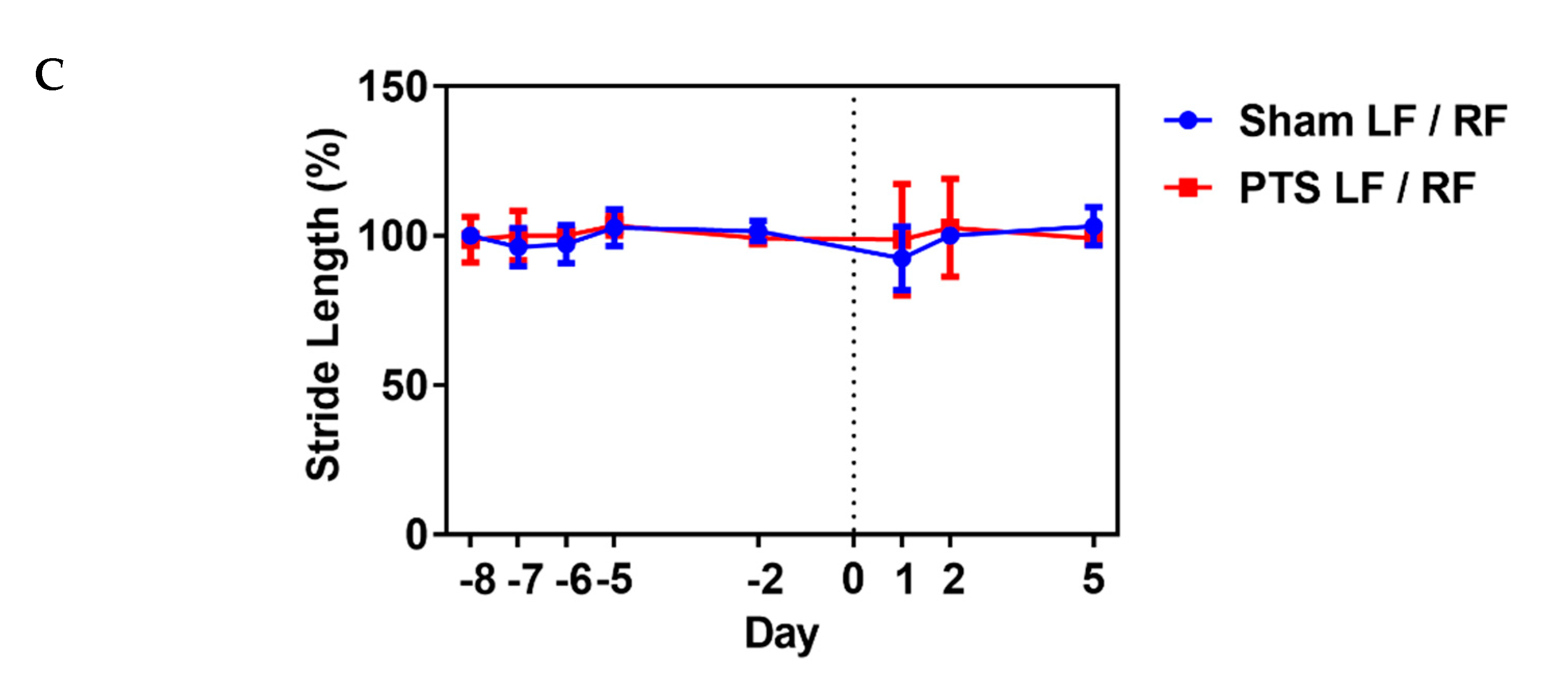
We next assessed the influence of the photothrombotic focal stroke on motor function and coordination by first performing a CatWalk gait analysis. We examined contralateral forelimb function post-stroke as motor disability in response to photothrombotic stroke [31]. We analyzed several gait parameters on days 1, 2 and 5 post-stroke and compared the stroke ipsilateral left front (LF) paw to the contralateral right front (RF) paw in each animal. No differences between the sham-operated group and photothrombotic stroke (PTS) group were detected. Shown are the results for parameters “max contact”, “intensity” and “stride length” (unpaired two-tailed test: max contact (%), p = 0.721; intensity (%), p = 0.987; stride length (%), p = 0.471; n = 9 mice; Figure 5). These results demonstrated a lack of effect of the stroke on gait parameters and that motor deficits might be confined to the digits of the paw. We therefore next used a pasta matrix reach task and a foot fault test to assess fine motor skills.
Figure 5. Impact of photothrombotic stroke on gross motor function. Representative CatWalk parameters (A) max contact (%), (B) intensity (%) and (C) stride length (%) analyzed before inducing photothrombotic stroke (PTS) to obtain baseline and on days 1, 2 and 5 after stroke. We compared the ipsilateral left front (LF) paw to the contralateral right front (RF) paw. Gait parameters were not altered by photothrombotic stroke. Shown are the results of unpaired two-tailed test (max contact (%), p = 0.721; intensity (%), p = 0.987; stride length (%), p = 0.471). All values are given as mean ± SEM (n = 9 mice).
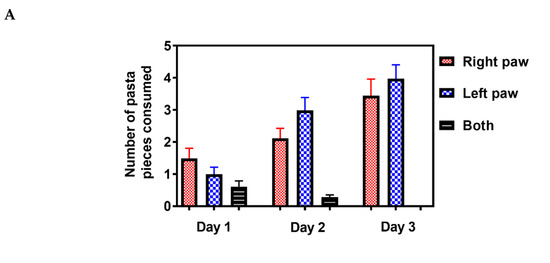
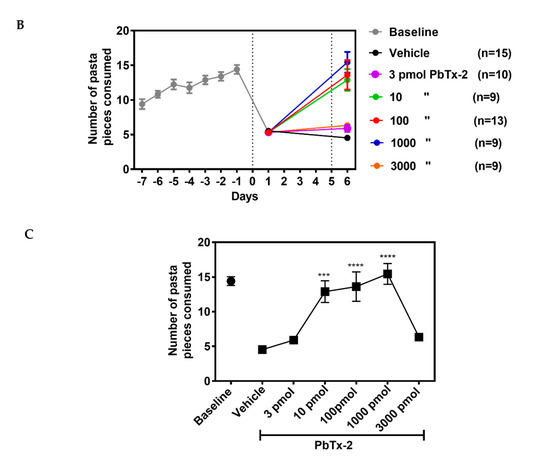
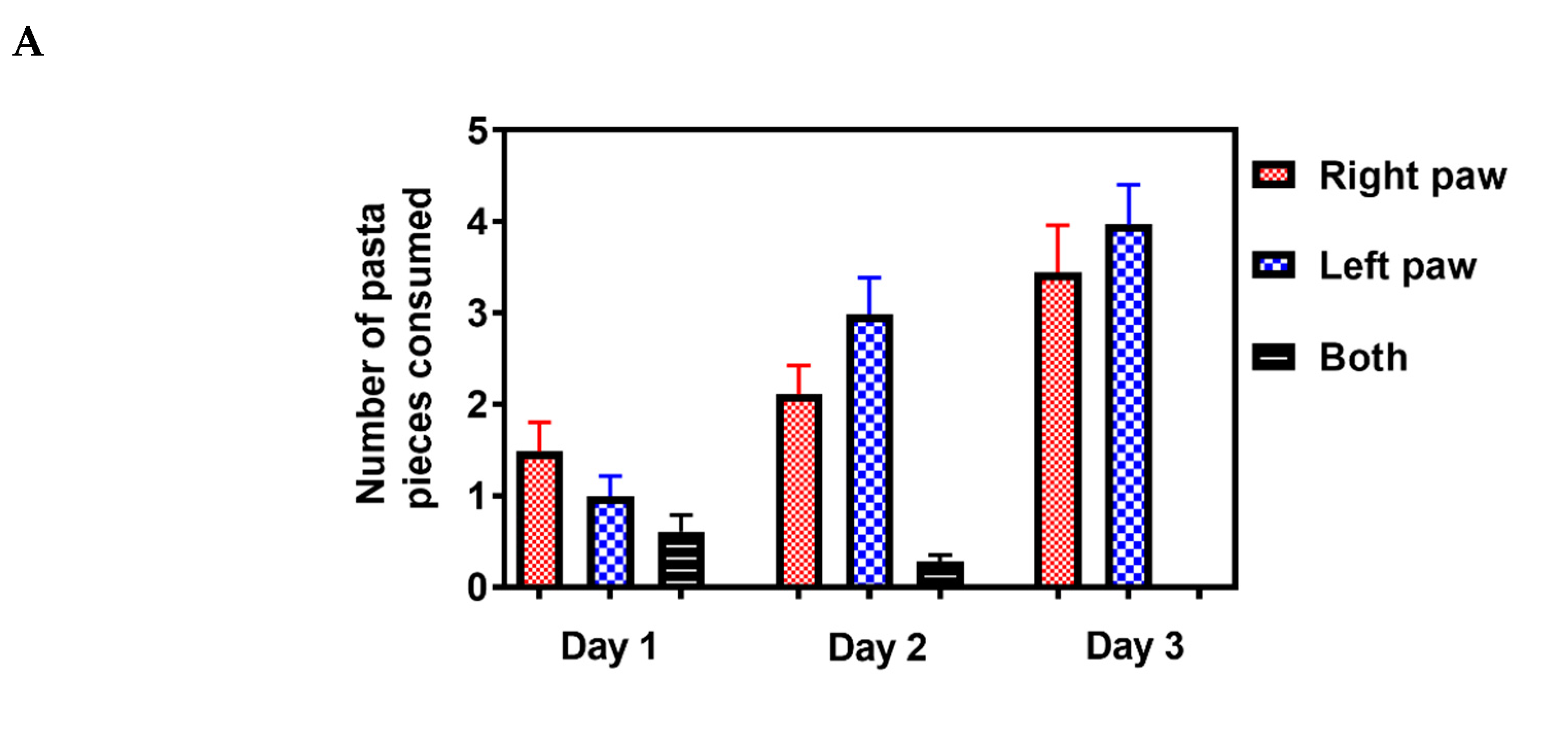
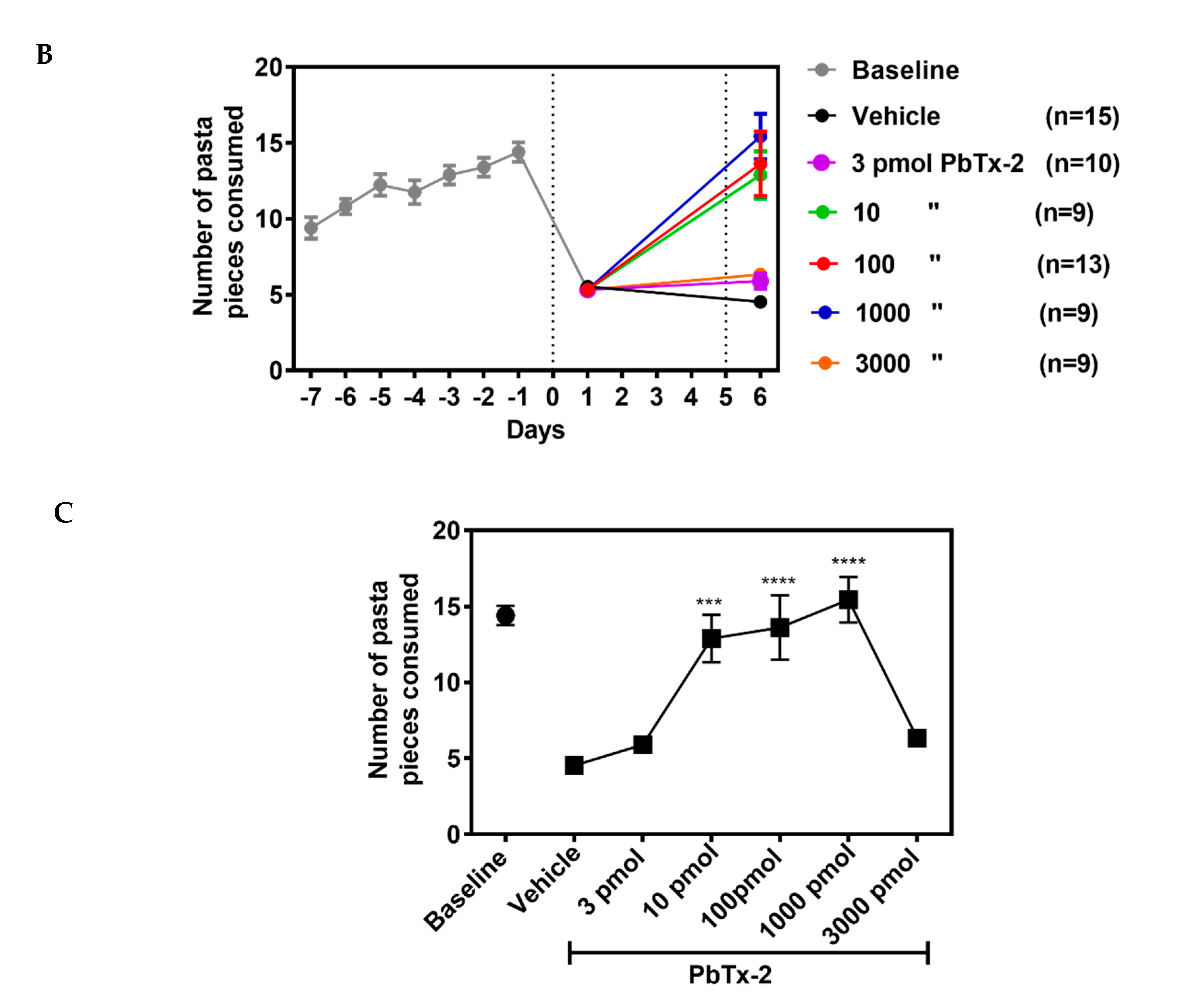
Rodents live in an environment that requires the use of a complex range of motor skills to gain access to food [32]. The pasta matrix reach task is one of the few motor tests that can measure skilled forepaw use [33]. Mice were trained for three days to grab a single piece of pasta to determine paw preference (Figure 6A), followed by seven days of pasta matrix training sessions to obtain baseline values before inducing stroke (Figure 6B). On day 1, following the stroke, there was a significant decline in the number of pasta pieces retrieved, indicating that the photothrombotic stroke affected fine motor skills. On day 6, following the stroke, animals treated with the 10, 100 and 1000 pmol doses of PbTx-2 exhibited a significant increase in the number of pasta pieces retrieved as compared with the vehicle-treated mice. The lowest and highest doses of PbTx-2, 3 and 3000 pmol, were however without a significant effect (one-way ANOVA followed by Dunnett’s post hoc test, **** p < 0.0001, *** p = 0.0002; 3 pmol PbTx-2 effect, p = 0.955; 3000 pmol PbTx-2 effect, p = 0.873; n = 9 to 15 mice; Figure 6).
Figure 6. Effect of PbTx-2 treatment on pasta matrix reach task. (A) Paw preference was determined using a single piece of pasta for 3 days. (B) Animals were trained for 7 days to retrieve 25 pieces placed in a 5X5 matrix from their preferred paw. Day 0 represents the photothrombotic procedure and at 1 day after the stroke, there was a significant reduction in the number of pasta pieces retrieved, indicating motor deficits induced by the insult. On day 6, after the stroke, the 10, 100 and 1000pmol PbTx-2-treated animals exhibited significant increases in the number of pasta pieces retrieved as compared with the vehicle-treated animals. The 3 and 3000 pmol PbTx-2 doses did not facilitate functional recovery. (C) Quantification of PbTx-2 dose–response effects on motor recovery 6 days post-stroke (one-way ANOVA followed by Dunnett’s post hoc test, **** p < 0.0001, ***p = 0.0002; 3 pmol PbTx-2 effect, p = 0.955; 3000 pmol PbTx-2 effect, p = 0.873). All data are represented as mean ± SEM (n = 9 to 15 mice). Data points without error bars are due to the error bar being smaller than the symbol.
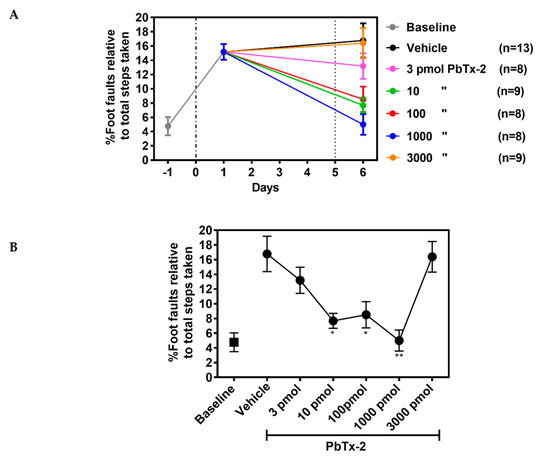
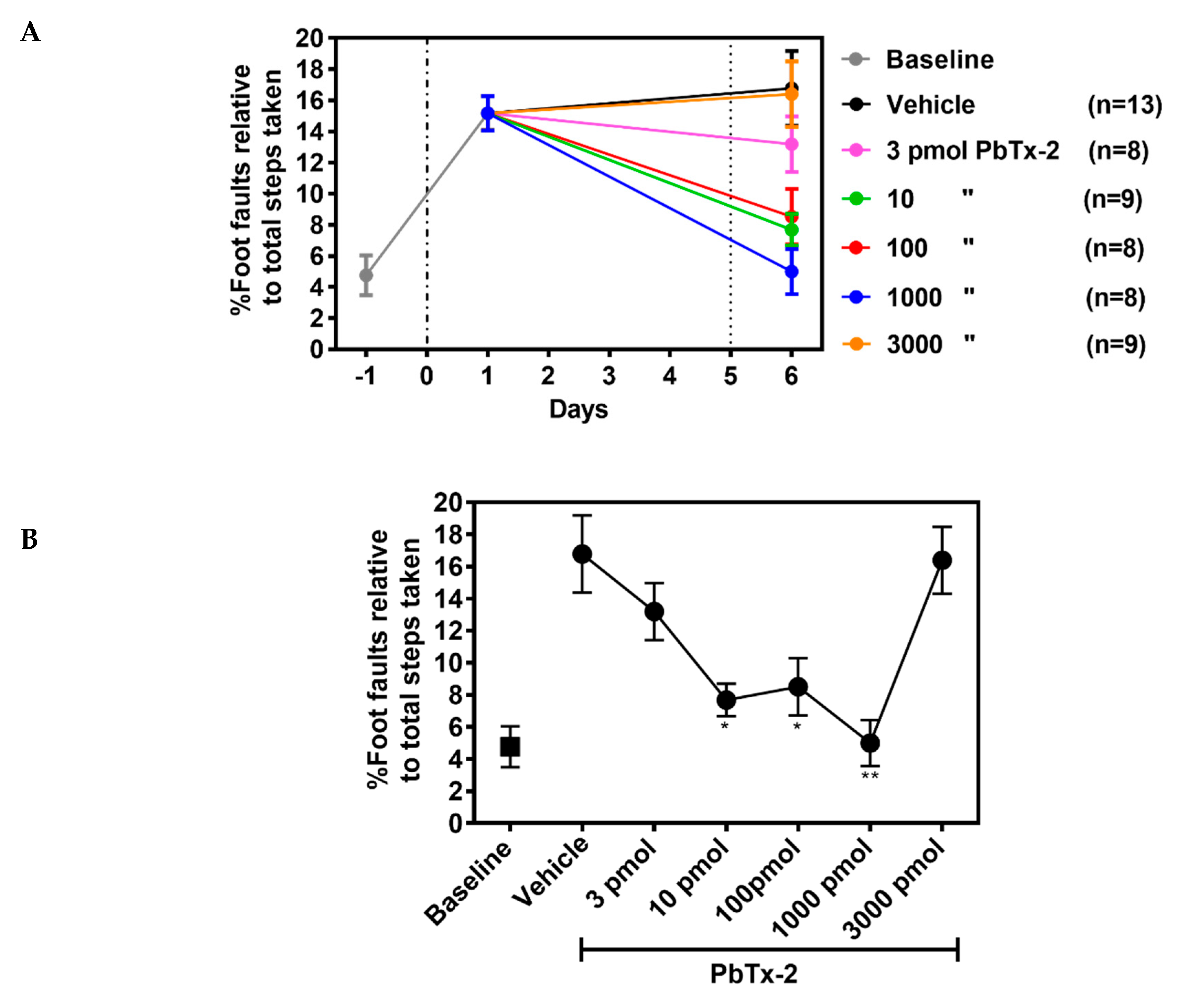
To further confirm the influence of PbTx-2 on functional recovery, we used a foot fault task that represents a sensitive method for detecting motor deficits of limb functioning and placement during locomotion. Animals without a stroke should place their paws precisely on the wire frame and demonstrate few to zero foot faults [33]. The photothrombotic stroke in the forelimb motor cortex produced a significant increase in the percentage foot faults on day 1 after the insult, indicating a disruption of limb function and placement (Figure 7A). At PbTx-2 doses of 10, 100 and 1000 pmols, treated animals displayed significant improvements in percentage of foot faults as compared with the vehicle-treated mice. Again, the 3 and 3000 pmol doses of PbTx-2 did not promote functional recovery (one-way ANOVA followed by Dunnett’s post hoc test, 10 pmol PbTx-2 effect; * p = 0.023, 100 pmol PbTx-2 effect; * p = 0.027, 1000 pmol PbTx-2 effect; ** p = 0.001; 3 pmol PbTx-2 effect, p = 0.703; 3000 pmol PbTx-2 effect, p > 0.999; n = 9 to 13 mice; Figure 7B). These data establish that treatment with the 10, 100 and 1000 pmol doses of PbTx-2 on day 5 post-stroke resulted in functional recovery of fine motor skills in both the pasta matrix handling and foot fault tasks as compared with the vehicle control treatments.
Figure 7. Effect of PbTx-2 treatment on foot fault task. (A) Animals were trained to walk on an elevated grid prior to photothrombotic stroke to obtain baseline values. On day 1 after inducing stroke, a significant increase in percentage of foot faults was observed. The 10, 100 and 1000 pmol doses of PbTx-2 produced significant improvement in percentage of foot faults as compared with the vehicle-treated animals. Alternatively, the 3 and 3000 pmol doses of PbTx-2 did not aid recovery. (B) Quantification of PbTx-2 dose–response effects on motor recovery 6 days post-stroke (one-way ANOVA followed by Dunnett’s post hoc test, 10 pmol PbTx-2 effect, * p = 0.023; 100 pmol PbTx-2 effect, * p = 0.027; 1000 pmol PbTx-2 effect, ** p = 0.001; 3 pmol PbTx-2 effect, p = 0.703; 3000 pmol PbTx-2 effect, p > 0.999). All data points are represented as mean ± SEM (n = 9 to 13 mice).

3. Discussion

Here, we investigated the effect of PbTx-2 on neuroplasticity in the peri-infarct cortex and associated motor functions in a murine model of stroke. The main findings of this study are: 1. epicortical application of PbTx-2 at the stroke site produced a 2-fold increase in dendritic arborization and increased synaptogenesis in the peri-infarct cortex, 2. photothrombotic stroke in the forelimb motor cortex produced functional deficits that were confined to the digits of the paw, 3. PbTx-2 doses of 10, 100 and 1000 pmols produced dramatic improvements in functional recovery toward pre-stroke controls as measured by an increase in the number of pasta pieces retrieved or decreased percentage of foot faults and 4. PbTx-2 displayed bidirectional dose–response profiles where the 3 and 3000 pmol doses did not affect neurite outgrowth or motor functional recovery, consistent with these effects being mediated through NMDARs.
VGSCs play a fundamental role in electrical signaling of the nervous system and action potential generation [34]. Two-photon imaging studies show that synaptic stimulation leads to transient increases in [Na+]i in postsynaptic spines and dendrites [15]. This suggests that [Na+]i may function as a signaling molecule and play a role in activity-dependent synaptic plasticity. PbTx-2, a VGSC gating modifier, augments NMDA receptor signaling through coincidence of an elevation of [Na+]i and Src kinase activity [21]. A previous report suggested that PbTx-2-mediated activation of sodium channels was associated with enhancement of NMDA-induced Ca2+ influx, accelerated spine formation and maturation, increased dendritic arbor elaboration and increased synaptogenesis in developing cerebrocortical neurons [22]. The cell signaling mechanisms underlying these responses involved PbTx-2-induced increase in intracellular Ca2+ with attendant phosphorylation of Ca2+-dependent molecules including CaMKI, CaMKII and CREB that play essential roles in neuronal growth and survival. BDNF is an activity-dependent neurotrophic factor that mediates neuroplasticity and is regulated by CREB-dependent mechanisms [35], and PbTx-2 exposure also increased the surface expression of BDNF-tropomyosin-related kinase B receptors in cerebrocortical neurons [22].
Glutamate plays an essential role in mediating excitatory neurotransmission in the central nervous system and is vital for synaptic plasticity. After an ischemic stroke, however, glutamate accumulation leads to excitotoxicity due to over-activation of NMDARs and neuronal death [36,37]. Interestingly, NMDAR antagonists failed clinically to show neuroprotective effects and, in some cases, worsened stroke outcomes in patients [38,39,40,41]. Hence, blocking NMDARs subsequent to a stroke is detrimental inasmuch as glutamate signaling through NMDARs contributes to neuronal survival. This influence of glutamate on NMDARs to promote neuronal survival displays an inverted U-shaped concentration–response curve, where too little or excessive activation of NMDARs are detrimental [42].
Neuronal excitability after a stroke exhibits distinct phases during stroke progression and recovery [43]. In the acute phase, excessive glutamatergic activity produces excitotoxicity and is deleterious. During the subsequent chronic phase however, glutamatergic excitability in the peri-infarct cortex is correlated with neuronal repair and recovery [43]. Therefore, enhancing cortical excitability too early after stroke may further increase neuronal death. This inflection point from the acute excitotoxic to chronic recovery phase occurs three days post-stroke in mice [14]. In the present study, we therefore selected the time point of five days after stroke for the epicortical treatments. Stroke recovery has been associated with dramatic spine plasticity in the peri-infarct cortex and with an increase in dendritic spine density over baseline values in some regions [11]. This influence of glutamatergic signaling is opposed by a marked increase in extracellular γ-aminobutyric acid (GABA) levels due to the loss of GABA transporter GAT-3 [14]. Notably, administration of L655,708, a benzodiazepine inverse agonist specific for extrasynaptic GABAA receptors, produced a rapid and sustained improvement in functional recovery in mice following a photothrombotic stroke [14]. Hence, counteracting the hypo-excitability caused by heightened GABAergic inhibition could potentially promote recovery when initiated during the chronic phase. The present results using the sodium channel gating modifier brevetoxin may provide an additional approach for enhancing brain excitability during the period of recovery and reorganization to promote neural repair.
We selected the photothrombotic stroke model because it produces a localized infarct that permits a detailed analysis of neuronal structural plasticity and functional recovery [44]. The effect of photothrombotic stroke on forelimb fine motor deficits, as assessed by the pasta matrix reach and foot fault tasks, appeared to be both pervasive and persistent since at six days post-stroke, the vehicle-treated animals displayed profound deficits in task performance. We found that a single epicortical PbTx-2 treatment applied five days post-stroke was sufficient to promote functional recovery and that these beneficial effects were paralleled by PbTx-2-induced increases in dendritic arbor complexity and synaptic density in the peri-infarct cortex. These actions of PbTx-2 on neuronal plasticity and functional recovery both showed inverted-U dose–response curves. We have shown previously that the in vitro effect of PbTx-2 on neurite outgrowth in cerebrocortical neurons exhibited a bidirectional concentration–response (inverted-U) profile and that this effect was primarily dependent on NMDARs [20]. Similarly, the effects of PbTx-2 on dendritic arborization and synaptogenesis in cerebrocortical neurons displayed bidirectional concentration–response profiles [22]. The inverted-U model for the relationship between NMDAR activity and neuronal survival and growth is well established [29]. The inverted-U dose–response effects of PbTx-2 on neuronal plasticity in the peri-infarct cortex observed in the present study are consonant with those of a previous report that neuronal activity affects structural plasticity in vivo through NMDAR-triggered intracellular signaling events [45]. It is therefore reasonable to posit that the effects of epicortical PbTx-2 on structural plasticity and post-stroke functional recovery are the result of elevated [Na+]i and enhanced NMDAR function.
Our results demonstrate impairment in forelimb fine motor control in mice after a photothrombotic stroke and reversal of these deficits by PbTx-2 treatment. These data suggest that stroke-induced motor deficits might be particularly responsive to augmented cortical excitability during the recovery phase of stroke. Currently, the only clinical treatment following a stroke is tissue plasminogen activator (tPA) which must be administered within the first few hours post-stroke. Considering that occupational and physical therapy are the standard of care for stroke recovery, our results suggest that sodium channel gating modifiers may represent a novel pharmacotherapy to accelerate recovery. This new strategy to enhance cortical excitability during the delayed time frame important for neural repair and recovery may hold promise for reducing the severity of stroke disability.

4. Materials and Methods