Changing stroke rehab and research worldwide now.Time is Brain! trillions and trillions of neurons that DIE each day because there are NO effective hyperacute therapies besides tPA(only 12% effective). I have 523 posts on hyperacute therapy, enough for researchers to spend decades proving them out. These are my personal ideas and blog on stroke rehabilitation and stroke research. Do not attempt any of these without checking with your medical provider. Unless you join me in agitating, when you need these therapies they won't be there.

What this blog is for:

My blog is not to help survivors recover, it is to have the 10 million yearly stroke survivors light fires underneath their doctors, stroke hospitals and stroke researchers to get stroke solved. 100% recovery. The stroke medical world is completely failing at that goal, they don't even have it as a goal. Shortly after getting out of the hospital and getting NO information on the process or protocols of stroke rehabilitation and recovery I started searching on the internet and found that no other survivor received useful information. This is an attempt to cover all stroke rehabilitation information that should be readily available to survivors so they can talk with informed knowledge to their medical staff. It lays out what needs to be done to get stroke survivors closer to 100% recovery. It's quite disgusting that this information is not available from every stroke association and doctors group.

Tuesday, June 4, 2019

Coffee not as bad for heart and circulatory system as previously thought

I haven't seen any research on coffee causing arterial stiffness.

How exactly is your doctor removing your hardening of your arteries?
Any of these? Does s/he know of any of them?


1.  Watermelon juice reverses hardening of the arteries


2.  Pomegranate juice consumption for 3 years by patients with carotid artery stenosis reduces common carotid intima-media thickness, blood pressure and LDL oxidation 


3.  Cranberry juice consumption may protect against cardiovascular disease


4.  Drinking low-calorie cranberry juice may help lower risk of heart disease, diabetes and stroke


Black Raspberry Extract Increased Circulating Endothelial Progenitor Cells and Improved Arterial Stiffness in Patients with Metabolic Syndrome: A Randomized Controlled Trial


Coffee not as bad for heart and circulatory system as previously thought

MedicalXpress Breaking News-and-Events | June 03, 2019
Drinking coffee might keep us up at night, but new research has given us a reason to sleep easy knowing that the popular drink isn't as bad for our arteries as some previous studies would suggest.

The research from Queen Mary University of London has shown that drinking coffee, including in people who drink up to 25 cups a day, is not associated with having stiffer arteries.
The research, led by professor Steffen Petersen, was presented today at the British Cardiovascular Society (BCS) Conference in Manchester and part-funded by the British Heart Foundation (BHF).
Arteries carry blood containing oxygen and nutrients from the heart to the rest of the body. If they become stiff, it can increase the workload on the heart and increase a person's chance of having a heart attack or stroke.
The study of over 8,000 people in the United Kingdom debunks previous studies that claimed drinking coffee increases arterial stiffness. Previous suggestions that drinking coffee leads to stiffer arteries are inconsistent and could be limited by lower participant numbers, according to the team behind this new research.
Coffee consumption was categorized into three groups for the study. Those who drink less than one cup a day, those who drink between one and three cups a day, and those who drink more than three. People who consumed more than 25 cups of coffee a day were excluded, but no increased stiffening of arteries was associated with those who drank up to this high limit when compared with those who drank less than one cup a day.
The associations between drinking coffee and artery stiffness measures were corrected for contributing factors like age, gender, ethnicity, smoking status, height, weight, how much alcohol someone drank, what they ate, and high blood pressure.
Of the 8,412 participants who underwent magnetic resonance imaging (MRI) heart scans and infrared pulse wave tests, the research showed that moderate and heavy coffee drinkers were most likely to be male, smoke, and consume alcohol regularly.
Dr. Kenneth Fung, who led the data analysis for the research at Queen Mary University of London, said, "Despite the huge popularity of coffee worldwide, different reports could put people off from enjoying it. Whilst we can't prove a causal link in this study, our research indicates coffee isn't as bad for the arteries as previous studies would suggest."
"Although our study included individuals who drink up to 25 cups a day, the average intake amongst the highest coffee consumption group was 5 cups a day. We would like to study these people more closely in our future work so that we can help to advise safe limits."
Professor Metin Avkiran, associate medical director at the British Heart Foundation, said, "Understanding the impact that coffee has on our heart and circulatory system is something that researchers and the media have had brewing for some time. There are several conflicting studies saying different things about coffee, and it can be difficult to filter what we should believe and what we shouldn't. This research will hopefully put some of the media reports in perspective, as it rules out one of the potential detrimental effects of coffee on our arteries."
To read more, click here.

Monday, June 3, 2019

One handed smart phoes woes

I can't blame my doctor and therapists for these problems, had a flip phone back in '06'.
Normal people hold the phone in one hand and use the other for swiping, typing, etc. When I try to put it in my affected left hand, due to spasticity it either turns off the phone, adjusts the volume or turns on Bixby. I tried the ring attachment on the back of the phone, didn't work. Took 5-10 minutes to get the finger flat enough to insert. Then the spasticity of the thumb would curl over the screen, pushing whatever icons were there. And typing the left most letters just were not available or inserted where they weren't wanted.  The pop up button I didn't try but that makes the assumption that you can squeeze your middle fingers together as needed to stabilize the phone, never occur in my case. Neither of these works with the magnetic attachment I have for use in my car. 

So I do icon selection and typing with the right hand thumb. while holding the phone with my fingers. Which is a problem for items out of thumb range. I end up having to press the phone against my body and rotate it to get the thumb in position.

Dementia Prevention: Popular Legends & Proven Strategies

You likely will need this. 

1. A documented 33% dementia chance post-stroke from an Australian study?   May 2012.

2. Then this study came out and seems to have a range from 17-66%. December 2013.

3. A 20% chance in this research.   July 2013.

4. Dementia Risk Doubled in Patients Following Stroke September 2018


What is your doctor recommending for dementia prevention? ANYTHING AT ALL?

I'm doing this.
Dementia prevention 19 ways
Don't follow me, I'm not medically trained.  Considering my doctor knew nothing about stroke, there is no way I'm asking about dementia prevention, it should be publicly available in that stroke database.

Dementia Prevention: Popular Legends & Proven Strategies

People buy supplements or do puzzles in hopes of protecting brain health. While they mean well, they may be ignoring solid research and missing out on truly effective strategies. Learn the difference.


Many Americans in their 50s and early 60s are worried about declining brain health, especially if they have loved ones with memory loss and dementia, a new national poll finds.

But while the majority of those polled say they take supplements or do puzzles in an effort to stave off brain decline, very few of them have talked with their doctors about evidence-based ways to prevent memory loss.

As a result, they may miss out on proven strategies to keep their brains sharp into their later years, says the poll team from the University of Michigan.

In all, nearly half of respondents to the National Poll on Healthy Aging felt they were likely to develop dementia as they aged, and nearly as many worried about this prospect. In reality, research suggests that less than 20 percent of people who have reached age 65 will go on to lose cognitive ability from Alzheimer's disease, vascular dementia or other conditions.

Not Asking Doctors

Despite the brain-related concerns of so many respondents, only five percent of the entire group, and 10 percent of those who said they had a family history of dementia, said they had talked with a healthcare provider about how to prevent memory problems.

At the same time, 73 percent said they do crossword puzzles or brain games, or take supplements, to try to keep their minds sharp. Neither strategy has been shown to have a beneficial effect by major research studies.

Results

  • 55% reported doing crossword puzzles or other brain games to maintain or improve their memory.
  • 48% reported taking some type of vitamin or supplement to help their memory.
  • 32% said they took fish oil or omega-3 supplements.
  • 73% reported engaging in at least one of these strategies to help maintain or improve their memory.
  • 5% said they had ever discussed ways to prevent dementia with their doctor.
  • 10% of those with a family history of dementia had talked with their doctor about ways to prevent dementia.
The poll, carried out by the U-M Institute for Healthcare Policy and Innovation with support from AARP and Michigan Medicine, U-M's academic medical center, asked 1,028 adults aged 50 to 64 a range of brain health questions.

Scientific Evidence

"While many people in this age range expressed concerns about losing memory, and say they take active steps to prevent it, most haven't sought advice from medical professionals, who could help them understand which steps actually have scientific evidence behind them," says Donovan Maust, M.D., M.S., a U-M geriatric psychiatrist who helped design the poll and analyze the results. "Many people may not realize they could help preserve brain health by:(Absolutely none of these are specific enough to do a damn bit of good! But your doctor gets good conscience laundering out of it.)
  1. Managing their blood pressure
  2. Managing their blood sugar
  3. Getting more physical activity
  4. Better sleep
  5. Stopping smoking."
Maust worked with poll director Preeti Malani, M.D., U-M dementia researcher Kenneth Langa, M.D., PhD, and the poll team.

Effects of experience

The team found stark differences in perceptions and viewpoints between the one-third of poll respondents who said they had a family history of dementia, or had served as a caregiver to a loved one with dementia, and those without such experience or family links.

For instance, 73 percent of those with a family history of dementia said they themselves were somewhat or very likely to develop the condition as they aged -- compared with just 32 percent of those with no family history. The gap between the two groups was nearly as large when the research team asked if poll respondents were worried about developing dementia later in life.

"Staying mentally sharp is the number one concern for older adults," says Alison Bryant, Ph.D., senior vice president of research for AARP. "According to the Global Council on Brain Health, people should concentrate on those things we know can improve brain health -- eating a healthy diet, getting adequate sleep, exercising, and socializing with friends and family."

Attitudes toward dementia research

Differences also emerged between those who had dementia in their families, and those without, when the researchers asked respondents if they'd consider taking part in dementia-related research.

Seventy-one percent of those with a family history of dementia said they'd be willing to give researchers a sample of their DNA, compared with 51 percent of the other respondents. Nearly twice as many of those with a family history said they'd take part in a test of a new medicine aimed at preventing dementia, or a new treatment for people diagnosed with dementia.

The poll also suggests that researchers searching for better ways to prevent, diagnose or treat dementia may have to work hard to attract participants. Thirty-nine percent of those who wouldn't be willing to give a DNA sample said it was because they didn't want their DNA to be stored in a repository. Similarly, 37 percent of those who said they wouldn't take part in studies of new prevention or treatment strategies expressed concerns about being a "guinea pig," and one-fifth worried about potential harms.

Healthy lives, healthy attitudes

The poll also shows that a greater percentage of adults in their 50s and early 60s who say they get adequate sleep and exercise, ate healthily and were active socially at least several times a week felt their memory was just as sharp now as it was when they were younger, compared to those who do not engage in these healthy behaviors as frequently.

But those who said their health was fair or poor, or who reported that they didn't often engage in healthy lifestyle practices, were much more likely to say that their memory had declined since their younger years. In all, 59 percent of those polled said their memory was slightly worse than it used to be.

"For anyone who wants to stay as sharp as possible as they age, the evidence is clear: focus on your diet, your exercise, your sleep and your blood pressure," says Malani. "Don't focus on worrying about what might happen, or the products you can buy that promise to help, but rather focus on what you can do now that research has proven to help."

A full report of the findings and methodology is available at http://www.healthyagingpoll.org, along with past National Poll on Healthy Aging reports.


Do you even know how to breathe? This article will teach you

There is even resilience breathing in there which you will need because of the failure of your doctor to have anything that will get you close to 100% recovery. You are going to have to be resilient enough to keep going with exercises millions of times with no idea when they will work. 

Do you even know how to breathe? This article will teach you


Sunday, June 2, 2019

Bioxytran, Inc. is a biopharmaceutical company whose mission is to develop anti-necrosis drugs that treat a variety of medical conditions resulting from Ischemia.

This delivers oxygen thru the clot.

Joyce Hoffman  has an excellent writeup here:

http://stroketales.blogspot.com/2019/06/oxygen-getting-to-brain-cells-is.html?utm_source=feedburner&utm_medium=feed&utm_campaign=Feed%3A+TheTalesOfAStrokePatient+%28The+Tales+of+a+Stroke+Patient%29 

For more information on how it works visit the website or play this video of how it works.

Here’s How Sex Can Boost Your Brain

From The Best Brain Possible by Debbie Hampton. I bet your doctor will tell you nothing about this. 

These two are very important;

Sex helps you fall asleep. You wouldn't need problematic sleeping pills handed out like candy.  More on Sleeping Pills and Older Adults

Sex makes you smarter. I assume you want this to counteract your lost 5 cognitive years from your stroke? Or does your doctor have a better protocol for that? 


Here’s How Sex Can Boost Your Brain

6 ways chewing gum is wrecking your health

Your doctor should have had a chewing gum protocol since March 2012. No protocol, call the president and ask when incompetence will be removed.  You do want better blood flow to the brain immediately post stroke don't you?

Chew Yourself a Better Brain March 2012 

The impact of mastication on cognition: evidence for intervention and the role of adult hippocampal neurogenesis April 2016

 But all the negatives here:

6 ways chewing gum is wrecking your health


If you chew gum regularly, too, it’s important to know how the habit impacts your body, from your teeth to your stomach and beyond. Here are all the ways chewing gum is hurting you more than it’s helping you.
We pop a piece after a boldly flavored lunch to put the kibosh on that garlic breath. We reach for a piece when we feel a little hungry but aren’t ready to eat a full meal just yet. And we snag another piece when we’re caught in an uncomfortable situation and need that oral fixation to help take the edge off (and distract you from the awkwardness). We’re gum chewers, and it’s not doing our health any favors.
If you chew gum regularly, too, it’s important to know how the habit impacts your body, from your teeth to your stomach and beyond. Here are all the ways chewing gum is hurting you more than it’s helping you.

1. It’s really bad for your teeth.

Unless you opt for sugar-free gum 100 percent of the time, that gum chewing habit is negatively impacting your dental health. The bad bacteria in your mouth digest sugar before it gets to your stomach, and you chew gum over a prolonged period of time, so those windows of time increase the amount of plaque buildup on your teeth and cause tooth decay to occur over time.

2. It could cause jaw problems.

Another common side effect of chewing gum, especially during times of high stress, is called temporomandibular joint dysfunction, or TMJ. It predominantly affects the jaw, jaw joint and surrounding muscles, leading to severe pain any time you try to move your jaw away from its typical closed alignment. It hurts to chew your food, it hurts to laugh… Pretty much everything related to moving your mouth hurts.

3. It can give you a lot of headaches.

That constant compression in your jaw from excessive chewing does more than predispose you to conditions like TMJ — it also increases the number of tension headaches you experience and how frequently they present themselves. So if you’re someone who already deals with a migraine disorder or frequent headaches due to the common stressors and anxiety triggers in your life, you’re better off staying away from chewing gum altogether.

4. It can make your indigestion symptoms worse.

A lot of people chew gum to help relieve feelings of nausea or an upset stomach, but gum can make these unpleasant symptoms worse. When you chew gum, you swallow a bunch of little sips of air over time, filling your stomach with unwanted gas. This process can lead to additional bloating and make your tummy feel even more distended than it did before. Talk about an unhappy digestive system…

5. It can make folks with IBS truly miserable.

For the people out there who think sugarless gum is the way to go because it has fewer calories, be mindful if you have any sensitive stomach issues or digestive problems. The sugar alcohols that serve as artificial sweeteners can act as laxatives, causing things like cramping, digestive distress and even diarrhea. Those with irritable bowel syndrome are best off staying away from all products that contain a significant amount of sugar alcohols — not just chewing gum.

6. Its reputation as a diet aid can backfire.

Many people chew gum to curb unwanted (and unhealthy) snacking cravings and avoid weight gain, but the constant chewing motion can actually trigger the brain to think that your body actually is hungry. That means that you still end up digging in and eating more than you probably would have after chewing away on that gum. What’s more, if you prefer mint gum, that flavor makes you more likely to reach for junk foods afterward rather than healthy options like fresh fruit. Doesn’t sound like a successful dieting plan to us…
This post was originally published on Swirled.com in the Thrive section, which covers valuable career and personal finance content for Millennials.

Gold Appeal: Teen learns to walk and talk again after massive stroke

This should be a standard occurrence. What are your doctors and stroke hospital doing to ensure this outcome occurs EVERY TIME?

Gold Appeal: Teen learns to walk and talk again after massive stroke

Ads by Kiosked
On a Sunday evening in February last year, 15-year-old Tia Stratilas felt an excruciating pain in her head and let out a scream before falling unconscious.
Rushing to her room, her parents were confronted with their daughter who appeared to be having a fit. Her eyes were rolled back in her head and as father Tasi started CPR her mother Maria ran for the phone to call triple-0.
Their seemingly perfectly healthy daughter had suffered a ruptured aneurysm in her brain and the blood clot that formed as a result caused a catastrophic stroke.
Tia Stratilas was 15 when she suffered an aneurysm and stroke.
Tia Stratilas was in an induced coma for two weeks.
“We are lucky she screamed otherwise we would have found her in the morning too late,” Mrs Stratilas said.
Tia had what is called an arteriovenous malformation, a malformation in an artery in her brain which caused the aneurysm. It had probably been there since birth, a ticking time bomb.


In the ambulance, paramedics feared the teen would not make it to hospital in time.
“At Wollongong Hospital the doctor operated immediately, opened her head to remove the blood clot and removed part of the bone at the front of her skull to help with the brain swelling. She was then flown to Sydney Children’s Hospital,” Mrs Stratilas said.
Tia was flown to the Sydney Children’s Hospital for more treatment.
Tia Stratilas is on the road to recovery thanks to the help of nurses like Victoria Honour and Dolly Dickinson. Picture: Sam Ruttyn
At Sydney Children’s Hospital, surgeons operated again, this time to clip the aneurysm and coil it so it would not rupture again.
“They told us it did not look good, the doctor said he was not going to sugar-coat it, it’s bad,” she said.
Tia was in an induced coma for two weeks and when she woke, it was as if she needed to learn everything all over again.
“She had to learn to walk again, it has taken four to five months to learn to walk again, and she had to learn how to connect her brain to her voice to talk, she could not remember letters, or how to eat, everything she had to learn from the beginning,” Mrs Stratilas said.
Tia undergoing some physiotherapy.
Tia had to learn to use her hands again.
Tia spent seven and a half months in hospital with a team of professionals helping to put her back on her feet and learn to talk again. It has been slow and painful work, but it’s starting to pay off.
“She has been through a lot of physiotherapy, occupational therapy and speech therapy and she can walk and talk again. She is back at school again full time with a support person,” Mrs Stratilas said.
“I’m just happy we still have her. She is starting get back some bad habits so my husband jokes that was old Tia, she is still there.
“I keep asking Tia is she okay and she is just always happy, she loves the hospital and even misses it sometimes.”
Bec McDonald, senior physiotherapist at Rehab2Kids, said Tia’s brain injury affected her upper and lower limbs and her ability to talk and express herself.
“Due to her injury, Tia had to re-learn to sit, stand, talk and walk. Tia couldn’t eat, perform self-care activities like bathing or toileting, she was initially unable to identify faces, names or her loved ones and or objects, but amazingly could sing songs word for word,” Ms McDonald said.
Tia got through with the support of her family (from left) brother Peter, her dad Tasi, mum Maria and brother Alexander. Picture: Sam Ruttyn
But her hard work with her rehabilitation team is starting to pay off.
“Tia has made great progress and has always been incredibly dedicated to her therapy, which is evident in the incredible progress she has made,” Ms McDonald said.
“Tia’s recovery required multidisciplinary approach with intensive of physiotherapy, occupational and speech therapy. She loved the hydrotherapy pool, using the Functional Electrical Stimulation (FES) bike and going on community access visits — including beach trips.
“The rehab team also supported Tia’s return to school physically and with neuro-psychological guidance and support.”
* Sydney Children’s Hospital Gold Appeal: Give a Golden Gift donation to help kids like Tia thrive — goldappeal.org.au or phone 1800 244 537

Sexual Experience Promotes Adult Neurogenesis in the Hippocampus Despite an Initial Elevation in Stress Hormones

If I'm reading this correctly and can extrapolate to humans for those who get this post stroke anxiety(20% chance)  your doctor should be ensuring you have sex at least 14 days in a row.  Which way will your doctor be incompetent? NOT knowing, Or NOT doing? Some bias here, they did not test female rats.

Sexual Experience Promotes Adult Neurogenesis in the Hippocampus Despite an Initial Elevation in Stress Hormones


  • Benedetta Leuner, 
  • Erica R. Glasper, 
  • Elizabeth Gould
PLOS
x


Abstract

Aversive stressful experiences are typically associated with increased anxiety and a predisposition to develop mood disorders. Negative stress also suppresses adult neurogenesis and restricts dendritic architecture in the hippocampus, a brain region associated with anxiety regulation. The effects of aversive stress on hippocampal structure and function have been linked to stress-induced elevations in glucocorticoids. Normalizing corticosterone levels prevents some of the deleterious consequences of stress, including increased anxiety and suppressed structural plasticity in the hippocampus. Here we examined whether a rewarding stressor, namely sexual experience, also adversely affects hippocampal structure and function in adult rats. Adult male rats were exposed to a sexually-receptive female once (acute) or once daily for 14 consecutive days (chronic) and levels of circulating glucocorticoids were measured. Separate cohorts of sexually experienced rats were injected with the thymidine analog bromodeoxyuridine in order to measure cell proliferation and neurogenesis in the hippocampus. In addition, brains were processed using Golgi impregnation to assess the effects of sexual experience on dendritic spines and dendritic complexity in the hippocampus. Finally, to evaluate whether sexual experience alters hippocampal function, rats were tested on two tests of anxiety-like behavior: novelty suppressed feeding and the elevated plus maze. We found that acute sexual experience increased circulating corticosterone levels and the number of new neurons in the hippocampus. Chronic sexual experience no longer produced an increase in corticosterone levels but continued to promote adult neurogenesis and stimulate the growth of dendritic spines and dendritic architecture. Chronic sexual experience also reduced anxiety-like behavior. These findings suggest that a rewarding experience not only buffers against the deleterious actions of early elevated glucocorticoids but actually promotes neuronal growth and reduces anxiety.


Sexual experience restores age-related decline in adult neurogenesis and hippocampal function

You  lost 5 cognitive years from your stroke.

 EXACTLY how much sex should you be having to regain those 5 years? Why doesn't your doctor have an answer? It was only tested in rats is not a valid answer. The only valid answer is: 'I'm working with these researchers(X, Y, and Z) to test this out in humans'. Anything else is grounds for firing, along with the stroke department head, the hospital president AND the board of directors. We have to start clearing out all the dead wood in stroke.


Sexual experience restores age-related decline in adult neurogenesis and hippocampal function

Abstract

Aging is associated with compromised hippocampal function and reduced adult neurogenesis in the dentate gyrus. As new neurons have been linked to hippocampal functions, such as cognition, age-related decline in new neuron formation may contribute to impaired hippocampal function. We investigated whether a rewarding experience known to stimulate neurogenesis in young adult rats, namely sexual experience, would restore new neuron production and hippocampal function in middle-aged rats. Sexual experience enhanced the number of newly generated neurons in the dentate gyrus with both single and repeated exposures in middle-aged rats. Following continuous long-term exposure to sexual experience, cognitive function was improved. However, when a prolonged withdrawal period was introduced between the final mating experience and behavioral testing, the improvements in cognitive function were lost despite the presence of more new neurons. Taken together, these results suggest that repeated sexual experience can stimulate adult neurogenesis and restore cognitive function in the middle-aged rat as long as the experience persists throughout the testing period. The extent to which changes in adult neurogenesis underlie those in cognition remain unknown.

KEYWORDS:

dentate gyrus; middle age; object recognition; sexual experience
PMID:
23460298
DOI:
10.1002/hipo.22090
[Indexed for MEDLINE]

Resveratrol and cardiovascular health

Useless, just bland statements.  I want to know EXACTLY how much red wine to drink on a daily basis or some similar replacement. We can't wait forever for those resveratrol tomatoes. 

Resveratrol and cardiovascular health


Abstract

Resveratrol (3,4′,5-trihydroxystilbene) is a member of natural, plant-derived chemicals known as polyphenols and is attracting increased attention due to its diverse health benefits especially in case of cardiovascular disease, cancer, diabetes and neurological problems. Despite impressive gains in diagnosis and treatment, cardiovascular disease (CVD) remains a serious clinical problem and threat to public health. Resveratrol possesses potent antioxidant properties and has been shown to decrease low-density lipoprotein–cholesterol oxidation and platelet aggregation. This compound also possesses a range of additional cardioprotective and vasoprotective properties including antiatherosclerotic and vasorelaxation action. Resveratrol also has the capacity to interact with multiple molecular targets, which involve diverse intracellular pathways. Most well-known is the ability of resveratrol to activate sirtuins, a class of NAD+-dependent deacetylase that affect multiple transcription factors and other protein targets. Recently, resveratrol was found to induce autophagy and regenerate myocardial ischemic tissue treated with stem cells. Overall observation indicates that resveratrol has a high therapeutic potentials for the treatment of cardiovascular diseases.

Saturday, June 1, 2019

Role of bone marrow-derived macrophages (BMDMs) in neurovascular interactions during stroke

Well, this should go straight to that stroke leader to update the stroke strategy and solve this. But that won't occur. WE HAVE NO STROKE LEADERS AND NO STROKE STRATEGY. 

Role of bone marrow-derived macrophages (BMDMs) in neurovascular interactions during stroke


Highlights

Infiltrating BMDMs can modulate both ischemic injury and recovery.
BMDMs get primed depending upon tissue microenvironment to adopt pro- or anti-inflammatory phenotype.
BMDMs can be a potential therapeutic target for stroke management.

Abstract

Stroke is a leading cause of disability worldwide and hence remains a major medical concern. Besides several pathological features, such as excitotoxicity, peri-infarct depolarization, acidosis, reactive oxygen species generation, apoptosis, and necrosis, dysregulation of the immune system severely affects stroke outcomes. After stroke onset, microglia – the brain-resident macrophage immune cells – and peripheral immune cells affect stoke injury/recovery by releasing pro-inflammatory and/or anti-inflammatory cytokines depending on their microenvironment. These pro- or anti-inflammatory cytokines further affect integrity of the blood brain barrier (BBB) and modulate immune infiltration after stroke. Among peripheral immune cells, bone marrow-derived macrophages (BMDMs) play a critical role in stroke pathology which peaks between three and seven days post-stroke. BMDMs have been extensively studied for their role in exacerbation of stroke injury, however they have rarely been studied for their role in tissue repair. Nonetheless, these reparative roles are gaining attention since recent studies have shown either failure or worsening of long-term post-stroke recovery after blockade of peripheral immune infiltration. These diverse but paradoxical effects of infiltrating monocytes/macrophages encouraged us to summarize the latest findings in neuro-immune and immune-vascular interactions. This review highlights the multifaceted role of BMDMs in stroke onset and resolution, and emphasizes the significance of tapping the potential of these cells to gain better insight into disease progression and therapy.

Research data for this article

This is an invited review article and hence does have any data to deposit.
Data not available / Other (please explain)
About research dataView full text

Comparison of the responsiveness of the Utrecht Scale for Evaluation of Rehabilitation (USER) and the Barthel Index in stroke patients

I see no usefulness in either, totally subjective.

Comparison of the responsiveness of the Utrecht Scale for Evaluation of Rehabilitation (USER) and the Barthel Index in stroke patients 

First Published May 28, 2019 Research Article


To compare the responsiveness of the Utrecht Scale for Evaluation of Rehabilitation (USER) to the responsiveness of the Barthel Index in stroke patients in an inpatient rehabilitation facility.

Observational study.

Inpatient rehabilitation facility.

Consecutive stroke patients admitted for clinical rehabilitation.

Not applicable.

The USER and the Barthel Index were administered by a nurse at admission and discharge. The Effect Size and Standardized Response Mean (SRM) were calculated as measures of responsiveness.

From 198 (78%) of the 254 patients who were included in the study period, both admission and discharge data were available. At admission the mean score of the USER subscale Functional independence was 43.1 (SD = 18.9) and at discharge the mean score was 59.3 (SD = 13.8). The mean score of the Barthel Index at admission was 13.3 (SD = 5.4) and at discharge 18.4 (SD = 3.3). The Effect Size of the USER subscales Mobility, Self-care, Cognitive functioning, Pain, Fatigue and Mood were 0.85, 0.77, 0.48, 0.19, 0.40 and 0.28, respectively, and of the Barthel Index 0.94. The results for the SRM were in the same range.

In inpatient rehabilitation after stroke, the USER was less responsive than the Barthel Index.

Two Melbourne mates have taken the terror out of having a stroke

My nihilism on stroke has not lifted one bit. You should still be terrified if you have a stroke today.  

All the failures here in one list; My nihilism list;

1. 30% get spasticity NOTHING THAT WILL CURE IT.

2. At least half of all stroke survivors experience fatigue Or is it 70%?

Or is it 40%?

NOTHING THAT WILL CURE IT.

3. Over half of stroke patients have attention problems.

NOTHING THAT WILL CURE IT.

4.  The incidence of constipation was 48%.

NO PROTOCOLS THAT WILL CURE IT.

5. No EXACT stroke protocols that address any of your muscle limitations.

6. Poststroke depression(33% chance)

NO PROTOCOLS THAT WILL ADDRESS IT. 

7.  Poststroke anxiety(20% chance) NO PROTOCOLS THAT WILL ADDRESS IT. 

8. Posttraumatic stress disorder(23% chance)  NO PROTOCOLS THAT WILL ADDRESS IT.

  912% tPA efficacy for full recovery NO ONE IS WORKING ON SOMETHING BETTER.

10.  10% seizures post stroke NO PROTOCOLS THAT WILL ADDRESS IT. 

11. 21% of patients had developed cachexia NO PROTOCOLS THAT WILL ADDRESS IT. 


12. You lost 5 cognitive years from your stroke  NO PROTOCOLS THAT WILL ADDRESS IT.

13.  33% dementia chance post-stroke from an Australian study?

       Or is it 17-66%?

       Or is it 20% chance in this research?

NO PROTOCOLS THAT WILL ADDRESS THIS


But the positive chest thumping here.

Two Melbourne mates have taken the terror out of having a stroke


Jill Margo

Jill MargoHealth Editor

Two old friends who met at Melbourne’s medical school and have worked together for the past 40 years, are on the brink of changing the way people are treated for stroke around the world.
They have taken a highly limited treatment and made it accessible at scale. This took 10 years to achieve and is built on their life’s work.
Professors Geoffrey Donnan and Stephen Davis were already international figures in stroke medicine but are now at the forefront.
Professor Geoffrey Donnan says with research "you can fail 20 times before you get a win." Josh Robenstone
When they started their careers, there was widespread nihilism about strokes. There was no hope and people feared them because they were often fatal or caused severe permanent disability.
One day, this young pair decided to draw up a list of treatments for stroke. There were none. Their page was depressingly blank.
Advertisement


Just as heart attacks damage the heart, so strokes damage the brain but they do this quickly. From the moment a stroke occurs, a person starts losing about 2 million neurons a minute.

Safe and effective treatment

Finding a treatment to stop this is a challenge for every neurologist. While Davis and Donnan never found one, they have found a safe and effective way to open an existing treatment potentially to millions.
Stroke is the second most common cause of death globally and the most common cause in Asia.
Their work has the potential to increase, by 33 per cent, the number of people who will walk out of hospital after a stroke, go home and resume normal living.
As young neurologists, in the early '80s, Davis and Donnan went separately to Massachusetts General Hospital in Boston to do fellowships.
There, they were both mentored by a pioneer of brain imaging, Robert Ackerman, who made a deep impression on them.
Ackerman was one of the first in the world to visualise a phenomenon that, according to Davis, is best described using the image of a fried egg.
In this egg, the yolk is comprised of dead brain cells. The white cells are still viable but desperately short of blood.

Fried egg theory

Most strokes are caused by a clot that blocks blood flow somewhere in the brain. Depending on where this happens, a cluster of brain cells die.
These form a dead core (the yolk) around which an area of tissue is still alive, but struggling (the white).
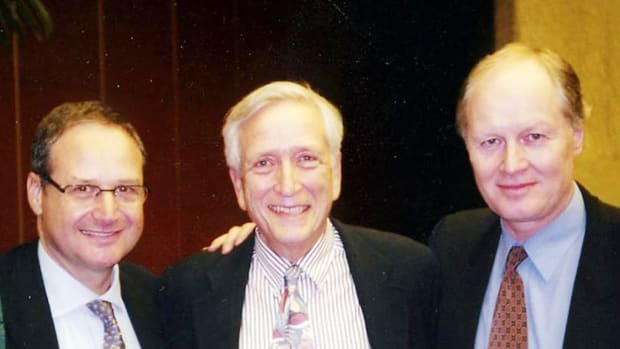
The two professors with their mentor. From left: Stephen Davis, Robert Ackerman and Geoffrey Donnan. Supplied
If blood flow can be restored to the white in time, the patient suffers far less disability.
In medical terms, the white is called the “ischaemic penumbra”, with ischaemic meaning deprived of blood.
Ackerman demonstrated this on a machine, home-built at the hospital. It was primitive, complicated and difficult to use but it inspired the young Australians.
At the time, finding a sophisticated form of imaging that would make it possible to visualise the penumbra in real time and restore its blood flow, was the Holy Grail of stroke treatment.
Back home in Melbourne, the two men recognised the strong intellectual chemistry between them and it wasn’t long before they figured that they could make more headway together than alone.

Overcoming failure

So, they collaborated and in the process, built a friendship based on trust. Over the decades, they have toasted their wins with a quiet whisky and encouraged each other to “press on” whenever an idea failed or when they were pipped to the post.
As Donnan says, “with research you can fail 20 times before you get a win”.
Their synergy was so powerful that they created professional stroke associations, clinical trial groups, regional organisations and international ones too. First one of them became president of the World Stroke Organization and then the other.
Donnan’s career took him to the top of Melbourne’s prestigious Florey Institute of Neuroscience. After running it for a decade, he is now at The Royal Melbourne Hospital.
At this same hospital Davis built his career and today leads the Melbourne Brain Centre. He also heads Translational Neuroscience at the University of Melbourne.
Stroke is a big problem in Australia. In the five minutes it might take you to read this story, between 40 and 50 Australians would have had one. That makes about 60,000 a year.
There are two kinds of strokes. The less common one is caused by a vessel bursting and bleeding into the brain. There is no magic treatment to reverse the damage this causes.
The common stroke, which occurs 85 per cent of the time, is caused by a clot. Dissolving clots is not new.

Clot-busters

When clot-busting drugs were used in the mid-1980s to restore blood flow after a heart attack, neurologists thought they might work in the brain too.
Many attempts were made – including by the Melbourne pair – but none worked. They did, however, produce useful building blocks of information and in the mid-1990s, the Americans had a breakthrough.
They cleared clots and saved the penumbra. For many patients this was miraculous because instead of going into a nursing home forever, they went back to work.
This brought tremendous celebration but it also brought caution. It only worked within three hours of the stroke occurring. This was very restrictive as some people wake up with the symptoms of stroke and don’t know when, during the night, it occurred.
For others, there are often delays getting help and delays in hospital, where they have to be scanned to confirm their eligibility for a clot buster. With so much to do, very few patients slipped in under three hours.
However, energised by this breakthrough, a global race began to extend this time limit. The Melbourne mates almost managed to achieve this, but failed.
Then, in 2008 the Germans announced they’d widened the window to 4.5 hours by meticulously and slowly expanding it.

Time is brain

This was excellent news and public health campaigns began urging people to recognise the symptoms of stroke, calling for faster transport to stroke centres and for more efficiency and speed in emergency departments.
“Time is brain!” became the slogan of the rush to treatment.
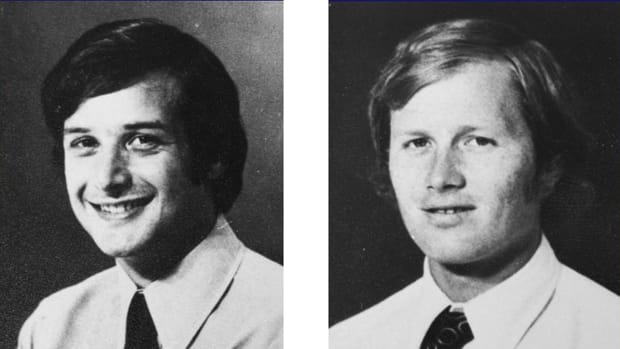
As young interns, from left: Stephen Davis and Geoffrey Donnan. Supplied
For the next decade researchers worked feverishly to expand the time further but it looked like the method had run its course.
Then last month, Donnan and Davis published a study showing they had done it. They had doubled the window to nine hours. “There are not many patients now that you can’t consider for this treatment. It represents quite a shift,” Donnan says
To achieve this, they used sophisticated imaging and algorithms. This determined if the egg white was still viable, because in some people it survives longer than others.
So, rather than patients being subjected to a standard scan and time limit, they individualised treatment so it can potentially be used for wake-up patients and anyone arriving at hospital within nine hours.
“This is based on a vision we have shared since the late '70s," says Davis.
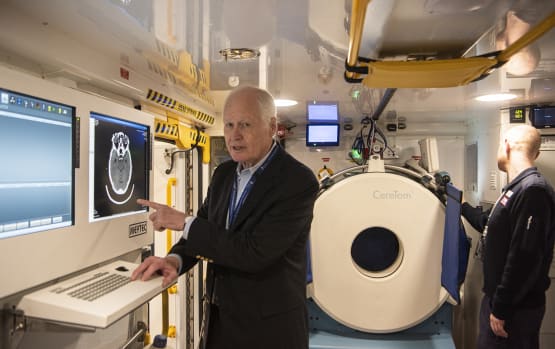
But every minute still counts and the sooner people are treated, the better. To accelerate treatment, last year the pair introduced Australia’s first mobile stroke unit.
So far, this specially equipped ambulance, with a scanner and trained stroke team on board, is halving the time to treatment.

Stroke-capable ambulances

It is being tested within a 20km radius of The Royal Melbourne Hospital and the pair are now thinking about stroke-capable road and air ambulances for regional and remote areas too.
In the meantime, these areas receive support via telemedicine. A neurologist is always on call to look at scans and advise local doctors on a course of treatment.
There have been other developments, including a brilliant mechanical treatment that uses a wire device to retrieve a clot lodged in a large vessel.
The Melbourne pair were involved in this too and drew important lessons from it. The problem is that most clots lodge in vessels too small for the device.
This means clotbusters are still the workhorses for acute stroke and getting them to work many hours after the event is what their study, published in The New England Journal of Medicine, achieves.
An editorial in the journal said it had “shattered an important barrier to the treatment of acute stroke” but that results need to be validated.

An intellectual companion

So is their evidence strong enough to change clinical practice?
“We believe it is,” says Donnan. To change practice two things are needed: a high-level trial and an analysis of all the studies on the topic,  which has since been published in The Lancet, and provides the validation.
The old nihilism has lifted. "The availability of treatment now, compared to when Stephen and I started, is the difference between day and night,” says Donnan.
Davis says finding an intellectual companion with whom he could feel completely comfortable and confident, was a gift.
“There is something in our collaboration that has been unique. We have tried to share all the way and we hope this sets an example for our talented younger neurologists.”
Jill Margo is an adjunct associate professor at the University of NSW Sydney.

AI-Based Stroke Rehab System Shown to Be as Effective as One-on-One Therapy

So you are saying that the bar you are comparing yourself to is the incredibly  great failure rate of 90% failing to get fully recovered. Great to know you aren't challenging yourself.

AI-Based Stroke Rehab System Shown to Be as Effective as One-on-One Therapy


Motus Nova’s “theratainment” device allows patients to perform therapeutic exercises to help make the tedious process of neurological rehab engaging and fun, while eliminating barriers to traditional physical therapy such as cost, time, and lack of motivation.

Image of the Motus Nova Hand Mentor and Foot Mentor courtesy of Motus Nova
The idea that the brain is capable of rewiring after a stroke is not new, but the therapy needed to achieve this is cumbersome at best. “Studies show that neuroplasticity requires hundreds to thousands of hours of repetition of focused, concentrated training(But we don't even know that, I've never seen research that documents the hours.) to get the brain to have those functional changes,” said David Wu, Motus Nova’s CEO, in an interview with MD+DI. But he explained that those many hours of therapy with a clinician are not always feasible for patients, because of concerns about time and logistics, cost, and sometimes even a lack of motivation.(Who the fuck is going to be motivated when you have NO SPECIFICS? Maybe if you do this 10 million times you will get results. Now is that motivating? What will motivate you to come up with specific stroke rehab protocols?  Money? Challenge? Embarrassment? The fact that YOU will be the 1 in 4 that will have a stroke? )
So, Motus Nova has developed a device that can be used at home and is as appealing as playing video games. The Motus Nova Hand Mentor and Foot Mentor can be used independently and without supervision. It uses artificial intelligence (AI) to do an initial assessment for a baseline measurement, and as the user continues operating the device, it uses a suite of sensors to monitor in real time to determine what the best therapy is most effective for recovery. “We have essentially machine learning and AI in place where the more the user uses it, the better the device gets at personalizing the therapy,” Wu continued.
After testing the initial therapy device in several clinical trials, the company came up with the idea of making it more interesting by attaching it to a screen. The Hand Mentor and Foot Mentor are sleeve-like robots that fit over the patient’s hand or foot. They are equipped with an active-assist air muscle and a suite of sensors and accelerometers, which provide clinically appropriate assistance and resistance while patients perform the therapeutic exercises. A touchscreen control provides goal-directed biofeedback through interactive games.

“We call that “theratainment,” where we trick the user into doing their therapy with their stroke-affected side,” said Wu. “By controlling a spaceship or controlling a character up and down, they're avoiding obstacles or shooting enemies. To succeed at these games, they have to use their limbs. And by doing that they're making new [brain] wiring possible.”
The device collects all movement data, which they can retrieve from the device or through a computer. “We’ve found from comments from users that this is very motivational,” said Wu. “[The device] can show you since you started that, for example, you've increased your range of motion by a certain percent, or you've increased your strength by so much this week,” said Wu. He explained that the data is available for the patient to share with any number of clinicians to guide further in-person treatment sessions.
“We really see the Hand Mentor and Foot Mentor being an individual and personalized device that goes into the home, as the first step into personalized medicine that's driven by AI,” said Wu. “I think, in that regard currently, we’re just matching the effectiveness of physical therapy, but we do hope that one day with all of this evidence-based data that we can provide a faster path to recovery that's personalized for each individual, and in that way, we can really add to the overall body of knowledge for medicine,” he concluded.

I have physics envy

Physics obeys complex but definable laws, meaning they behave in predictable and measurable ways in almost every context. Found this in the book, 'Happy Brain; Where happiness comes from, and Why' by Dean Burnett.  I want stroke to behave the same way, the brain may be more complex than most physics problems but I don't even see anybody stating they are going to solve this regardless. THAT is what LEADERS DO, they tackle the difficult problems. We have NO LEADERS IN STROKE.  I have a friend that worked on building parts of the Large Hadron Collider. It found the Higgs boson. Someone with leadership and the intellectual capacity to envision how to do that is needed in stroke. 

WSO - WORLD STROKE ORGANIZATION, president Michael Brainin, Austria 

I see ABSOLUTELY NOTHING in here that suggests that the WSO has the capacity to solve stroke. So Michael Brainin, Austria; Why don't you step down and let someone with that capacity actually solve stroke? Of course you have to blame the board of directors for not knowing what they need to accomplish. 100% RECOVERY FOR ALL SURVIVORS.