Use the labels in the right column to find what you want. Or you can go thru them one by one, there are only 33,762 posts. Searching is done in the search box in upper left corner. I blog on anything to do with stroke. DO NOT DO ANYTHING SUGGESTED HERE AS I AM NOT MEDICALLY TRAINED, YOUR DOCTOR IS, LISTEN TO THEM. BUT I BET THEY DON'T KNOW HOW TO GET YOU 100% RECOVERED. I DON'T EITHER BUT HAVE PLENTY OF QUESTIONS FOR YOUR DOCTOR TO ANSWER.
Changing stroke rehab and research worldwide now.Time is Brain!trillions and trillions of neuronsthatDIEeach day because there areNOeffective hyperacute therapies besides tPA(only 12% effective). I have 523 posts on hyperacute therapy, enough for researchers to spend decades proving them out. These are my personal ideas and blog on stroke rehabilitation and stroke research. Do not attempt any of these without checking with your medical provider. Unless you join me in agitating, when you need these therapies they won't be there.
What this blog is for:
My blog is not to help survivors recover, it is to have the 10 million yearly stroke survivors light fires underneath their doctors, stroke hospitals and stroke researchers to get stroke solved. 100% recovery. The stroke medical world is completely failing at that goal, they don't even have it as a goal. Shortly after getting out of the hospital and getting NO information on the process or protocols of stroke rehabilitation and recovery I started searching on the internet and found that no other survivor received useful information. This is an attempt to cover all stroke rehabilitation information that should be readily available to survivors so they can talk with informed knowledge to their medical staff. It lays out what needs to be done to get stroke survivors closer to 100% recovery. It's quite disgusting that this information is not available from every stroke association and doctors group.
But you tell us NOTHING ON 100% RECOVERY RESULTS! The only goal in stroke, I guess that won't be important to you until you are the 1 in 4 per WHO that has a strokeMight be too late then for you to solve the 100% problem!
So no reporting or measurement of 100%
recovery, obviously not important to the medical staff or researchers.
But vastly important to stroke survivors.
Stroke
is the second leading cause of death and the leading cause of
disability worldwide. However, how the prevalence of stroke varies
across the world is uncertain.
Aims:
The
aim of this study was to analyze temporal trends of prevalence for
stroke, including ischemic stroke (IS), intracerebral hemorrhage (ICH),
and subarachnoid hemorrhage (SAH) at the global, regional, and national
levels.
Methods:
The
age-standardized prevalence rates (ASPR) of stroke, IS, ICH, and SAH,
along with their corresponding 95% uncertainty intervals (UI), were
derived from data in the Global Burden of Diseases, Injuries, and Risk
Factors Study (GBD) 2019. This provides estimates for the burden of 369
diseases and injuries globally in 2019, as well as their temporal trends
over the past 30 years. Joinpoint regression analysis was used to
analyze the 1990–2019 temporal trends by calculating the annual
percentage change (APC) and average annual percentage change (AAPC), as
well as their 95% confidence interval (CI).
Results:
In
2019, the global ASPR of stroke was 1240.263 per 100,000 population
(95% UI: 1139.711 to 1352.987), with ASPRs generally lower in Europe
compared to other regions. Over the period from 1990 to 2019, a
significant global decrease in ASPR was observed for stroke (AAPC
−0.200, 95% CI: −0.215 to −0.183), IS (AAPC −0.059%, 95% CI: −0.077 to
−0.043), SAH (AAPC −0.476, 95% CI: −0.483 to −0.469), and ICH (AAPC
−0.626, 95% CI: −0.642 to −0.611). The trends of ASPR of stroke, IS,
SAH, and ICH varied significantly across 204 countries and territories.
Conclusion:
Our
findings highlight significant global disparities in stroke prevalence,
emphasizing the need for ongoing monitoring and intensified efforts in
developing regions to reduce the global burden of stroke.
Get full access to this article
View all access and purchase options for this article.
Anytime I see 'care' in any stroke press release I know the stroke medical world is not
willing to disclose actual results because they are so fucking bad, it
wouldn't look good, so misdirection is used. Don't fall for that
misdirection! By touting 'care' they are not telling you about results or recovery which survivors want! Survivors
don't care about door to needle time; you FUCKING BLITHERING IDIOTS;
they want 100% recovery! Why aren't you providing that?
Big fucking whoopee.
But you tell us NOTHING ABOUT RESULTS.
They remind us they 'care' about us multiple times but never tell us
how many 100% recovered. You have to ask yourself why they are hiding
their incompetency by not disclosing recovery results. ARE THEY THAT FUCKING BAD?
Three measurements will tell me if the stroke medical world is possibly not
completely incompetent; DO YOU MEASURE ANYTHING? I would start cleaning
the hospitals by firing the board of directors, you can't let
incompetency continue for years at a time.
There is no quality here if you don't measure the right things.
You'll want to know results so call that company president(whomever that is) RESULTS
are; tPA efficacy, 30 day deaths, 100% recovery. Because there is no
point in using this if they are not willing to publish
results.
In my opinion this partnership allows stroke hospitals to continue with their
tyranny of low expectations and justify their complete failure to get
survivors 100% recovered. Prove me wrong, I dare you in my stroke addled
mind. If your stroke hospital goal is not 100% recovery you don't have a
functioning stroke hospital.
All you ever get from hospitals are that
they are following guidelines; these are way too static
to be of any use. With thousands of pieces of stroke research yearly it
would take a Ph.D. level research analyst to keep up, create protocols,
and train the doctors and therapists in their use.
If your stroke hospital doesn't have that, you don't have a well functioning stroke hospital, you have a dinosaur.
Join us on May 3rd for an exciting launch event exploring the latest advancements in stroke care:
The Supernova Revascularization Device & The Neutron Aspiration Catheter
Morning Virtual Panel | Afternoon On-Site Hands-On Workshop led by leading experts in the field:
Cannabis may alleviate neuropathic pain, chemotherapy-induced nausea/vomiting and MS-associated spasticity.
The studies, however, are generally of low quality, a speaker said.
BOSTON — There is some evidence that cannabinoids may help with
neuropathic pain, chemotherapy-induced nausea/vomiting and MS-associated
spasticity, “but it’s not exactly a slam dunk,” a speaker said.
Most of the evidence on the health effects of cannabinoids
comes from trials outside the United States and often involves
synthetic forms “that may or may not have any similarity to what our
patients get when they go to a dispensary,” Ellie Grossman, MD, MPH, an
instructor in the division of internal medicine at Harvard Medical
School and Cambridge Health Alliance, said during a presentation at the
ACP Internal Medicine Meeting. In addition, studies typically involve
self-reports, and patients may not know how much chemical they are
ingesting.
Despite these limitations, Grossman told attendees that “if you’re
going to leave here with anything today, you can remember there are
three indications for which there is some evidence in favor of
cannabinoid effectiveness.”
‘Some signal for helpfulness’
“By far” the most common medical condition that cannabinoids are used
for is chronic pain, Grossman said. It is also one of the more commonly
studied medical conditions in cannabis trials, particularly neuropathic
pain.
A meta-analysis from 2015 showed that cannabinoids reduced chronic pain, although “the effect size is not huge,” Grossman said.
“If you look at the size of those studies, they are all individually
small [and] they are generally low-quality studies. But there is this
thrust of evidence showing an effect,” she said.
There are essentially no data comparing cannabinoids with other pain
agents, Grossman noted. Most of the trials are older and used pain
scores as the primary outcome. Since then, researchers determined that
functional outcomes are a better marker. So, there is “almost no
evidence to guide us” on those clinically important outcomes, Grossman
said.
“Garbage in, garbage out,” she added.
The Agency for Healthcare Research and Quality is conducting a living
systematic review that is updated every quarter. The most recent review
from January found that one product — a THC:CBD oromucosal spray that
is not available in the U.S. — appears to have a beneficial effect on
chronic pain with moderate evidence. All the other cannabis products
studied either had no evidence or low-quality evidence.
A Cochrane review restricted to neuropathic pain identified 16
studies with 1,750 participants. These studies showed a moderate effect,
but the quality was very low, and twice as many patients in the
cannabis arms dropped out because of adverse events, Grossman said.
“There is some signal for helpfulness for cannabinoid, but it’s messy,” she said.
The two other indications with data supporting the use of
cannabinoids are chemotherapy-induced nausea/vomiting and MS-associated
spasticity. Like chronic pain, however, the evidence is “not great
quality,” Grossman said. For chemotherapy-induced nausea/vomiting, some
studies demonstrated an improvement compared with placebo, but there are
no data comparing cannabinoids with other antiemetics. For spasticity,
there appears to be an improvement in patient-related outcomes, but the
evidence on clinician-reported outcomes is unclear, according to
Grossman.
There is less robust or negative evidence of cannabinoids for:
weight loss/anorexia in HIV;
sleep disorders and anxiety;
glaucoma;
Tourette’s syndrome;
inflammatory bowel disease; and
PTSD.
Adverse effects
In studies of patients who used cannabinoids medicinally, Grossman
said short-term adverse effects included sedation, “feeling high,”
dizziness, speech disorders, muscle twitching, hypertension, numbness,
psychiatric effects, euphoria, dysphoria, impaired memory and
disassociation.
“There are a whole lot of questions about longer term health care
risks,” she said. “All the evidence comes from studies of people who
have been using it for recreational reasons.”
When inhaled or smoked, cannabinoids are associated with an increased
risk for coughing, wheezing and sputum/phlegm, according to Grossman.
When used during pregnancy, there is an increased risk for lower neonatal birth weight and preterm labor.
“The signals keep coming, in particular about cardiovascular disease,” Grossman said.
Other longer term risks of cannabinoids include the development of
psychotic symptoms, psychosis relapse, suicide and cannabis use
disorder. In a study published in JAMA Network Open in 2023,
13% of participants who used cannabis for medical purposes met the
criteria for cannabis use disorder. Among them, 1.3% met criteria for
moderate to severe cannabis use disorder.
When weighing the benefits and risks of cannabinoids, Grossman
pointed attendees to a clinical practice guideline developed by Canadian
researchers.
According to the guideline:
In order to achieve a 30% or greater reduction in chronic pain, the
number of patients needed to treat is 11 and the number needed to harm
is six.
To control chemotherapy-induced nausea/vomiting, the number needed to treat is three and the number needed to harm is six.
For a 30% or greater improvement in spasticity, the number needed to treat is 10 and the number needed to harm is six.
“How we weigh that in our individual patients, I leave up to you,” Grossman said. “That is one way of thinking about this.”
With just this manifesto and NO strategy outlined on how to get to 100% recovery, this will be ignored for the useless crapola it is!
You could vastly reduce disability and deaths by having
100% recovery protocols! Getting people directly back to their old
life. But it will require destroying the existing stroke associations
since they don't know what the fuck they are doing as proven by this 'manifesto'!
Stroke
is the UK's fourth biggest killer and a leading cause of disability.
The good news is that with the right investment, stroke is preventable,
treatable, and recoverable. Ahead of the General Election, we have set
out what needs to change to improve stroke care.
Read about how the next UK Government can make this happen and what you can do to help.
So rather than actually solving stroke the ASA lazily recognizes people they should have helped to fully recover by sponsoring research that gets survivors recovered!. They need to be destroyed and run by survivors, that is the only way stroke will ever get solved.
The American Stroke Association spotlights the resiliency of
local individuals and groups in the fight against stroke
DALLAS, May 1, 2024 — Each year, approximately 800,000 people in the U.S. have a stroke.[1] Six
local stroke heroes from across the country are being recognized by the
American Stroke Association, a division of the American Heart
Association, for their resiliency and dedication in the fight against
stroke.
The American Stroke Association’s annual Stroke Hero Awards honors stroke survivors, health care professionals, advocates and caregivers. During May, American Stroke Month,
the Association, devoted to a world of healthier lives for all and
celebrating 100 years of lifesaving service, honors these Stroke Heroes
and proudly advocates(Advocating DOES NOTHING TO GET SURVIVORS RECOVERED YOU BLITHERING IDIOTS!) for stroke survivors year-round. Those who have
had a stroke often must work against physical, emotional and cognitive
changes to move forward.
The following Stroke Heroes are being recognized for outstanding
efforts in educating, inspiring and raising awareness about stroke.
Send me hate mail on this:
oc1dean@gmail.com. I'll print your complete statement with your name and my
response in my blog. Or are you afraid to engage with my stroke-addled
mind? Survivors would like to know why you are being so fucking incompetent!
Oops, I'm not playing by the polite rules of Dale Carnegie, 'How to Win Friends and Influence People'.
Telling supposedly smart stroke medical persons they know nothing about stroke is a no-no even if it is true.
Politeness
will never solve anything in stroke. Yes, I'm a bomb thrower and proud
of it. Someday a stroke 'leader' will try to ream me out for making them look bad by being truthful, I
look forward to that day.
Winners include:
Caregiver Hero: Loretta Sharp Gray, Oakwood Village, Ohio
Loretta Sharp Gray went from teaching students
with disabilities to personal caregiver for her life partner, who
survived a serious stroke and wasn’t expected to live. Never complaining
or seeking recognition, she takes care of him at home with periodic
home visits from his primary care doctor and nurse practitioner. At the
same time, this grandmother is an advocate, volunteer and trusted
messenger in the community. She also volunteers with the Association’s
STEM Goes Red program. Students from local schools learn about heart
health, stroke and CPR, as well as careers in science, technology,
engineering and math.
Kimon Bekelis, MD has worked tirelessly to
ensure equal access to lifesaving stroke care on Long Island, N.Y.
regardless of demographics or ability to pay. He led the development of
the Stroke and Brain Aneurysm Center at Good Samaritan, the first
Comprehensive Stroke Center on the south shore of Long Island, expanding
access to high-quality stroke care for an underserved population. He
believes everyone deserves an equal chance at the best possible outcome.
Throughout his career, Dr. Bekelis has embodied this commitment to
health equity and worked to enact meaningful improvements in equitable
access to lifesaving stroke care.
Group Heroes: Centre for Neuro Skills, various locations in California and Texas
For more than 40 years, the Centre for Neuro
Skills has provided community-based treatment for people recovering from
brain injuries. As a recognized leader in the stroke and brain injury
rehabilitation field, the Centre’s specially trained staff offer
outcome-driven medical treatment, therapeutic rehabilitation and disease
management services. The Centre lends its clinical expertise for
educational interviews and shares inspiring stroke patient stories to
local and national media for national recognition days, such as World
Stroke Day and American Stroke Month, to educate the public about stroke
prevention, causes and rehabilitation.
After a stroke at age 12, Reegan Lueken's
perseverance is an inspiration. Returning home from the hospital wasn’t
the end of her journey. She participated in intensive therapies to help
get her life back on track. Now a 10th grader, her stroke has
taught her that every day is a gift. Reegan has worked hard to be on
the honor roll and complete her first community college course. She uses
the Association’s platform to share her story so others can learn from
her experience. She and her mom, a heart disease survivor, want others
to know that a stroke can happen to anyone at any age.
Craig Northcutt nearly lost his life in an ATV accident, leaving
him with a brain bleed that caused a stroke. After months of intensive
neurorehabilitation, he relearned how to walk, talk and return to work.
Now he raises awareness about stroke through professional mentorship and
by sharing his story with high school students and stroke survivors.
Craig is celebrating his 12-year stroke anniversary and his 30-year work
anniversary with the Choctaw Nation. As part of the organization’s
Tribal Advocacy program, he helps tribal nation members develop their
professional skills and find jobs.
After having a stroke on Dec. 30, 2022, Rick
Hoeg tackled the hardest challenge of his life: recovery. While still in
aggressive outpatient rehab, Rick created a nine-part YouTube series on
stroke education and prevention, often featuring his rehabilitation
therapists. In his series, he taught stroke warning signs and shared his
recovery journey, reaching over 100,000 viewers. Rick’s video series
culminated in a $30,000 fundraiser benefiting the hospitals that saved
his life. Today, he continues to educate about stroke and supports
hospital staff in their vital work.
Winners were selected by a nationwide panel of volunteer judges from
the American Stroke Association, with the exception of the Voters’
Choice Award, which was selected via online popular vote.
If they are not going back to the start of the stroke and stopping the 5 causes of the neuronal cascade of death in the first week thus saving millions to billions of neurons, well then they are not going back and solving the original cause of the movement problem; DEAD NEURONS! Which means their mentors and senior researchers don't know what the hell they are doing! Rehab after the stroke barely works; Only 10%? fully recover!
Helping lighten the load so stroke patients get back on their feet forms new research from University of Northampton (UON).
A stroke is a serious life-threatening medical condition that happens when the blood supply to part of the brain is cut off.
The
prevalence of strokes in the UK is expected to increase from 950,000
people in 2015 to 2.1 million in 2035, an increase of 120%. The cost
associated with strokes in 2015 was £26 billion, which is expected to
increase to £75 billion in 2035, an increase of 194%.
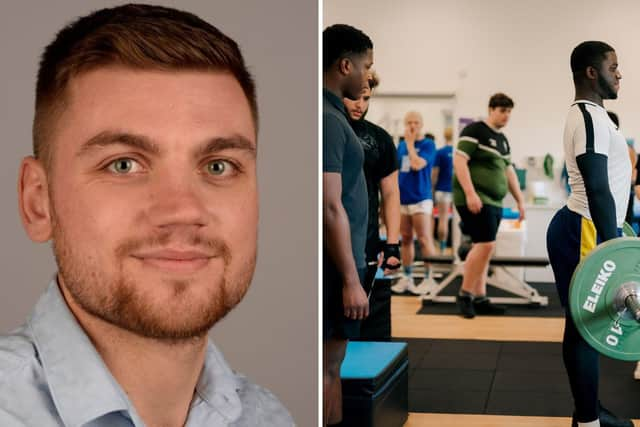
Brett Baxter and University of Northampton students
Physical
rehabilitation work to help stroke patients return to ‘normal’ life
usually focusing attention on the affected side of their body with
muscle growing exercises.
Now,
UON academics are investigating how stroke patients’ muscles on the
affected side of their bodies improve, with no exercises, when a
different muscle activity is used on the other side.
When
we train our bodies – such as lifting weights at the gym – the other,
untrained side benefits because of the cross-educational effect: the
muscles not being trained adapt and show signs of improvements anyway.
So you're doing something that has been proven for over a decade already! WHY? Your mentors and senior researchers are so out-of-date, they don't even know of previous research in their field? In my opinion; complete incompetence!
With
this, our muscles become stronger due to neurological adaptations
although this phenomenon is usually observed in traditional resistance
training (such as lifting and lowering a weight).
However,
during eccentric muscle contractions when the muscles become longer
this cross-educational effect is more pronounced. With this research,
UON academics will focus on how this can help people who have suffered a
stroke.
Brett Baxter, Lecturer in Sport
& Exercise Science, is working on research with colleagues in Sport
and Physiotherapy. He says: “Strokes can have a devastating impact on
people’s health and wellbeing, compromising their quality of life and
autonomy.
“Traditional
stroke rehabilitation places, understandably, a focus on techniques on
the affected side of the body. This can be gruelling and challenging,
but what we’re exploring with this research is a novel approach that
could have huge implications by changing the narrative of stroke
rehabilitation efforts.”
The
research will take place over the summer, starting with a briefing
session for interested volunteers and to assess their eligibility to
take part. If eligible, on the same day volunteers will perform the
exercise so the team can check what is the right resistance for the
exercise to hit the right intensity and assess their response.
Volunteers will be invited back at a later date for one more session to perform five sets of the exercise at the chosen intensity.
Brett
concludes: “As people who have had a stroke are at an increased risk of
another, we will perform the pilot tests under safe conditions to check
participants’ health and the feasibility of the training by monitoring
beat-to-beat heart rate and blood pressure and terminating the test if
these raise to an excessively elevated level or upon the participant’s
request”.
“We
also want this research to be co-created with our volunteers so their
thoughts on what we are doing will be crucial to taking the pilot
forward. For anyone who wishes to take part in the briefing session and
the later stages of the research, please email me for further details.”
Does your competent? stroke hospital have procedures in place to bring in new stroke interventions? NO? So you don't have a functioning stroke hospital? You'll have to direct the ambulance to a more successful place.
Route 92 Medical has today announced receipt of US Food and
Drug Administration (FDA) 510(k) clearance for the FreeClimb 54
reperfusion system, comprised of the FreeClimb 54 aspiration catheter paired with a Tenzing 5 delivery catheter.
This new system is part of a growing portfolio of neurovascular
devices from Route 92, designed to work harmoniously as a complete
endovascular thrombectomy solution to address a broad range of
neurovascular interventions, according to a company press release.
“Route 92 Medical works to provide innovative endovascular
thrombectomy solutions to clinicians, helping them maximise their
opportunity to restore blood flow to the brain on their first attempt,”
said Tony Chou, chief executive officer of Route 92. “The FreeClimb 54
reperfusion system is an essential addition to our product portfolio,
enabling clinicians to use our products to address a wider range of
patient needs.”
The FreeClimb 54 system can telescope through the company’s
complementary products, allowing physicians to rapidly, predictably
reach and remove stroke-causing clots during endovascular thrombectomy
procedures. Route 92’s recent press release also notes that FreeClimb
54’s robust tip and shaft design facilitates use for multiple passes,
and compatibility with other technologies. Additionally, the system may
be used to remove distal clots when first-line therapies fail to
completely remove the clot.
“The launch of the FreeClimb 54 reperfusion system continues Route 92
Medical’s progressive and complete approach to stroke care,” stated
Peter Pema (Riverside Methodist Hospital, Columbus, USA). “This system
combines the unparalleled effectiveness and safety of their Tenzing
delivery system with an aspiration catheter that can reach far into the
cerebral circulation beyond the proximal branch vessels. Thus, the size
of the FreeClimb 54 system offers clear advantages to clinicians looking
to achieve rapid, safe recanalisation of vessels on the first attempt.”
“The FreeClimb 54 system is a gamechanger,” added Ronald Budzik
(Riverside Methodist Hospital, Columbus, USA). “It is a simple system
capable of getting a larger bore aspiration catheter to distal anatomy,
especially around tighter turns.”
This obviously was tried on high functioning individuals. Nobody like me with spasticity that prevents voluntary movement. So going against the precept of 'Leave no survivor behind!'
Understanding
the role of adherence to home exercise programs for survivors of stroke
is critical to ensure patients perform prescribed exercises and
maximize effectiveness of recovery.
Methods
Survivors
of hemiparetic stroke with impaired motor function were recruited into a
7-day study designed to test the utility and usability of a low-cost
wearable system and progressive-challenge cued exercise program for
encouraging graded-challenge exercise at-home. The wearable system
comprised two wrist-worn MetaMotionR+ activity monitors and a custom
smartphone app. The progressive-challenge cued exercise program included
high-intensity activities (one repetition every 30 s) dosed at 1.5 h
per day, embedded within 8 h of passive activity monitoring per day.
Utility was assessed using measures of system uptime and cue response
rate. Usability and user experience were assessed using well-validated
quantitative surveys of system usability and user experience.
Self-efficacy was assessed at the end of each day on a visual analog
scale that ranged from 0 to 100.
Results
The
system and exercise program had objective utility: system uptime was
92 ± 6.9% of intended hours and the rate of successful cue delivery was
99 ± 2.7%. The system and program also were effective in motivating cued
exercise: activity was detected within 5-s of the cue 98 ± 3.1% of the
time. As shown via two case studies, accelerometry data can accurately
reflect graded-challenge exercise instructions and reveal differentiable
activity levels across exercise stages. User experience surveys
indicated positive overall usability in the home settings, strong levels
of personal motivation to use the system, and high degrees of
satisfaction with the devices and provided training. Self-efficacy
assessments indicated a strong perception of proficiency across
participants (95 ± 5.0).
Conclusions
This
study demonstrates that a low-cost wearable system providing frequent
haptic cues to encourage graded-challenge exercise after stroke can have
utility and can provide an overall positive user experience in home
settings. The study also demonstrates how combining a graded exercise
program with all-day activity monitoring can provide insight into the
potential for wearable systems to assess adherence to—and effectiveness
of—home-based exercise programs on an individualized basis.
Background
Stroke
is a leading cause of disability and a growing public health concern.
Approximately 9.4 million Americans had a stroke between 2017 and 2020
(an overall prevalence of 3.3%, which is expected to increase to nearly
4% by 2030) [1].
An increasing population of individuals surviving stroke poses a
significant burden on social, economic, and health care systems because
motor impairments that limit movement on one side of the body affect up
to 80% of survivors [2].
Motor impairments significantly degrade quality of life by hindering
activities of daily living and limiting community participation.
Deficits in motor function often result from physical impairment, but
can also arise from the behavioral phenomenon of learned nonuse whereby
limb use is suppressed despite sufficient motor capacity [3].
Prolonged nonuse can lead to weakness and contractures that further
exacerbate impairment. Therefore, a primary goal of rehabilitation after
stroke focuses on promoting recovery of impaired movements. Exercise
training is an effective tool in restoring motor function, even beyond
the acute stage of recovery wherein most of the practical gains are
typically seen [4, 5].
Although
physical and occupational therapists commonly prescribe home exercise
programs to manage residual sensorimotor deficits after stroke,
adherence rates can be low thereby limiting the patient’s potential
recovery [6, 7].
Home-based tele-rehabilitation programs with therapists providing
intermittent supervision of the patient may help mitigate adherence
issues [7] and demonstrate potential functional benefits [8, 9] that equal or exceed those provided by conventional face-to-face therapy (for reviews see [10, 11]).
Augmenting home-based tele-rehabilitation programs with wearable
technologies that monitor movement and provide feedback to patients and
therapists has potential to improve stroke outcomes through increased
intensity of therapy and adherence to rehabilitation programs [12, 13]; see also [9].
Despite its promise, wearable activity monitoring technology is not
widely used by therapists in day-to-day stroke care in the clinic [14]
or by patients at home. Barriers to adoption include lack of skills and
knowledge of patients, not knowing what brand and type of monitor to
choose (cf. [15]), and the skills, beliefs, and attitudes of individual therapists, which determine the current use of wearable technology [14]. Other factors, including user motivation and trust in the technology likely contribute to patterns of low adherence (cf. [16, 17]).
In
recognition of this opportunity, there has been a recent explosion in
the number and types of technologies proposed to promote adherence to
home-based exercise programs for physical rehabilitation after stroke [18,19,20,21,22,23,24,25,26,27,28,29], for reviews see [30,31,32].
Most of these systems use micro-electro-mechanical sensor (MEMS)
technology such as accelerometers and gyroscopes to monitor body
movements in real-time and to derive summary statistics such as
“activity counts” [22, 33, 34] or measures of movement smoothness [23]. Other approaches to motion tracking are possible such as visual image processing systems cf. [35] but lack the portability and convenience of wearable systems.
The most common application of wearable technologies is the monitoring and assessment of the quantity and quality of movement [18, 26, 36,37,38,39,40].
Wearable technologies can also provide helpful cues (i.e., reminders,
nudges) to perform activities such as exercises prescribed as therapy [19, 20, 24, 25, 27, 28, 41]. In one exemplar study, Holden and colleagues describe a wrist-worn system [24]
that provided a vibratory stimulus to the more-involved arm when that
arm’s activity level fell below a personalized threshold for a selected
time window. If prompted, the participant was instructed to increase
more-involved arm movements, ideally by performing pre-selected
activities from a self-directed repetitive functional task practice
program [19].
The study protocol also included twice weekly meetings with a study
therapist to download acceleration data and to provide performance
feedback to the participant. Across seven participants and the 4-week
program, this system provided only a small number of cues per day
(median = 4), although mean arm activity increased following prompts by
11% to 29%. The authors conclude that personalized prompts delivered by a
wrist-worn accelerometer may enhance self-directed arm activity after
stroke [19].
However, for technologies to be adopted by clinicians and their
patients, the systems must not only have practical utility, but they
must also provide a positive user experience within the context of their
intended use scenarios cf. [20, 27, 29].
To
date, wearable rehabilitation exercise systems have prompted users to
increase activity relatively infrequently, such as once every 10 min [25], once an hour [24] or less frequently [24, 27].
User feedback indicates that they desire flexible exercise schedules
and well-defined exercise recommendations with graded challenge levels
based on ability [27].
In the current study, we sought to assess the utility, usability, and
user experience of a wearable exercise cueing and monitoring system
designed to promote high-dose (60 cues per 30-min exercise session, 3×
per day), graded-challenge exercise at-home with a small cohort of
hemiparetic stroke survivors. Our clinician-designed exercise program
was motivated by the fact that many survivors of stroke are ineligible
for interventions such as constraint-induced movement therapy (CIMT) [42, 43],
which is suitable only for participants retaining substantial motor
capacity (e.g., residual wrist extension). Our novel exercise program
seeks to engage patients in high-dose activities while accepting of a
broad range of impairment levels, ranging from an inability to move the
more-involved arm and hand to the ability to move that limb
independently. Our study included a wide age range of participants (29
to 63 years old), a wide range of time post-stroke (2 to 21 years), and
varying living situations (i.e., living alone, living with family, or in
assisted care settings) to demonstrate how such a system can be used by
different populations. Quantitative movement data was derived from
motion trackers worn on both wrists. End-user feedback was collected
through well-validated quantitative surveys that assess key aspects of
the subjective user experience. Additional qualitative feedback was
collected through questionnaires and informal discussions designed to
solicit recommendations for future system modifications or improvements.
After summarizing our findings, we provide two individual case reports
that demonstrate how patients with different levels of residual motor
capacity chose to engage with the cued exercise program in their home
setting.
You'll want your competent? doctor to have the nutritionist and dietician create diet protocols with this in mind, along with all these other needs!
For dementia prevention; for cognitive improvement; for
cholesterol reduction; for plaque removal; for Parkinsons prevention; for
inflammation reduction; etc.
The study showed that people with a healthy balanced diet had better
brain health, cognitive function and mental health than others. We
compared the balanced diet to three other diet groups — low-carb (18%),
vegetarian (6%) and high protein/low fibre (19%). We found that people
who ate a more balanced diet had better:
fluid intelligence (the ability to solve new problems),
processing speed, memory and
executive functions (a set of mental skills that include flexible thinking and self-control)
than the other diets. This also corresponded to better brain health —
with higher grey matter volumes (the outermost layer of the brain) and
better structured neurons (brain cells), which are key markers of brain
health.