This is the whole problem in stroke enumerated in one word; 'care'; NOT RECOVERY!
YOU have to get involved and change this failure mindset of 'care' to 100% RECOVERY! Survivors want RECOVERY, NOT 'CARE'!
I see nothing here that states going for 100% recovery! You need to create EXACT PROTOCOLS FOR THAT!
ASK SURVIVORS WHAT THEY WANT, THEY'LL NEVER RESPOND 'CARE'! This tyranny of low expectations has to be completely rooted out of any stroke conversation! I wouldn't go there because of such incompetency as not having 100% recovery protocols!
RECOVERY IS THE ONLY GOAL IN STROKE! GET THERE!
ESAD2025: Europe makes strides in stroke care, but stark inequities persist, new data reveal
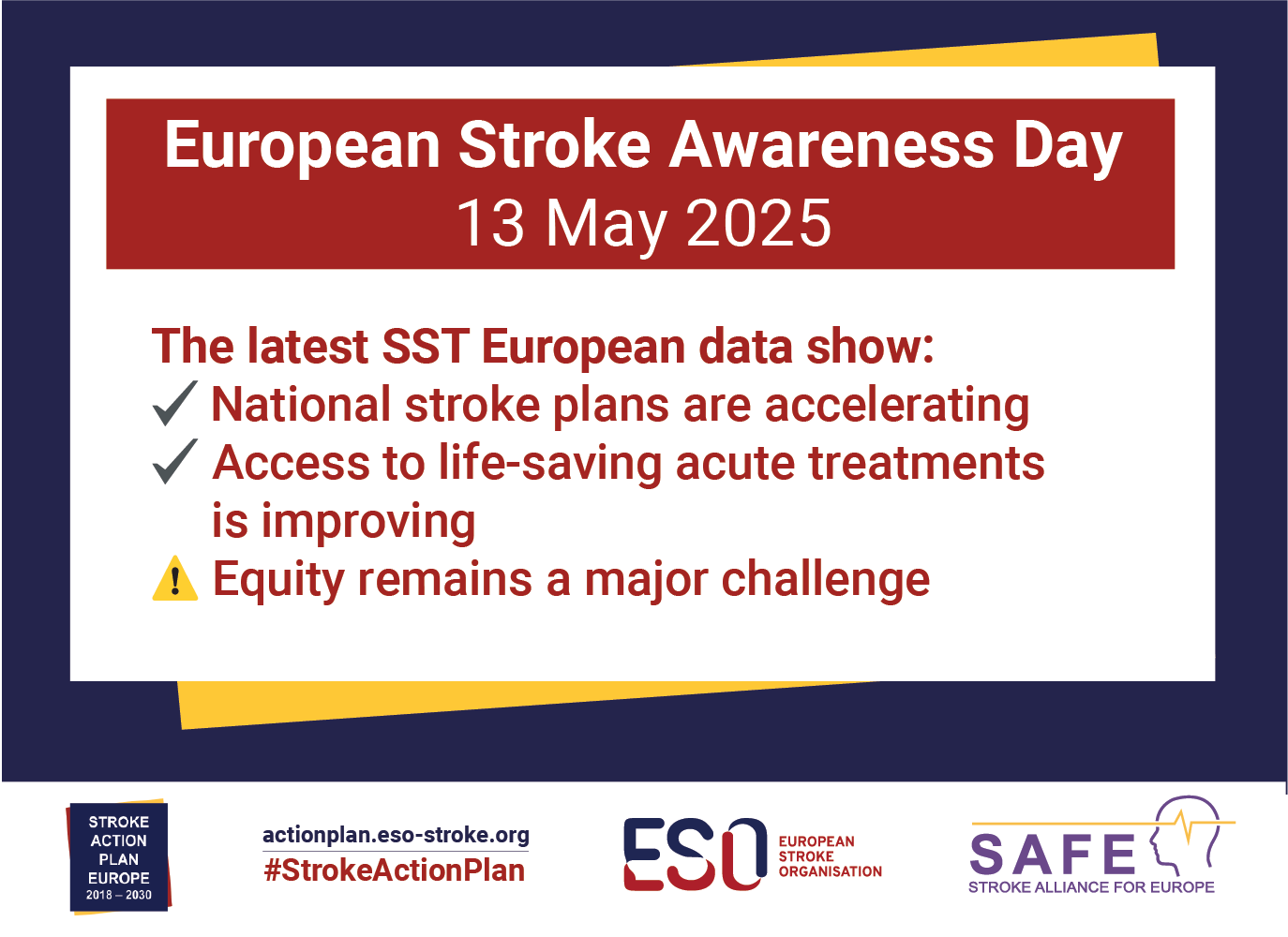
The 2023 Stroke Services Tracker data shows progress in stroke care planning and treatment access, but persistent disparities demand urgent attention.
New data from the Stroke Action Plan for Europe’s 2023 Stroke Service Tracker, launched today, show encouraging progress in stroke care(NOT RECOVERY!) across Europe – but also highlight serious inequalities that urgently need to be addressed.
A total of 47 countries contributed to the latest dataset, providing the most comprehensive picture yet of stroke care(NOT RECOVERY!) across the continent. The findings show improvements in national planning, emergency treatment and prevention. However, too many people who have had a stroke still face major challenges in accessing the care(NOT RECOVERY!), rehabilitation and follow-up they need.
Stronger national commitment to stroke care(NOT RECOVERY!)
There is growing political commitment to tackling stroke. The number of countries with a national stroke plan has risen from 16 in 2022 to 24 in 2023, with 16 more countries currently developing one. Importantly, 30 countries now involve Stroke Support Organisations in shaping national stroke strategies and guidelines, ensuring people with lived experience have a voice in how care(NOT RECOVERY!) is delivered. Lithuania, Poland and Slovakia have recently joined this effort.
Programmes aimed at preventing stroke are also becoming more common. Lithuania, Sweden, the Netherlands and Germany are among the countries that have launched or expanded national prevention efforts in the past year, bringing the total to 23.
Improved access to life-saving treatment – but too slowly
Access to key emergency treatments for ischaemic stroke (which happens when a blood clot or blockage stops blood flow to parts of the brain) is improving, but unevenly. On average, 15.4% of eligible patients received clot-busting drugs (intravenous thrombolysis), and 5.9% underwent mechanical thrombectomy – a procedure to remove a clot directly from the brain.
Seven countries have now met the European benchmark of giving thrombolysis to at least 20% of patients, and 14 have reached the target of delivering thrombectomy to over 7.5%, based on high-quality data. Five more countries hit this goal using data of lower quality.
However, delays in treatment remain a major problem. Only seven countries managed to achieve the recommended ‘door-to-groin’ time – the time from arrival in hospital to starting thrombectomy – of 60 minutes or less. In 12 countries, this delay was over 90 minutes, reducing the chances of a good recovery.
Ongoing challenges in stroke unit care(NOT RECOVERY!), rehabilitation and follow-up
Despite some progress, the organisation of stroke services and monitoring of quality still fall short in many areas. The goal of admitting at least 90% of stroke patients to a specialist stroke unit is only met in nine countries with reliable data. In contrast, some countries admit fewer than one in four patients to stroke units – and others don’t collect this data at all.
Only 22 countries monitor the quality of stroke unit care(NOT RECOVERY!). The picture is even more concerning when it comes to rehabilitation after hospital discharge. Just 11 countries have systems in place to monitor the quality of rehabilitation services.
Early rehabilitation is available in stroke units in 22 countries (although data quality is low in eight). However, there has been little progress in ensuring patients have a rehabilitation and care(NOT RECOVERY!) transition plan which are essential for continued recovery. Just five countries systematically monitor whether such plans are given, while 14 estimate that they are provided, but without proper tracking.
Follow-up care(NOT RECOVERY!) after stroke also varies widely. Only 11 countries report that at least 90% of patients receive follow-up and just four countries offer structured follow-up that meets recognised standards.
Prevention of further strokes and improving patient outcomes
Preventing another stroke is crucial – nearly one in four strokes happens in someone who has already had one. But across Europe, there is little data on how well countries are doing in providing secondary prevention, or how many patients are getting the medication and support they need. This makes it difficult for policymakers to know where to act.
These inequalities in care(NOT RECOVERY!) are reflected in outcomes. In some regions, death rates within 30 days of stroke remain worryingly high, pointing to major differences in access to emergency treatment, rehabilitation services and longer-term support.
Life after stroke: support remains limited
Only 13 countries report having a dedicated national programme for life
after stroke. While many address important aspects of recovery, support
remains inconsistent. Twelve countries include ongoing health management
in their programmes, while 10 focus on emotional adjustment and mental
wellbeing. Eleven countries offer support for everyday activities and
practical challenges, and an equal number provide information and
guidance for both stroke survivors and their carers.
A call to action: bridging the gap between potential and practice
“The 2023 Stroke Service Tracker data show that while momentum is building in some areas – particularly in national planning and access to acute therapies – major gaps in organisation, delivery and equity of stroke care(NOT RECOVERY!) persist,” said Professor Hanne Christensen, Chair of the Stroke Action Plan for Europe. “There is no room for complacency. Countries must take these insights and act decisively to bring data collection and stroke care(NOT RECOVERY!) up to the standards that every person affected by stroke deserves.”
Arlene Wilkie, Director General of the Stroke Alliance for Europe (SAFE), added: “It is unacceptable that in 2023 we still see such wide disparities in access to stroke unit care(NOT RECOVERY!), early rehabilitation and life after stroke support. Stroke survivors need holistic and continuous care(NOT RECOVERY!). We call on all national governments and policy makers to do better in providing the essential services required for all those affected by stroke.”
Professor Simona Sacco, President of the European Stroke Organisation (ESO), emphasised: “The Stroke Action Plan for Europe provides countries with the framework they need to close the gap between aspiration and delivery. These data are both a roadmap and a challenge – to work smarter, faster and more equitably.”
Click for more information on your country’s data, the Stroke Action Plan for Europe and the Stroke Service Tracker
Click to read more
About SAP-E and the Stroke Service Tracker
The Stroke Action Plan for Europe (SAP-E), launched in 2018, provides a strategic blueprint to improve stroke prevention, care(NOT RECOVERY!) and life after stroke support by 2030. The Stroke Service Tracker (SST) was developed as a monitoring tool to evaluate Europe’s progress against the SAP-E targets, providing valuable insights for national stakeholders to drive improvements.
Europe faces over 1.1 million strokes each year, causing nearly 460,000 deaths. Nearly 10 million people live with stroke’s long-term effects. The economic burden is immense – €60 billion in 2017 – and is projected to rise to €86 billion by 2040 without urgent reform.
The SST continues to be a vital instrument for mapping progress and exposing areas where countries fall short. It is a call for action, innovation and investment to ensure every stroke survivor in Europe has access to high-quality, timely and equitable care(NOT RECOVERY!) – no matter where they live.


No comments:
Post a Comment