Changing stroke rehab and research worldwide now.Time is Brain! trillions and trillions of neurons that DIE each day because there are NO effective hyperacute therapies besides tPA(only 12% effective). I have 523 posts on hyperacute therapy, enough for researchers to spend decades proving them out. These are my personal ideas and blog on stroke rehabilitation and stroke research. Do not attempt any of these without checking with your medical provider. Unless you join me in agitating, when you need these therapies they won't be there.

What this blog is for:

My blog is not to help survivors recover, it is to have the 10 million yearly stroke survivors light fires underneath their doctors, stroke hospitals and stroke researchers to get stroke solved. 100% recovery. The stroke medical world is completely failing at that goal, they don't even have it as a goal. Shortly after getting out of the hospital and getting NO information on the process or protocols of stroke rehabilitation and recovery I started searching on the internet and found that no other survivor received useful information. This is an attempt to cover all stroke rehabilitation information that should be readily available to survivors so they can talk with informed knowledge to their medical staff. It lays out what needs to be done to get stroke survivors closer to 100% recovery. It's quite disgusting that this information is not available from every stroke association and doctors group.

Saturday, January 17, 2026

Are Your Patient’s Bad Dreams Predicting Disease?

 Ask your competent? doctor if they are familiar with prodromal dreams predicting Parkinsons! And are they ready with EXACT PARKINSON PREVENTION PROTOCOLS?

Are Your Patient’s Bad Dreams Predicting Disease?

Many clinicians will understandably dismiss a patient’s report of a vivid, frightening dream about falling ill as a byproduct of anxiety. However, a growing body of neurobiological research suggests these nocturnal narratives may be more than mere coincidence. Emerging evidence indicates that some dreams may serve as harbingers of disease, detecting physiologic changes before conventional diagnostics — or even symptoms — emerge.

Unlike typical dreams that fade upon waking, “prodromal dreams” stay with people and involve vivid, often disturbing imagery in which they discover a specific illness. Anecdotal examples from the International Association for the Study of Dreams include a woman who dreamt of her aunt, who had died of breast cancer, warning her that she too had the disease — later confirmed by mammogram.

Now, new neuroscientific models and clinical studies are beginning to provide biological plausibility for how the sleeping brain might detect early pathology.

A 2025 hypothesis and theory paper in Frontiers in Psychiatry, for example, proposes that some prodromal dreams emerge from interoceptive predictive processing during REM sleep. During REM, limbic and paralimbic regions involved in interoception compress high-dimensional visceral and autonomic inputs into low-dimensional summaries. When these summaries diverge from the brain’s predictions, a “prediction error” is generated. Because REM operates in a hallucinatory, hyper-associative mode with reduced external input, the brain’s attempt to explain that error is rendered as vivid, often threat-laden or metaphorical dream imagery that can foreshadow emerging pathology.

photo of  Abidemi Otaiku
Abidemi Otaiku, MD

“In neurodegenerative conditions, such as Parkinson’s disease and Alzheimer’s disease, it is possible that changes to brain networks involved in dream generation and emotional tone may cause changes to dreaming years or decades before other symptoms of the disease emerge,” Abidemi Otaiku, MD, clinical research fellow at UK Dementia Research Institute, Imperial College London, London, England, told Medscape News Europe.

Dream Enactment as an Early Warning in Parkinson’s Disease

Research is revealing a possible connection between dreams and neurodegeneration in Parkinson’s disease, where dream-related symptoms can emerge years before motor dysfunction. Isolated REM sleep behavior disorder (iRBD) — in which people physically act out their dreams while having no overt neurologic disease — often emerges years before motor symptoms appear, according to a 2025 review in the Journal of Sleep Research. The predictive power of this phenomenon is sobering: a 2019 meta-analysis tracking nearly 4000 patients with iRBD found that about one third had developed Parkinson’s disease or dementia with Lewy bodies after an average of 5 years, with statistical modeling estimating this proportion would exceed 90% by 14 years. A smaller subset may develop multiple system atrophy.

These clinical observations now have a biological correlate. A 2025 Brain Communications study used advanced MRI to detect excess iron accumulation in the substantia nigra — a small but critical movement hub — in people with early Parkinson’s disease. Those with dream enactment showed iron levels intermediate between healthy control individuals and patients with Parkinson’s disease, and iron deposition increased measurably over 4 years. This suggests that dream enactment can coincide with subtle, yet detectable, brain changes that precede clinical diagnosis.

The genetic architecture of this subtype is equally revealing. A 2025 international genetics study comparing patients Parkinson’s disease with and without RBD uncovered distinct patterns at two pivotal genes: SNCA and LRRK2. This genetic fingerprint points to an alpha-synuclein-related subtype in which dream enactment may be woven into the disease pathway from its earliest stages. A 2023 review in Cell Death and Disease additionally reports that when RBD accompanies Parkinson’s disease, the disease typically follows a more aggressive trajectory, with faster progression and higher rates of cognitive decline, hallucinations, depression, and anxiety.

Otaiku’s own research includes a study that found frequent and distressing dreams are associated with an increased risk for Parkinson’s disease if the dreams occurred within 5 years prior to diagnosis. “My work has mostly been about nightmares as a prodromal sign in neurodegenerative diseases,” Otaiku said. “I think nightmares could be used alongside other prodromal symptoms like loss of smell, depression, and dream enactment to facilitate early detection.”

Clinical Implications: What to Do When Patients Report Prodromal Dreams

If a patient reports having prodromal dreams or aggressive nightmares, what should clinicians do? A sleep study may be warranted to differentiate prodromal dreaming from other sleep disorders. Nightmares and dream enactment are treatable, and evaluation can uncover conditions such as RBD, obstructive sleep apnea, or medication effects.

photo of Anthony Bloxham
Anthony Bloxham, PhD

Some patients may report upsetting dreams to their physician and express a desire to stop them. “It is possible to wake yourself up from a dream, and there are those who may do so during a distressing one,” explained Anthony Bloxham, PhD, lecturer in psychology and member of the Sleep Research Group at Nottingham Trent University, Nottingham, England. “Lucid dreaming is all about recognizing when you are dreaming, and then maybe taking more active control of the dream as it unfolds.”

However, in the case of a prodromal dream, waking up may be counterproductive because important details may be lost. “Confronting whatever is bothering you in the dream, understanding it, and trying to change it into something positive or more pleasant seems a more problem-solving focused approach than simply trying to escape,” Bloxham told Medscape News Europe.

If a patient expresses fear or discomfort about their dreams, reassurance is important. Ensure the patient understands that a dream is not necessarily indicative of a diagnosis, but that you would like to gather more information.

photo of Brigitte Holzinger
Brigitte Holzinger, PhD

“My advice would be to keep the topic light and playful,” said Brigitte Holzinger, PhD, professor and scientific director of the postgraduate sleep coaching program at the Medical University of Vienna, Vienna, Austria. “Call it an experiment — ask if the patient would be interested in participating,” she told Medscape News Europe. Ask the patient to keep a dream journal, noting details as soon as they wake up. Even an incidental part of a dream may be a valuable clue.

Finally, a full medical workup is warranted if there is enough evidence to suggest a suspected illness.

Friday, January 16, 2026

Cognitive Rehabilitation Exercises for Memory and Attention After Stroke

 WOW!     Guidelines NOT EXACT PROTOCOLS! Don't they want to guarantee recovery? They're that incompetent they can't write EXACT PROTOCOLS? 

In my opinion this IS PURE INCOMPETENCE! 

Cognitive Rehabilitation Exercises for Memory and Attention After Stroke

How Stroke Affects Cognition

Stroke-related brain changes can disrupt memory, attention, and executive function, even when physical deficits are limited.

Cognitive problems (problems with thinkingremembering, or focusing) happen to a majority of stroke survivors. Up to 60% of people experience some kind of cognitive impairment within the first year after their stroke.1 Damage caused by a stroke can disrupt multiple areas of the brain involved in mental functioning, setting off a cascade of challenges.

The most common issues include trouble concentrating, memory loss, and problems with executive function, which is the brain’s ability to plan, organize, and make decisions.2, 3 Stroke survivors might forget appointments, lose track mid-conversation, or struggle to follow the steps in a familiar recipe. These cognitive difficulties can occur whether or not they have visible physical symptoms from stroke, which can be particularly frustrating because others might not realize they’re struggling.4

What Is Cognitive Rehabilitation?

Cognitive rehabilitation after stroke uses structured activities and exercises that strengthen mental processes.

Cognitive rehabilitation involves specific, targeted exercises designed to strengthen memory, attention, problem-solving, and other thinking processes that may have been affected by stroke.5 Speech-language pathologists (SLPs), occupational therapists (OTs), and neuropsychologists can guide patients through these structured activities that challenge the brain in progressive, measurable ways.6

The Science Behind Recovery: Neuroplasticity

The foundation of cognitive rehabilitation lies in neuroplasticity, the brain’s ability to reorganize and form new connections.7 When a stroke damages certain areas of the brain, healthy regions can actually take over some of the lost functions by creating new neural pathways. Cognitive therapy uses neuroplasticity by giving the brain the right kind of stimulation to help it rewire.

Patients can work with a therapist in clinical sessions, but many cognitive rehabilitation exercises can also be performed at home. The key is consistency and gradual progression. Just like building muscle strength, rebuilding cognitive abilities requires regular practice and increasing challenges over time.

Effective Exercises for Stroke Survivors

Cognitive exercises are often most effective when they incorporate repetition, progressive challenge, and consistent routine.

Patients’ brains need regular stimulation to strengthen the new connections they’re forming through neuroplasticity. They can start with exercises that feel manageable, then gradually increase difficulty as skills improve. The goal isn’t to master everything immediately, it’s to give the brain the repetitive practice it needs to “rewire” itself.

Memory Exercises: 

These exercises can target different types of recall: 

  • Card matching games strengthen working memory by requiring someone to hold information temporarily while searching for pairs. 
  • Journaling helps with both immediate and long-term memory by encouraging people to record and reflect on daily events. 
  • memory book used to write down important information, appointments, and reminders, is both an exercise and a practical tool for daily life.

Attention Training Exercises: 

This type of training focuses on rebuilding the ability to concentrate and ignore distractions and can include: 

  • Trail-making tasks, where patients connect numbered or lettered dots in sequence, can improve focused attention and mental flexibility. 
  • Reading a short article and then summarizing the main points can help patients stay focused and understand what they’re reading. 
  • Focus games like spot-the-difference puzzles train the brain to maintain concentration while ignoring irrelevant information.8

Problem-Solving Exercises

  • Logic puzzles, such as Sudoku or crosswords, exercise thinking skills and pattern recognition. 
  • Sequencing tasks, like organizing a set of pictures to tell a story or arranging steps for a recipe, can help rebuild executive function skills. 
  • Math problems, like starting with simple addition and working up to more complex problems, can strengthen analytical thinking and processing speed.

Dual-Task Training: 

Research shows that dual-task training, performing motor and cognitive activities simultaneously, can improve both walking performance and cognitive function in stroke survivors. Real-world activities that require both physical and cognitive effort prepare patients for daily life situations such as:

  • Walking while counting backwards divides the patient’s attention, requiring their brain to manage movement while processing numbers. 

Activities like following a recipe while cooking engage multiple skills simultaneously: reading comprehension, sequencing, timing, and motor coordination. These exercises have people use their body and brain at the same time, just like they have to do in real life every day.9

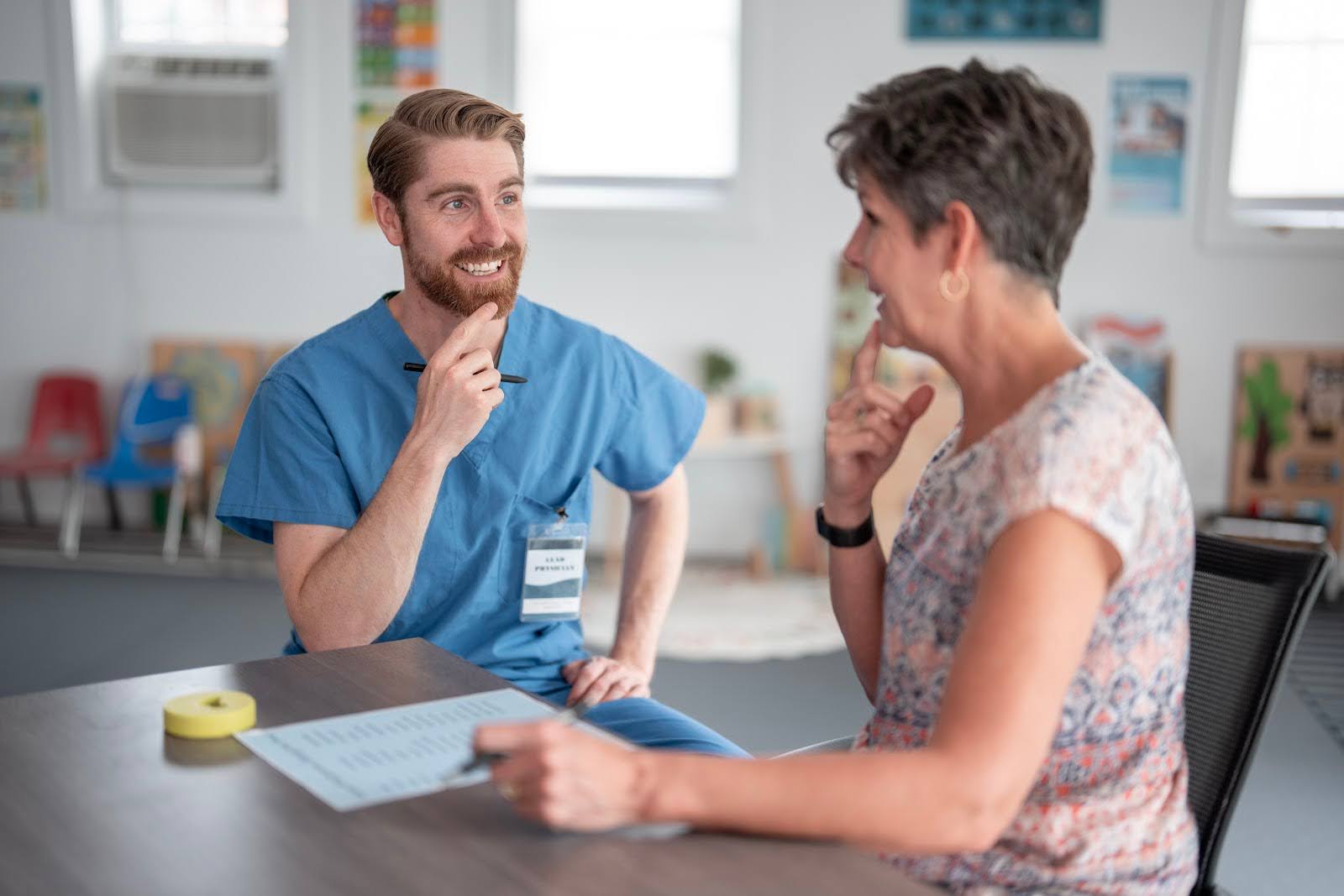
Speech pathologist with stroke survivor

Integrating Training into Daily Life

Some of the most effective cognitive rehabilitation happens when stroke survivors incorporate mental exercises into their everyday routines.

Real recovery comes from turning ordinary moments into opportunities for brain training. Instead of treating cognitive exercises as separate therapy sessions, stroke survivors can build mental strengthening directly into their regular daily activities.

Below are a few ways to put this into practice:

  • Label household items and create visual schedules to support memory and organization skills. Patients or care partners can put simple labels on kitchen cabinets, drawers, and frequently used items to reduce the mental effort needed to find things. Visual schedules posted in prominent places, like a morning routine checklist by the bathroom mirror or a medication chart by the coffee maker, can serve as memory aids while helping to rebuild internal recall abilities.
  • Turn everyday meals into opportunities for recall practice. Ask open-ended questions like, “What did you do this morning?” or “Name three things you’re grateful for today.” If the survivor gets stuck, provide hints or gentle guidance instead of quizzing or correcting them.
  • Use brain games for stroke recovery through apps or computer programs to supplement daily practice.10 Technology offers accessible, structured cognitive training with difficulty levels that adjust to the patient’s progress. Many programs provide detailed tracking so users can see improvement over time, which helps maintain motivation.
Speech pathologist with stroke survivor

We use the term “care partner” to be more inclusive of all types of people who support their loved ones with long-term health conditions, and because it matches our mission of empowering the individual to be in control and in charge of their own health and condition. It also implies that the individual is partnering with their loved one rather than “giving” their loved one a service.

Getting Support from Professionals and Caregivers

Cognitive recovery after stroke works best when patients have the right team supporting their progress.

SLPs and OTs guide targeted activities designed specifically for patients’ cognitive challenges.11, 12 These specialists understand how stroke affects different mental processes and can design exercises that address each person’s particular situation. They track progress, adjust difficulty levels, and ensure people are working on skills that will translate to real-world improvements.

Care partners can help with encouragement, reminders, and structure, and help survivors keep cognitive training consistent. Family members and friends become essential allies in recovery when they understand how to provide support without taking over. They can help establish daily routinesoffer gentle prompts for exercises, and celebrate small victories. The key is finding the balance between getting helpful assistance and maintaining patients’ independence.13

Monitor frustration levels and avoid overexertion, because cognitive fatigue could derail progress. The brain is working harder than usual to process information and learn patterns, which means people may get mentally tired faster than before their stroke. Both professionals and care partners need to watch for signs that the patient is pushing too hard, like increased confusion, irritability, or difficulty with tasks that were manageable earlier in the day.14

Tracking Progress and Staying Motivated

Monitoring small gains and setting achievable goals helps sustain motivation throughout the cognitive recovery process.

Motivation drives recovery, and documenting progress creates the momentum to keep going.

Keep a log of improvements and goals met, no matter how small they seem. Writing down when the patient remembers a grocery list without checking it twice, completes a crossword puzzle, or follows a conversation without losing track builds concrete evidence of recovery. Research shows that rehabilitation professionals consider goal setting one of the most effective motivational strategies for stroke patients, and tracking achievement of those goals provides essential feedback for continued progress.15

Patients can set short-term challenges that build momentum, rather than shooting for distant, vague targets. Instead of “I want to get my memory back,” people could try “I’ll practice remembering three items from my morning routine for a week.” Success with smaller goals creates confidence and motivation to tackle bigger challenges. The key is making each goal specificachievable, and tied to something meaningful in the patient’s daily life.

Celebrate small wins to boost morale and maintain motivation during the inevitable plateaus. Recovery doesn’t follow a straight line, and acknowledging progress helps people push through discouraging phases.

Conclusion

Cognitive healing after stroke is possible months or even years after stroke, so every day of practice is valuable.16

The brain doesn’t stop healing just because stroke survivors have passed the six-month mark or even the one-year anniversary of their stroke. Research demonstrates that neuroplasticity, the brain’s ability to rewire itself, remains active well beyond the traditional recovery timeframes that many people expect. Studies show meaningful cognitive improvements can occur even in longer stages of recovery, with some survivors experiencing functional gains long after their initial stroke.

Patience, consistent work, and professional support are the foundation of long-term cognitive recovery. Progress often comes in small increments rather than dramatic leaps, and recovery isn’t linear. Working with SLPs and OTs provides the targeted approach the brain needs, while daily exercises at home maintain momentum between sessions. Professional guidance along with steady self-directed work gives the brain a strong chance to change and grow.

Kandu offers Stroke Navigation services for stroke survivors and their care partners. Patients receive one-on-one personalized support through our app, licensed Kandu Navigators, and stroke recovery community. You can sign up for Stroke Navigation services here.

For additional resources, try the American Heart Association’s “Heart and Stroke Helper” app as a “next step”; it provides community resources, medication management, and support tools specifically for stroke survivors.

©2026 Kandu, Inc. All Rights Reserved. 8090.983.E


EVT Benefits Persist up to 3 Years After Stroke due to BAO

 If it wasn't 100% recovery then it wasn't a favorable outcome to the survivor!  Your tyranny of low expectations should be rooted out of stroke.

EVT Benefits Persist up to 3 Years After Stroke due to BAO

Favorable functional outcomes after endovascular thrombectomy (EVT) in patients with ischemic stroke due to basilar artery occlusion were sustained up to 3 years, but only in those younger than 70, new research showed.

Investigators found that more than twice as many stroke patients who received EVT were ambulatory and capable of self-care at 3 years compared to those who got best medical management alone.

Patients receiving EVT also had lower mortality and higher rates of other functional outcomes.

“These findings reinforce EVT as the standard of care and support broader implementation and timely access to thrombectomy services for posterior circulation stroke,” lead author Wei Hu, MD, PhD, Department of Neurology, The First Affiliated Hospital of USTC, Division of Life Sciences and Medicine, University of Science and Technology of China, Hefei, China, and colleagues wrote.

The findings were published online on December 29 in JAMA Neurology.

Standard of Care

Basilar artery occlusion is an uncommon but devastating subtype of ischemic stroke. As previously reported by Medscape Medical News, earlier results from the ATTENTION trial showed that EVT improves 3-month functional outcomes compared to best medical management in affected patients.

However, data regarding the longer-term efficacy of thrombectomy have been limited.

The new 3-year follow-up extension of the ATTENTION trial included 307 adults (mean age, 68 years) who were treated between February 2021 and January 2022 across 36 stroke centers in China. Participants had presented with moderate to severe ischemic stroke (National Institutes of Health Stroke Scale score of 10 or greater) due to basilar artery occlusion within 12 hours of the estimated time of onset.

Patients were randomly assigned to receive either EVT plus best medical management (thrombectomy group) or best medical management alone (control group).

Clinical assessments were conducted at baseline, 24 hours, 7 days or at hospital discharge, 90 days, 12 months, and 3 years.

The primary endpoint was a favorable functional outcome, defined as a modified Rankin Scale (mRS) score of 0-3. Researchers adjusted for age, prestroke mRS score, time from symptom onset to randomization, and stroke severity.

Follow-up data for the new study were collected through January 2025.

Excellent Functional Outcome

At 3 years, 38.4% of the thrombectomy group had achieved ambulatory and self-care capable status (mRS score, 0-3) vs 18.3% in the control group (adjusted risk ratio [RR], 2.05; 95% CI, 1.35-3.11; P  = .001).(That is still NOT AN EXCELLENT OUTCOME! ONLY 100% RECOVERY IS! Are you that fucking stupid?)

An excellent functional outcome (mRS score, 0-1) was observed in 30.5% of patients in the thrombectomy group vs 9.6% in the control group (adjusted RR, 3.03; 95% CI, 1.69-5.44).

More subjects in the thrombectomy group than in the control group had an mRS score of 0-2, indicating functional independence (35.5% vs 12.5%; adjusted RR, 2.71; 95% CI, 1.62-4.54).

“Among every 100 patients treated with EVT rather than medical management, 20 more would be ambulatory and self-care capable, and 23 more would be functionally independent at 3 years,” wrote the authors.

Quality of life, as measured by the European Quality of Life 5-Dimension 5-Level questionnaire, was higher in the thrombectomy group. And more patients in this group achieved independence in instrumental activities of daily living as measured by the Barthel Index.

The mortality rate steadily increased and was relatively high at 3 years in both the EVT group (55.7%) and the control group (73.1%), but it was significantly lower in the thrombectomy group.

A prespecified subgroup analysis found that patients younger than 70 benefited from the treatment (adjusted RR, 2.70; 95% CI, 1.52-4.78), but those aged 70 or older did not.

Important Insights

In extending the follow-up period to 3 years, the study “offers important insights into the long-term trajectory of recovery after endovascular thrombectomy in patients with basilar artery occlusion,” wrote the authors.

The study didn’t include patients on the more extreme spectrum of stroke severity (mild or very severe). It also didn’t correct for multiple testing, so analyses should be considered exploratory, the authors noted.

In addition, the trial wasn’t powered to assess differences in treatment effects across subgroups, and researchers didn’t record medication compliance, vascular risk factor control benchmarks, interim adverse events, or the rate of recurrent stroke, all of which could affect long-term functional outcomes, they added.

Also, the relatively low use of thrombolysis may have contributed to poorer outcomes in the control group and to the clinical magnitude between groups.

'Solid Evidence' 

Reached for comment, Johanna Ospel, MD, PhD, neuroradiology fellow and stroke researcher at University of Calgary, Canada, said the 3-year results are “important because they show that the benefit of EVT is sustained over the long-term: EVT benefit in the EVT arm is long-lasting, beyond the standard 3-months outcome assessment.”

Ospel said she personally was not surprised by the long-term data, “but, in some ways, these results, together with the BAOCHE trial, did turn the evidence for basilar occlusion EVT upside down because we really did not have a good evidence basis for treating these occlusions with EVT,” she told Medscape Medical News.

“Most of us probably did offer EVT for some basilar occlusion patients even before ATTENTION and BAOCHE, but this was really not based on solid data and [was] off-label,” Ospel added.

“Thanks to these two trials, we now can say that basilar occlusion EVT is based on solid evidence from randomized trials, and that has important implications for systems of care, guidelines, insurance providers and procedural reimbursement,” she concluded.

The study was funded by the Fundamental Research Funds for Central Universities and the Program for Innovative Research Team of The First Affiliated Hospital of the University of Science and Technology of China. The study authors reported no conflicts of interest. Ospel reports being co-author of the American Heart Association (AHA)/American Stroke Association(ASA) 2022 scientific statement “Toward a Better Understanding of Sex- and Gender-Related Differences in Endovascular Stroke Treatment.” 

Study: Troubling trend in stroke survival

 FYI

Study: Troubling trend in stroke survival

Living with Life After Stroke: Navigating Rehabilitation, Relationships, Resilience

Why don't you come out an just say you're a complete fucking failure at 100% recovery? Or are you a blithering idiot who thinks you are competent? 

Living with Life After Stroke: Navigating Rehabilitation, Relationships, Resilience

Anushka Khatana1, Abhishek Dixit1, Navya Jaitly1, Tanzeel Wani1, Parul Molhotra1, Man Mohan Mehndiratta1* 1Department of Neurology, BLK-Max Super Speciality Hospital, New Delhi Correspondence: Man Mohan Mehndiratta E-mail: drmanmohan.mehndiratta@blkhospital.com DOI: https://doi.org/10.62830/mmj2-04-3a 


Abstract: 


Stroke is a major cause of long-term disability, with millions of people worldwide being affected. Post-stroke survivors are strong physically, mentally, and emotionally and require much care, adaptation to normal life and a lot of mental power to endure. This paper is a comprehensive analysis of life after a stroke (evidence-based rehabilitation methods, the importance of changing the dynamics of personal relationships over time, and the methods to promote resilience). The narrative review included clinical trials, meta-analyses, qualitative studies, and patient-reported outcomes from PubMed, Google Scholar, and Consensus. We found that rehabilitation, a multidisciplinary procedure, must be done individually. The acknowledgement of others is significant in recovery, whereas psychological resilience assists survivors in making adaptations to living with a disability. The most significant problems are motor impairment, communication disorders, stress of the caregiver, and emotional distress. Person-centred, long-term rehabilitation, relational support, and resilience-building approaches are critical to the best recovery and reintegration