You just proved how incompetent your hospital system is! Incompetent for over a decade!
- vagus nerve(56 posts to July 2012)
10 Easy Ways to Stimulate Your Vagus Nerve to Reduce Stress from Debbie Hampton
The latest here:
CommonSpirit Offers First-In-Tennessee Vivistim Paired VNS System For Stroke Survivors
CommonSpirit – Memorial Hospital announced it is the first health care facility in Tennessee to offer an innovative, FDA-approved therapy that provides new hope for stroke survivors who continue to experience arm and hand weakness.
By combining vagus nerve stimulation with physical rehabilitation, the Vivistim Paired VNS System is a breakthrough medical device that significantly improves upper limb function in individuals who have suffered an ischemic stroke. Clinical studies have shown that patients treated with Vivistim alongside rehabilitation experienced two to three times greater improvement in arm and hand function compared to rehabilitation alone and the benefits are maintained for over a year.
“We are incredibly excited to bring this cutting-edge therapy to Chattanooga and, by extension, to stroke survivors across Tennessee,” said Janelle Reilly, market president, CommonSpirit, Tennessee and Georgia.“The Vivistim System represents a significant step forward in our ability to help patients regain movement and independence, truly enhancing their quality of life.”
This new therapy has the potential to improve the health of Tennesseans statewide with patients from across the state scheduled to receive Vivistim at CommonSpirit - Memorial Hospital. The first patient recently underwent a successful outpatient procedure to implant the small Vivistim device, which is comparable in size to a car key fob. The procedure was performed by Ranjith Babu, MD, neurosurgeon at CommonSpirit – Neuroscience Institute – Chattanooga.
The stroke team at Memorial Hospital has worked closely to launch Vivistim with Teresa Kimberley, PT, PhD, FAPTA, the director of the Brain Recovery Lab and a lead Vivistim scientist at the Center for Neurotechnology and Neurorecovery at Massachusetts General Hospital and Harvard Medical School. “Despite the great advances in modern emergency stroke treatment over the past ten years, millions of people still face serious residual physical limitations after stroke. Vivistim has really changed that. I’m excited that there is great hope now for the people of the Tennessee Valley to improve their quality of life through our work together launching this exciting novel technology at Memorial hospital,” said Dr. Kimberley.
Vivistim Therapy is a three-part process:
Memorial Hospital’s Neuroscience Institute team is recognized nationally as a premier center in the development of novel technologies for neurologic disease like stroke. With a commitment to providing advanced neurological care, like Vivistim, Memorial Hospital helps ensure Tennesseans no longer need to travel out of state to receive transformative medical care.
For more information about the Vivistim Paired VNS System or to inquire about candidacy, contact CommonSpirit – Neuroscience Institute – Brain and Spine Care at 423 206-9480.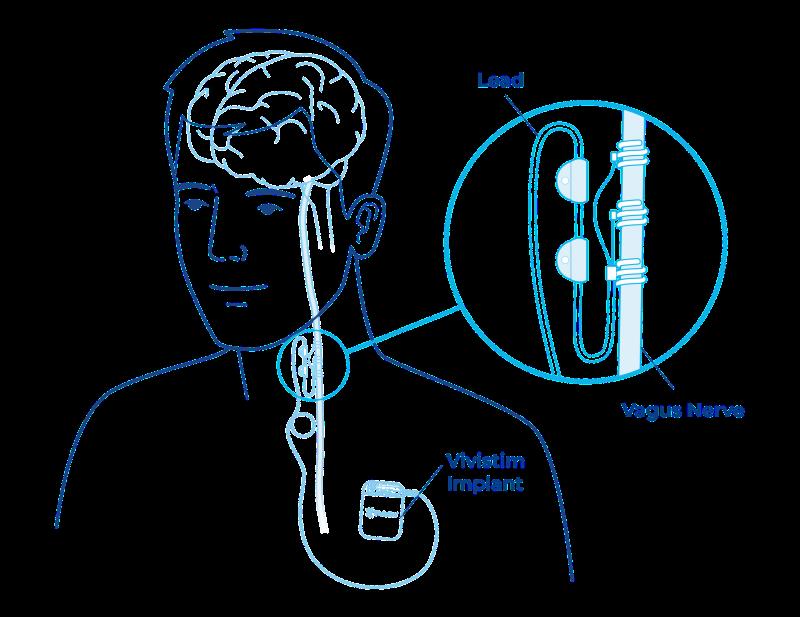
By combining vagus nerve stimulation with physical rehabilitation, the Vivistim Paired VNS System is a breakthrough medical device that significantly improves upper limb function in individuals who have suffered an ischemic stroke. Clinical studies have shown that patients treated with Vivistim alongside rehabilitation experienced two to three times greater improvement in arm and hand function compared to rehabilitation alone and the benefits are maintained for over a year.
“We are incredibly excited to bring this cutting-edge therapy to Chattanooga and, by extension, to stroke survivors across Tennessee,” said Janelle Reilly, market president, CommonSpirit, Tennessee and Georgia.“The Vivistim System represents a significant step forward in our ability to help patients regain movement and independence, truly enhancing their quality of life.”
This new therapy has the potential to improve the health of Tennesseans statewide with patients from across the state scheduled to receive Vivistim at CommonSpirit - Memorial Hospital. The first patient recently underwent a successful outpatient procedure to implant the small Vivistim device, which is comparable in size to a car key fob. The procedure was performed by Ranjith Babu, MD, neurosurgeon at CommonSpirit – Neuroscience Institute – Chattanooga.
The stroke team at Memorial Hospital has worked closely to launch Vivistim with Teresa Kimberley, PT, PhD, FAPTA, the director of the Brain Recovery Lab and a lead Vivistim scientist at the Center for Neurotechnology and Neurorecovery at Massachusetts General Hospital and Harvard Medical School. “Despite the great advances in modern emergency stroke treatment over the past ten years, millions of people still face serious residual physical limitations after stroke. Vivistim has really changed that. I’m excited that there is great hope now for the people of the Tennessee Valley to improve their quality of life through our work together launching this exciting novel technology at Memorial hospital,” said Dr. Kimberley.
Vivistim Therapy is a three-part process:
- Implantation: A small Vivistim device is implanted during a short, outpatient procedure. This device sends gentle electrical pulses to the vagus nerve.
- Therapist-Led Rehabilitation: Two to three weeks after implantation, patients begin intensive rehabilitation with physical and occupational therapists. During these sessions, the therapist uses a wireless remote to activate the Vivistim device while the patient performs specific tasks, such as reaching, grasping, or manipulating objects. The pulses from the vagus nerve send signals to brain regions that release neuromodulators, strengthening neural connections and enhancing the learning process.
- Self-Activated Therapy: Patients also continue their therapy at home, using a magnet to activate the Vivistim device while practicing daily tasks like folding laundry, preparing meals, or getting dressed. This ongoing pairing of VNS with focused activities helps reinforce new neural pathways, leading to sustained improvement.
Memorial Hospital’s Neuroscience Institute team is recognized nationally as a premier center in the development of novel technologies for neurologic disease like stroke. With a commitment to providing advanced neurological care, like Vivistim, Memorial Hospital helps ensure Tennesseans no longer need to travel out of state to receive transformative medical care.
For more information about the Vivistim Paired VNS System or to inquire about candidacy, contact CommonSpirit – Neuroscience Institute – Brain and Spine Care at 423 206-9480.


No comments:
Post a Comment