Changing stroke rehab and research worldwide now.Time is Brain! trillions and trillions of neurons that DIE each day because there are NO effective hyperacute therapies besides tPA(only 12% effective). I have 523 posts on hyperacute therapy, enough for researchers to spend decades proving them out. These are my personal ideas and blog on stroke rehabilitation and stroke research. Do not attempt any of these without checking with your medical provider. Unless you join me in agitating, when you need these therapies they won't be there.

What this blog is for:

My blog is not to help survivors recover, it is to have the 10 million yearly stroke survivors light fires underneath their doctors, stroke hospitals and stroke researchers to get stroke solved. 100% recovery. The stroke medical world is completely failing at that goal, they don't even have it as a goal. Shortly after getting out of the hospital and getting NO information on the process or protocols of stroke rehabilitation and recovery I started searching on the internet and found that no other survivor received useful information. This is an attempt to cover all stroke rehabilitation information that should be readily available to survivors so they can talk with informed knowledge to their medical staff. It lays out what needs to be done to get stroke survivors closer to 100% recovery. It's quite disgusting that this information is not available from every stroke association and doctors group.

Monday, June 3, 2024

Improving rehabilitation motivation and motor learning ability of stroke patients using different reward strategies: study protocol for a single-center, randomized controlled trial

You don't understand ONE GODDAMN THING ABOUT SURVIVOR MOTIVATION, DO YOU? You create 100% recovery protocols and your survivor will be motivated to do the millions of reps needed because they are looking forward to 100% recovery. GET THERE! 

The problem is stroke researchers are not motivated to solve stroke. What the fuck is your solution to that failure? We still don't know how to motivate stroke medical 'professionals' to solve stroke to 100% recovery!

Improving rehabilitation motivation and motor learning ability of stroke patients using different reward strategies: study protocol for a single-center, randomized controlled trial

Jingwang Zhao&#x;Jingwang Zhao1†Jiangling Guo,&#x;Jiangling Guo2,3†Yeping Chen&#x;Yeping Chen4†Wenxi LiWenxi Li5Ping ZhouPing Zhou6Guangyue ZhuGuangyue Zhu1Peipei HanPeipei Han3Dongsheng Xu,,
Dongsheng Xu4,7,8*
  • 1School of Rehabilitation Science, Shanghai University of Traditional Chinese Medicine, Shanghai, China
  • 2Graduate School, Shanghai University of Traditional Chinese Medicine, Shanghai, China
  • 3College of Rehabilitation Sciences, Shanghai University of Medicine and Health Sciences, Shanghai, China
  • 4The Second Rehabilitation Hospital of Shanghai, Shanghai University of Traditional Chinese Medicine, Shanghai, China
  • 5Yueyang Hospital of Integrated Traditional Chinese and Western Medicine, Shanghai University of Traditional Chinese Medicine, Shanghai, China
  • 6Zhongshan Hospital, Fudan University, Shanghai, China
  • 7Engineering Research Center of Traditional Chinese Medicine Intelligent Rehabilitation, Ministry of Education, Shanghai, China
  • 8Institute of Rehabilitation Medicine, Shanghai University of Traditional Chinese Medicine, Shanghai, China

Background: Stroke survivors often face challenges in motor learning and motivation during rehabilitation, which can impede their recovery progress. Traditional rehabilitation methods vary in effectiveness, prompting the exploration of novel approaches such as reward strategies. Previous research indicates that rewards can enhance rehabilitation motivation and facilitate motor learning. However, most reward paradigms have utilized fixed reward amounts, which also have limitations. Exploring alternative, more effective reward strategies, such as probabilistic rewards, is warranted to optimize stroke patient rehabilitation.

Methods: A total of 81 stroke patients will be recruited and randomly assigned to control, fixed reward, or probabilistic reward groups at a ratio of 1:1:1 using a randomized number table method. Participants will undergo 10 days of daily hand motor function rehabilitation training, with sessions lasting 20 min each. The training will involve pegboard tests and box and block tests. Control group participants will receive standard training, while fixed reward group members will receive monetary incentives for completing tests, and probabilistic reward group members will have the chance to win monetary rewards through a lottery box. Rehabilitation motivation and motor performance and functional near-infrared spectroscopy brain imaging will be conducted at designated time points. The primary outcome measure is the stroke rehabilitation motivation scale, and the second outcome measures include motor performance, simple test for evaluating hand function, motivation and pleasure scale self-report, and Pittsburgh rehabilitation participation scale.

Discussion: Reward-based training enhance rehabilitation participation and adherence, it also improve motor learning speed and memory retention of stroke patients. The fixed reward applied in the past studies could diminish the sensitivity of stroke patients to rewards, while probabilistic reward may provide unpredictable or variable incentives or reinforcements for motor rehabilitation. This study will compare the efficacy of different reward strategies in enhancing motor learning ability and rehabilitation motivation among stroke patients. By conducting a randomized controlled trial, the study seeks to provide valuable insights into optimizing stroke rehabilitation protocols and improving patient outcomes.

Clinical Trial Registration:https://www.chictr.org.cn/, ChiCTR2400082419.

A multimodal MRI study of XNKQ acupuncture for limb dysfunction after ischemic stroke: a randomized controlled study protocol

 Impossible to have effects except as a placebo. Energy meridians have never been proven to exist.

No mechanism of action is possible. 

But if you believe, have at it, recognizing these possible side effects;

acupuncture side effects

A multimodal MRI study of XNKQ acupuncture for limb dysfunction after ischemic stroke: a randomized controlled study protocol

Chunlei Tian,&#x;Chunlei Tian1,2†Lingyong Xiao,&#x;Lingyong Xiao1,2†Ruiyu Li,Ruiyu Li1,2Yinghui Chang,Yinghui Chang1,2Zhe LvZhe Lv3Lanping Li,Lanping Li1,2Shiqing Zhao,Shiqing Zhao1,2Xiaoyu Dai,
Xiaoyu Dai1,2*
  • 1Department of Acupuncture and Moxibustion, First Teaching Hospital of Tianjin University of Traditional Chinese Medicine, Tianjin, China
  • 2National Clinical Research Center for Chinese Medicine Acupuncture and Moxibustion, Tianjin, China
  • 3Imaging Department, First Teaching Hospital of Tianjin University of Traditional Chinese Medicine, Tianjin, China

Introduction: Limb motor dysfunction is one of the challenges in rehabilitation after cerebral ischemic stroke (CIS) and greatly affects the quality of life of patients. This study aims to investigate the central mechanisms of the curative effect with multimodal magnetic resonance imaging (MRI), which will provide additional evidence to support the application of Xingnao Kaiqiao (XNKQ) acupuncture.

Methods and analysis: This trial is a randomized controlled trial. Patients who meet the criteria will be recruited and randomly divided into 2 groups. One group will receive acupuncture treatment and another group will not receive acupuncture treatment. Both groups will receive conventional treatment. In addition, 20 healthy individuals will be recruited who will not receive any treatment. The total course of treatment is 14 days. The primary outcome is multimodal MRI analysis. For safety assessment, adverse events will be observed and recorded.

Ethics and dissemination: The study involving human subjects was reviewed and approved by the Ethics Committee of IRB of The First Teaching Hospital of Tianjin University of TCM (TYLL2023[K]031). This study complied with the Declaration of Helsinki. Written informed consent about this study was provided by the participants. The results of this study will be published in a peer-reviewed journal.

Clinical trial registration: Chinese Clinical Trial Registration Center (ChiCTR2300078315) https://www.chictr.org.cn/.

Introduction

Data (1) from the Global Burden of Disease study show that the absolute number of stroke episodes increased by 70.0% from 1990 to 2019, while the age-standardized rates of stroke incidence decreased by 17.0%. Stroke (2) is the leading cause of disability and death in adults in China. By 2019, the number of stroke patients in China was about 28.76 million (3), of which cerebral infarction accounted for 24.18 million. If it is not treated and prevented in time, cerebral ischemic stroke (CIS) patients will be disabled or even have a recurrence of cerebral infarction in a short period, which will seriously affect their life and health and increase their economic burden.

About 12.5% of stroke survivors left with a disability in 2020 (2), equivalent to file.2 million people. After 12 months of follow-up, the rate of disability among stroke survivors was 14.8% at 3 months and 14.0% at 12 months. Therefore, how to effectively improve limb dysfunction and help patients return to daily life still needs to be further explored. In this process, exploring the brain’s mechanistic changes to improve treatment options can provide better help to patients.

Functional magnetic resonance imaging (fMRI) (4) is a non-invasive and radiation-free imaging technique, and multiple sequences can show different brain functional changes, which is widely used to study brain mechanisms (5). It can monitor the activation of brain regions, and brain functional connectivity, guide clinical rehabilitation and suggest patient prognosis.

Acupuncture is a traditional Chinese medicine treatment technique that is applied to a variety of diseases. Xingnao Kaiqiao (XNKQ) acupuncture was founded by academician Shi Xuemin of Tianjin University of Traditional Chinese Medicine. Its clinical effects have been satisfactorily verified. It is now widely used in post-stroke rehabilitation. And clinical data show its safety and efficacy. Further research is needed to support the mechanism by which XNKQ acupuncture acts on the brain in CIS patients. We used multimodal MRI technology to further explore the central mechanism by which XNKQ acupuncture exerts action in patients with post-stroke limb dysfunction.

ESOC 2024: “Cognition and Vascular Cognitive Impairment”

 Great research but useless for getting survivors recovered! The goal of stroke research is survivor recovery! DO YOU NOT UNDERSTAND?

What do survivors need to do to prevent this cognitive decline? That's the research needed!

ESOC 2024: “Cognition and Vascular Cognitive Impairment”

Originally published 10.1161/blog.20240531.611984

European Stroke Organisation Conference
May 15–17, 2024

Session: Cognition and Vascular Cognitive Impairment

Seven researchers shared their work during this well-attended session on cognition and vascular cognitive impairment co-chaired by Sandra Billinger (University of Kansas Medical Center, Kansas City, United States) and Aleksandra M. Pavlovic (University of Belgrade, Belgrade, Serbia) at ESOC 2024. In this blog post, I comment on three take-home messages that are relevant to researchers and clinicians in stroke medicine.

Two researchers presented results that support a role for “strategic” white matter lesions in cognition using data from the Meta VCI Map consortium. Floor De Kort (UMC Utrecht, Utrecht, the Netherlands) first presented on the clinical relevance of white matter hyperintensity location in poststroke cognitive function. In this work integrating nine ischemic stroke cohorts and a total of 1,568 patients, De Kort identified certain locations, such as the left anterior thalamic radiation, which have differential associations with cognitive performance. Marvin Petersen (UMC Hamburg-Eppendorf, Hamburg, Germany) next presented a prediction model of cognitive performance using white matter hyperintensity dysconnectivity. In this study, Petersen used lesion network mapping in 3,485 individuals attending a memory clinic to improve the prediction of cognitive performance. Lesion network mapping was performed to quantify dysconnectivity, and Ridge regression was used to predict cognition across four cognitive domains. Lesion network mapping improved prediction of attention, processing speed, and verbal memory (but not language) over other available clinical variables. In summary, these two projects used large data sets of brain imaging and cognitive tests to demonstrate the clinical relevance of the location — and not just raw volume — of white matter lesions.

Marion Buckwalter (Stanford School of Medicine, Stanford, United States) next presented a coherent story on the effect of blocking the VCAM1-VLA4 axis on cognitive decline in a mouse model of infarct-induced neurodegeneration. Buckwalter presented data from a mouse model of infarct-induced neurodegeneration which is associated with lymphocytic infiltrates, blood-brain barrier leakiness, and loss of pericyte coverage. The use of VCAM1 and VLA4 blocking antibodies in this animal model prevented infarct-induced neurodegeneration, reduced blood-brain barrier leakiness, and improved pericyte coverage. These results support the promising role of blocking lymphocyte trafficking across the blood-brain barrier to prevent poststroke cognitive impairment,(Solve this problem, don't just tell us it exists!) and underline the need for additional studies in clinical trials after further exploration in translational studies.

Joanna Wardlaw (Centre for Clinical Brain Sciences, Edinburgh, United Kingdom) finally presented on the incidence, risk factors, and trajectories of cognitive impairment after stroke in the R4VaD study. Wardlaw summarized the R4VaD study, a UK-wide prospective longitudinal observational cohort of patients presenting at hospital stroke services within six weeks of stroke or transient ischemic attack. Participants were assessed through blinded central follow-up for up to two years, and cognition was rated on the Diagnostic and Statistical Manual of Mental Disorders (DSM)-V ordinal cognitive impairment scale. Age, pre-morbid modified Rankin Scale (mRS) score, baseline Montreal Cognitive Assessment (MoCA) score, and hypertension were among the top predictors of cognition at two years. These results are important as they may be used to stratify the risk of cognitive decline(Why aren't you solving this problem? Describing it does nothing.) after stroke in future interventional studies.

Sunday, June 2, 2024

Teresa’s Story – Haemorrhagic Stroke at 17 caused by Arteriovenous Malformation (AVM)

 FYI.

Teresa’s Story – Haemorrhagic Stroke at 17 caused by Arteriovenous Malformation (AVM)

Picture of Teresa who survived a haemorrhagic stroke at 17 caused by Arteriovenous Malformation (AVM)

My story started when I was 17. On summer break, getting ready to finish my A levels to then go off to university. It was a bit of a weird summer for me, and starting great with my first proper attendance at Glastonbury – this was the first of many, but that is a different kind of story (it was just down the road from me so a rite of passage for all of us). After that I had to have a back operation. All went well just to fix a curvy spine (scoliosis). So, from the start of a mad party summer this led to a chilled recuperating summer and then six weeks rest.

Coming up to the end of recuperation it was a weekend, and really warm, so I had a delightful walk about one of my favourite stone circles in Somerset.  It was a pretty good day, then I came home  and I popped a film on. It was ‘As Good as It Gets.’

Then everything changed.

During the film I had some strange things occurring, and just small things at first; uncontrollable dribbling (weird yeah?) and so I went to see my mum. I tried to chat to her but I just couldn’t get any words out – just sounds! It was so strange. Mum looked at me and noticed my mouth had dropped to one side and said
“I think you’re having a stroke!”

I was thinking it was just my mum being the hypochondriac that she can be, but she rang for an ambulance anyway. It turned up and paramedics did checks, but could not really find anything that was odd, except that I wasn’t speaking. They then gave me a pencil to try and write something down, but I couldn’t write anything. I could hold the pencil, but couldn’t remember how to write anything or even USE a pencil. It was all too much, and I just burst into tears. I couldn’t control that either. There was no control of anything…

Tests and scans would show I’d had an aneurysm. It was quite deep down in the brain and was caused by abnormal blood vessels. So, my mum was right – it was a stroke.

I spent a couple of months in a rehabilitation hospital, (re)learning how to read, write, and also talk after a diagnosis of aphasia as well, as all the other things most of us  take for granted. The weird thing about talking was that if you asked me a question, I could visualise the answer, but I couldn’t get the words out! Fine motor skills had also gone, so I had problems with eating and using my hands. I remember trying to write thank you notes for ‘get-well’ presents, trying to spell words and sound them out like I did in school, but it didn’t work anymore.

Frustration was the main thing here, but I remember just trying to be patient with myself and that was the most important thing. There was a lot of anxiety and emotions that I couldn’t handle properly. It really was quite a hard time in my life, and acceptance was difficult – and that this had actually happened to me.

After lots of work with the speech and language therapist and helped by the fact that I did not shut up talking. If you know me then I am very chatty – and my speech started coming back. Reading and writing took longer, but I did return to college. I had a year out of proper education, but attended some classes with a scribe so I could catch up with friends. I start learning again (I LOVE learning) and so also to got some normality back in my life!

The first book I read after my rehab was Rik Mayall’s autobiography ‘Bigger than Hitler – Better than Christ’. He is also someone that had a brain related illness, which made it more relatable for me, and also, I am a big FAN!

I returned to college full-time the year after, with lots of support from the staff; extra time for exams, extra support needed. I worked my hardest at the same time as having some cool ass surgery to deal with the blood vessels. It’s called Gamma Knife surgery (using gamma rays). I thought I was like the HULK or some other cool superhero (or if you are a King Gizzard and Lizard Wizard fan – there is a whole song that I can relate to!) and I got the grades to get into university to study archaeology in Bristol.

When I went to university, I did not embrace the stroke and I really tried to hide from it and although everything was OK, and that I didn’t need extra help. Strokes are an old person thang. I knew what I was doing. Actually all I had to do, if I needed help, was to ask – but I didn’t! I struggled for my first two years. My grades were not too bad, but I was slow at taking notes and keeping up. All my essays would have syntax problems and so they were marked down, and there were a couple of times where hand ins were late, or I didn’t understand the assignment properly. I lost confidence with my public speaking as well; you cannot notice the stroke at all in my face now but in the back of my mind I always felt like someone could see my mouth drop or that there was dribble out the corner of my mouth.

Between finishing my second year and going into third year I thought I should do the right thing and ask for help. I got an assessment and yes, I was officially diagnosed with dyslexia and dyspraxia and so my university life changed; back to extra time for exams, essays marked on content and not syntax.

My grades all changed, my confidence returned, and I started to ask tutors when I was unsure. This really was a turning point for me; to always ask for help now and not suffer in silence – and to never let anything hold me back in what I wanted to do!

At work and out of work I love to bring people together! My job at the university is on the welcome Desk at the Sir Duncan Rice Library and I am always trying to get involved with different projects, especially those that bring people together. What I love about the university is that it’s a place I can get involved with all types of projects from outreach work to detailed copyright work. I feel like I have support and can ask as many questions as I like. 

What I love about the university is that it’s a place I can get involved with all types of projects from outreach work to detailed copyright work. I feel like I have support and can ask as many questions as I like.

This passion for bringing people together is shared in my volunteering role. When I moved to Aberdeen seven years ago, I needed to find some type of community and I joined GGI (Girl Gone International); a Facebook social impact community group. I started to meet people, made friends, and then wanted to help with planning events.

This led to me being an event host. I then moved up to become a community leader, leading groups and training other volunteers, and doing behind the scenes admin tasks. What I love about this is it’s a safe place for people to meet and connect, and not just in Aberdeen but worldwide. Last year I stepped up to become global support. This for me was quite scary as I was worried about my level of professional writing, but the team is a great support – with us being such a diverse rainbow of people and “thrive, connect and support” are at the core of the group!

So, at the moment I am looking after all the UK groups and I help supporting groups worldwide. This is a girl who had forgotten how to speak, that was very conscious of her public presentation skills – and now I’m hosting online workshops, leading groups of over 2,000 members to form communities and combat loneliness, traveling across countries to meet and connect. We had a massive summit meeting in Lithuania with eighty attendees for across the globe, sharing ideas thoughts and strategies! I even got to host a trip away to Iceland last December – and yes, I got to see those Northen Lights!!! My next steps will be to start working on the data side of things, to allow my CPD within the group and push the boundaries again – me, out of my comfort zone!

Teresa's Story - Haemorrhagic Stroke at 17 caused by Arteriovenous Malformation (AVM)

The key for me was frustration – and I was so lucky to make the kind or recovery I did. This was due to the support of my friends, my family, and my POSITIVITY. Sometimes I think of what a different journey I might have taken without the stroke, but I guess it just would not have been as interesting – and I do love a challenge!

Never forget what you love doing.
Always stop and ask for help wherever you are in work life or academia.
Never stop being you.
Embrace the different side of you.

My story is just one flavour in the big mix of ‘neurospiciness’ – and one spice by itself can be powerful, but a mixture of spices is aways better. Keep sharing!

WSO hosted its first stroke policy ever at the 77th World Health Assembly on May 27th.

I'm sure this will be a COMPLETE FAILURE since the focus is on 'care', NOT RECOVERY OR RESULTS! And with  no survivors there they aren't even doing what survivors want; 100% RECOVERY!

Send me hate mail on this: oc1dean@gmail.com. I'll print your complete statement with your name and my response in my blog. Or are you afraid to engage with my stroke-addled mind?  You'll want 100% recovery when you are the 1 in 4 per WHO that has a stroke!  Explain how you're going to get to 100% recovery if you don't start that research RIGHT NOW!

 WSO hosted its first stroke policy ever at the 77th World Health Assembly on May 27th.

A panel of policy and clinical experts set out the global burden of stroke and advances in acute care that represent an unparalleled opportunity to improve outcomes for patients, reduce healthcare budgets and social costs. Representative from the governments of Jamaica, Indonesia and Costa Rica highlighted the need and potential for acute care improvement within the overall stroke care continuum, with a focus on strategies that reflect national contexts, challenges and priorities. A full event report and policy brief will be shared with stakeholders shortly.

A Framework to Design Virtual Reality Mirror Therapy (VRMT) for Motor Rehabilitation in Post- Stroke Survivors: Dosage, Motivation, Task Difficulty, Feedback and Mechanism

We haven't even gotten protocols on basic mirror therapy done in the past 12 years, why are we working on something new? Who approved this abomination?

 A Framework to Design Virtual Reality Mirror Therapy (VRMT) for Motor Rehabilitation in Post-Stroke Survivors: Dosage, Motivation, Task Difficulty, Feedback and Mechanism


Bethany Strong
Department of Psychology
University of South Wales
Pontypridd, Wales
bethany.strong@southwales.ac.uk
 
Ali Roula
Faculty of Computing, Engineering and
Science, University of South Wales
Pontypridd, Wales
ali.roula@southwales.ac.uk
 
Biao Zeng
Department of Psychology
University of South Wales
Pontypridd, Wales
biao.zeng@southwales.ac.uk
 
Liucheng Guo
Capital University of Physical Education
and Sports
Beijing, China
guoliucheng@cupes.edu.cn
 
Peter McCarthy
Faculty of Life Science and Education
University of South Wales
Pontypridd, Wales
peter.mccarthy@southwales.ac.uk

Abstract—

The primary goal of mirror therapy is to alleviate symptoms and improve motor function and perception. It involves using a mirror to create a visual illusion that the affected limb is moving regularly and painlessly. Mirror therapy is often used in conjunction with traditional physical and occupational therapy methods and has been studied for post-stroke rehabilitation. However, mirror therapy effectiveness can vary among individuals(It shouldn't if you had EXACT STROKE PROTOCOLS based upon the EXACT DAMAGE DIAGNOSIS!). Virtual reality mirror therapy (VRMT) is an advanced application of mirror therapy that utilises virtual reality technology to enhance rehabilitation. While traditional mirror therapy uses a physical mirror to create the illusion of movement in the affected limb, VR mirror therapy takes advantage of immersive digital environments to provide a more engaging and customizable experience. This approach is particularly beneficial for stroke rehabilitation. The paper summarises four key design factors: e dosage, motivation, task difficulty and sensory feedback. In addition, it indicates the potential role of mirror neurons in both mirror therapy and VRMT and highlights three areas for future VRMT studies

Bending induced polarization charges in non-polar porous polymer for stroke rehabilitation

 This just monitors movement! It DOES NOTHING directly to get survivors recovered. It could be useful, if the measurements provided point DIRECTLY TO 100% RECOVERY PROTOCOLS!

Bending induced polarization charges in non-polar porous polymer for stroke rehabilitation

https://doi.org/10.1016/j.cej.2024.152684
Get rights and content

Highlights

  • •

    The transverse flexoelectric coefficient of porous PDMS can reach approximately 2.9 times the counterpart of the bulk one.

  • •

    A competitive mechanism between the strain gradient and permittivity on the flexoelectricity of porous polymer is discovered in bending mode for the first time.

  • •

    An optimal porosity corresponding to the maximum polarization response of porous polymer is found.

  • •

    The developed intelligence terminal of rehabilitation can successfully collect and recognize the motions of post-stroke patients in real-time.

Abstract

Owing to the flexibility, lightweight, long-life and low cost, polymers are promising candidates to realize electromechanical conversion in wearable electronics. The flexoelectric effect enables non-piezoelectric materials to achieve electromechanical coupling, thereby broadening application ranges of nonpolar polymers. In this work, the porous samples of polydimethylsiloxane (PDMS) with various pore sizes and porosities are fabricated by the sacrificial salt template method and the chemical gas foaming method. The flexoelectric polarization response can be tuned directly by the structural characters of the porous PDMS. The transverse flexoelectric coefficient of porous PDMS can reach approximately 2.9 times the counterpart of the bulk one. The competitive mechanism between strain gradient and permittivity is proposed on flexoelectricity of random porous media by dielectric impedance spectrums and finite element analyses. The present regulation of flexoelectricity provides an alternative to electromechanical conversion. With the deep learning technique based on one-dimensional convolution neural networks, actions of both sick and normal legs of various stroke patients can be well recognized by the designed device of rehabilitation. The present rehabilitation monitoring system, which is an innovative application of the flexoelectricity in the porous polymers, offers a new approach to support physical therapy for post-stroke patients.

Saturday, June 1, 2024

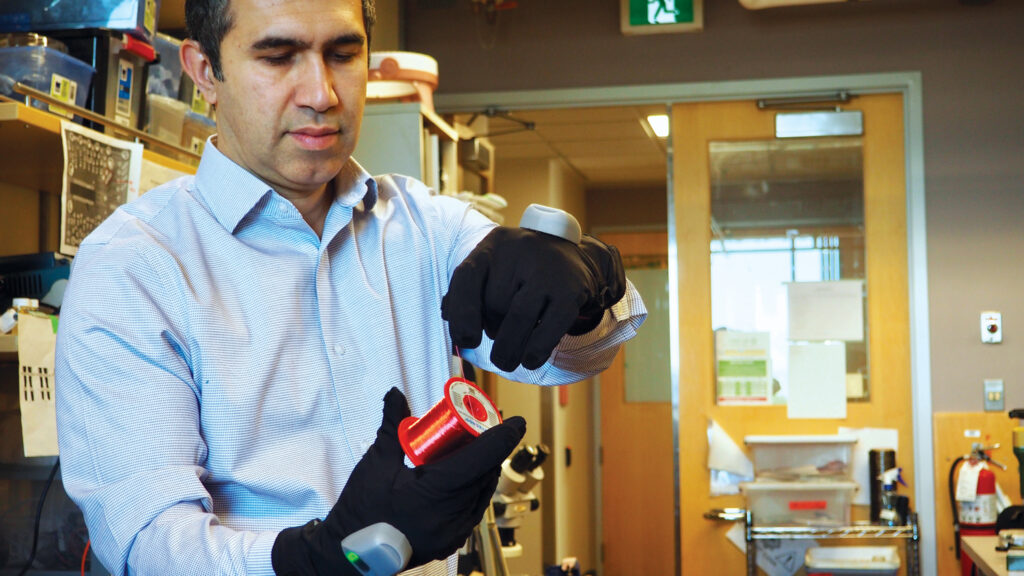
Smart gloves help researchers study strokes

 The picture immediately tells me they KNOW NOTHING about stroke recovery of hands. No survivor with spasticity could ever get this glove on. Measuring movement DOES NOTHING to get survivors recovered! They need EXACT rehab protocols. Useless.

Smart gloves help researchers study strokes

Swatches | June 1, 2024 | By:

University of British Columbia electrical and computer engineering professor Peyman Servati, Ph.D., demonstrating the smart glove. Image: UBC Media Relations/Lou Bosshart

A smart glove undergoing testing with stroke survivors could also one day have applications in robotics, sign language translation, animation and augmented reality. University of British Columbia (UBC) researchers developed the MarsWear smart glove that tracks hand and finger movement and grasping force in real time using sensor yarns and pressure sensors woven into the fabric. No motion-capture cameras are needed, just the researchers’ machine learning models to determine angles of motion. 

“We can then analyze and fine-tune [patients’] exercise programs for the best possible results, even remotely,” says Janice Eng, Ph.D., a stroke rehabilitation specialist and professor of medicine at UBC.

“Imagine being able to accurately capture hand movements and interactions with objects and have it automatically display on a screen,” says Peyman Servati, Ph.D., a UBC professor of electrical and computer engineering. “You can type text without needing a physical keyboard, control a robot or translate American Sign Language into written speech in real time, providing easier communication for individuals who are deaf or hard of hearing.”

Work on the smart glove was published in January 2024 in Nature Machine Intelligence. The gloves are manufactured locally and the product was created for the stroke project
by startup Texavie, managed by the UBC researchers.

Semi-immersive virtual reality system to enhance hand motor rehabilitation after stroke

 When will we finally get stroke leadership to get researchers to DELIVER RECOVERY instead of just enhancing movement? I consider this failed research for not having the correct objective.

Semi-immersive virtual reality system to enhance hand motor rehabilitation after stroke

Publisher: IEEE

Abstract:

In the past few years, the incorporation of virtual reality (VR) technology into various medical applications has attracted growing attention, notably as a means of assisting upper-limb motor rehabilitation exercises for people recovering from stroke. VR has gained attention due to its potential to provide an interactive, engaging, and motivating environment for patients undergoing rehabilitation. This technology offers unique opportunities to enhance traditional rehabilitation approaches, providing a novel and immersive way to deliver rehabilitation exercises for stroke patients. This article aims to present a novel VR system designed to help hemiplegic patients in their functional rehabilitation after a stroke. The system provides a partially immersive experience where users can interact with a virtual environment by tracking their hand movements using a leap motion controller motion sensor. An avatar of the user’s hand is generated within the virtual environment, mimicking the movements of their real hand. The system is designed to provide repetitive, task-oriented activities within the context of a serious game, in order to facilitate the rehabilitation process. An initial evaluation was conducted to assess its acceptability among patients. The results revealed that patients responded positively to the game, expressing that it could be a useful tool in their functional recovery.
Date of Conference: 21-22 April 2024
Date Added to IEEE Xplore: 27 May 2024
ISBN Information:

Evidence-based physiotherapeutic concepts for improving arm and hand function in stroke patients

Ask your competent? doctor if in the following 22 years we've gotten to delivering recovery rather than just 'improving' it! 'Improve' is NOT GOOD ENOUGH!

Evidence-based physiotherapeutic concepts for improving arm and hand function in stroke patients

2002, Journal of Neurology

Abstract  

In recent years, our understanding of motor learning, neuroplasticity and functional recovery after the occurrence of brain lesion has grown significantly. New findings in basic neuroscience provided stimuli for research in motor rehabilitation. Repeated motor practice and motor activity in a real world environment have been identified in several prospective studies as favorable for motor recovery in stroke patients. EMG initiated electrical muscle stimulation – but not electrical muscle stimulation alone – improves motor function of the centrally paretic arm and hand. Although a considerable number of physiotherapeutic “schools” has been established, a conclusive proof of their benefit and a physiological model of their effect on neuronal structures and processes are still missing. Nevertheless, evidence-based strategies for motor rehabilitation are more and more available, particularly for patients suffering from central paresis. ■ 

New program introduced for stroke patients in central Virginia

 And it took them 2 years after approval to bring it in! I don't call that excellence.

Paired vagus nerve stimulation for treatment of upper extremity impairment after stroke May 2022


I think most stroke survivors would rather do the non-invasive approaches. So ask your doctor why surgery; I'm guessing revenue and profits.

Dorset Embarks on Revolutionary Stroke Recovery Trial Utilizing Earpiece Technology

Non-invasive VNS approach could enhance post-stroke recovery outcomes August 2023

The latest here:

New program introduced for stroke patients in central Virginia

CHARLOTTESVILLE, Va. (WVIR) - A new program at UVA Health is helping ischemic stroke survivors improve the use of their arms.

It’s called the Paired-Vagus Nerve Stimulation program and it is the first FDA-approved device to help in stroke recovery.

The new initiative helps patients to improve motor control through gentle electric stimulation.

“This is the population that has not gone all the way better. They’ve made some recovery and they sort of leveled off and that’s the group that we that we know that this device has been ideally studied in and approved for and that we want to try to get into to give them that added chance of ongoing recovery, motor recovery,” said stroke expert, Dr. Andrew Southerland.

An ischemic stroke is the most common kind of stroke and makes up about 80% to 85% of strokes.

UVA Health collaborated with Ivy Rehab Physical Therapy and MicroTransponder, to launch the Paired-Vagus Nerve Stimulation program.

Non invasive vagus nerve stimulation devices

 In case your doctor knows nothing;

Let me google that for you:

Or lots of reading;

New Research Could Help Explain Anger’s Link to Heart Attacks and Strokes


So it's not helpful getting vein bursting angry at your doctor for KNOWING NOTHING ON GETTING YOU 100% RECOVERED! You'll just have to hope comeuppance hits her/him when they are the 1 in 4 per WHO that has a stroke?  

If your doctor wrote three prescriptions to OT, PT and ST of E.T.(Evaluate and Treat) that means your doctor is no better than a trained chimpanzee as far as getting you recovered! You still have to remain calm.

New Research Could Help Explain Anger’s Link to Heart Attacks and Strokes

JAMA. Published online May 31, 2024. doi:10.1001/jama.2024.9776

Observational studies have associated anger with increased risks of myocardial infarction—heart attack—and stroke, but little has been known about the mechanism behind this phenomenon. Now, the results of a randomized clinical trial published in the Journal of the American Heart Association suggest that anger may affect blood vessel dilation, offering a possible explanation.

The researchers, supported by the National Institutes of Health (NIH), aimed to examine how negative emotions affect the blood vessels.

“This study adds to our body of knowledge that acute negative psychological events, such as stress or anger, can have real physiologic effects,” said cardiologist Glenn Levine, MD, a professor at Baylor College of Medicine who was not involved with the study.

The Backstory

Although there’s plenty of conversation around psychiatric conditions and physical health, Daichi Shimbo, MD, the study’s lead author and a cardiologist at Columbia University Medical Center, wanted to investigate the physiological influences of negative emotions that everyone experiences from time to time. “When we think about mental health, we think about severe chronic conditions like depression, anxiety, posttraumatic stress disorder, and so forth,” he said. “What we don’t talk about is negative emotions.”

After seeing data linking both short-term and long-term risk of heart disease to anger and sadness, he wondered what could cause this correlation. He worked with fellow researchers to design a study centering around 3 core emotions: anger, transient anxiety, and stress.

The Trial Design

The trial involved 280 participants between the ages of 18 and 73 years with no history of hypertension, diabetes, lipid imbalance, or mood disorders, who were assigned to various conditions designed to induce specific emotions:

• Either an anger or an anxiety recall task: participants were asked to recall an event that made them angry or anxious and talk about it for 8 minutes.

• A depressed mood task: participants were asked to read scripts off slides that became progressively sadder for 8 minutes.

• A neutral task: participants in this control group counted out loud for 8 minutes.

The recall tasks for anger and anxiety were based on validated methods designed to elicit the negative emotions felt at specific points in the participants’ lives.

“Obviously what may make you angry is different than what makes me angry,” Shimbo said. “There’s individual stimuli that cause people to have these negative emotions.”

The depressed mood task relied on the Velten Mood Induction Procedure, a validated measure for inducing sadness. Because the simple act of talking can affect blood vessel function, the control condition included a speaking component, but it was designed to be somewhat boring, Shimbo explained.

Researchers measured flow changes in the blood vessels of each participant’s dominant arm with a blood pressure cuff, an intravenous catheter, and a finger probe immediately after the negative emotion induction or the neutral task and then again after 3, 40, 70, and 100 minutes.

The Results

They found that:

• Blood vessel dilation was significantly reduced in the anger induction group compared with the control group.

• There was no statistically significant difference in blood vessel dilation between the anxiety or sadness induction conditions and the control group.

• Vessel impairment in the anger induction condition persisted for up to 40 minutes before returning to the baseline.

“This study suggests that a short episode of anger may be linked to vascular impairments or the ability of the vessels to dilate,” said Rebecca Campo, PhD, a social-health psychologist and program director at the NIH’s National Heart, Lung, and Blood Institute, which funded the work. “The idea is that if this is something that occurs frequently, it could be a precursor to the kind of long-term damage that can lead to heart attacks and strokes.”

It's important to note that the emotional induction lasted only 8 minutes and was on a scale between mild and moderate. Shimbo pointed out that this level of emotional annoyance is in line with what people experience every day and yet it impaired healthy blood vessel dilation for up to 40 minutes.

“I speculate if you’re a person who gets angry a lot, you’re chronically insulting your arteries,” he said. “I think over time it’s going to reach a point that it’s going to be chronically dysfunctional. And that’s the step toward getting atherosclerosis and heart disease.”

The Biological Mechanisms

Healthy blood vessels regularly undergo the process of vasodilation, where they widen to allow increased blood flow, helping to deliver oxygen and nutrients throughout the body. Part of this is dependent on the health of the endothelial cells, which line the blood vessels and release vasoactive factors.

Impairment of vasodilation, caused by the loss of normal endothelial function, promotes numerous processes that lead to the buildup of plaque in the arteries, known as atherosclerosis.

This study is one of the first to show that anger affects blood vessel function, and so the intermediary mechanisms that connect these variables aren’t yet fully understood. However, researchers proposed several potential pathways to explore in the future.

Levine hypothesized that the sympathetic nervous system’s activity plays a role.

“We can categorize things like anger and stress together,” he said. “We know in the short-term, episodes like that can increase adrenaline levels and sympathetic tone. Your heart rate goes up, your blood pressure goes up, your body releases adrenaline, and these can lead to increased oxygen demand by your heart. These can lead to constriction of your coronary arteries.”

But Shimbo, who codirects the Columbia Hypertension Center, is somewhat skeptical of this explanation because the increase in blood pressure in the study was similar for both the anxiety and anger conditions but only the latter was associated with impaired vasodilation.

In his view, a connection with the powerful vasoconstrictor endothelin 1, which is released when a person feels stress, is a more likely explanation. He noted it’s also possible that anger affects vascular function through the inflammatory cascade, the body’s process of responding to trauma by recruiting immune cells and chemical mediators.

The Takeaways

Based on the study, Shimbo said that cardiovascular researchers should distinguish between different negative feelings.

“I was surprised that sadness and anxiety didn’t have negative effects on blood vessel function and anger did,” he said. “I think that tells you that maybe we shouldn’t put all these negative emotions into one bucket.”

Although there’s still a lot to learn about the connection between anger and heart disease, the results of this study provide a basis for additional work.

“Controlled laboratory studies such as this are an important starting point for understanding basic biological mechanisms underlying emotions and health outcomes,” Campo said.

Campo also noted several limitations inherent to the study design. Although focusing on a relatively young and healthy population removes some confounding variables, the results are not widely generalizable.

“The participants were free of any cardiovascular disease; they weren’t taking any cardiovascular medication,” she said, adding that the study wasn’t conducted in a real-life setting and “didn’t examine populations at risk for health disparities.”

Additionally, the study did not examine the chronic effects of anger—but future work could try and tackle this issue. Shimbo is also interested in testing the impact of cognitive behavioral therapy on vascular function or finding a medication to reduce the physiological effects of anger.

In the meantime, clinicians can use these preliminary findings to advise patients on various anger management strategies to protect their long-term cardiovascular health.

For patients who “get chest discomfort when they get angered or stressed, this is a real phenomenon,” Levine said. “It’s not just in their mind. It is good to explore mechanisms where they can learn to better deal with situations that might cause stress, frustration, or anger.”

Back to top
Article Information

Published Online: May 31, 2024. doi:10.1001/jama.2024.9776

Conflict of Interest Disclosures: No disclosures were reported.