With your risk of dementia post stroke, what will your competent? doctor do with this to prevent those problems?
Parkinson’s Disease May Have Link to Stroke March 2017
1. A documented 33% dementia chance post-stroke from an Australian study? May 2012.
2. Then this study came out and seems to have a range from 17-66%. December 2013.`
3. A 20% chance in this research. July 2013.
4. Dementia Risk Doubled in Patients Following Stroke September 2018
Oh, sorry; NOTHING AT ALL! In my opinion your doctor is completely incompetent in not using research to prevent dementia!
The Neuroscience Basics Behind Dementia & 7 Less-Obvious Ways to Help Reduce Your Risk
Dementia…. such a scary word.
Dementia is actually not 1 thing. It is an umbrella term that describes the decline in cognitive abilities that in turn interferes with everyday functioning. It is a group of conditions where someone has progressive changes in the brain that make things like memory, thinking, normal behaviors, and eventually everyday life harder.
The first thing you may think of is Alzheimer’s disease. And AD is actually the most common cause of dementia. Other types of dementia include vascular dementia, Lewy body dementia, and frontotemporal dementia. These can all affect different parts of the brain and produce different symptoms. But they have this in common: They suck (pardon my French).
Genetics and someone’s age play a huge role in the risk of dementia. But our brains also spend decades responding to sensory input, injury, movement, relationships and different environments in which we live, work and travel.
And some of these factors are in our control to some extent.
In the rest of the article I will go over:
6 different types of dementia
The neuroscience & brain regions involved
7 Less-obvious things that people can do that may help delay or protect against dementia
The Neuroscience of the Different Types of Dementia
Different types of dementia affect different brain regions and neural networks. This helps explain why some people experience memory loss first, while others develop changes in personality, attention, or movement.
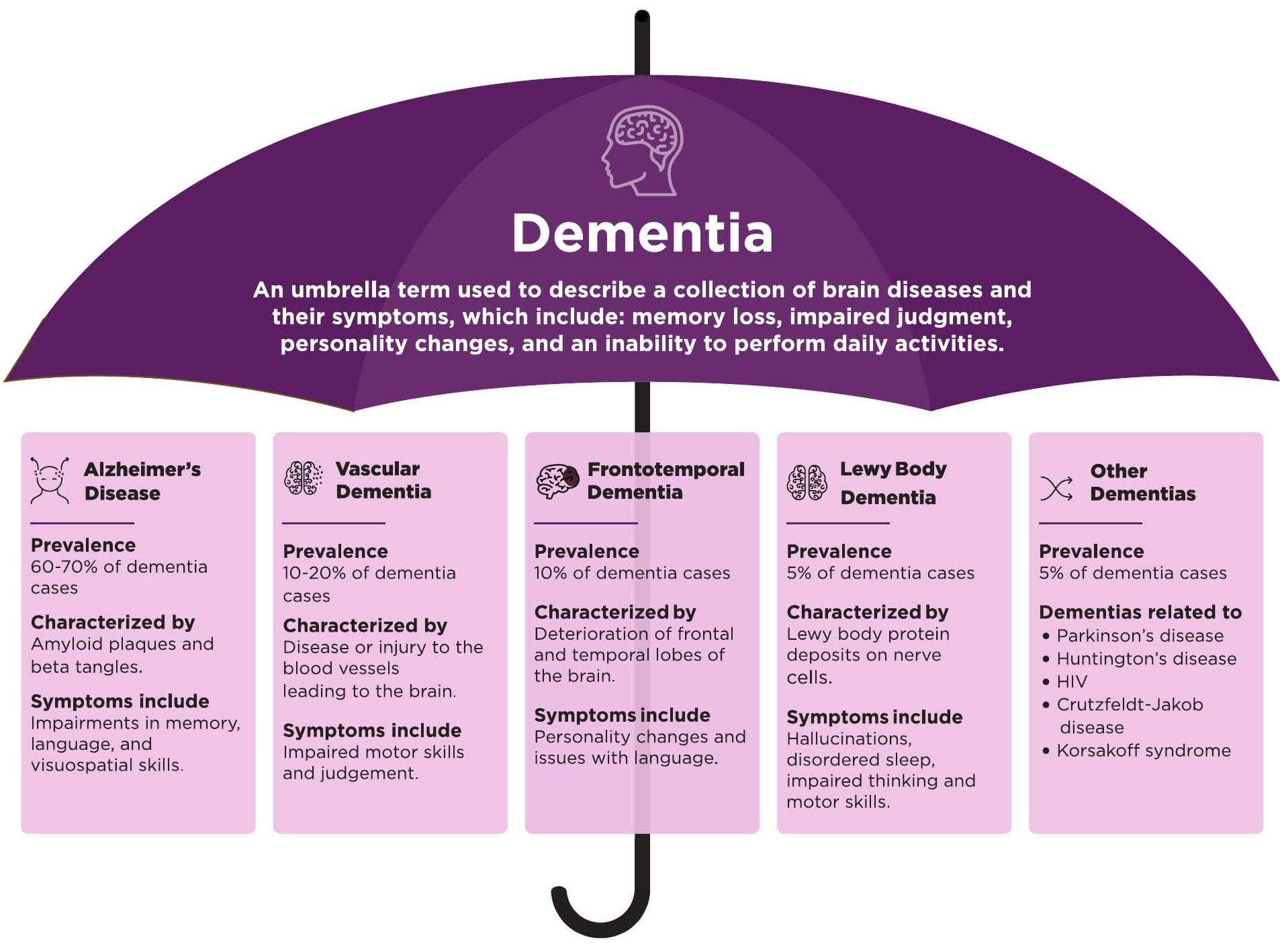
1. Alzheimer’s disease (AD)
In Alzheimer’s disease, there is an abnormal accumulation of beta-amyloid plaques and tau proteins in the brain. This disrupts synaptic communication and later can cause neuronal death.

A brain structure called the entorhinal cortex, which is an important gateway to the hippocampal system, is often affected. Tau pathology can also appear in the locus coeruleus, which is involved in the regulation of arousal and attention.
There is also degeneration of the nucleus basalis of Meynert, which can affect acetylcholine signaling. And there is abnormal connectivity and metabolism in the posterior cingulate cortex and the precuneus.
Symptoms that can occur with AD: Short-term memory loss, asking repetitive questions, feeling disoriented, having difficulties with finding words, and at some point in time, everyday activities may be difficult to perform.
2. Frontotemporal dementia
Frontotemporal dementia is another type of dementia, and as the name states, it involves the degeneration of frontal and temporal networks. Many cases are associated with abnormal tau or TDP-43 proteins.
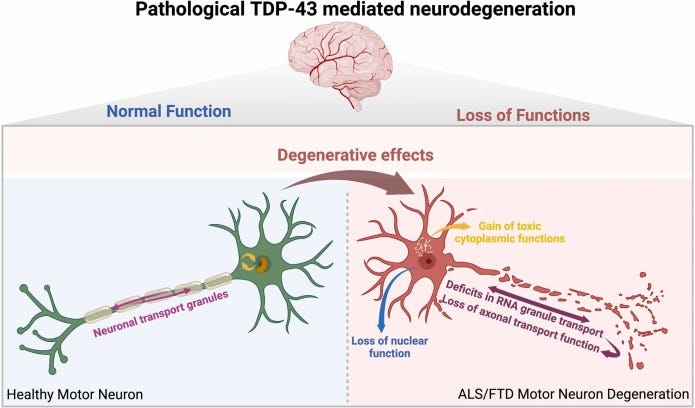
In our brains, the anterior insula and anterior cingulate cortex contribute to empathy, motivation, and social awareness. The orbitofrontal cortex regulates behavioral decisions, while the anterior temporal lobes support social and semantic knowledge.
Symptoms that can occur in FTD: People can have changes in personality, impulsivity, may experience loss of empathy, may show inappropriate behavior or compulsive behaviors, or at some point can have progressive language difficulties.
The incredible actor Bruce Willis is currently suffering from FTD. Sending all the love to him, his family and his loved ones.
3. Lewy body dementia
The third type of dementia is Lewy Body Dementia. This type includes an abnormal accumulation of alpha-synuclein.
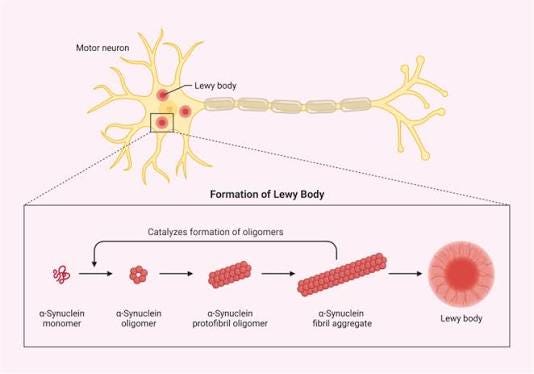
Degeneration can affect a brain region called the substantia nigra, which plays an important role in in movement. Cholinergic pathways originating in regions such as the basal forebrain can also be affected, disruping acetylcholine signaling involved in attention and cognition. There are also disruptions in the occipital and parietal networks which can contribute to visual-processing abnormalities. Additionally, there could be brainstem changes which in turn can affect REM sleep regulation.
Symptoms that can occur in LBD: People may experience visual hallucinations, fluctuating alertness, Parkinsonian movement symptoms, and acting out dreams during sleep.
4. Vascular dementia
Vascular dementia results from cerebrovascular damage, including strokes and small-vessel disease.
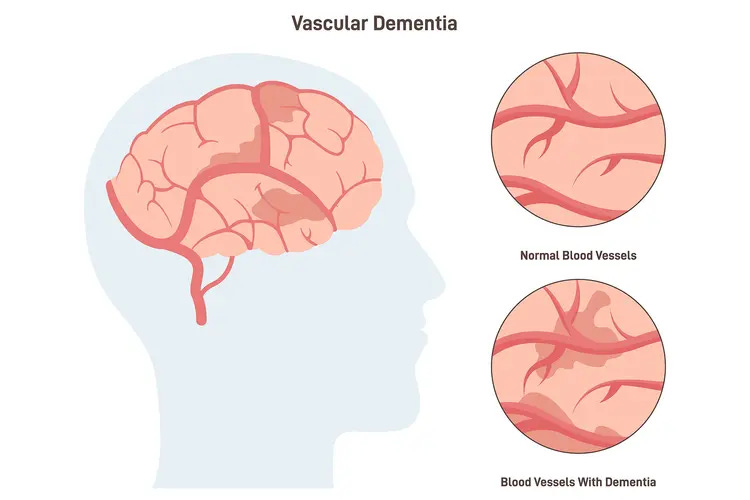
Injury to white-matter pathways, the thalamus, basal ganglia, and frontal-subcortical circuits disrupts communication between regions involved in executive function and attention.
Symptoms that can occur in VD: Slowed thinking, poor concentration, difficulty planning, reduced cognitive flexibility, and sometimes walking difficulties.
5. Parkinson’s disease dementia
This type of dementia is a decline in cognitive abilities in people who have been diagnosed with Parkinson’s Disease. Parkinson’s disease dementia involves widespread neurodegeneration, including alpha-synuclein pathology and disrupted dopamine and acetylcholine signaling.
In addition, the basal ganglia-thalamocortical circuits and distributed cortical networks can also become increasingly affected.
Symptoms that can occur in PDD: People with PDD will experience decline in cognitive abilities such as slowed thinking, impaired attention, visuospatial difficulties, memory retrieval problems. Sometimes people can experience hallucinations later on as well.
6. Mixed dementia
Mixed dementia can occur when there are multiple dementia pathologies. Commonly this would be Alzheimer’s pathology alongside vascular brain injury.
Symptoms that can occur: People with mixed dementia will have symptoms including difficulties with memory, attention, executive function, and certain behaviors.
The brain’s communication spiderweb
I like to think of the brain as an incredibly complicated communication spiderweb. Billions of neurons form interconnected networks responsible for our memories, personalities, emotions, and behaviors.
Different dementias damage different parts of this web, disrupting communication between brain regions.
Which networks are affected helps explain why dementia can look so different from one person to another.
I want to go over 7 less-obvious things I found in the research, that may help protect against dementia.
Let’s dive in!


No comments:
Post a Comment